
Review: Kubo and the Two Strings (2016)

kubo-and-monkey

Kubo and the Two Strings (2016): Laika Entertainment

It becomes clear very quickly that KUBO AND THE TWO STRINGS is a thematic title rather than a literal one, pretty much from the very first time you see the said instrument. The writers and animators at Laika know how closely you can pack your themes into their most expressive of mediums, and they run wild with the symbolism in their latest effort.

Kubo (Art Parkinson) has a gift for storytelling. Every day he travels to his nearest town to tell tales of legendary samurai in battle with the evil Moon King and his minions. Every day he returns home at sunset to care for his mother, who received a life-changing injury protecting him as a baby. Kubo yearns to find his place in the world, and his path on an epic quest of self-discovery, accompanied by protectors Monkey (Charlize Theron) and Beetle (Matthew McConaughey, begins one night where he lingers after dark…

Laika are at the top of their game, obvious from the film’s astounding stormy opening scene. The more human characters especially stand out with their range of naturalistic facial expressions and the way they react to the elements like rain and wind (I have absolutely no idea how you make hair and fur made of clay move so fluidly and believably). I love how the animators are never tempted to make their characters cute, but they’re appealing in their own way in their ugliness. In addition to stop-motion people, animals and fantastical creatures (including the largest and most complex puppet ever created for this medium) and living paper origami characters populate this vibrant world.

It is fitting in a tale where music holds such power that this film’s soundtrack is absolutely stunning. Kubo’s stories and his wider adventure is lifted to the stratosphere by Dario Marianelli’s rich score that draws on Japanese folk music. The heart flutters the first time Kubo orates and his origami puppets take to the air and spin and flip to his words, the soundtrack swelling in unison.

The voice cast imbue these characters with such tenderness and varying shades. Parkinson and Theron are the standouts, which was essential for this story to work as Kubo and Monkey’s relationship becomes the beating heart of the film.

The film’s tender and intriguing first act focussing on Kubo, his mother, and later, Monkey, is simply wonderful. Kubo’s daily cycle of caring for his only sporadically coherent mother, traveling to perform his stories, returning before nightfall  with his tale’s conclusion always left hanging, is powerful in its simplicity. There isn’t another animation house out there that would be bold and brave enough to tackle the tricky subject of a child caring for his parent so sensitively and unsentimentally. As nice as the increasingly complex visuals and action are, they threaten to eclipse what matters in this story and the film never surpasses this intimate first stretch.

Kubo doesn’t pack anywhere near as many surprises as PARANORMAN or THE BOXTROLLS either. If you’re paying attention to the clues, when the twists come they might feel a bit anticlimactic. While plot turns don’t shake you as much as Laika’s other work, it is their scariest film since CORALINE, with twisted adult themes and liberal borrowing from (suprisingly for a family film) J-Horror imagery.

Even saying that Kubo and the Two Strings isn’t quite up there with the other films Laika have put out there still makes this by far and away better than the vast majority of animated features out there. The stop-motion studio that specialises in big emotion and twisted thrills keeps going from strength-to-strength and have produced something that may be lacking surprises, but is still visually stunning and rather poignant, not to mention a little bit scary for adults and children alike. SSP

Posted in Film, Film Review | Tagged , , , , , , , , , , , , , | 2 Comments

Review: Deepwater Horizon (2016)

deepwater-horizon-movie

Deepwater Horizon (2016): Summit Entertainment/Participant Media/Di Bonaventura Pictures

I can’t say I was expecting to like DEEPWATER HORIZON. Turning real-world disasters, especially ones where we’re still feeling the impact today, into spectacle can go either way. It couldn’t be too maudlin or grandstanding, it couldn’t be propaganda. What director Peter Berg and writers Matthew Michael Carnahan and Matthew Sand have produced is honest and grounded, always focussed on the men and the destruction of their lives rather than the destruction of an oil rig and the surrounding environs due to Big Oil’s negligence.

What should have been another day on the oil rig for Mike Williams (Mark Wahlberg) and his colleagues soon turned to disaster on one fateful day in 2010. This is the story of what they went through, what went wrong and how the impact of this disaster is still reverberating today.

For all his critics, when he is given the right material Mark Wahlberg can be great. Just look at BOOGIE NIGHTS and THE FIGHTER. Here he’s a charming, quick-thinking, working-class hero. He has a believable and poignant relationship with his family (Kate Hudson and Stella Allen, both excellent). He firmly roots this real-life disaster story to Earth and, yes, he does get to real off a list of things really quickly, because if you’ve got a party trick you might as well show it off. Kurt Russell is having a great few years as a sturdy fixed point for plot to revolve around and rocks yet another fine moustache. John Malkovich doesn’t turn in a bad performance, but his BP villain is not especially layered and it’s really bizarre hearing a Cajun accent coming out of his mouth.

Stylistically, Peter Berg’s direction is better during the story’s setup. Here it’s a very classical, good-looking picture full of elegant sweeping crane shots and sturdily framed interiors. Where will the eventual threat come from? Are these lingering shots on show-and-tell projects going wrong and air rushing up from the silty depths a clue? It’s not subtle, but it works. When things on the rig really go south, while the action is raw and visceral, it can be a bit hard to keep track of everything happening on screen when we are seeing rapid cuts of explosion after explosion through shaky-cam. Two of these would be enough, all three are a bit much. You also never need to see a mournfully billowing American flag in a serious drama. That moment, brief as it was, brought me completely out of the action and the well-intentioned storytelling.

The disaster, which proceeds to get worse and worse even when you think it must have reached its peak, would mean nothing without dedicating real time to establishing these characters. They’re all real people doing their jobs, living and laughing, making ends meet and looking forward to the next time they’re allowed home until it becomes a very primal battle for survival. The film’s first half, which introduces us to the key players in the crew at home, then arriving at the oil rig and into passive-aggressive, then aggressive-aggressive conflict with the BP bigwigs, is its real strength, the meat of the movie, impressive and hard-hitting as the disaster-thriller final act is.

Deepwater Horizon is one of the nicest surprises of 2016. Really good performances, old-fashioned filmmaking class and never forgetting the human element in this disaster makes you easily forgive the odd stumble where it goes too “Hollywood”. I saw this at a near-enough-deserted IMAX screening, which was sad, but at the same time justified after seeing what I saw, as big as possible. I urge you to check it out and keep the story of what these brave working men went through alive and in the public eye. SSP

Posted in Film, Film Review | Tagged , , , , , , , , , , , , , , , , | 1 Comment

Top 4: Cinematic Experiences

One of the most common questions fired at a film buff is “what’s your favourite movie?” For most worshipers at the alter of digital and celluloid projection, it’s a near-impossible question to answer. Far easier to contemplate is top cinematic experiences, the films that have made the biggest impact and lingered on the memory after seeing them on the big (often biggest) screen. Here’s some of mine.

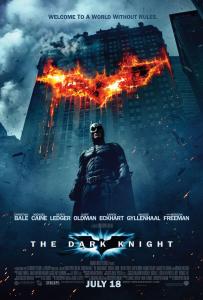
the_dark_knight_poster

The Dark Knight (2008): Warner Bros

THE DARK KNIGHT (2008): IMAX, National Media Museum, Bradford, 2008 I was never sold on 3D – it’s a gimmick, it throws up a barrier between audiences and the screen world and it more often than not negatively impacts the viewing experience. IMAX, on the other hand, is an immersive medium. Christopher Nolan is perhaps the proudest major proponent of using IMAX to enhance his storytelling working today, and it all started with Batman. Embellishing his already excellent crime-epic-with-Batman-in-it were majestic and eye-popping city exteriors plus the film’s showiest action draped across the entire 3-storey screen. Most dazzling of all was the film’s opening heist, and my heart really was in my mouth when the Joker’s gang abseil across a sheer drop between skyscrapers.

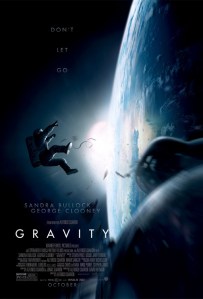
gravity

Gravity (2013): Warner Bros

GRAVITY (2013): 3D, National Media Museum, Bradford, 2013 While most still see AVATAR as the height of 3D filmmaking, Alfonso Cuarón’s disaster/survival/existential drama in space had a far greater impact on me. Like I’ve said, I don’t really get the appeal of 3D, but films made with the technology from start to finish has a certain draw. For someone who can feel a little ill on a clear night looking up at the vast, yawning chasm of space, seeing something going very wrong up there gave me genuine palpitations. Avatar brought us to a new world but GRAVITY presented us with an extension of our own, a tangible and real person in mortal peril in the most hostile and desolate location imaginable. People talk about CLOVERFIELD causing motion sickness, but Gravity made my stomach drop straight out (in a good way).

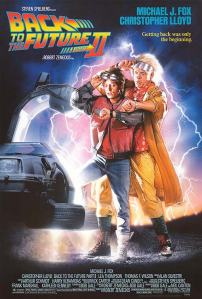
back2

Back to the Future Part II (1989): Universal

BACK TO THE FUTURE PART II (1989): National Media Museum, Bradford, 2015 The perfect storm so rarely comes around. Watching Marty McFly arrive in the future 2015 on on the very same date of the time jump in the film was a once in a lifetime opportunity I could never pass up. It was an privileged-feeling little screening full of Marty and Doc super-fans having fun (I don’t even think me and the friend I went with were the biggest) and it had a really lovely atmosphere. For as long as I can remember, BACK TO THE FUTURE PART II has been, and still remains, my all-time favourite time travel movie. Because I’m a 90s kid I’d never seen a Back to the Future outside of my own home, and the cleverness of the plot and wit of its presentation only shines brighter on a large screen.

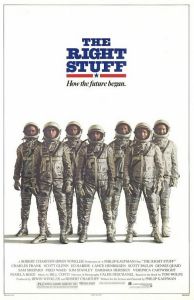
right_stuff_ver1

The Right Stuff (1983): Warner Bros

THE RIGHT STUFF (1983): 70mm, Prince Charles Cinema, Leicester Square London, 2016 Though I consider myself a cinephile, before this year I don’t think I really appreciated the benefits and drawbacks of various different film stocks and aspect ratios. I notice a difference between the formats, but they don’t tend to make the biggest impact on me. I haven’t picked a side on the film vs digital debate. That said, seeing THE RIGHT STUFF in 70mm at the unique little venue that is The Prince Charles Cinema has begun to open my eyes. The Right Stuff is among the greatest film in history in terms of effective sound use in storytelling, and the blast of high-powered engines and ominously creaking metal only has more impact as it envelops an auditorium. By seeing it on film, with all its flaws from years of use, the story seemed to have more weight. I hadn’t seen it for years, and I’d forgotten that this Space Race drama is funnier than a lot of comedies (standout line: “Our Germans are better than their Germans”) as well as being a must-see on the biggest screen possible. SSP

Posted in Film, Film Feature | Tagged , , , , , , , , , , , , , , | 1 Comment

Review: Captain Fantastic (2016)

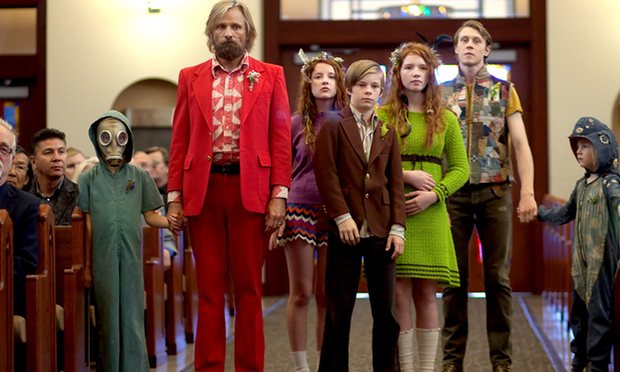
captain-fantastic

Captain Fantastic (2016): Electric City Entertainment/ShivHans Pictures

CAPTAIN FANTASTIC practically screams “quirky”. I mean, just look at the still from the funeral scene above. But this isn’t quirk for the sake of it, but instead a heartfelt story promoting debate.

Ben (Viggo Mortensen) lives in the woods with his six children. He has removed his family from hollow, wasteful, consumer-driven mainstream society and taken them back to a simpler time. They spend their days happy, healthy and connected to nature – running, jumping, climbing trees, hunting and reading science and philosophy. When news reaches them that their mother, who returned to civilisation for medical treatment, has died, the children persuade their dad to take them to her funeral and to meet their grandparents, who have always feared for what Ben’s parenting is doing to his family.

Many of Ben’s parenting techniques are questionable, but one I can wholeheartedly get behind – if you respect your children, then don’t lie to them. The only people Ben lies to throughout the film are a cop and his father-in-law, in both cases because he doesn’t respect them. This commitment to the truth results in some of the film’s funniest moments – Ben’s children will ask him about the world, about life, death, and sex, and he will tell them everything whatever their age.

Ben is a fascinating and contradictory monster. He is the most dedicated father you could ask for, determined for his children to be the most brilliant and able they could possibly be. Yet he is distant, unaffectionate and borderline psychotically focussed at delivering his agenda. He teaches them bushcraft, philosophy, history and sociology but maintains their bubble of routine and limited life experiences. As his eldest Bo (George MacKay, giving the performance of the film) quite rightly, and furiously, points out, he has been taught so much and yet “knows nothing”. There is, it is said, a great difference between knowledge and wisdom.

The film serves as a gentle critique of both “normal” and alternative lifestyles. Writer-director Matt Ross does a good job of not overtly laying into either side, acknowledging that everyone’s experience is different (and that’s fine) and there are benefits and drawbacks to every way of living and raising children. Ben tells his children that they “do not make fun”, but is quick to show off the intelligence of his youngest daughter in comparison to his in-laws’ children, using her as a ringing endorsement of home-schooling vs state education. When the kids finally get to meet their grandparents (Frank Langella and Ann Dowd) they are, for the first time since their mother left, shown tangible affection and genuine attention to and interest in what they actually want to do with their lives beyond living in harmony with nature.

I found it really hard to feel anything for Ben at the beginning, particularly the moment when he announces to his children the death of their mother with scarcely a reaction. This is somewhat made up for later on when, alone and at his lowest point, he has a complete emotional collapse. Viggo Mortensen is famous for going all-out in his preparation for roles (that, and getting his kit off in recent years, which he does again here) and if he took his sword to dinner while filming THE LORD OF THE RINGS, you wonder how deeply he threw himself into the character of Ben.

I know this isn’t purporting to depict reality, but could a family really go against a dearly departed’s Last Will and Testament just because her widower was brandishing it and making a scene at her funeral? The ending could have probably done with a bit more punch – just some minor tweaks would have done it. It ends up as a classic, quirky and bittersweet conclusion to an indie where the film would have certainly endured bringing its audience crashing back down to Earth. An interesting film then (even if, according to Ben, interesting is a “non-word”) that will inspire much discussion and which, refreshingly, doesn’t presume to know how you should spend your life. SSP

Posted in Film, Film Review | Tagged , , , , , , , , , , | Leave a comment

Review: 10 Cloverfield Lane (2016)

50-10-cloverfield-lane-paramount

10 Cloverfield Lane (2016): Paramount Pictures/Bad Robot/Spectrum Effects

Who’d have thought one of the best films released in 2016 was a (sort of) sequel to CLOVERFIELD? Much like this year’s BLAIR WITCH this one has come to us by stealth, not revealing what it is until the very last minute. As really it’s a spoiler to even outright say whether or not this is a sequel, I’m going to leave it for you to watch for yourself, but suffice to say 10 CLOVERFIELD LANE does a lot with this brand recognition and the associations that name has to keep you guessing throughout. The appeal doesn’t end there though, and this becomes an incredibly satisfying film on its own terms.

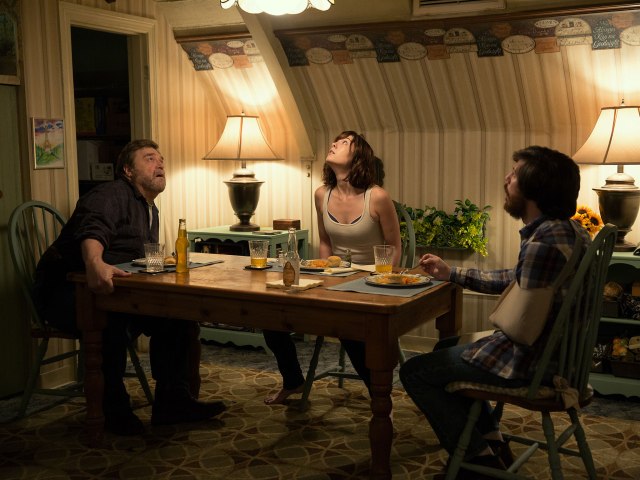
Following a car crash, Michelle (Mary Elizabeth Winstead) finds herself trapped in a bunker lorded over by the considerably unstable ex-marine Howard (John Goodman). Howard claims that the world outside has ended, that he, Michelle and fellow bunker inhabitant Emmett (John Gallagher Jr) are the only survivors, but just how much can the lord of this confined domain be believed?

10 Cloverfield Lane plays on paranoia wonderfully. How much of Howard’s story is true and what risks can Michelle and Emmett take proving it not to be? The film very cleverly goes back and forth over what is true and what isn’t throughout – just when you think Michelle has gotten to the bottom of the mystery another complication raises further doubts. Characters’ paranoia drives the plot over the course of the film and even plays a major part in altering the balance of power in the bunker later on.

This becomes the most screwed up family sitcom in history with dinner table arguments, bathroom arguments and boardgame arguments to go with the fear of imminent death. Howard’s twisted view of the trio’s relationship, with him as a protective father and Michelle and Emmett as his vulnerable and occasionally disobedient children shapes the whole middle act of the film.

Goodman can make smiling, dancing, even playing charades absolutely terrifying. Howard’s one word of wisdom before Michelle shimmies into an air vent to fix a life support system is “Neither of us will be able to help you if you get stuck…don’t get stuck!” It’s great to see him getting so much out of a meaty role again. This is among Winstead’s most accomplished and nuanced turns. Michelle is really taking through the emotional ringer, she is far from a damsel in distress and is forever trying to work things out and outsmart her captor. John Gallagher Jr has shown a hell of a range this year playing both the mild-mannered Emmett here and a complete psychopath in HUSH. As such a punchy little chamber piece, you really don’t need any other performers when you have these three playing off each other so beautifully. This would work equally well as a stage play as it does as a movie.

There’s a certain plot item that makes this share some DNA with BREAKING BAD, and considering some of the brutal imagery in evidence on that show I think they could have probably been more extreme when a character comes into contact with said item. I’d also say that when the answers finally do come I was disappointed. I was still entertained, but it would have to be one hell of a revelation to deliver on the promises of all that buildup and misdirection.

10 Cloverfield Lane is a knife-edge chamber piece with a loose connection to a recognised name. I’d have almost preferred it if first-time feature director Dan Trachtenberg didn’t need the brand to get people to put their money down, because once you’ve started on this ride you will be hooked, Cloverfield or not. SSP

Posted in Film, Film Review | Tagged , , , , , , , , , , , , | 3 Comments

Review: Hunt for the Wilderpeople (2016)

hunt-for-the-wilderpeople

The Wilderpeople who stare at men: Piki Films/Defender Films

The run of great 2016 indie films continues. Light and shade are so key in telling compelling stories, and Taika Waititi’s impressively domestic and enjoyable latest offering is hard-hitting and hilarious.

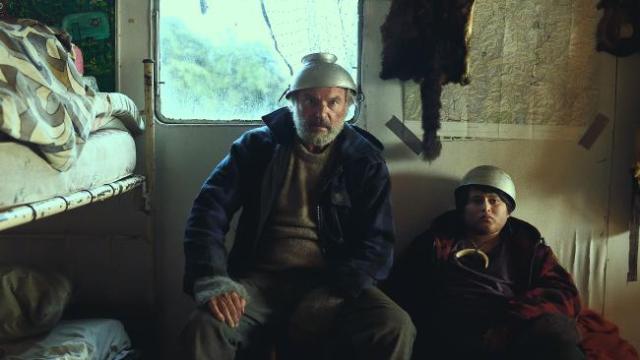
Ricky Baker (Julian Dennison) arrives at the home of his latest foster family – his last chance to settle before juvie – and finally glimpses a life away from meddling social services. But Ricky’s happy new farm life with kindly Bella (Rima Te Wiata) and grouchy Hec (Sam Neill) is shattered by a tragedy and the two boys go on the run in the New Zealand wilderness as the authorities launch a manhunt in pursuit.

Working as I do for social services, movies about the subject always hit particularly close to home. It’s not quite the gritty gut-punch of something like SHORT TERM 12, but Wilderpeople certainly has its moments and poignancy aplenty. Ricky Baker is told quite blatantly and cruelly that “Nobody wants you” by Paula from Child Welfare (Rachel House) and he finds himself completely out of options after disrupting or running away from so many foster homes. He finds a kindred spirit with Hec, another (big and beardy) lost boy who doesn’t really fit anywhere and only just manages to live on the very periphery of society with the help of  his wife.

It’s a road movie, but a very sincere road movie. Aside from the usual unlikely friendships and bonding, escape from inept and smothering authorities, the film has an important real-world point to make about outdated attitudes to, and within, social care. Though Ricky and Hec far from hit it off at first, Hec is under no illusion that he would ever be considered a suitable foster carer by himself, without the involvement of a woman. Waititi is highlighting the preposterousness of this – in today’s society of plenty of well-adjusted people living alone, with the appropriate checks in place why could a man not be a good new parent to a child in need of a safe home? He pokes fun at social services’ hypocrisy of sticking to the letter of the law in some regards but taking shortcuts when too much time or energy in required (social services signing off Bella’s tumbledown farmhouse as “fine” but showing very public concern for Ricky as soon as he is left on his own with Hec). It might be a (slightly cartoony) satirical representation, a vision of the real world warped for comic effect, but there’s always an element of truth to good satire.

From the opening verdant panorama accompanied by a etherial choir, Hunt for the Wilderpeople is achingly beautiful. New Zealand is far more than Middle Earth, and while you can certainly play spot-the-shared-locations, Wilderpeople only references LORD OF THE RINGS once. It’s a gorgeous, mythical land whatever your story is, but it’s very pleasing having such a New Zealand sensibility and sense of humour represented on screen as well as the country’s lovely landscapes.

As he demonstrated in WHAT WE DO IN THE SHADOWS and elsewhere, Taika Waititi’s signature comic style of heightened awkwardness and surreal asides gives his films a wonderfully appealing tone. Some people are just funny even before they open their mouths and the film features two firecracker cameos from Rhys Darby as paranoid Psycho Sam who elatedly introduces his ancient Landrover, “Crumpy!” and Waititi himself as an inept minister who thinks Doritos are an appropriate element of a eulogy. Julian Dennison’s completely sells his incredulous and innocent response to a TV report on the manhunt for a Caucasian male, as Hec is “obviously white!”. Our two leads turn in performances among the year’s best – Dennison is one hell of a charismatic find and it’s so gratifying to see Sam Neill get to not only play a character from his native land but to really stretch his acting chops in some difficult and really dark scenes.

It would be easy to sugarcoat the conclusion to a film like this. You want Ricky and Hec to get through their experiences unscathed and happy, and for the villains to be punished, broken and humiliated. Waititi ties everything up by the story’s end, and everyone gets what they deserve, but he thankfully doesn’t take the easy way out and over-romanticise what happens – there are consequences to everything that transpired.

Catch Hunt for the Wilderpeople while you can – you’ll be uplifted, you’ll be enlightened and you’ll be able to switch off from a year of shonky blockbusters for a while. Speaking of blockbusters, Waititi’s next film is THOR: RAGNAROK for Marvel. However that turns out, it certainly won’t be lacking in personality, or facial hair. SSP

Posted in Film, Film Review | Tagged , , , , , , , , , , , , , , , | 4 Comments

Review: Sausage Party (2016)

sausageparty

Sausage Party (2016): Annapurna Pictures/Columbia Pictures/Point Grey Pictures

Sorry, DEADPOOL, you’re going to have to return your 2016 bad boy award. SAUSAGE PARTY is even filthier, more anarchic and childish, but actually turns out to be about a bit more as well. That’s not a slight on Deadpool, by the way – it’s irreverence is a big part of its charm – but it’s good to have a comedy that is both crass and immature but sporadically thoughtful.

Frank (Seth Rogen) has a dream. As a sausage living in a multipack in a supermarket, all he wants is to be chosen by his Gods and taken, along with his betrothed bun Brenda (Kristen Wiig) to the promised land. There’s just one problem: the food has been lied to, and nothing awaits them beyond their vacuum-packed world but pain and suffering. Someone has to make a stand and Frank, faith or no faith, is the sausage to do it. 

The jokes in Sausage Party may not all be sophisticated but they come thick and fast and have a high hit-rate. From a Hitler sour kraut screaming “Kill the juice!” to a lost Barry (Michael Cera) mistaking something lying in the street for a fellow lost sausage (it isn’t) and more innuendo per minute than CARRY ON, the film made me laugh more than any other has this year. There are some killer spoof scenes as well, from a horrific SAVING PRIVATE RYAN-riffing scene (where Mr PB tries to put back together his shattered wife Mrs J) and a take on the famously awful slo-mo blue sex scene from TOP GUN complete with backing music (“I don’t know how I’m meant to feel watching that…” an onlooker says).

The final filthy set piece of the film makes TEAM AMERICA look positively conservative by comparison. It’s similar subject matter-wise to the most infamous scene in that film, but on a much larger scale. I don’t think I’ve ever seen such an end of the film celebration featuring this much canoodling outside of SHORTBUS, and that could arguably be called softcore pornography in addition to a great human drama.

Sausage Party does have a stab at discussing several real-world issues pretty sharply. From religion, both questioning faith vs rational thought and religious conflict (with a bickering Muslim flatbread and a Jewish bagel played by David Krumholtz and Edward Norton respectively as stand-ins for troubles in the Gaza Strip) to sexuality and fate. It doesn’t mock people for their beliefs – in fact by the end Frank seems to wish that he could still believe because he was much happier with religion – but it does ask people to consider all options, rational or religious. That’ll go down well in conservative parts of the USA I’m sure.

I can’t say every gag landed for me and the un-foody form the film’s main villain (Nick Kroll) takes. Though in-keeping with the crude nature of the  rest of the film, this conception of this antagonist pushed it a little over the edge for me, and gave it a pretty nasty, bordering on lazy misogynist tone whenever he appeared.

For something that probably started out with Seth Rogen getting his mates together and asking “I wonder if we could get away with this?”, Sausage Party is a pretty miraculous final product. The characters work, most of the jokes destroyed me and we’re left with some interesting possiblities should a sequel come around. It might be immature and not the biggest or most expensive animation out there, but this very adult cartoon can be pretty clever as well and it should go down well with Rogen’s usual audience too. SSP

Posted in Film, Film Review | Tagged , , , , , , , , , , , , , , , , | Leave a comment

Review: Ratchet & Clank (2016)

ratchetclank

Ratchet & Clank (2016): Blockade Entertainment/CNHK Media/Insomniac Games/Sony

I’m a big fan of Insomniac Games’ RATCHET & CLANK series. I played through them all on the PS2 and grew very attached to the characters, the high-octane action and the knowing sense of humour throughout. This year the original game was remade and tweaked to tie into the duo’s big screen debut and the result is…mixed. I really like the new game and it gave me the same thrills as the original with added polish and even more knowing jokes. The film, sadly, is a different matter.

Lombax mechanic Ratchet (James Arnold Taylor) teams up with warbot defect Clank (David Kaye) to stop the evil Chairman Drek (Paul Giamatti) from tearing apart the galaxy to create a new planet for his species. The duo join the heroic Galactic Rangers with the hope of enlisting the help of charming superhero Captain Quark (Jim Ward) and set out on a planet-hopping adventure…

Some jokes don’t really work on the big screen, no matter how tongue-in-cheek they are trying to be. The introduction of Chairman Drek is proceeded by onscreen caption “Cue bad guy speech in 3…2…1…”. Just because you’re pointing out that something is clichéd doesn’t make it less so when you do exactly the same thing. The game’s action and puzzle-solving sequences were broken up by witty infomercials for key characters and locations and these routines were brief and snappy enough to be really amusing. Stretched out this humour becomes rather laborious, like Douglas Adams read aloud by someone who doesn’t understand Douglas Adams.

OK it’s quite funny that in a throwaway gag Ratchet seems to be taking video exercise instructions from a Cylon, and that the Galactic Rangers are protecting the galaxy by increasing their number from four…to five. Captain Quark’s recruitment drive opening with “You may have not prevented Dr Nafarious from rendering the entire population of Naridia colourblind…twice” raised a smile, as did the death of a henchman and a high pitched scream followed by his friend’s anguished screaming of “Wilhelm!”.

A late in the game plot twist and a key character’s arc is somewhat ruined by how it’s handled here. Being, in theory, “a kids movie”, any character ambiguity, contradictions, complexity, interest must of course be exorcised so as not to confuse the little tykes.

The action, though as colourful as the game’s character and environment designs, is pretty basic stuff. About the only big scene of note has Ratchet and Quark rapidly cycling through some favourite ridiculous guns from the games. The problem is that Pixar, Disney and DreamWorks have the bar so high in terms of animation quality. Ratchet and Clank looks like what it essentially is – a (very) extended video game cutscene.

Jim Ward is about the performance worth turning out for, which is to be expected as he has been playing the all-encompassing blowhard Captain Quark now for fifteen years. Returning players from the game James Arnold Taylor and David Kaye are decent as our duo of heroes but I think struggle to carry a whole film. I can see why they enlisted John Goodman to play Ratchet’s grouchy garage boss, but Sylvester Stallone’s hulking henchman hardly features and Paul Giamatti’s cheque for playing Chairman Drek was apparently sent to the wrong actor, and I’d love for that to have not been an accident.

The search goes on for a decent video game to film adaptation. In their journey to the big screen, Ratchet and Clank have lost wit, energy and fun. This is just further proof that video games worlds only entertain when you’re an active participant in them. As any regular gamer will tell you, this is not a medium to be passively received, and just watching gets old fast. SSP

Posted in Film, Film Review, Video Games | Tagged , , , , , , , , , , , , , , , , , , | 1 Comment

Review: Where to Invade Next (2016)

where-to-invade

Where to Invade Next (2016): Dog Eat Dog Films/IMG Films

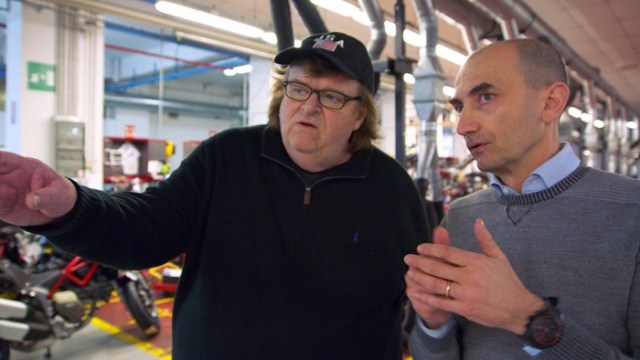
Michael Moore famously doesn’t beat about the bush (or Bush). WHERE TO INVADE NEXT (should that be phrased as a question?) opens with a montage of Washington DC’s landmarks accompanied by the whir of helicopter blades and an action movie drum score. Moore sets the tone with his first sardonic statement: “I was quietly summoned to the Pentagon to meet with the Joint Chiefs of Staff”. He then proceeds to reel of a list of wars the USA has lost. The only logical next step of course was to go and see what the US of A was missing from around the world.

In a series of “polite invasions”, Michael Moore journeys to distant lands with a big flag to steal all their best ideas to bring back to the United States.

It’s a neat idea for a documentary – send Moore on a travel log to highlight things other countries do better than the USA, and stick it to The Man at every opportunity along the way. There’s a lot to like about America, and I really think Moore is proud of his nation, but at the same time his home country’s faults have always infuriated him.

Countries he visits are assessed with tongue-firmly-in-cheek according to fun facts (for Germany: “none”), threat level and notable citizens. Any shots taken are playful (Moore’s incredulity at the best-educated country on his travels, Finland, also being home to the Air Guitar World Championship and the sport of “Wife Carrying”). Along the way he aims to steal paid, even incentivised vacations for stress relief from Italy, happy, stimulated and non-competitive students from Finland, women’s rights and government-funded contraception and abortion services from Tunisia. He even brings back a message from Portuguese cops to their American counterparts: “As long as you allow the death penalty to exist, human dignity can’t be protected”.

It’s pretty positive stuff from Moore for once, unless he’s taking snide swipes at the country he is trying to fix, that is. “Taxes in America pay for the basics – police, fire, roads, water, war, and bank bailouts”. Playful jibes and stereotypes give way at points to his anger at his home nation seemingly refusing to give into reason when he has a point to make – Moore sees American prisons as the modern equivalent  of the slave trade in the way inmates are trapped in an infinite loop without reprieve, for instance.

I don’t think he really needed to bring up Hitler and WWII atrocities in the Germany segment as it doesn’t really add to his thesis. As sincere as showing German schoolchildren marking and understanding what their grandparents did, it’s just there because it’s expected of a trip to Germany and Moore wasn’t going to leave without touching on the subject. It all comes across a bit Hallmark, a bit cheesy-inspirational for the sake of it and is at odds with Moore’s more cutting analysis elsewhere. A later segment highlighting Anders Breivik’s attacks in Norway in 2011 has more of a place and more impact as it feeds directly back into what Moore was talking about – Norway’s seemingly lapse attitudes to crime, punishment and justice.

Moore’s persona can be love-hate for many. I’d say that he attempts to cover too many subjects, and too broadly, and that he’d be better tightening his focus and attempting fewer arguments in a more detailed and analytical essay. He does, and has always, made sweeping generalisations, but he also highlights some interesting points as evidence to back up his argument. Where to Invade Next may only be genuinely thought-provoking occasionally, but it is consistently entertaining. SSP

Posted in Film, Film Review | Tagged , , , , | Leave a comment

Review: Zootropolis (2016)

zootopiain

Zootopia/Zootropolis (2016): Walt Disney Animation Studios

ZOOTROPOLIS (which has the much better title of ZOOTOPIA in the States) is not only the best film of 2016 so far but also may well be the most important. It’s the usual pristine, vibrant and peppy animation from the House of Mouse but with far more going on below the surface.

Judy Hopps (Ginnifer Goodwin) is a bunny with a dream. Not content with her family’s safe and comfortable life of carrot farming, she moves to the big city to become the first ever rabbit cop. Tasked with demeaning and menial work by her superiors, Judy gets the chance to prove her worth when, with the reluctant help of fox grifter Nick Wilde (Jason Bateman) she begins to unravel a conspiracy to tear animal society apart.

Zootropolis is a great analysis of prejudice, holding an unforgiving mirror up to Western society and making great use of the workings of the animal kingdom as allegory. Presumptions are made about particular animals, their instincts and their predispositions to particular careers. You come to Zootropolis to become anything you want, only that’s not possible for some animals. Bunnies will always be cute (“We can call each other that, but…”) and foxes will always be scheming.

Obviously as a take on race relations this animation can’t be as explicit as, for instance, last year’s STRAIGHT OUTTA COMPTON (“You can’t arrest them just for being black!”) but there’s still some pretty merciless satirical commentary here. Look at how quickly the animal police force both turn on their carnivore colleagues and swoop down on meat-eating citizens in the street following some disturbing events reaching the media (“It’s not like a bunny could go savage”, “But a fox could, huh?”).

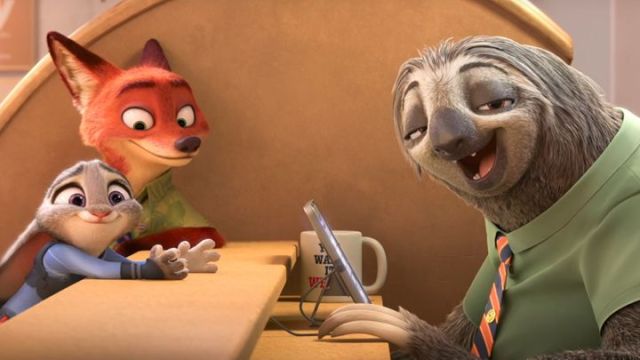
It’s not all serious of course. The gags are rapid-fire, ranging from visual jokes based around animals’ physiology and behaviour such as the already infamous and painfully funny sloth-manned DMV scene to much bluer references to rabbits’ famous promiscuity (Hopp’s hometown population sign is constantly fluctuating, she comments herself offhand that her kind are “good at multiplying”). Judy and Nick’s uneasy relationship is classic cop movie stuff, but it’s given an honesty and real heart by Goodwin and Bateman’s top-notch voice work. Elsewhere the cast is filled out with as diverse personalities as Idris Elba, Jenny Slate and Maurice LaMarche, all making their animated avatars (some of the most expressive ever created by Disney) distinctive and as real as anthropomorphic animals can possibly feel.

Zootropolis is not only funny and witty, but it’s built around a really good noir mystery that plumbs the murky depths of four distinct habitats as districts of a vast animal city. For once the workings of this bizarre animated world are incorporated into the film’s plot – they’re not anthropomorphic animals just because that’s what you do in a cartoon, but their evolved state and advanced society teetering on the verge of reverting back to a more savage time is an essential part of the plot development. Aside from indulging a few of the usual buddy movie conventions towards the film’s end, the way key information is gradually and shockingly revealed makes this more akin to CHINATOWN than FROZEN.

With the depressingly high number of hate-fuelled atrocities committed every day and reported by global media, Zootropolis couldn’t be more timely. There’s a lot that kids will like here, but this is a hard-hitting, relevant and adult animation at its core, probably destined to be appreciated even more by parents than by their children. Who’d have thought that Disney would be the studio with their fingers on the pulse and prepared to show audiences the world over what they really are? SSP

Posted in Film, Film Review | Tagged , , , , , , , , , , , , , , , | 3 Comments