
X-Men: Apocalypse (2016): Fox/Bad Hat Harry
I stand by my original review of X-MEN: APOCALYPSE, but now I’ve watched it again I have a few more thoughts.
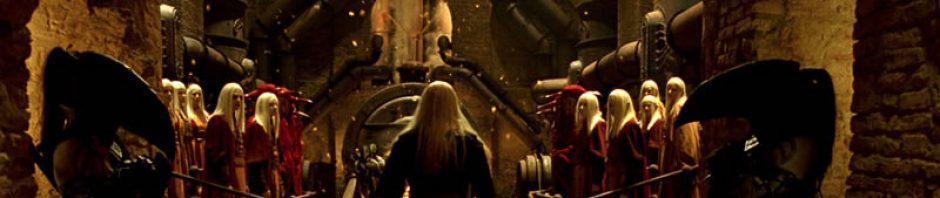
I don’t have any real issues with the film’s opening. The original Four Horsemen aren’t given much opportunity to make an impact in the film’s fun opening action scene but their powers and appearance make them stand out for the brief time they’re on screen, unlike the thoroughly played-out CHARIOTS OF THE GODS? basis for the rest of the film’s setup.
They’ve never quite got Cyclops right in these movies. James Marsden was hardly in the original X-MEN trilogy and Ty Sheridan just turns him into an average stroppy teenager. Maybe that comes from retroactively making Scott the younger Summers brother in this take on the X-family. Cyclops should be a morally unshakeable boy scout like Captain America or Superman, he should be there to lead his team and make sure they do the right thing and don’t hurt anyone unless they absolutely have to. Fair enough, his power is highly destructive and difficult to control, but he seems to have next-to-no problem-solving skills, no concept of strategy; he just runs in and hopes for the best. The end fight just amounts to the X-Men shooting their respective colour-coded beams of light at the big bad and there’s nothing creative about that.
Jean Grey’s (Sophie Turner) re-introduction once again wastes her potential as a character and as a concept (what if the most powerful being in the universe was a good girl…for now?) and makes me all the more hopeless that we’ll ever see a proper adaptation of THE DARK PHOENIX SAGA, my favourite run in any comic book series. It’s bombastic, it’s layered and out-there (literally – the X-Men take the fight to space and try and save the whole universe) and it’s nowhere near safe enough for a big studio to bet on.
Mystique should never have become a hero. FIRST CLASS gave her a logical motivation, but removed her edge. In DAYS OF FUTURE PAST she only occasionally seemed to remember what she was trying to achieve. Jennifer Lawrence is a fine actor, but I’m not convinced Raven was the right fit for her and she just looks tired and listless here.
Magneto’s arc works well enough, and Michael Fassbender sells being the unluckiest and angriest mutant out there, but I want him to move on to newer and better things now. For all the ways they botched his characterisation, having Apocalypse (Oscar Isaac) as the embodiment of an uncaring god works for this story. Magneto confronts him over his absence when their kind needed him most and he does not have an answer to give him, but a sliver of faith remains with Erik. The scene where the first mutant takes his would-be protege to confront his demons at Auschwitz felt heavy-handed when I first saw it (it still is that) but thematically it’s punchy and it gives him the only even vaguely logical reason out of the Four Horsemen to follow their deity.
By now most of you will know that Hugh Jackman makes his penultimate appearance as Wolverine, his cameo being the one and only reason for the plot to take a detour to Alkali Lake. Last time I think they struck the right balance between fanservice and moving the story forward, but here this balance goes askew and the film is drained by over-compensating spectacle in an effort to top Days of Future Past.
If Fox are going to continue to release X-movies that don’t star Deadpool then they need to take a step back, realise what they’re good at and prioritise character development over beefed up visuals. There’s always going to be superpowered fisticuffs and fireworks, but there’s no need to be bigger than the last time on every attempt. Bigger isn’t always better; you just need to be different. SSP