Hard-Hitting Netflix Original Documentary Double Bill

How catchy is the title of this piece? Anyway, isn’t streaming brilliant? Convenience and value for money aside, so many interesting documentaries that might otherwise have never found the right outlet for release can now be beamed straight into your curious eyeballs at a time of your choosing. Here are just two of the most notable, made for, and available now, on Netflix.
my-beautiful-broken-brain-poster

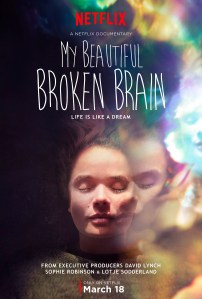
My Beautiful Broken Brain (2014): Netflix

MY BEAUTIFUL BROKEN BRAIN (2014/16) In 2011, Lotje Sodderland suffered from a stroke at the age of 34. This is her story told in a manner only possible because it comes from a dynamic artist. Lotje’s terrifying and life-changing experience is reconstructed in chilling and immediate fashion, the visceral footage adding real weight to the standard family and friends talking heads giving their recollections on the event. The first time we actually see Lotje she makes a very pragmatic statement straight to camera, cheerily confirming that “I’m definitely not dead”. Lotje then graciously allows us to follow her recovery process, talking directly to us throughout, of rewiring her brain every slow and painful step of the way.

The documentary certainly makes you appreciate how much we as a species take communication for granted as we watch a witty and erudite adult grapple for the simplest words that elude her, having to attempt to re-learn to speak, read and write almost from scratch. We obviously can’t experience precisely what Lotje is going through but she, a filmmaker herself, and fellow filmmaker Sophie Robinson who was enlisted to get this most personal of projects off the ground, know how important it is to make your audience go through something other than pity. If there was one thing I wasn’t expecting in a serious documentary, it the film’s effectively otherworldly Lynchian horror visuals (a certain bequiffed filmmaker just may make an appearance later on). The slightly off, eerie imagery  combined with Lotje’s magnetic personality and superhuman struggle makes MY BEAUTIFUL BROKEN BRAIN not just a must-watch, but a must-experience. It’s frightening, contemplative and artistic without style ever overtaking substance.
04ddcec388af21e3441b03a2727f7b3e6231a55f

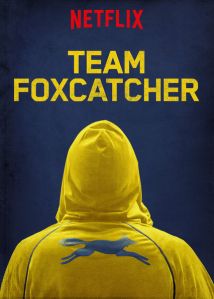
Team Foxcatcher (2016): Netflix

TEAM FOXCATCHER (2016) As creepy and fascinating as this true story is, this documentary has the misfortune of coming out the year after Bennett Miller’s superlative drama FOXCATCHER. What the documentary gets across that the feature arguably did not is the desperation of many of the young athletes living and training on John du Pont’s farm. Some had nothing but the clothes on their back and a born talent for wrestling, those better off still had to worry about supporting their families when they inevitably retired, so no wonder did they all take up his offer of unlimited resources and zero real-world distractions.

The wealth of archive footage is mesmeric and it really gets across what an open and charming sporting prodigy (one tragically caught in the wrong place at the wrong time) Dave Schultz was, all the while keeping his murderer John du Pont elusive and sinister, tragic and pitiable, try as he might to beguile. None of his quirks that were dangerously indulged by those around him were exaggerated in popular media, but some, like du Pont claiming to be the Dalai Lama when he wore red or his belief that he could control the weather, or the firing of brilliant athletes because they were black, “the colour of death” come to startling light in this documentary. You’re also allowed to get to know the Foxcatcher community – all the athletes from over the world living on the farm together with their families, all these people whose lives were destroyed by the actions of one deeply disturbed individual. With all the evidence laid out before you, you can see that there were warning signs, but how were those involved ever meant to know how far it would go? This is a thoughtful gut-punch of a documentary feature. SSP
Posted in Film, Film Feature, Film Review | Tagged , , , , , , , , , , , , | 3 Comments

Review: Love & Friendship (2016)

loveandfriendship

Love & Friendship (2016): Westerly Films/Blinder Films/Chic Films

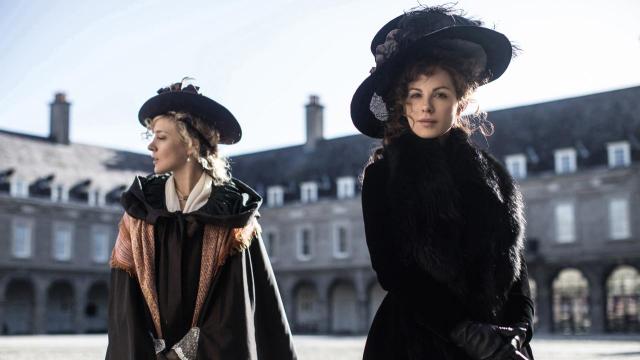
It’s Jane Austen, but not quite as we know it. Whit Stillman’s LOVE & FRIENDSHIP adapts one of the titanically influential novelist’s lesser-known and unfinished stories (originally titled LADY SUSAN) and the result is a film that is both delicate and incredibly funny, often in a rather modern manner.

Recently widowed Lady Susan Verson (Kate Beckinsale) stays with her in-laws and lays out her plans for wedding her daughter Frederica (Morfydd Clark) and maintaining her own privileged position in society. Idiot suitors and interested parties come and go, but Lady Susan has been playing this game for a long time, and will stop at nothing to make sure she comes out on top. 

In a world where multiple UNDERWORLD movies and a remake of TOTAL RECALL exist, you’d be forgiven for forgetting just how good Kate Beckinsale can be – here she gives Lady Susan presence, relentless determination and razor-sharp wit. She plays society, men and women alike so expertly and is always one step ahead of everyone else in the drawing room in order maintain her self-reliance and comfortable lifestyle. Lady Susan’s show is nearly stolen by adorable idiot Sir James (Tom Bennett), a man rich enough to get away with being a complete moron, who is run circles around by everyone he meets but never quite realises it. He tries, bless him, he appears a good-natured enough soul, and you are laughing with more than at him by the end. The supporting cast of lords and ladies played by talent including Morfydd Clark, James Fleet and Justin Edwards make for a good ensemble who inhabit their characters seamlessly.

As an unfinished Austen, Love & Friendship feels understandably enough like it’s trying out ideas and testing some of the author’s soon-to-be hallmark themes and character archetypes. It’s refreshingly scrappy and unpolished, but it also feels very real. Everyone looks uncomfortable and mannered in their period clothes, not because they’re bad or miscast performers, but because clothes of that period were awkward, restrictive and uncomfortable. This is a slight and undemanding story, but a very watchable and entertaining one all the same.

There are some lovely stylistic details to make this tale distinctive, and to add colour to some of the recurring jokes. The characters in each household hold a pose for the camera (Sir James is so stupid he carries on moving as normal as the people around him pause) and all are introduced with snide captions commenting on their status, age, or respective usefulness. Seeing the handwriting floating and faltering on screen as Sir Reginald (James Fleet) struggles to regale his wife (Jemma Redgrave) with Lady Susan’s correspondence with enough personality to engage her is also an amusing idea.

The scenes with Chloë Sevigny are much less satisfying, with Sevigny’s Alicia simply acting as a sounding board for Lady Susan as she plans her next move. You don’t really get a sense of why they are friends at all really – Lady Susan just shows off and Alicia lets her, not expressing herself or who she is in any real fashion. I don’t really see the point in Stephen Fry being part of this either as he’s usually just in the background of Sevigny’s scenes contributing very little. At least he didn’t pick up any bad habits from SHERLOCK HOLMES and thankfully keeps his trousers on this time.

I will have to see this one again to pick up some of the intricacies of the dialogue, but the performances of the key players throughout still make it a hugely enjoyable watch. Love & Friendship isn’t a swooner, in fact it’s refreshingly pragmatic about relationships and what they amounted to for aristocratic women in the Nineteenth Century. Lady Susan’s means to an end attitude to marriage for herself and her nearest and dearest must have reflected many in her privileged yet limited position. For a brisk and modest film without any real shocking twists or revelations, this is a pleasingly layered and satisfying affair. SSP

Posted in Film, Film Review | Tagged , , , , , , , , , , , , , , , , , , , | 2 Comments

Review: Radiator (2014/15)

radiator-2-xlarge

Radiator (2014): Turnchapel Films

I’d like to forewarn you that anyone with an ailing friend or relative, or who has witnessed someone with a duty of care not up to that task, will find that a lot of RADIATOR hits very close to home and is difficult to watch. Fear not though, there is low-key humour sprinkled throughout as well to keep it from being too much of a downer. I see this as a beautiful and worthwhile piece of British independent cinema to seek out.

When Daniel (Daniel Cerqueira) returns to his rural childhood home to help his mother (Gemma Jones) care for his ailing and estranged father (Richard Johnson), little does he suspect that this charitable role will take up far more time and energy than he can willfully give. Will his time in the challenging company of Leonard and his doting Maria soften him or reaffirm why he left for London in the first place?

Tom Brown’s film embraces the beautiful and unforgiving power of the close-up, and you couldn’t get more thematically appropriate scenery than the desolate serenity of the Lake District. I went to the lakes a lot as a child and they can be imposing, unforgiving and the very last place you’d want to have to trek to in order to care for an ailing relative. Think of where they go for their miserable holiday in WITHNAIL & I – it’s exactly like that. This region of Northern England is also stunningly beautiful and tranquil; just the place one might want to retire for peace and quiet. So even putting aside their historical fallouts and general dislike for each other Leonard and Daniel are starting from a point of animosity – Daniel has had a long and hard journey to see this old wretch.

The best chapter in the film is an occasion when father and son are forced to get along as Maria leaves for a few days to see friends. They get along famously until they have an explosive argument over, of all things, cutlery. That’s families for you – you have to love them but you don’t have to like to them and you fall out over the stupidest things. Richard Johnson’s final performance is one to savour, a storm of contradictions. Leonard is abrasive but vulnerable, quick to complain but equally quick to brush off any assistance offered with utter indignity. He’s not a nice bloke in short, but he is funny and you wonder how much you’d put up with if he was one of your own relatives. Cerqueira’s obstinate Daniel and especially Jones as the always-warm Maria are saints for looking after him, and the film never pretends otherwise.

Leonard and Maria’s converted farmhouse home is wonderfully ramshackle. I’m sure most people know someone who has lived in a place not so dissimilar. Everything in its place; that place being the floor, leaning against walls, serving as architecturally essential supports for the wider structure or just generally strewn around. Just look at the perfect fit of desperation as Daniel claws through the chaos of his parents’ cutlery drawer looking for a fork, or the ever-present mouse watching their every move from corners of the room.

If I had one criticism, as hard-hitting and soulful as Radiator is, the plot is structured exactly as you’d expect it to be. The moments of pathos appear right on cue, and you can pretty much guess where the characters will be at and how far they will, or won’t have come by the end. But hey, sometimes real life, which is what this film strives to represent, sticks to the script. Cruel twists of fate, ups, downs and in-betweens come at regular intervals and advance all our life stories. If you have any opportunity to track down and watch Radiator, I implore you do so. If nothing else, it’ll make most of you appreciate your own families. SSP


Posted in Film, Film Review | Tagged , , , , , , , , | 1 Comment

Review: Warcraft (2016)

warcraft

Warcraft (2016): Legendary Pictures/Blizzard Entertainment/Atlas Entertainment

Despite being a regular gamer myself, WORLD OF WARCRAFT is something that has passed me by. You can’t not be aware of it as a phenomenon, but I’ve never played it and have no real familiarity with the story. I went into Duncan Jones’ WARCRAFT film adaptation ignorant but with an open mind. I came out bewildered and slightly annoyed I spent an evening with it.

The world of Azeroth must prepare for war as a horde of Orcs invade through an unholy portal sustained by sinister magic to their ruined homeland. Warriors, wizards and kings must work together to mount a counter-attack.

First, the good. I liked the portrayal of magic in this world as an elemental, corrosive and terrifying power. One of the few things the film does really well is to sell what it costs someone to wield it. From seeing a sorcerer standing atop a mountain to summon a lightning storm to turn the tide of battle, then immediately requiring power replenishment as their lifeforce leaves them, to the rapid corruption of body and soul some magic-users go through in the film, it all comes at a price. It’s an awesome force, but using it for as a weapon affects you far more than just swinging a sword.

The visuals are admittedly dazzling throughout, though the constant onslaught of visual information and bright colours (refreshing as it may be in a world of grey and sepia blockbusters) quickly becomes a more painful than pleasurable experience. The Orcs are very well realised with the same sophisticated motion-capture technology used in the latest PLANET OF THE APES movies. The sheer size and mass of the ten-foot Orcs fighting human knights in armour raises some interesting possibilities for the action, though the entertainment value drops drastically once the conflict grows from brutal and immediate skirmishes to hectic full-blown battle scenes. On a side note, how come in a 12A/PG-13 movie you can show swords thrust through faces and blood gushing from severed arms as long as it’s green blood? A human gets his neck crushed in an Orc’s fist as well at one point, but since there’s no visible blood it’s apparently it’s OK to show this violent death to a mixed-age audience as well.

Performance-wise there unfortunately isn’t a lot to write home about. Toby Kebbell does what he can in terms of injecting humanity (irony not lost) into new daddy Orc Durotan, though he doesn’t quite hit the perfect pathos of Koba in DAWN OF THE PLANET OF THE APES and Ben Foster channels Nicol Williamson as Merlin-esque wild-eyed campy sorcerer Medivh. Elsewhere we’re supposed to root for Travis Fimmel as a smirky warrior, Ben Schnetzer’s baby-faced “chosen one” cutout and a green Paula Patton, who is more than talented enough to bring something interesting to the role of conflicted half-Orc Garona, if only the script would give her room to do so. Meanwhile, we’re meant to boo Daniel Wu and Clancy Brown’s ferocious Orc leaders Gul’dan and Blackhand, who both  have striking designs but do next-to-nothing interesting and rarely say anything you can make out because they growl through tusks.

Important scenes and character moments are continually cut short or feel rushed, the film seems compelled to get it over and done with as soon as possible, yet it’s still two hours long, and a grueling two hours at that. I don’t know if massive swathes of extra exposition would improve matters, and once they stop explaining everything (about 20 minutes in) Warcraft becomes more watchable but also more confusing if you’re not familiar with the lore.

Duncan Jones is a dedicated player of the game and clearly he would have wanted to put everything he loves about it on screen (fully supported by games developer Blizzard), but I don’t know how all that passion results in something so lacking in personality. As a director, he works with big ideas on a modest scale and his stories tend to be driven primarily by character. I’m not sure this plot-driven fantasy epic was quite the right fit for his talents. I really hope his next project MUTE, firmly back in Jones’ wheelhouse of low-key sci-fi is a little more compelling. SSP

Posted in Film, Film Review, Video Games | Tagged , , , , , , , , , , , , , , , , , , , | 2 Comments

Review: The Do-Over (2016)

The-Do-Over-2016-a-3

The Do-Over (2016): Happy Madison Productions/Netflix

I was planning to bite the bullet and get through this one quick (I had already paid for my Netflix subscription after all) but my internet provider had other ideas, perhaps in protest, when it went down over the whole bank holiday weekend. Adam Sandler’s comedy has previously alternated between the downright offensive and the juvenile, but now he’s hit middle age (on the outside at least) he’s just sad. A slight air of melancholy, summed up by Sandler glumly reminiscing about being “stuck in shop class building bird cages and foot stools” is probably the only good thing about THE DO-OVER.

After bumping into old school friend Max (Adam Sandler) at a high school reunion, down-in-the-dumps bank manager Charlie (David Spade) takes a break with his buddy. When Max fakes their deaths and steals a pile of cash belonging to the man whose identity he has stolen, he and Charlie find themselves on the run from some bad men.

Adam Sandler’s boat (I’m going to keep calling him Adam Sandler rather than Max because he’s never not playing Adam Sandler) is called Fish ‘n’ Chicks. That’s not only unfunny, it doesn’t even really work as a pun. It’s still probably the best gag in the film, the script of which, by Kevin Barnett and Chris Papas, seems to have set out to destroy mirth.

There might as well be a massive Corona logo stuck to the corner of the screen throughout the Do-Over – the advertising deal they got for this movie must have been lucrative, with at least a bottle or better a blatant “I love this brand of beer” shoutout in every scene. Incredibly it makes the FAST & FURIOUS franchise look positively subtle in comparison, and Dom Toretto really likes his Mexican beverages.

You think the story might go in an interesting direction when Charlie’s expository voiceover is broken off mid-sentence by an explosion. It doesn’t, with laboured scene after laboured scene utterly devoid of humour following the plot (such as it is) kicking into gear.

Goons bouncing off the bumpers of speeding vehicles are about as sophisticated as the jokes get, but Adam Sandler and Charlie also use the same tactic to gain an ally – stalking and running over Heather (Paula Patton) with their car – and that’s apparently meant to be cute rather than cartoonily misogynistic. This only gets more sickening as we get to see our supposed protagonists getting a kick out of woman-on-woman brutality in the final set piece.

Being misogynistic would be enough to write this off as not worth your time, but The Do-Over is also homophobic (“aren’t men who like men equally funny and scary, right guys?” the film seems to say in a quite literally tortuous final act scene); it’s derogatory to the handicapped (Sandler’s senile mother plastered with makeup like a pantomime dame and her debilitating condition constantly mocked by her son is the basis for an entire sequence) and very one-note Adam Sandler-y (two utterly repellant guys who somehow aren’t shot at more often).

It took me several attempts, but I did get through the Do-Over. I think I only finished it because I didn’t want such a pathetic movie to defeat me. There’s nothing to it accept backwards man-childishness, and it’s even worse when Sandler tries to be serious, when he tries to make us care and appreciate a Hallmark card ending after showing utter disdain for us for 75 % of the movie. This didn’t defeat me, and if you start it you might as well finish it just to reaffirm that you are better than Sandler. But if you haven’t yet hit play, I’d strongly advise that you don’t bother. Only pain will you find. SSP

Posted in Film, Film Review | Tagged , , , , , , , , , , | 3 Comments

Blade Runner & Inception: “Questions, yes?”

This piece contains spoilers for BLADE RUNNER and INCEPTION.

Two of the most iconic Science Fiction films of all time, two distinctive and revolutionary directors putting their vision on screen, two of the biggest questions we as a species can ask ourselves. Blade Runner. Ridley Scott. Inception. Christopher Nolan. What does it mean to be human? What is reality? Audiences have their own queries over the layered plots and characters as well, and the debate over these can be heated. You just have to ask the right questions. Here’s my take on the most persistent unanswered questions of these movies.

blade runner

Blade Runner (1982/2007): Warner Bros

BLADE RUNNER (1982/2007) Mr Director’s Cut’s most frequently tweaked work got a cinematic re-release last year in its supposedly definitive form. THE FINAL CUT, as with all versions of this quintessential sci-fi-noir, provokes as much debate as ever. Ridley Scott’s vision of the future may not have come to pass quite yet, but a world controlled by China and Coca Cola is an amusingly spot-on prediction of what the mainstream film industry looks like today. We may not yet be living in Chinese-American hybrid cities, but ever-increasing globalisation and the increasing prominence of territories like China and South Korea to anyone producing forms of entertainment makes it seem like we can’t be that far off. It’s a world so rich and full of subtleties that you’ll never run out of things to spot when watching it again. Aside from the central ideas of advanced robotics, free will, immortality, memory, what is the soul?, there are references to globalisation and the dissolution of nations, off-world colonisation, designer fabrication of animals and human organs. You might groan at the thought, but it’s no wonder there’s a sequel in the works – there’s so much to explore!

Of course the area of debate has always been is Deckard (Harrison Ford) a Replicant? Of course he is – Ridley Scott has confirmed it. What I found odd after seeing the Final Cut again is that nobody seems to be asking whether Edward James Olmos’ character Gaff is also a Replicant. Deckard has a recurring dream featuring a unicorn, Gaff makes origami animals and leaves a little foil unicorn outside Deckard’s apartment at the end of the film. Gaff knows even if Deckard doesn’t what he is. It’s established with Rachel’s (Sean Young) revelation of her own origins that memories can be implanted to convince a Replicant of their humanity (which could easily have happened to Deckard as it did Rachel), but nothing is specifically mentioned about dreams. How would Gaff know about a specific Replicant fantasy unless he’d also seen it? Is it a known Replicant identifier or was it Gaff’s own dream that he thought Deckard might have shared? I might be going up a blind alley here, but I do find it odd that Gaff’s origins aren’t as closely scrutinised as Deckard’s.

Inception_poster

Inception (2010): Warner Bros

INCEPTION (2010) It may be a spring chicken compared to granddaddy Blade Runner, but ever since it hit our screens five years ago, Christopher Nolan’s dream heist extravaganza has (quiet intentionally) left a lot unanswered. We have a vague idea that this near-future is dominated by big manufacturing companies, that espionage facilitated by military grade dream-training technology is a huge threat to anyone with power and influence. We know Cobb (Leonardo DiCaprio) is a wanted man in exile, fled from the USA and his family after his wife died in suspicious circumstances. He is a seasoned dream “extractor”, he has been digging through many people’s minds including his own very messy one, but the key argument that still rages among fans is “from what point is he dreaming?” The most common theory seems to be that Cobb is dreaming from the point when he tests the potent sedative in the room of ailing patients. While regaining his composure he knocks his spinning top totem to the floor and therefore never finds out for certain if he has woken up. I certainly buy this, that he is certainly still dreaming at this point, but I think we can go deeper still (yes I’m thinking of that meme as well).

When Arthur (Joseph Gordon-Levitt) explains to Ariadne (Ellen Page) the importance of having a unique totem – a small item only you would recognise the feel and weight of to check if you are dreaming – Ariadne asks to have a closer look at Arthur’s totem, a loaded dice, to which he responds amused “That would defeat the point”. Only the dreamer should know their totem and only the totem’s owner can use it effectively. Cobb constantly uses his spinning top to check that reality is reality, as any experienced extractor would. The problem with this train of thought is, if we take into account Cobb’s explanation to Ariadne later, his spinning top was once Mal’s (Marion Cotillard). He kept it as a memento, a constant painful reminder, of when his dear wife committed suicide in an effort to “wake up”. So if he is using someone else’s totem, no matter how close to her he was, how could he use it to accurately judge what is real? His tool is flawed and so is the conclusion he is drawing from it, so I don’t actually think anything he is going through is actually happening. The film from start to finish is an illusion and Mal was right – Cobb is dreaming and he doesn’t know it. At least, that’s my take. SSP

Posted in Film, Film Feature, Film Review | Tagged , , , , , , , , , , , , , | Leave a comment

Review: The Hallow (2015)

the-hallow

The Hallow (2015): Fantastic Films/Occupant Entertainment

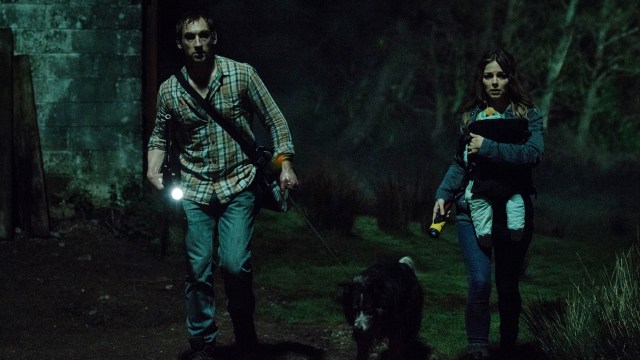
Folkloric horror is perhaps the most fascinating and rich sub-category of film’s best-trodden and most mutable genre. Every culture on Earth has their own legends, fables, superstitions and things that go bump in the night ingrained, and film has mined that for decades as inspiration for everything from THE WICKER MAN to JU-ON and KRAMPUS. Ireland boasts perhaps my favourite examples of cultural folklore that I’ve previously mostly encountered through animation, and through HELLBOY, and it is this that writer-director Corin Hardy expertly and ingeniously appropriates for THE HALLOW, a horror with a distinctive atmosphere and effective scares.

Following a move to the Irish countryside for work and a new life, a couple (Joseph Mawle and Bojana Novakovic) soon find themselves beset on all sides by The Hallow – the forest’s original denizens will not stop until the invaders are no more. Adam and Claire must fight for their lives and the life of their young baby, who these not-so-nice fairy folk seem to have taken a liking to, all the while one parent is not quite acting themselves…

You can tell that Hardy has a background in set design. Everything you see from makeup to animatronics and set dressing is as real as possible, designed specifically to stand up to close scrutiny. His production design team can be very proud of making such a small film look so much more expensive. The only times the cracks show is where the perfectly serviceable practical effects are enhanced with CGI, but these shots are thankfully few and far between.

The creatures who torment our heroes, the titular Hallow, are a chilling creation. Elemental, relentless and disturbingly trapped between what is recognisable in nature and something that looks and feels very wrong. As always, clever use of shadowy environments and performers in suits leave a much bigger impression than more showy special effects ever could. Joseph Mawle throws himself fully into his role as Adam, and his slow but sure corruption by the parasitic arm of the Hallow, is impressively realised with stages of makeup and a steadily more manic and unpredictable performance. It is this jeopardy, that we don’t know for around half the film’s runtime whether Adam is really Adam, that gives Bojana Novakovic’s tender, instinctual performance as Claire its heart and its real impact.

It’s the human emotion that carries this, as all good films. It’s an economical scary story, but the scares are more implied for the film’s first half. Much like CLOSE ENCOUNTERS OF THE THIRD KIND, we care about this family and want them to settle and to survive, and it is this concern more than any amount of disturbing imagery that frightens us the most. The disturbing imagery does come thick and fast too when the plot gets moving (there’s some baby…things that are just horrible), the effects stand up and there’s refreshingly few jump scares thrown at us. It’s a creeping, nagging dread we’re subject to more than short, sharp shocks.

Hardy has also brought a story complete with an important and timeless moral. The primary aim of the film may be to scare the bejesus out of us, but if we could also look after the environment and stop interfering with nature as well, then that would be grand. Irish folklore is all about balance and about responsibility to our planet. Anyone who lacks respect for nature better beware its protectors who have been part of it for far longer than you have.

What would horror movies do without characters using flash cameras to see their way through the dark? The Hallow does occasionally lean on cliché and some genre tropes – arrogant city couple ignoring local warnings; isolated location far from any help – have been seen countless times before. But with a bold message, rooting this story definitively in a tangible place rich in lore and the real, lived-in design of its visuals and sound makes The Hallow stand out from many of its creepy contemporaries. SSP

Posted in Film, Film Review | Tagged , , , , , , , , , , , | Leave a comment

Fargo Season 2: Tall Tale Made in Weirdness

fargo

Fargo (2015): MGM/FX

The following piece contains spoilers for Season 2 of FARGO.

The first season of the TV companion piece to the Coen Brothers’ classic movie had me completely and utterly hooked. I felt sure no-one could hope to measure up to the Two Headed Director’s finest feature. Then along came a stunning television anthology by Noah Hawley that built on the film’s themes and rented the character archetypes, but told an entirely new story set twenty years later. The second season pulls much the same trick as the first, relocating the action to thirty years before Season 1 and ten before the film, but rather than another morally murky noir, this time it’s a no holds barred gangster epic.

Season 2 of Fargo continues to move well, treading lightly and building slowly with rushes of extreme violence and even extremer acts of (barely) human monstrosity. The character work is smart and nuanced and the performances are universally excellent, particularly from Kirsten Dunst in a career-best turn. The show and the talented artists getting it out there take time with constructing beautiful visuals to compliment the action as well, with numerous still winter vistas and pristinely framed interiors throughout. With all this, plus a distinctive editing style and keen weaving of gender politics and representation of some very different ideas of what it means to be an American family at the back end of the 1970s, they were always on to a winner.

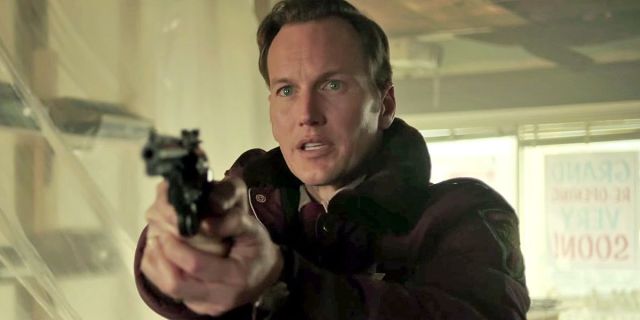
What really makes the second of Fargo though doesn’t become clear until the final two episodes. Officer Lou Solverson (Patrick Wilson) rushes to rescue his murder suspects (Dunst and Jesse Plemons) from a risky tri-state police operation to lure the Gerhardt crime family out into the open. Their plan works – the Gerhardts come armed to the teeth for Peggy and Ed thinking they are responsible for the death of two of their own (they’re half right) and proceed to massacre the lawmen protecting them. In the chaos, Lou comes close to being killed by man-mountain Bear Gerhardt (Angus Sampson) until something distracts both of them. Would you believe me if I said it was a flying saucer? If you don’t, then you should, because that’s exactly what it is hanging over their heads. What the Fargo, right?

The Coen Brothers famously claimed “This is a true story” before the main title of their movie, such is the fashion for biopics and true-crime dramas. Many of the film’s viewers even bought it for a while – their tale was so bizarre yet grounded and unromantic it could only be real. This belief was the whole premise of the flawed but interesting indie KUMIKO, THE TREASURE HUNTER after all. The thing is, not a word of it wasn’t made up. Fargo the series has adopted the same tag, and throughout year 2 the concept of what is real and what isn’t has been toyed with. We’ve had constant references to odd goings on, hints that something is out of the ordinary in episode after episode, always slightly out of reach or beyond our field of view. Martin Freeman narrates Episode 9 as an informative and authoritative look through real crime records, though he constantly reiterates that they will never have all the facts. With that in mind, that Fargo is admitting to being strange fiction masquerading as strange fact, why not sprinkle UFO references throughout your show and have a actual convenient flying saucer turn up to save one of the lead characters?

No film, not even documentary features can claim to be showing you the absolute truth, only a version of it. As a medium, film is made in the editing process so what we see is always second-hand and always heavily manipulated to the filmmaker’s whims. Now Fargo and its creative team have come out and admitted through long-form storytelling they are using the trappings of truth to tell increasingly extravagant lies, they are liberated, free to comment on the contradictions of true-crime tales on film and do whatever they like in the show’s future. Sometimes truth is stranger than fiction, and fiction masquerading as truth can be stranger and more enlightening than either. SSP

Posted in Film, Film Feature, Television | Tagged , , , , , , , , , , , , , | 2 Comments

Review: X-Men: Apocalypse (2016)

xmenapocalypse

X-Men: Apocalypse (2016): Fox/Bad Hat Harry

Well, as superhero movies go it’s certainly better than BATMAN V SUPERMAN. This time they try out a bit of self-aware humour when Xavier’s new students come out of seeing RETURN OF THE JEDI agreeing that “the third one is always the worst”. This was probably intended as a belated apology for LAST STAND but could equally apply just as well here – X-MEN: APOCALYPSE is the scrappiest and least successful of the mutant prequel trilogy.

When the first mutant Apocalypse (Oscar Isaac) awkakens after a long enforced hibernation and seeks to bring about the end of the world, only Professor Xavier (James McAvoy) and his burgeoning team of X-Men stand in his way. The X-ranks may have grown to include psychic Jean Grey (Sophie Turner), concussive blaster Cyclops (Tye Sheridan) and teleporter Nightcrawler (Kodi Smit-McPhee) but Apocalypse has indoctrinated four powerful followers to go up against the X-Men as well, most prominently a certain Master of Magnetism (Michael Fassbender).

As ensembles go, it’s another impressive but wonky one where not everyone gets their moment to shine. McAvoy is still the series MVP as a Professor X with more humour and more pain to his portrayal and Sheridan is a fine new addition as an uppity Cyclops with endearingly awkward chemistry with Turner. Jennifer Lawrence and Nicholas Hoult have clearly had words with their agents and ended up with less time in blue. In their place, Smit-McPhee is on full blue duty as a jollier, more mischievous take on Nightcrawler. Apocalypse’s multiple powers have near-unlimited scope and yet somehow he doesn’t feel all that threatening, interesting or comprehensible a character despite Isaac’s best efforts behind the makeup. Fassbender gets the thankless task of floating and staring dreamily into the middle distance for much of the film’s final act and the other horsemen do little more than stand around and scowl (Olivia Munn’s Psylocke might get a couple of lines and opportunity to swing her energy blade around but still essentially functions as window dressing straight from the comics).

We get another inventive Quicksilver (Evan Peters) high-speed action sequence that’s bigger, funnier but somehow less satisfying than the kitchen scene in DAYS OF FUTURE PAST (maybe they picked the wrong song?) plus a trippy psychic battle between Professor X and Apocalypse, but elsewhere the spectacle left me cold, even bored. There’s only so much time you can watch sand cyclone and buildings tear apart and reform in Egypt before you get horrible TRANSFORMERS 2 PTSD flashbacks. The fight scenes are incomprehensibly edited and pretty basic in terms of choreography and we don’t really get a sense of the X-Men working as a team until just before the cut to black at the end. At one point some of our heroes are taken to a key location from an earlier film that adds nothing to the story, only a pretty violent stop-off and fanservice.

A lot of the material is doom-laden, relying on us as an audience realising that Apocalypse destroying everything would be a bad thing (but still requiring exposition dumps from guys in suits) but mercifully there are some chucklesome gags as well. These come from Xavier’s cringe-worthy belated reunion with old flame Moira Mactaggert (Rose Byrne), Cyclops’ uncontrollable destructive power in the midst of an idyllic place of learning and a strategically placed F-bomb. Other moments I think we were meant to take seriously, chiefly Magneto’s attempt to settle down as a steelworker in the Polish countryside (really) are difficult to keep a straight face at.

As patchy as the X-Men series has been over the last 16 years, when I hear that John Ottman theme build and the titles shoot forth (usually along DNA strands, this time through time itself) I still can’t help but get chills. I love the X-Men and all they represent, but even I am getting a little weary at this stage. Yes it’s nice to see a proper X-Men team, looking as they should, by the end credits, but it’s been a long old slog to get to that moment. Bryan Singer could have probably done with half the cast, a good polish on Simon Kinberg’s screenplay and more coherency of character and plot as a whole and it might have resulted in something that’s more than sporadically entertaining. SSP

Posted in Film, Film Review | Tagged , , , , , , , , , , , , , , , , , , , , , , | 4 Comments

Review: Trainwreck (2015)

trainwreck-trailer-pic

Trainwreck (2015): Apatow Productions

Forgive me for stating the obvious, but Amy Schumer is a formidable comedian. It’s a real backward-looking shame the marketing team for TRAINWRECK felt they had to both promote it as a Judd Apatow project (he directs, but was not responsible for the concept or screenplay) and jumped straight to comparing it to BRIDESMAIDS (the perceived go-to funny women movie). This is unquestionably Schumer’s show. It’s not even “one for the girls” (and I almost wretch using that phrase) but should make anybody who doesn’t have a problem with dirty humour guffaw until their sides hurt at a relentless stream of gags just as filthy as anything Apatow or any of his frequent collaborators penned themselves.

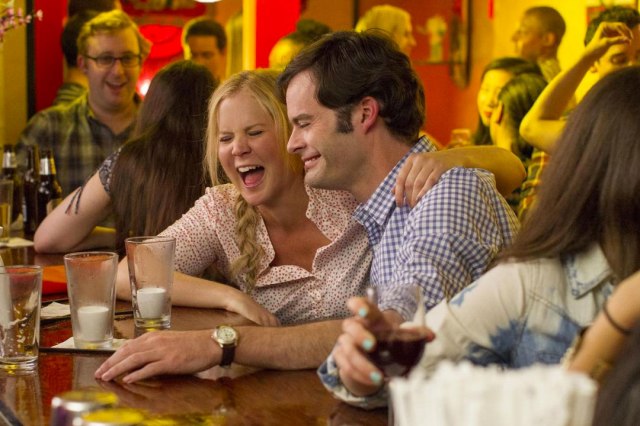
Lifestyle magazine columnist Amy (Amy Schumer) has a problem with men. She meets and beds plenty of fellas on wild nights out, but avoids commitment like the plague. She is content enough with her lifestyle choices, taking little responsibility for herself but happy to care for her ailing father (Colin Quinn) as her younger sister (Brie Larson) settles down to a cosy family life. But then a chance meeting with a sports doctor (Bill Hader) shifts her perspective on life irrevocably. 

Roughly half of the film presents itself as a sort of anti-rom-com, with Amy dodging out of the way of love with gusto. She didn’t have the best role model growing up in an unfaithful dad (seen in a really dark doll-based opening flashback) and therefore forms her strong and flawed attitude to relationships early. The film’s second half loses its straightforwardness and honesty and reverts to formula to an extent as Amy finally falls for a man as much as he falls for her. The film never loses the feelgood factor though and it has a killer final set piece.

What a glorious personality Amy is – she may be crass with a warped idea of healthy relationships, but she’s a good person at heart and an endearing character to spend time with. Schumer not only delivers the laughs in abundance (sometimes with a line or a pratfall, often with a look) but also shows her dramatic range, drawing on her real-life experiences in Amy’s far more emotionally raw moments later on. John Hader makes a good straight man to Amy as well as taking his character on not quite the expected route for the love interest. Strong support also comes from Brie Larson as Amy’s younger but maturer sister and a terrifyingly dolled-up Tilda Swinton as Amy’s vile boss. Before this movie I had no idea who John Cena was. He’s great in this though, and has since proven himself to have natural comic timing in addition to his willingness to poke fun at himself. Cena’s unintentionally homoerotic, rapidly escalating argument in a cinema is hands-down the funniest scene of 2015.

I don’t follow American sports or sports stars. I’m sure there are references and in-jokes I missed because of this (something Schumer, who I think is a massive sports fan in contrast to the character she plays doubtless intended). Even I know who Lebron James is though, and he turns out to be a really good comic actor too – who knew?

Through Apatow wasn’t the creative driving force, like most of the films he has directed Trainwreck does suffer from Overlong Comedy Syndrome. But because Apatow stepped back and Schumer is playing her A-game, the humour and heart stay with it throughout, despite it running out of steam towards the end. You don’t object to spending more time with Amy and the jokes never stop coming, but once she’s started to confront her problems in earnest further diversions become slightly annoying. This is a minor criticism and nothing that should put you off watching one of finest, filthiest and least vain comedies in years. Following Trainwreck Amy Schumer should have her pick of projects – she is not someone to be underestimated. SSP

Posted in Film, Film Review | Tagged , , , , , , , , , , , | 2 Comments