Review: Kung Fu Panda 3 (2016)

kungfupanda3

Kung Fu Panda 3 (2016): DreamWorks Animation/China Film Co

The road is littered with third movies that don’t live up to expectations. One of the only great lines in this summer’s X-MEN: APOCALYPSE acknowledged that “the third one is always the worst”. I think that KUNG FU PANDA 3 actually comes out slightly better than the previous instalment and is worth a watch even if it never recaptures the near-perfection of the original.

Po, the panda Dragon Warrior (Jack Black) continues his quest to accidental enlightenment. When vengeful villain Kai (JK Simmons) escapes from the spirit realm, only Po can hope to stop him, and reconnecting with his past, and his long lost father (Bryan Cranston) might just hold the key…

From a gorgeous and inventive opening featuring the surprise return of a previously departed character, Kung Fu Panda 3 proves to still have a special something in its imagery. This sense of wonder isn’t really maintained throughout, but there’s enough to keep you watching.

We get a few funny moments, like Mantis’ (Seth Rogen) exclamation of, “Ow! My claw…thingy!” and the revelation that Tigress (Angelina Jolie) “is flammable, apparently”. There are more than enough jokes in here to please young ‘uns, plus a few that will please their parents as well. The Kung Fu Panda films have always tried to straddle that divide, perhaps even more so than SHREK, and they largely succeed here.

“I like who I am” –  it’s a nice message, though it’s the same self-acceptance message that drove the plots and key character arcs in ANTZ, Shrek and the previous two Pandas. It is put slightly more poetically here as “I’m not trying to turn you into me, I’m trying to turn you into you”.

It’s a tale of two flawed fathers idealised by their wide-eyed son. Absent parents and especially estranged dads are so common in family animated fare that we could have probably gone without exploring that relationship again, but at least they change the dynamics a little with Po’s story. I love the conceit of an adoptive dad having to advise a bewildered biological pops who has come back into the picture, and this makes for James Hong’s best role in ages returning as an increasingly emotionally worn Mr Ping, Po’s goose dad. Bryan Cranston can do better as we’ve seen on multiple occasions, but he does just fine here and has good chemistry with Black.

I love the idea of the main villain throwing a tantrum because he’s been forgotten by the world. JK Simmons has a lot of fun here, and Kai is just a brute on the hunt for all the power just because, but his childish behaviour at least makes him a little more colourful than the villains who proceeded him.

There is no place for a panda with a learning disability being the butt of a joke. It’s 2016 for heaven’s sake – what kind of a message does that send to kids? They just about got away with fat jokes in this series, but there is no place for marketing a disability as something goofy and amusing. Everyone involved should know better.

You’d be justified in suggesting that the storytelling here is retroactive. It deploys retconning liberally to give us somewhere else to go, and it feels far from organic. Of course Pandas are powerful chi healers, but have forgotten this skill after generations of comfortable living. This is like learning that the hobbits secretly harbor power on the level of Gandalf’s, buried under all the second breakfasts.

Kung Fu Panda 3 is a perfectly satisfactory end to Po’s story. The characters have been on a journey, the mythology of this world has been steadily expanded and it was always beautiful to look at. Unfortunately, DreamWorks Animation have announced more chapters are on the way, because apparently they learned nothing from Shrek’s steady decline. Ah well, that’s Hollywood folks! SSP

Posted in Film, Film Review | Tagged , , , , , , , , , , , , , , , | Leave a comment

Review: Hell or High Water (2016)

hell-or-high-water

Brothers in arms: Film 44/OddLot Entertainment

Where this this one come from? HELL OR HIGH WATER arrived with plenty of established talent involved, but very little fanfare. It turns out to be one of the best releases this year, and among the most enlightening and relevant.

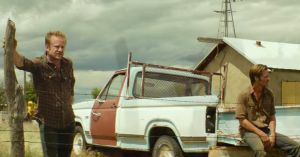
The Howard Brothers (Chris Pine and Ben Foster) are on crime spree spanning Texas. Only soon-to-be retired lawman Marcus Hamilton (Jeff Bridges) stands in their way. But are they really just in it for the money and the thrill of the chase? Tanner may be, but his younger, wiser brother has another agenda.

The film features career-best turns from an intense Chris Pine and a chunky and unhinged Ben Foster. They bring the brotherly banter along with a convincing portrayal of affection (reluctant or not) you can only have for a sibling. Tanner is the muscle; a blunt instrument prepared to do whatever it takes to come out on top, and Toby is the brains; more cautious and forever trying to keep his volatile older brother in check. They have some lovely moments together, whether celebrating a heist gone well or bickering over the narrowest of escapes and always with deep abiding love. Jeff Bridges does what he does best with added lower jaw acting as a cop pained to be approaching compulsory retirement. Marcus has the usual Bridges swagger, but it’s a pretty melancholy turn from the former Dude; he sells this old-timer putting a brave face on going through the most terrifying experience of his life: staring down the prospect of doing nothing for the final stretch of his existence.

Hell or High Water’s opening shot – a long take of a deserted parking lot then tracking a bank employee as she takes the long walk across and through the doors – is just stunning. I saw this film in an intimate little indie cinema and the whole (tiny) audience was enraptured from this very first, very confident, moment. It was a surprise when David Mackenzie followed up intimate and brutal prison drama STARRED UP with a Western (or Southern) but you can pick up his strutting confidence behind the camera from the sure hand with which he guides both full-blown shootouts and close-scrutiny character work.

Mackenzie created such an uncomfortable atmosphere in the confined corridors of a prison, but here he uses space to a more comic effect with Marcus knocking loose a lampshade by the simple act of taking off his hat in the pokiest of motel rooms and Tanner making a serious misjudgement by trying to rob a bank across the street midway through breakfast. In Hell or High Water the dread comes from open, exposed spaces. The desolate-beautiful Texan landscapes spell trouble for anyone making their way across them and every character who meets a nasty end meets it in the glare of the Texan sun.

The noirish, knowing script by Taylor Sheridan (straight off the equally excellent but much more sombre SICARIO) married with desolate Southern imagery results in what can only be described as cinematic poetry. The waitress’s barking of “What don’t ya want?” to her customers and a Texan would-be vigilante sneering  “You gotta find the tree” that he’s determined to hang the bank robbers from (Marcus chuckling response: “Gotta love West Texas!”).

This is an anti-financier treatise. The two great evils in modern America are arguably prejudice and greed, and both have taken a fully justified beating on film over the past couple of years, and the latter corrodes and destroys everyone it touches in this story. You want these brothers playing Robin Hood to get away with it – the banks deserve to be punished and played at their own game. Though it’s explained to us, the mechanics of Toby’s plan are a little hard to get a good fix on. You can see how his crime spree could benefit his estranged family, or hurt the money men, but not both. You still get the message though and Hell or High Water remains engrossing and character rich, packing an important message along with this thrilling ride through gorgeous scenery. SSP

Posted in Film, Film Review | Tagged , , , , , , , , , , | 2 Comments

Ash vs: or, why Living Dead has already left Walking Dead behind 

ash_vs_evil_dead_trailer_1

Ash vs Evil Dead (2015): Renaissance Pictures/Starz!

In 83 episodes over 6 seasons, THE WALKING DEAD has captivated audiences the world over with grim character work, creeping dread and excessive zombie killing. I am no longer one of those captivated – the pilot was great and there were some compelling moments spread across Season 3 and 4, but I threw in the towel and gave up halfway through Season 5 due to the sheer monotony and tedium of the enterprise. After only 10 episodes (hoping to continue with Season 2 shortly), here’s a few reasons I already think ASH VS EVIL DEAD has surpassed its less groovy cousin.

It’s short and sweet. 10 episodes at 30 minutes apiece (pilot aside), Ash doesn’t waste time and much like CLONE WARS and REBELS reclaimed STAR WARS’ serial origins, this series doesn’t try to take EVIL DEAD beyond very fun and colourful schlock. Compare it to Walking Dead which goes on and on and on, always aspiring to be a filmic prestige show but has long outstayed its welcome.

It’s scary. Evil Dead has always been scary. Early on Sam Raimi realised that his home-made makeup and gore wouldn’t frighten anyone on its own terms, so he made up for that with creative camerawork, unsettling sound design and a genuinely terrifying premise that marked his undead out. The makeup is better now, but we also see on multiple occasions in the films and in this series, the Deadites go back and forth between their possessed and normal states. When a loved one is gone, they’re only a moment away from tricking you into dropping your guard by seemingly returning to normal. They prey on emotion and humanity’s willingness to believe there’s a hope their loved ones can get better. Walking Dead offs characters for good and doesn’t even often allow them to come back as zombies.

It cracks a smile. Evil Dead has always been funny. As compelling as Walking Dead was to begin with, as good as the performances still are, you can’t always be stoney-faced, even in the face of the apocalypse. Our heroes may be facing death round every bend, but our idiot protagonist Ash (Bruce Campbell) is never going to leave his ego behind, and a bit of goons slapstick (against an version of Ash, a demon baby or a possessed old lady) or barrel-scraping chat up lines help break pace and add colour.

Violence this extreme is funny. The zombie kills in Walking Dead are brutal and extreme, but our heroes are so supernaturally gifted at defending vulnerable areas and getting timely headshots that any jeopardy is quickly diminished. Dismemberment, disembowelment, disintegration, even death by firehose is doled out with a complete straight face. Ash knows its a ridiculous show, its characters know what they are doing and what is happening around them is funny as well as scary, which really helps with the tonal dissidence.

Our idiot protagonist screws up, but his friends will save him. We’ve seen the Evil Dead movies, we know when the icky stuff is going to hit the fan. No matter how much of the same he’s been through, how many times he somehow scrapes through, Ash remains wonderfully unaware. He’s good at killing Deadites, but throw enough at him or just wait for his middle-aged body to let him down and he’s toast. This would result in a short series if Ash didn’t have anyone else to rely on, but luckily the writers gave him good egg Pablo (Ray Santiago) and streetsmart Kelly (Dana DeLorenzo) who know only to trust Ash so far.

Our idiot protagonist occasionally makes a sane decision. Despite being a complete moron, Ash has a survival instinct and is usually the first to point out when a situation doesn’t feel right. He may be an idiot, but he’s not an idiot. Chainsaw first, ask questions later seems to be his mantra (see the dinner table scene with Kelly’s definitely-deadite-mum), unless there’s a woman he thinks he’s got a chance with involved. Ever try the Walking Dead Stupid Character Decision drinking game?

It steadily expands on the mythos. Walking Dead had a revolving door of characters aside from the core leads, but every series amounted to the same thing: stay in a “secure” location for a while before things go south and the journey continues. It’s basically ANIMALS OF FARTHING WOOD with zombies. From a solid foundation, Ash builds on the world Raimi created, introducing new interested parties (a nice XENA reunion with Lucy Lawless’s scene-stealing killing machine Ruby), demons as well as deadites and leaves the world in a more interesting place than we found it by the end of Season 1. SSP


Posted in Film, Film Feature, Television | Tagged , , , , , , , , , , , , , , , , | Leave a comment

Halloween Series Retrospective: A Nightmare on Elm Street

Time once again to look back on a long-running franchise in its entirety. There’s a lot of NIGHTMARE ON ELM STREET movies. Not quite as many as its slasher fellows HALLOWEEN and FRIDAY THE 13TH, but Freddy sure did refuse to stay dead, even when they promised he would. Here’s some thoughts on them all, dire remake aside. Happy Halloween. All together now! “One, two, Freddy’s coming for you…”

nightmareonelmstreet_84_mpeak2

A Nightmare on Elm Street (1984): New Line Cinema

A NIGHTMARE ON ELM STREET (1984) The epitome of Wes Craven’s genius as a horror filmmaker. We still don’t know all that much about dreams; what they are, what they mean. They do hold a power over us and the introduction of demonic murderer Freddy Krueger (Robert Englund at his most twisted and terrifying) who makes you hope you’ll never sleep again makes the very most of this. Original imagery, creeping dread and some of the most memorable movie deaths of all time helps make this Craven’s opus and the film that built New Line.

freddysrevenge

Freddy’s Revenge (1985): New Line

A NIGHTMARE ON ELM STREET 2: FREDDY’S REVENGE (1985) A lot of people put this one down, even picking it as the worst of the series. I think that’s really unfair. True, it’s not in the same league as Craven’s iconic original, but what is? It adds some sharp elements the mythology, boosts Freddy’s power set, and more importantly, is still still tense and scary. Who cares if it’s a bit (OK more than a bit) trashy and exploitative? That’s the slasher genre!

anightmareonelmstreet3dreamwarriorsmovieposter_2

Dream Warriors (1987): New Line

A NIGHTMARE ON ELM STREET 3: DREAM WARRIORS (1987) Let’s be frank here: it’s just rubbish X-MEN isn’t it? There is so much potential in the concept of a team of kids fighting back against Freddy in their dreams, but that promise is largely squandered here. The budget isn’t good enough to execute the concept of the dreamers using powers (as originally scripted) with enough pizazz and a film, a superhero-asylum-horror, it really should be scarier and more thrilling.

dreammaster

The Dream Master (1988): New Line

A NIGHTMARE ON ELM STREET 4: THE DREAM MASTER (1988) Dull, dull, dull. We’re given a wet and uninteresting new protagonist in Alice (Lisa Wilcox) and the film has no style to speak of and very few scares. At this point the wider plot of the series was clearly just being made up as they went on and the mythology becomes stodgy and incomprehensible. About the only thing to recommend in Dream Master is a single image of how Freddy is killed this time round. Apparently he eats souls now, so they are induced to revolt against their host in an effect that hasn’t aged well, but is still striking.

dreamchild

The Dream Child (1989): New Line

A NIGHTMARE ON ELM STREET 5: THE DREAM CHILD (1989) A good dollop of the Gothic, a pretty clever premise, the trippiest of the series’ imagery and a killer pulp comic set piece makes this one memorable. It’s also very obviously rushed, cheap-looking (with decent enough cinematography) and terribly acted, even by the standard of adults pretending to be teens. I still don’t know why the nun needed to be released from her mortal shell and how she beats Freddy. If I’m honest I’d forgotten we’d seen her before in an earlier film.

1991_poster

Freddy’s Dead (1991): New Line

FREDDY’S DEAD: THE FINAL NIGHTMARE (1991) Opening on a Nietzsche quote followed by a Freddy Krueger quote: good gag. If this was made now, and/or more time had passed between instalments, this could be considered an early example of Hollywood’s favourite way to revitalise a named property: the soft reboot. By this point there’s nothing scary about Freddy; he’s just a gurning goon messing with a new generation of dumb kids who don’t know the rules yet. It only gets worse when the 3-D gimmick comes in (it’s always been gimmicky, always will be) and they try to rationalise Freddy, one of the all-time great evil-just-because villains.

wescravensnewnightmaremovieposter

New Nightmare (1994): New Line

NEW NIGHTMARE (1994) New Nightmare is a whole other thing. The return of Wes Craven to a franchise he grew to despise (when he wasn’t doing it) and the start of the horror maestro’s meta phase, for me this is the best Nightmare since the first. Heather Langenkamp, still remembered for playing Nancy in the original Nightmare, is having terrible dreams and comes to realise Freddy is breaking into the real world and haunting her and her son. It’s pretty self-aggrandising stuff, suggesting that Craven was keeping a real evil in check by making movies, but it’s clever and scary and the effects and nasty imagery mostly hold up today. SSP

Posted in Film, Film Feature | Tagged , , , , , , , , , , , , , , , , , | Leave a comment

Review: Doctor Strange (2016)

doctorstrange

Talk to the beard: Marvel/Disney

The problem with Marvel is that a lot of their characters have the same origin story. “Arrogant prig becomes selfless hero” is almost as commonplace as DC’s “Death of family gives hero guilt-driven purpose”. Stephen Strange’s story may not be all that far removed from that of Tony Stark, or even Thor, and his film’s first act might feel very BATMAN BEGINS, but DOCTOR STRANGE offers so much more in terms of imagery and concepts that you don’t really mind.

Brilliant but arrogant neurosurgeon Stephen Strange (Benedict Cumberbatch) is brought crashing down to earth when a car crash leaves him barely able to use his hands. In a desperate search for a solution, he travels to Tibet and comes under the tutelage of the Ancient One (Tilda Swinton) who leads an order of sorcerers who protect time, space and reality itself from inter-dimensional threats. Will Doctor Strange answer the call to become something more in time to stop renegade sorcerer Kaecilius (Mads Mikkelsen) from performing a dangerous ritual?

From the first scene of the film (an eye-popping magical heist and chase) director Scott Derrickson is making a bold aesthetic statement. Christopher Nolan (who may have been influenced himself by Steve Ditko’s imagery from the original Doctor Strange comics) ain’t got nothing on this. From entire cities flipping and folding, shards of reality punching through our field of vision, a fistfight inside a reversing timeline and some good old-fashioned psychedelic mind-melting, rarely does much time pass without seeing something you’ve never quite seen like this before. As far as I’m concerned, the hallmarks of distinctive modern special effects to create the otherworldly are DARK CITY/THE MATRIX, INCEPTION and now Doctor Strange.

Cumberbatch was born for this role, making surgeon Strange a strutting Sherlock and the magic user he becomes endearingly inept at first, but never above using his previous arrogance and competitive streak to try and get ahead in his new and unlikely profession. Chiwetel Ejiofor hints at a lot more going on below the surface of his calm, collected but pained Mordo, Mikkelsen brings deadpan humour to Kaecilius’s interactions with Strange and Rachel McAdams’ Dr Palmer refreshingly reacts to strange goings on like a real person would, and doesn’t instantly forget her ex was a terrible person when he rocks up in a snazzy new uniform. Swinton is convincing as an ageless bastion of knowledge, but could have made her weirder. Swinton could always make things weirder if she wanted to.

It helps that Marvel commit to adding flashes of fun everywhere, from a great recurring gag which has Strange compare formidable arcane librarian Wong (Benedict Wong) to other famous mononymous celebrities. Even the most intense action scenes aren’t lacking in a few gags, especially when Strange is still a novice and tends to win more by fluke (or very protective sentient cloak) than his skill.

I would say that the visual onslaught is at times a bit much. I hate to compare this, likely the best big-budget extravaganza of the year with WARCRAFT, which…wasn’t, but once again human beings can only take in so much information via our eyeballs. The opening set piece works, as does the concluding sequence for its sheer ballsinesss, but there is so much going on in the scene that ends the film’s second act where Strange and Mordo chase Kaecilius through the highly malleable “Mirror Dimension” that I was struggling to process everything I was seeing in time.

Doctor Strange may not be the most thematically demanding movie out there, but it’s got imagination in abundance and personality to spare, plus every now and then it’s nice to have a film that is pure, unadulterated escapism. The way the Marvel Universe(s) are left at the end of all this certainly offers up some interesting narrative and character possibilities in the future. The only major issue I can foresee in Strange joining the wider action is that his powers are in essence limitless, giving him license to do anything. There are other characters out there where the same could apply, which could result in quite the battle if they find themselves in direct conflict. I can highly recommend this, my favourite blockbuster this year. SSP

Posted in Film, Film Review | Tagged , , , , , , , , , , , , , , , , , , , , , | 4 Comments

Review: Under the Shadow (2016)

under-the-shadow-1

Under the Shadow (2016): Wigwam Films

Horror works so well when tied to real and traumatic historical events. Guillermo del Toro is a master of this and you only need to watch the opening moments of THE DEVIL’S BACKBONE or PAN’S LABYRINTH for proof. UNDER THE SHADOW is low-key and effective Iranian take on the same, putting a supernatural twist on a very real tale of a mother and daughter in jeopardy.

As the Iran-Iraq war reaches its most destructive phase, Shideh (Narges Rashidi) is left alone with her young daughter Dorsa (Avin Manshadi) in a house crumbling from bomb blasts to the roof. First her husband (Bobby Naderi) is called away to treat injured soldiers and civilians, then her neighbours steadily start to flee from Tehran to smaller towns away from the fighting. Soon enough their apartment block is inhabited solely by Shideh, Dorsa, and something else that has just taken Dorsa’s doll…

It’s a film of little moments. A projectile exploding outside the window as Shideh loses her place at the university. Shideh ripping off her hijab as she breaks down in front of the babysitter. Her trying to keep it together for the sake of her family as she locks away her treasured medicine textbooks and reevaluates her life while her husband swans in from work and her daughter plays in the background.

Shideh is a thoroughly compelling character as portrayed by Rashidi. Branded as a clumsy and immodest woman who has the temerity to drive by her neighbours, and referred to as “shrapnel” by her in-laws, her independence as a student of medicine has all-but been quashed. She’s used to being on her own looking after her daughter though, so when her husband is sent away to fight not a lot will change. She has always been the one with strongly-held convictions. Political upheaval and the horrors of the Iran-Iraq war have been depicted on film before, in striking graphic style in PERSEPOLIS for instance, but rarely have we been in the thick of it to such an extent, so focussed on the impact the chaos and climate of fear has on a small family unit. Shideh and Dorsa have a great dynamic, utterly believable in their equal parts frustration with, and affection for, each other as mother and daughter. Shideh wants to be rational, to be strong, to believe that Dorsa’s stories and ailing health can be explained, but increasingly she must accept the strange goings on and hope that it’s not all in her head (as Dorsa chillingly points out, “you saw her too!”).

The film preys on very primal fears. The war outside may be deadly, your mother may be caring and competent, but when the lights go out and something seems to be moving around that shouldn’t be, you want your father to be around as well to feel safe. The plot is actively manufactured to make you uncomfortable, ready for the next scare as mother and daughter try to stay together and the djinn try and keep them apart. Creepy little details are dropped in too, things that don’t add up but make you feel uneasy.

The djinn are an unsettling creation; part poltergeist, part old-fashioned spectre taken to wearing (culturally appropriate) head-to-toe fabric. They go bump in the night, they appear to talk to little girls and through her friends, and though they seem to be able to fly outside windows and disappear at will, they also have a solid presence and an ability to affect the physical world around them and this, as well as their vaguely human disguises they adopt in the film is drawn from the manner of their appearances in the Quran.

As unsettling as the big shocks are when they come, writer-director Babak Anvari smartly leaves the viewer more scared for Shideh and Dorsa once they have escaped their supernatural tormentors. I almost wish we saw more of the djinn or that the the film allowed even more time to gather tension, but this isn’t just a ghost story. Once the paranormal threat is resolved, mother and daughter still have to find safety elsewhere as the war continues to erupt around them. Warfare and fear for your family always remains the real horror element here. Under the Shadow is a sharp and chilling treat, and well worth tracking down. SSP

Posted in Film, Film Review | Tagged , , , , , , , , , , | 1 Comment

Review: Batman: Return of the Caped Crusaders (2016)

batman

Batman: Return of the Caped Crusaders (2016): Warner Bros Animation/DC Entertainment

This may well be the cleverest and most subversive film Warner Bros Animation have ever made, and it’s an animated followup to 1960s BATMAN TV show. I’m an Adam West fan and an appreciator of “camp” as an aesthetic for entertainment, but even so I never thought I’d enjoy RETURN OF THE CAPED CRUSADERS quite as much as I did.

For anyone who’s been living in a cave for the last 70 years, billionaire Bruce Wayne (Adam West) and his young ward Dick (Burt Ward) lead double lives as masked crime fighters Batman and Robin. Once again our heroes set out to foil their most devious enemies. But Gotham City’s problems are only just beginning once Joker, Penguin, Riddler and Catwoman are subdued…

The first half of the film is a faithful recreation of the 60s TV show; campy, sporadically funny and often awkward. Ridiculous gadgets abound and flying leaps of logic still dumbfound everyone but our heroes. Batman boasts that the Bat-analyser has the information from “two encyclopaedias”, Robin responds to the Riddler’s pothole gun by exclaiming “Holy crumbling infrastructure, Batman!” and the Dynamic Duo have a narrow escape from a giant oven that is helpfully labelled “Giant Oven”. Then things really take a turn with a really rather ingenious plot conceit.

Holy spoilers, Batman! Just after confronting the supervillains in space (yep) Batman decides to take his brand of justice beyond “Pow!” and pulls out a Bat-knuckle-duster (“Fracture!”). Our previously noble hero then clones himself using a convenient bit of technology and takes over every position of power in Gotham to make it a better place. He starts by appointing Commissioner Batman and Chief Batman (for the latter he just puts on a hat over his ears and deadpans “begorrah”) and goes on from there.

Chastised as the soft and safe Batman, Adam West finally gets to play the Dark Knight, and has a load of fun doing it. This was a brave gamble, but by golly does it pay off. 60s Batman was a hero for wide-eyed school children; a non-threatening. incorruptible, moral idol. Making him temporarily flawed and (almost) allowing him to act out his darkest desires and leaving Robin to clear up his mess (Burt Ward is unusually good here as well) really shakes up the status quo, suggesting that for once everything might not be OK.

Such is the faithfulness of the transition of the tone and look of this world from live action to animation (disappointingly minus the Joker’s moustache), it’s perhaps appropriate that not every scene works and some jokes fall hard. There are pretty long stretches at the start which can seem uncomfortable for the sake of it, and it makes you wonder whether an 80 minute feature is too long to keep this material limping on (I thought the same about BATMAN: THE MOVIE). Luckily, the aforementioned brilliant second half more than makes up for the tumbleweed (intentional or not) of the film’s beginning.

The animation is more beautiful than it has to be, laughs come thick and fast and I still get chills when I hear that iconic theme tune rearranged and amped up. 2016 hasn’t been a good year for Batman on film, but Return of the Caped Crusaders has made the hard slog worth it. Whereas BATMAN V SUPERMAN was monotonously grim and unintentionally funny and THE KILLING JOKE was uncomfortable and miscalculated in the extreme, revisiting the colourful 60s iteration of Gotham’s protector has been a roaring success. Affectionate towards its origins but not beyond moving characters on and providing challenging character arcs, this is not only gleefully silly and fun, but braver and more mischievous than most of 2016’s output. Bring on the next one, I hear the Dynamic Duo are going up against William Shatner playing a Batman villain considered too gruesome for the TV show… SSP

Posted in Film, Film Review | Tagged , , , , , , , , , , , , | 2 Comments

Review: Kubo and the Two Strings (2016)

kubo-and-monkey

Kubo and the Two Strings (2016): Laika Entertainment

It becomes clear very quickly that KUBO AND THE TWO STRINGS is a thematic title rather than a literal one, pretty much from the very first time you see the said instrument. The writers and animators at Laika know how closely you can pack your themes into their most expressive of mediums, and they run wild with the symbolism in their latest effort.

Kubo (Art Parkinson) has a gift for storytelling. Every day he travels to his nearest town to tell tales of legendary samurai in battle with the evil Moon King and his minions. Every day he returns home at sunset to care for his mother, who received a life-changing injury protecting him as a baby. Kubo yearns to find his place in the world, and his path on an epic quest of self-discovery, accompanied by protectors Monkey (Charlize Theron) and Beetle (Matthew McConaughey, begins one night where he lingers after dark…

Laika are at the top of their game, obvious from the film’s astounding stormy opening scene. The more human characters especially stand out with their range of naturalistic facial expressions and the way they react to the elements like rain and wind (I have absolutely no idea how you make hair and fur made of clay move so fluidly and believably). I love how the animators are never tempted to make their characters cute, but they’re appealing in their own way in their ugliness. In addition to stop-motion people, animals and fantastical creatures (including the largest and most complex puppet ever created for this medium) and living paper origami characters populate this vibrant world.

It is fitting in a tale where music holds such power that this film’s soundtrack is absolutely stunning. Kubo’s stories and his wider adventure is lifted to the stratosphere by Dario Marianelli’s rich score that draws on Japanese folk music. The heart flutters the first time Kubo orates and his origami puppets take to the air and spin and flip to his words, the soundtrack swelling in unison.

The voice cast imbue these characters with such tenderness and varying shades. Parkinson and Theron are the standouts, which was essential for this story to work as Kubo and Monkey’s relationship becomes the beating heart of the film.

The film’s tender and intriguing first act focussing on Kubo, his mother, and later, Monkey, is simply wonderful. Kubo’s daily cycle of caring for his only sporadically coherent mother, traveling to perform his stories, returning before nightfall  with his tale’s conclusion always left hanging, is powerful in its simplicity. There isn’t another animation house out there that would be bold and brave enough to tackle the tricky subject of a child caring for his parent so sensitively and unsentimentally. As nice as the increasingly complex visuals and action are, they threaten to eclipse what matters in this story and the film never surpasses this intimate first stretch.

Kubo doesn’t pack anywhere near as many surprises as PARANORMAN or THE BOXTROLLS either. If you’re paying attention to the clues, when the twists come they might feel a bit anticlimactic. While plot turns don’t shake you as much as Laika’s other work, it is their scariest film since CORALINE, with twisted adult themes and liberal borrowing from (suprisingly for a family film) J-Horror imagery.

Even saying that Kubo and the Two Strings isn’t quite up there with the other films Laika have put out there still makes this by far and away better than the vast majority of animated features out there. The stop-motion studio that specialises in big emotion and twisted thrills keeps going from strength-to-strength and have produced something that may be lacking surprises, but is still visually stunning and rather poignant, not to mention a little bit scary for adults and children alike. SSP

Posted in Film, Film Review | Tagged , , , , , , , , , , , , , | 2 Comments

Review: Deepwater Horizon (2016)

deepwater-horizon-movie

Deepwater Horizon (2016): Summit Entertainment/Participant Media/Di Bonaventura Pictures

I can’t say I was expecting to like DEEPWATER HORIZON. Turning real-world disasters, especially ones where we’re still feeling the impact today, into spectacle can go either way. It couldn’t be too maudlin or grandstanding, it couldn’t be propaganda. What director Peter Berg and writers Matthew Michael Carnahan and Matthew Sand have produced is honest and grounded, always focussed on the men and the destruction of their lives rather than the destruction of an oil rig and the surrounding environs due to Big Oil’s negligence.

What should have been another day on the oil rig for Mike Williams (Mark Wahlberg) and his colleagues soon turned to disaster on one fateful day in 2010. This is the story of what they went through, what went wrong and how the impact of this disaster is still reverberating today.

For all his critics, when he is given the right material Mark Wahlberg can be great. Just look at BOOGIE NIGHTS and THE FIGHTER. Here he’s a charming, quick-thinking, working-class hero. He has a believable and poignant relationship with his family (Kate Hudson and Stella Allen, both excellent). He firmly roots this real-life disaster story to Earth and, yes, he does get to real off a list of things really quickly, because if you’ve got a party trick you might as well show it off. Kurt Russell is having a great few years as a sturdy fixed point for plot to revolve around and rocks yet another fine moustache. John Malkovich doesn’t turn in a bad performance, but his BP villain is not especially layered and it’s really bizarre hearing a Cajun accent coming out of his mouth.

Stylistically, Peter Berg’s direction is better during the story’s setup. Here it’s a very classical, good-looking picture full of elegant sweeping crane shots and sturdily framed interiors. Where will the eventual threat come from? Are these lingering shots on show-and-tell projects going wrong and air rushing up from the silty depths a clue? It’s not subtle, but it works. When things on the rig really go south, while the action is raw and visceral, it can be a bit hard to keep track of everything happening on screen when we are seeing rapid cuts of explosion after explosion through shaky-cam. Two of these would be enough, all three are a bit much. You also never need to see a mournfully billowing American flag in a serious drama. That moment, brief as it was, brought me completely out of the action and the well-intentioned storytelling.

The disaster, which proceeds to get worse and worse even when you think it must have reached its peak, would mean nothing without dedicating real time to establishing these characters. They’re all real people doing their jobs, living and laughing, making ends meet and looking forward to the next time they’re allowed home until it becomes a very primal battle for survival. The film’s first half, which introduces us to the key players in the crew at home, then arriving at the oil rig and into passive-aggressive, then aggressive-aggressive conflict with the BP bigwigs, is its real strength, the meat of the movie, impressive and hard-hitting as the disaster-thriller final act is.

Deepwater Horizon is one of the nicest surprises of 2016. Really good performances, old-fashioned filmmaking class and never forgetting the human element in this disaster makes you easily forgive the odd stumble where it goes too “Hollywood”. I saw this at a near-enough-deserted IMAX screening, which was sad, but at the same time justified after seeing what I saw, as big as possible. I urge you to check it out and keep the story of what these brave working men went through alive and in the public eye. SSP

Posted in Film, Film Review | Tagged , , , , , , , , , , , , , , , , | 1 Comment

Top 4: Cinematic Experiences

One of the most common questions fired at a film buff is “what’s your favourite movie?” For most worshipers at the alter of digital and celluloid projection, it’s a near-impossible question to answer. Far easier to contemplate is top cinematic experiences, the films that have made the biggest impact and lingered on the memory after seeing them on the big (often biggest) screen. Here’s some of mine.

the_dark_knight_poster

The Dark Knight (2008): Warner Bros

THE DARK KNIGHT (2008): IMAX, National Media Museum, Bradford, 2008 I was never sold on 3D – it’s a gimmick, it throws up a barrier between audiences and the screen world and it more often than not negatively impacts the viewing experience. IMAX, on the other hand, is an immersive medium. Christopher Nolan is perhaps the proudest major proponent of using IMAX to enhance his storytelling working today, and it all started with Batman. Embellishing his already excellent crime-epic-with-Batman-in-it were majestic and eye-popping city exteriors plus the film’s showiest action draped across the entire 3-storey screen. Most dazzling of all was the film’s opening heist, and my heart really was in my mouth when the Joker’s gang abseil across a sheer drop between skyscrapers.

gravity

Gravity (2013): Warner Bros

GRAVITY (2013): 3D, National Media Museum, Bradford, 2013 While most still see AVATAR as the height of 3D filmmaking, Alfonso Cuarón’s disaster/survival/existential drama in space had a far greater impact on me. Like I’ve said, I don’t really get the appeal of 3D, but films made with the technology from start to finish has a certain draw. For someone who can feel a little ill on a clear night looking up at the vast, yawning chasm of space, seeing something going very wrong up there gave me genuine palpitations. Avatar brought us to a new world but GRAVITY presented us with an extension of our own, a tangible and real person in mortal peril in the most hostile and desolate location imaginable. People talk about CLOVERFIELD causing motion sickness, but Gravity made my stomach drop straight out (in a good way).

back2

Back to the Future Part II (1989): Universal

BACK TO THE FUTURE PART II (1989): National Media Museum, Bradford, 2015 The perfect storm so rarely comes around. Watching Marty McFly arrive in the future 2015 on on the very same date of the time jump in the film was a once in a lifetime opportunity I could never pass up. It was an privileged-feeling little screening full of Marty and Doc super-fans having fun (I don’t even think me and the friend I went with were the biggest) and it had a really lovely atmosphere. For as long as I can remember, BACK TO THE FUTURE PART II has been, and still remains, my all-time favourite time travel movie. Because I’m a 90s kid I’d never seen a Back to the Future outside of my own home, and the cleverness of the plot and wit of its presentation only shines brighter on a large screen.

right_stuff_ver1

The Right Stuff (1983): Warner Bros

THE RIGHT STUFF (1983): 70mm, Prince Charles Cinema, Leicester Square London, 2016 Though I consider myself a cinephile, before this year I don’t think I really appreciated the benefits and drawbacks of various different film stocks and aspect ratios. I notice a difference between the formats, but they don’t tend to make the biggest impact on me. I haven’t picked a side on the film vs digital debate. That said, seeing THE RIGHT STUFF in 70mm at the unique little venue that is The Prince Charles Cinema has begun to open my eyes. The Right Stuff is among the greatest film in history in terms of effective sound use in storytelling, and the blast of high-powered engines and ominously creaking metal only has more impact as it envelops an auditorium. By seeing it on film, with all its flaws from years of use, the story seemed to have more weight. I hadn’t seen it for years, and I’d forgotten that this Space Race drama is funnier than a lot of comedies (standout line: “Our Germans are better than their Germans”) as well as being a must-see on the biggest screen possible. SSP

Posted in Film, Film Feature | Tagged , , , , , , , , , , , , , , | 1 Comment