Review: The Crown – Season 1 (2016)

the-crown

Not-so-happy and glorious: Netflix/Left Bank Pictures

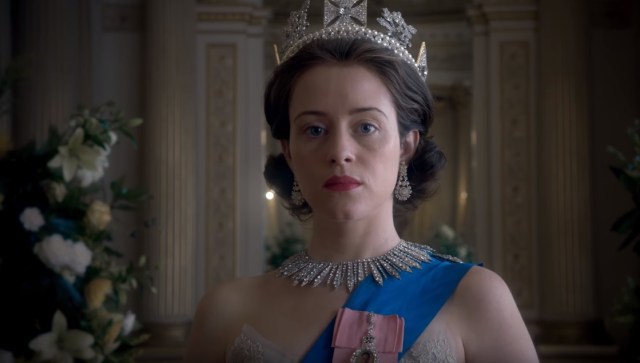
THE CROWN was by far and away my television highlight of 2016. Following the first decade of Queen Elizabeth II’s long reign, it boasts stately performances, sumptuous production design and an intimate examination of real people in a unique situation.

After the untimely death of her father George VI (Jared Harris), Princess Elizabeth (Claire Foy) ascends the throne of the United Kingdom and the Commonwealth. Born to royalty but banking on a more private life with her husband Philip (Matt Smith), Queen Elizabeth endures family scandal, political upheaval and seismic shifts in society across the globe. This is only the beginning.

This is a series built on the central performances, chiefly the challenges and balance of power in the relationship between Foy’s hard-as-nails monarch and Smith’s sidelined and uncertain consort. John Lithgow manages to avoid parody as an increasingly frail Winston Churchill and both Vanessa Kirby and Victoria Hamilton come into their own as the season goes on as Princess Margaret and the Queen Mother respectively.

There are some great moments throughout the first season. After their all-too-brief period of real happiness is ended, Elizabeth and Philip get their GRADUATE moment towards the end of Episode 2 as they are driven away to their destiny. At this point there really is no turning back, no way to save their former lives. I would have probably liked this chapter to have closed on their terrified, determined faces, but the impact of this moment is still huge.

My favourite scene was the heartbreaking point when Elizabeth and her father George VI both realise and acknowledge without words that the royal mantle will be passing from him to her rather more imminently than planned. As a final gift to her he gives her the tradecraft to bypass political smoke and mirrors and they bond over the King’s red box of Cabinet papers. Witnessing a father’s way of saying what needs to be said without actually saying it is poignantly lasting.

Later we have a wonderfully playful and mannered sequence tracking Princess Margaret’s call to her sister through switchboard after switchboard to request dinner. A moment flipped on its head to end the same episode as Margaret desperately tries to reach her again as her happy life is destroyed.

These are real people first and foremost, royalty second. They may be privileged, may not have earned their positions but they dress, undress, talk, row, joke and show passion just like anyone else. Philip also makes a very un-royal, almost CARRY ON proposition to his wife and monarch at one point which you’d never see if this was a BBC production.

Peter Morgan keeps things moving in interesting ways throughout, and though you may know a lot of this story, things rarely play out quite how you expect. “Act of God” is an atmospheric slow-burning mini horror movie set during the Big Smoke, with figures lurching out of walls of fog and danger in the shadows of every alley concealed a few feet further than perception. “Scientia Potentia Est” has Elizabeth doing her best EDUCATING RITA as she aims to overcome ignorance of all non-constitutional matters of the world with the hep of an unconventional tutor.

It’s a great looking show, with the considerable budget in evidence in every scene, meticulous attention to detail and eye-catching moments aplenty (Churchill’s arrival at Number 10, filmed from above has his scuttling insecty shape escape into his imposing sanctuary; the sparing but glorious coronation scene).

Time marches on, and even a 60 year reign seems like a passing glance when there is so much to do and so much your are not allowed to do. Most scenes prominently feature incessantly loud time pieces dominating every pause in conversation – a witty device to employ.

The quote of the series, all about what monarchy has to represent to serve a purpose, has to come from abdicated Edward VIII’s (Alex Jennings): “Who wants transparency when you can have magic?”. For me The Crown brought that across, it made me understand that surviving royal families still serve a purpose and still allure. For any staunch republicans out there, it’s an extremely well-performed and detailed character study that can only go deeper as this story continues. SSP
Posted in Film, Film Review, Television | Tagged , , , , , , , , , , , , , | 1 Comment

Review in Brief: Our Kind of Traitor (2016)

OUR KIND OF TRAITOR has a series of stunningly pretty images to open with: sparkling snowscapes, dappled sunlight, a slow-motion ballet performance. Even the death that follows this montage is beautifully composed, as horrible as the act remains. The visual splendour continues throughout with pristine reflections of characters examining themselves and noirish contrast of light and shadow. Perry (Ewan McGregor) goes along to the kind of party that has hard drugs and a model riding around the house on a horse and things go very badly very fast for him after this. Characters are sometimes bafflingly stupid, like when our heroes recap the spying they’ve been doing the moment they’re left alone in a limo, even though it’s been made quite clear everything is bugged. It’s not a battle of the best spies around but between slightly past-it intelligence service and international organised crime, the slight update to le Carré’s story allowing for some punchy commentary: “We Russians have had a mixed reputation in Europe recently”. Tell us about it.

Posted in Film, Film Review | Tagged , , , , | Leave a comment

Review: T2 Trainspotting (2017)

t2

Seems familiar: Cloud Eight Films/DNA Films

T2 TRAINSPOTTING was never going to match its predecessor. Lightning, we are told, doesn’t strike twice. TRAINSPOTTING captured the zeitgeist and summed up so succinctly and stylishly the people and culture of Britain in the 1990s. We fell instantly in love with some deeply flawed characters and we wanted to see them get out OK. You’d never be able to quite replicate all that in the same way. That said, I really liked Danny Boyle’s long-awaited return to this world and will say it takes the older and no wiser characters to some interesting places.

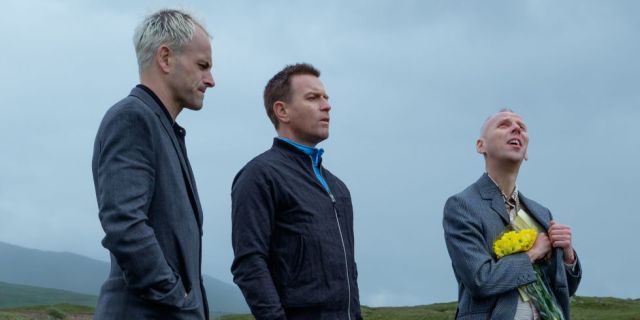
Twenty years after Renton (Ewan McGregor) ran away with all the money from a large drug deal and left his friends empty-handed, he is drawn back to his native Edinburgh. The city has changed almost beyond recognition, but addled Spud (Ewen Bremner), skuzzy “entrepreneur” Sick Boy (Johnny Lee Miller) and the psychotic Begbie (Robert Carlyle) have not. Renton’s return causes old friends to reminisce, new schemes to be hatched and revenge to be plotted.

“So you came back for nostalgia?” Sick Boy asks Renton. Boyle, writer John Hodge and their film pointing out that this is a shameless look back at a great story doesn’t exactly elevate the material, but it’s a clear statement of intent.

Ewen Bremner is still the secret weapon here. They keep up with tradition and give Spud the film’s chief comic gross-out moment, but Bremner also has fun with Spud’s hitherto undiscovered (and amusingly miraculous) talents and guides him on his own moving story of self-discovery. By the end he’s become a sort-of Irvine Welsh surrogate, which I’m sure the author would be very happy with. Renton gets a tweaked and biting “Choose Life” speech to belt out and Begbie gets unexpected moments of humanity in addition to his usual pitbull behaviour, John Hodge restoring a key character moment from Welsh’s first novel that was absent from Boyle’s original film. It’s pleasing to see Robert Carlyle take his thug in a slightly different direction. Yes, he flies off the handle – attacking his parole officer over a table and chasing a terrified Renton through Edinburgh at night – but elsewhere Carlyle plays it much lower-key, and is far more menacing as you really can’t tell if or when he will lose it. A scene with his teenage son (Scot Greenan) following a failed burglary is beautifully handled and difficult to predict the outcome of.

T2 of course features plenty of nods to the original with flashbacks, location callbacks, striking jump-cuts and familiar music cues, not to mention another killer soundtrack of its own. It’s a story of looking back, of not being able to move on and of the worst times in your life looking rosy compared to your current tribulations. So many things never change and others only get worse. Renton’s visit to his family home is rendered bittersweet by the absence of his mother, as he sits at the kitchen table with his old man (James Cosmo) with an empty chair opposite casting a sad shadow.

I always found the original Trainspotting really funny, in a black-as-pitch kind of way. T2 is funny in a broader sense, with slapstick brawls, deals going right then very wrong in quick succession, and in one scene a hurriedly improvised song advocating the extermination of Catholics to a blood-baying sectarian crowd. Some of the most enjoyable scenes just follow the boys hanging out, going off on tangents and coming up with the next hair-brained plan to escape life’s cruel cycle.

The plotting is admittedly fractured, some set-ups don’t pay off particularly satisfyingly and it only becomes something more than a trip down memory lane when all four central characters have come into contact (or conflict) again. It may be a retread, but that’s the point: that’s what a lot of life feels like. It’s great to spend some more time with these friends who feel like our friends and see what they’re up to and what they haven’t learned. Hodge avoids anything too sensationalist and anything too soapy, the cast slip back into their roles like a pair of favourite shoes (or a relapse) and Boyle gives the whole thing pumping energy and visual pizazz enough for a pretty decent hit. SSP

Posted in Film, Film Review | Tagged , , , , , , , , , , , | 2 Comments

Review: Whiskey Tango Foxtrot (2016)

wtf

War reporting going SNAFU: Broadway Video/Little Stranger

I wasn’t expecting to get as much out of WHISKEY TANGO FOXTROT as I did. I do like most of Tina Fey’s work, but war comedies can be a difficult balancing act, especially when handling such recent, raw events. Thankfully, the film is smart,  mostly sensitively handled take on the war in Afghanistan held together by a very strong lead performance from Fey.

Journalist Kim Baker (Tina Fey) is sent to Afghanistan at the height of US military involvement to bring coverage of the war back Stateside. She begins as a dangerous liability to the unit she is attached to but finds her confidence enough to do important work on the ground and keep the American public informed. But on the ground and in the middle of a war zone the situation changes quickly and Kim’s home life begins to interfere with her vital role as a war correspondent.

Robert Carlock’s dialogue is witty but not overly polished, the gags rarely run exactly as you expect them to. It’s a cruel but amusing setup for why certain journalists were sent to Afghanistan: “You are all the unmarried, childless personnel”. Basically, who can we afford to lose if things go wrong? There’s probably a certain amount of truth in that. American Soldiers aren’t presented as the invaders here, but their reason for being there is constantly called into question, like when Kim, in interview mode, asks a marine why he enlisted, he replies “I’m a big fan of the movie PREDATOR and I’m the same height as Arnold Schwarzenegger”. There are some nice one-liners too, when Kim produces an orange rucksack that she plans to bring on patrol, a sergeant screams, “Where you gonna hide this, inside a sunset?”

Tina Fey is recognised as a brilliant writer and talented comic performer, but I think she is underappreciated as a “serious actor”. Here, despite the film’s marketing as the usual raucous comedy, like PINEAPPLE EXPRESS with a location change (this isn’t) Fey is able to show her considerable range. The subject matter is challenging, the debate is intense, some of the imagery pretty horrific. There are moments of intense contemplation, the real cost of the war is never in doubt, and Fey completely sells that drive every good journalist has to tell the right story at all costs. Christopher Abbott as Kim’s guide Fahim brings a lot of heart and another perspective to the film and Martin Freeman has fun playing a jerky photojournalist even if his role becomes ever less necessary as the plot moves on.

Now what on Earth is Alfred Molina doing in this film playing a Muslim community leader? He’s dropped out of somewhere else, a far more unpleasant place of lazy parody and stereotypical shortcuts. It’s like a character from a 70s sitcom decided to try his hand in something more serious, and it’s completely innocuous. Margot Robbie is ridiculous as well, so ridiculous and unpleasant in fact that her vacuous character is probably a close approximation of somebody real. Her presence seems solely to justify a scene describing just what a girls’ night out in Kabul entails (a sequence which mostly manages to waste the skills of A GIRL WALKS HOME ALONE AT NIGHT’s Sheila Vand).

There have been funnier war comedies and more biting satires, but it’s the earnesty that comes through strongest in Whiskey Tango Foxtrot; real people in difficult situations trying to do what they think is the right thing. When it’s really pushing for a gag (the disastrous televised first woman in Afghanistan driving) it doesn’t work as well, but when it’s letting Fey do what she does best or questioning the point to the war without diminishing the sacrifices of real people, it comes close to shining. SSP

Posted in Film, Film Review | Tagged , , , , , , , , , , , , , , | Leave a comment

Review in Brief: Don’t Breathe (2016)

What a treat of a horror-thriller DON’T BREATHE is. Stephen Lang’s Blind Man fighting off teenage burglars isn’t just played as an unstoppable monster (though he becomes that towards the end) but also a scared and unhinged human being. Between this and the EVIL DEAD reimagining, Fede Alvarez is making a real name for himself as a maestro of scares (a key scene in this where the Blind Man turns the tables on the home invaders might be the most frightening this decade). Camera work has rarely been used so effectively to build dread and keep you guessing where the next threat will come from, and the film would make a great double-bill with HUSH – both films employing sensory impairment in striking ways to drive the plot and provide original set pieces. Is it silly and increasingly, unnecessarily nasty? Yes, but it’s also an adrenaline rush throughout and something pretty different to the usual jump-scares. SSP

Posted in Film, Film Review | Tagged , , , , , , | 1 Comment

Review: La La Land (2016)

lala-land

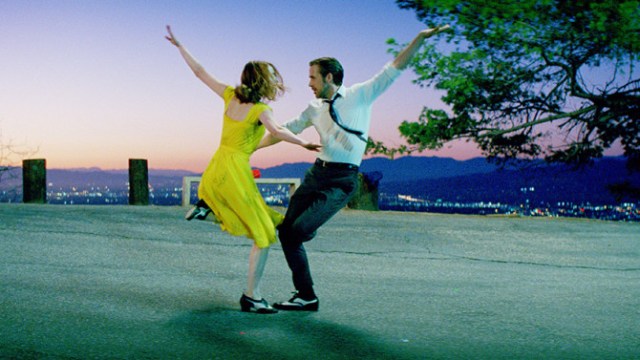
Magic hour maneuvers: Black Label Media/Gilbert Films

Every so often a film comes along that captures the public imagination and wows critics alike. Usually in the lead-up to the Oscars, critics and cinephiles have plenty to talk about but the public can be left cold. Between the music, the performances and the cute chemistry, LA LA LAND is a real crowd-pleaser and has a good chance to sweep at the Academy Awards (fourteen nominations – count ’em!). But does it deserve such acclaim?

Aspiring actress Mia (Emma Stone) and struggling jazz pianist Sebastian (Ryan Gosling) fall for each other after a chance encounter. How will they balance their blossoming relationship with professional struggles and successes in the vibrant but unforgiving city of Los Angeles?

Neither Stone or Gosling are born song and dance people, but they feel all the realer for it (or as real as you can be in a musical). I loved that you hear tap shoes scraping on tarmac as the couple begin to dance on their late-night journey home. It’s the little human flaws that make the movie, with Mia’s central solo song “Audition (The Fools Who Dream)” making the most of Stone’s imperfect voice in heart-wrenching fashion. Gosling’s jazz piano playing is impressive, but no more so than a raw little scene which marks a turning point in the pair’s lives and relationship as they argue over dinner.

The musical numbers are dynamic and vibrant, the tunes themselves hummable even if most of the lyrics don’t stay with you after one viewing. The colourful and ambitious opening freeway traffic jam spectacular “Another Day of Sun” stands out, as do some of the more intimate ditties (“City of Stars”) with long and languid takes capturing these set pieces, made all the more impressive by utilising real locations rather than vast fabricated studio sets.

As well as the characters and what drives them are fleshed out, you do find yourself wishing that Mia’s career ups and downs were tracked as closely as Sebastians’s. The tried-and-tested formula of telling a story by seasons is used up to a point, before we flash forward by years to complete the tale without warning. We go into the studio with Seb and cover the most vapid aspects of his industry as he sells out for some success, but much of Mia’s story is told offscreen, which I thought was a shame.

The film really captures the soul-crushing cycle aspiring actors find themselves stuck in. Of course Mia works as a barista to make ends meet, and the showbiz party she and her housemates attend with the hope of being spotted is all glitz with a sickening undercurrent of seediness – just what will they have to put up with for an opportunity? Just how many young actresses have to degrade themselves for their big break, how many are flat-out ignored because they don’t tick enough boxes?

What La La Land also captures is that faltering, tentative phase of new love. Mia and Seb test the water and have fun before committing to anything serious, particularly in their flirtatious SINGIN’ IN THE RAIN-riffing first encounter, and everything is almost ended prematurely with the simple phrase “I hate jazz”. A lot of fun is had in referencing Classic Hollywood, though this can sometimes be overkill. Mia’s coffee shop is on a studio lot (because of course it is) and said studio lot and everything that is going on within it looks like prestige filmmaking hasn’t looked in 50 years. Studio filmmaking comes across as cruel, vampish and impersonal, independent auteurs with vision as shining lights of opportunity for well-intentioned and talented would-be actors (WHIPLASH director Damien Chazelle here polishing his halo).

The film takes us on three different paths through the story, zipping backwards and forwards and commenting on what might have been. You can have your dreams and you can have true love, but you’d be hard-pressed to have both. You can see why La La Land been embraced near-universally, even if it hasn’t quite bewitched me with its spell. It’s feelgood and soulful and witty in discussion of Hollywood’s favourite subject: itself. SSP

Posted in Film, Film Review | Tagged , , , , , , | 4 Comments

Review: Silence (2016)

SILENCE

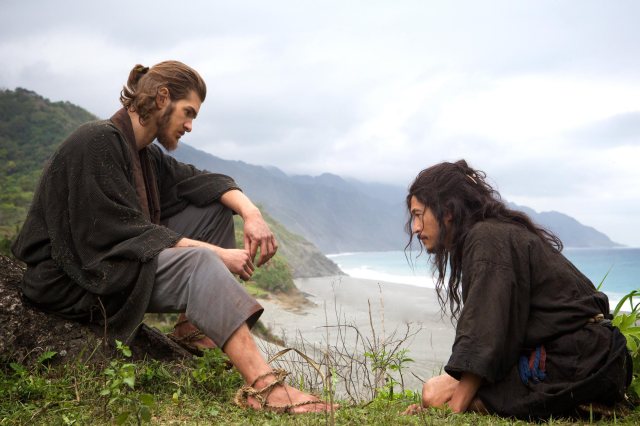
Sorry, I can’t hear you over the sound of my symbolism: Cappa Defina Productions/EFO Films

The release of a new Martin Scorsese film is still something to mark on your calendar, but perhaps the undoubtedly ambitious guilt trek SILENCE was too personal for his own good.

Two Portuguese Jesuits travel to Japan to investigate reports that their mentor Ferreira (Liam Neeson) has abandoned Christian teachings and gone native. Japan is a dangerous place to be for any Christian, and soon fathers Rodrigues (Andrew Garfield) and Garrpe (Adam Driver) find themselves persecuted along with their new secret congregation by a relentless inquisition.

Silence is certainly a handsome-looking film, ugly-feeling film, with tropical mountainsides (Taiwan standing in for Japan) and volcanic plateaus shrouded in dramatic mist Kurosawa would be proud of in extreme contrast with horrific acts of torture and abject human misery. The attention to detail in the period costumes and historical locations lend this story a level of authenticity just as the bewildering decision to have some or the English-speaking cast affect Portuguese accents for the first few scenes breaks the illusion.

With the best will in the world, Garfield doesn’t yet have the skill to carry a film solo. Adam Driver and Liam Neeson do, but their contributions mainly come in the opening and final twenty minutes respectively. Garfield is fine when he has someone to play off, such as in the film’s excellent and emotionally charged final stretch where Rodrigues confronts Ferreira, but he is just not a compelling narrator or a character with enough layers to spend this amount of time with. I just wish we spent more time with Garrpe, who probably went through a much more interesting crisis of conscience offscreen. When he quite rightly realises the priests’ presence is endangering the remaining native Christians, he disappears to protect them, an act that must have wracked him with guilt and which is completely nulified by Rodrigues staying. Rodgrigues’ blind faith keeps him on his unwavering path no matter how many are harmed for his religion and he only relents with the express permission of his Lord and Saviour, and I found that hard to fathom without a faith myself.

While a time of sacraments and rituals, idols and inquisitors was not a subtle one, you find yourself asking Scorsese to cool it with the sledgehammer symbolism found throughout his film. The use of light levels and layers of sound would have probably been enough to amplify the subtext here. Jesus appears in the water and in the floorboards, silver pieces are scattered on the ground following a great betrayal, martyrs are subjected to cruel and unusual punishments and are very dignified in their agony.

This is Scorsese cleansing his soul, and I don’t think he cared how grueling it would be for the rest of us to sit through. I don’t have a problem with what he’s saying about the world, about faith, and his message comes through vividly in the end, but I’d have liked more tonal shifts along the way to break up the monotony. The thematically similar THE MISSION and APOCALYPSE NOW – with which Silence shares a plot through-line and mood – could both be as intense, but they also had peaks and troughs and more than one shade.

Undoubtedly religious atrocities were committed by the Japanese in this period. The same goes for Christians trying to spread their doctrine in countries socially and culturally the antithesis of European Christendom. Neither side comes out well, and nor should they. I understand Scorsese feeling like this was a film he had to make, but it’s hard-going with little reward for the majority of viewers. Beyond the impressive vistas, strong supporting players (particularly the Japanese cast) and a genuinely enlightening and affecting final stretch, this isn’t going to be counted among Scorsese’s great successes, even if I can’t dismiss it for being uninteresting. SSP

Posted in Film, Film Review | Tagged , , , , , , , , , , , | 1 Comment

Series Retrospective: Bourne

In the latest look back at a long-running series, I’ve decided to look at everyone’s favourite amnesiac assassin, Jason Bourne. Robert Ludlum’s antidote to Bond has been knocking around for a while, and has not let his author’s passing and Matt Damon’s temporary departure slow the pace.

bourne_identity_ver2

The Bourne Identity: Universal

THE BOURNE IDENTITY (2002) The first, leanest, and in my opinion the best Bourne movie, IDENTITY stood out from fellow spy actioners in the early 2000s. Doug Liman might not be as dynamic a director as Paul Greengrass, but he coaxes two great performances from Damon and Franka Potente and his action is beautifully unfussy. The mythology is kept vague but implications are intriguing, assassins (notably a bookish-looking Clive Owen with a hunting rifle) could be brushed past on the street and you really believe Bourne could just melt away.

large_jxwzgmqotsqsxub9oghocoaegcm

The Bourne Supremacy: Universal

THE BOURNE SUPREMACY (2004) Greengrass arrived in the Bourne franchise like a freight train. SUPREMACY’s plot is a little messier, but the momentum never ceases and the trend was set for immediate hand-held action that has only just started to fall out of favour twelve years later. Yes, you can blame this movie for sloppy, rating-chasing action movie editing (it looked good in 2004…) Some of the cast might be annoyed their characters were knocked off early, but their space is filled admirably by a more active Nikki (Julia Stiles) and the caring face of espionage Pam Landy (Joan Allen). 

large_fhho6jyyy0nrcetwsoei19izsnf

The Bourne Ultimatum: Universal

THE BOURNE ULTIMATUM (2007) The most linear Bourne film, plot-wise, but ULTIMATUM boasts immediate, frenetic action and puts you right in the heart of everything that is going on. The camerawork can be more jarring than immersive at times, and while I quite like the conversations shot not just over-the-shoulder but from behind whole bodies with elusive glimpses of the tense participants, it won’t be everyone’s cup of tea. They still don’t address how Bourne can get round the world without changing his face (I don’t care how many passports you have – it still looks like you!) but if you go with it it’s a thrilling conclusion to the story.

bourne_legacy

The Bourne Legacy: Universal

THE BOURNE LEGACY (2012) Then they made LEGACY. Or at least writer Tony Gilroy did. few writers can direct, and vise versa. This was more of a glorified placeholder for when Damon and Greengrass decided to come back. Jeremy Renner usually makes for a compelling lead or at the very least characterful support, but his Bourne-replacement Aaron Cross (I’m actually amazed I remembered his name without Wikipedia) is just vanilla up until a seriously stupid late plot revelation where he becomes a bit of an insult to a large portion of society. Add to this run-of-the-mill villains and constant reminders of a better film you could be watching (it takes place concurrently with Ultimatum) and you end up with a waste of your time.

bourne

Jason Bourne: Universal

JASON BOURNE (2016) It seems like Greengrass wanted to do a film about the Greek austerity riots and/or CIA/NSA surveillance, but then he remembered Bourne and decided to fold these real-world events back into the spy’s ongoing exploits to make sure audiences went to watch it. This soft reboot is certainly relevant and it moves along excitingly enough, but it’s consciously ticking boxes and it artificially creates a new mystery for Bourne to solve and asks you to suspend your disbelief a little too much.While it’s good to see him return, Damon clearly had to put in very little effort beyond getting back into lean, mean shape.

Would I watch more Bourne if they made them? Probably. Would I rush to see it now they’re clearly cattle-prodding it to keep the story going? Probably not. SSP

Posted in Film, Film Feature | Tagged , , , , , , , , , , , , , , , , | Leave a comment

Review: A Monster Calls (2016)

a-monster-calls

Bark worse than his bite? (Sorry): Apaches Entertainment/La Trini

I read A MONSTER CALLS over Christmas in preparation for this. What took me so long?

Conor (Lewis MacDougall) doesn’t have the luxury of a happy childhood. Between his mother (Felicity Jones) losing  her battle against cancer, his icy grandmother (Sigourney Weaver) outstaying her welcome and constant torment at school, Conor finds himself coping alone. Then, at his lowest point, a monster calls…

Having Liam Neeson on board to play the Monster and also someone else in the form of a photograph on the mantelpiece is a master stroke – here Patrick Ness adds a certain extra poignant factor to the self-panned screenplay adaptation of his story. Advantages of authors being part of the process of visualising their own work include but are not limited to, unparalleled understanding of the source material and the need to refine and improve what has come before. Having another pair of eyes guiding the ship doesn’t hurt either, and director JA Bayona keeps the whole thing simultaneously grounded and wondrous and gets the very best out of his cast.

It’s great to see Sigourney Weaver in a non-glamerous role. She begins as Grandma is described in the novel; a well-groomed and severe older woman, but as events unfold, protective layers peel away and she becomes worn away, real and human. But it is the tenderest of central pairings in Conor and his mum and MacDougall and Jones’ perfectly-pitched performances that keeps you rooted to this story. It’s a complex relationship for a thirteen-year-old to have with a parent, but one that rings painfully true. It is a simple truth at the heart of this tale, but not an easy one.

There are canny references throughout to sympathetic monster movies (KING KONG, Universal’s FRANKENSTEIN) which might have been a bit presumptuous if A Monster Calls couldn’t proudly stand side by side with its subgenre fellows. We also get thematic and aesthetic links to other modern fantasy allegories like PAN’S LABYRINTH, being as it is another tale featuring a child’s experiences front-and-centre but presented in a very adult fashion, though Bayona perhaps chooses to blur the lines blur a little more between realities than del Toro did.

The animated sequences with Neeson’s narration are the perfect realisation of the book’s stories, and the film wholeheartedly embraces the unique advantages of working in a visual medium. The three tales the monster tells to Conor are living ink, bold and graphic but  never fully tangible to fit with Ness’s themes of avoiding confrontation of difficult situations and as tribute to the work of Jim Kay who illustrated a run of the novel. It was a tall order to visualise squiffy dreamland physics and the horrific jumps between reality and unreality with such aplomb, but somehow it works as a compelling tapestry.

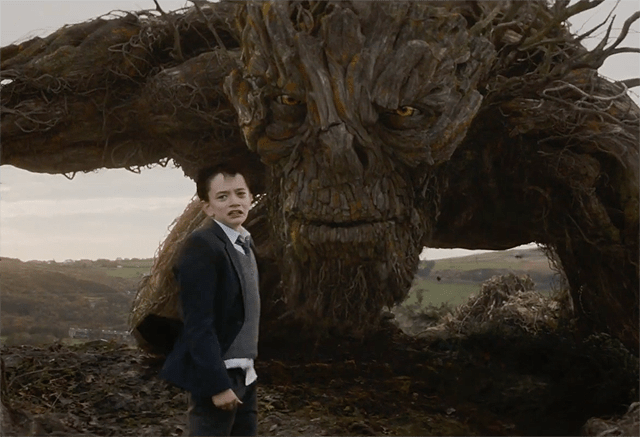
You can almost hear the production design team screaming “don’t do an Ent!” so the Monster instead appears as a yew tree tangle in rangy humanoid form with Liam Neeson’s sharp profile and formidable glower as his booms forth his dialogue. He is frightening, as any monster should be, but he is also engagingly, and humanly, irritable, and somehow his outbursts that shake the earth and bring forth an internal inferno soften him and bring him closer to our human protagonists – he’s just as fallible an occupier of grey areas as the rest of us.

I honestly didn’t think A Monster Calls would get me. The book brought forth tears but I found myself not quite shaken with the same emotional force as I was on the page. Then the final couple of scenes came and I’ll admit I bawled. I’d have personally played the ending slightly differently in the way it’s put together on screen, but that’s really splitting hairs and it remains a spiritually satisfying conclusion and a promise that a better life is to come for Conor. You’ll have to catch this at some point as it may very well be a future classic. SSP

Posted in Film, Film Review | Tagged , , , , , , , , , , , , , , , | 1 Comment

Film Confessional: Gods of Egypt

gods-of-egypt

A far deadlier Riddles in the Dark: Summit Entertainment/Mystery Clock Cinema

I have a confession to make…I actually quite like GODS OF EGYPT. I enjoyed watching the film that made Alex Proyas aggressively lambast film critics for not giving him a chance, pretty much from when the first trailer dropped. I can see it’s a flawed work, but it’s flawed in fascinating ways.

You can’t fault Alex Proyas’ bonkers ambition. You can never fault his ambition. Unfortunately he’s only ever produced two knockout movies in a fairly lengthy career (they were the dark and emotional THE CROW and the dark and emotional DARK CITY). All his others tend to be interesting on their own terms and aesthetically striking but with drawbacks.

Gods of Egypt could be called just about anything but dark; the brief given to everybody who worked on the project was “Planet Egypt”. This shows. Think of this like the 60s Greek mythology adaptations like JASON AND THE ARGONAUTS but dipping into a different culture and adding a liberal splash of FLASH GORDON. I know there were complaints of whitewashing from the off, and while I can understand this criticism it doesn’t bother me anywhere near as much as it did in Ridley Scott’s EXODUS, which was a fairly serious dramatic re-telling of a religious story firmly rooted in a real time and place, where nobody should have been white. Here the story is nominally Ancient Egypt-set, but it’s a romp, it’s a colourful fantasy where real-world logic rarely intrudes.

Whatever it is, the film is jam-packed with ideas. We see Ra’s (Geoffrey Rush) space-barge dragging the sun over the side of a flat earth shortly before its pilot pauses to battle a space monster; then there’s the sight of Set (Gerard Butler) riding to war in a chariot pulled by flying scarabs and a god being mobbed by the spirits of the dead as she falls into a dark, swirling vortex the moment a protective charm is removed. The film’s batty internal logic works; if gods lived among us they would do everything grandly and opulently, humanity would be regarded as little more than a nuisance.

I was generally impressed with the designs of the sets and of the creatures (the sphinx above is a particular highlight), though I question whether the gods’ true forms should have been bio-mechanical, because as soon as you have living metal titans duking it out on top of a pyramid, your thoughts tend to jump straight to TRANSFORMERS. Nikolaj Coster-Waldau and Butler don’t seem to have bothered changing characters since the last “historical” epic they took part in, and don’t exactly stretch themselves, nor does Chadwick Boseman’s putting on a plummy English accent as he contemplates the meaning of a head of lettuce, not that this material ever asks them to. Also, after all these years, is the use of forced perspective really the only way to have different scales of character appearing in the same scene? The gods and the mortals never look like they shared the same soundstage, never mind the same world.

The script is appropriately naff for a high-concept B-movie; somewhere between Tolkien and Shakespeare but more cloth-eared (“Every night the battle between chaos and creation must go on, otherwise the world will be destroyed”). This isn’t really a criticism, in fact it’s part of the entertainment value. I don’t really understand why Proyas got so defensive over the negative reviews the film received. It’s not high art whatever the director thought, but I think it will have a life as a bit of a cult gem. There’s nothing wrong with producing trash if it’s fun, if it’s memorable, and I don’t think you should be ashamed of every now and then turning out a product like this. It’s less problematic if you treat is as pure escapism and far more enjoyable if you switch off your brain and have fun. SSP

Posted in Film, Film Feature, Film Review | Tagged , , , , , , , , , , , , , , , , | Leave a comment