Review: Rogue One: A Star Wars Story (2016)

jyn-erso-1

I rebel, therefore I am: Lucasfilm/Allison Shearmur Productions

Was the emotionally bereft GODZILLA remake just a blip for Gareth Edwards? Thankfully yes it was. There is more genuine humanity, imagination and enjoyment to ROGUE ONE: A STAR WARS STORY than there was not only in the ill-advised giant lizard retread, but also in the vast majority of the blockbusters released in 2016. It’s a bit of a treat for STAR WARS fans too, both fleshing out a gap in the timeline and providing new sights to behold.

Born rebel Jyn Erso (Felicity Jones) is recruited by the Alliance in their fight against the tyrannical Galactic Empire. Her long lost weapons designer father (Mads Mikkelsen) may hold the key to the destruction of the Empire’s superweapon, The Death Star, and Jyn must lead a team of spies, assassins and outcasts to retrieve this information before time runs out for the Rebels and for the galaxy. 

Finally someone plays with the style of Star Wars. We’re straight into the story sans opening crawl, scene transitions are liberated from the archaic wipe edit (finally Star Wars is edited according to the action rather than the action working around the edit) and character-fleshing flashbacks are incorporated. This was the perfect time to do this: we’re in mostly uncharted waters here, and if Lucasfilm will continue to hire distinct directors to helm these spin-offs, they should be free to make them their own and make every film it’s own thing. Edwards brings with him a more hard-edged documentarian aesthetic, following our heroes a pace behind through crowded and sweaty alien markets and throwing us in the thick of frenetic, brutal battle scenes. I said the opening of THE FORCE AWAKENS was like Star Wars meets SAVING PRIVATE RYAN, Rogue One is more Star Wars meets PLATOON. Edwards gets just the right balance with paying heed to what has come before as well, with chunky, grimy technology and pleasingly terrible 1970s hairstyles.

Felicity Jones as Jyn is a grounded and empathetic lead who kicks some serous ass without any force gimmicks. Alan Tudyk playing towering reprogrammed Imperial droid K-2SO as a mix between deadpan comedian and passive-aggressive child was a master stroke (thoughts out loud on Jyn: “I find her answers vague and unconvincing”, “Do you want to know the odds of her betraying us? They’re high…Very high!”). Ben Mendelsohn’s cold and brutal autocrat Krennic is often undone by his frustration at not receiving credit for his hard work, and sees straight through a deception early on (“Oh look, you wife: back from the dead!”). I wouldn’t say the whole cast are given much to do, with rebel leader Cassian’s (Diego Luna) edginess dropped by the wayside quickly and Forest Whitaker and Mads Mikkelsen acting as glorified (admittedly well performed) plot devices. What I can’t deny is that a certain dark lord’s brief appearance will give you chills and thrills.

Here’s the thing: massive space battles rendered with next-gen special effects are stunning, but bringing a long-gone actor from A NEW HOPE back from beyond the grave with the same? I’m not so sure. It’s undoubtedly a very sophisticated effect, but it’s almost too good, too detailed, and something certainly triggers the uncanny valley sense. I found myself not really listening to the dialogue in these important to the plot scenes, which was an issue. Elsewhere archive footage and outtakes from the original film are used, which work perfectly fine for brief shots.

The plot moves well, even if it doesn’t deviate much from the Star Wars formula. It meets and sometimes exceeds your expectations of action and spectacle, but being a Star Wars film the finale is of course a race against time to destroy something in space. Joining the Rebel Alliance also seems to be a large part about who you know as well as you heart and resolve, as the Rebellion top brass don’t seem much interested in Jyn aside from how they can exploit her familial connections. It’s a galaxy of coincidence, but we’ve always known that. Rogue One hits the right notes, throws in some surprises and gives us time enough to spend with a compelling new group of characters. As another spin-off/prequel in an industry seemingly producing little but, it’s certainly out in front of the pack. SSP

Posted in Film, Film Review | Tagged , , , , , , , , , , , , , , , , , , , | 4 Comments

15 Years On: The Fellowship of the Ring 

the-lord-of-the-rings-the-fellowship-of-the-ring-wallpapers-5

The Lord of the Rings: The Fellowship of the Ring (2001): New Line/WingNut/Saul Zaentz

There are three film franchises that have impacted me above all others. First, there came STAR WARS, which kept me happy throughout my first decade (on VHS – sadly I’m too young to have seen the original trilogy on the big screen). Then, in winter 2001 the way fantasy films looked, sounded and felt was changed forever with the releases of HARRY POTTER AND THE PHILOSOPHER’S STONE and THE LORD OF THE RINGS: THE FELLOWSHIP OF THE RING in close succession. There’s no denying the impact of these touchstones, particularly of the veritable mountain climbed in adapting Tolkien into a blockbuster, but just how well have they aged? Without further ado, let’s take a look back at the opening chapter of Peter Jackson’s ambitious fantasy epic on its fifteenth anniversary.

In the first chapter of the granddaddy of grand fantasy storytelling, nine companions quest across Middle Earth to return the banished Dark Lord Sauron’s Ring of Power to the land of Mordor and destroy it. The ring bearer Frodo’s (Elijah Wood) burden is great, and many dark forces are drawn to the power of the One Ring, but the quest must succeed for Middle Earth to survive. 

Getting all your exposition out of the way at the beginning can really save you, and your audience, an almighty headache further down the line. The prologue to Fellowship is about as elegant and attention-grabbing as such world-building sequences can be. The themes, the scale and the stakes are established from the off and the later Council of Elrond scene is much less drawn out without the need to reestablish the treat and the concerns of the various races when it’s done so cleanly in the first ten minutes.

As thrilling as the sweeping action scenes accompanied by Howard Shore’s soaring score can be (Balin’s Tomb especially still holds up today), it is some of the littler moments that are the most satisfying. This is one of the well-realised cast of characters ever assembled, and it’s all down to the harmonious ensemble. Look to Gandalf (Ian McKellan) uttering that famously ominous rhyme to Frodo by firelight; Bilbo’s (Ian Holm) sobbing apology to his nephew “for everything”; the Fellowship’s pain in grief at the apparent demise of their guide; Sam’s (Sean Astin) unwavering loyalty to his friend.

The special effects still look pretty good, with only the forced perspective used for making similar-sized actors look a different scale to each other starting to look ropey to the modern SFX-trained eye. Real locations and hard graft from Weta Workshop and the art department win the day and give the film staying power that the more CG-ed THE HOBBIT surely won’t have when as many years have passed.

The casting couldn’t have been better, and every member of the Fellowship inhabits their role completely. I’ll admit that I was never especially convinced by Aragorn and Arwen’s forbidden romance, and this has not changed over time, particularly with Viggo Mortensen and Liv Tyler turning in far more accomplished performances since. If there’s a real love story in Lord of the Rings, as we all know, it’s between Frodo and Sam. Sadly, we had to wait until the concluding chapters of Rings before we’re given a compelling female character at all (Cate Blanchett’s Galadriel is more of a plot device), which is clearly why Jackson and his writers created Tauriel for the Hobbit: an attempt at balance.

Fellowship has aged remarkably well midway through its second decade. Every time I revisit this towering tale I’m very hard-pressed not to see it through to the end. For me it still holds wonder and its lasting effect on the shape of the contemporary film industry can’t be disputed. Pretty much every fantasy post-2001 that wasn’t Potter tried to be Lord of the Rings, which wasn’t always a bonus. Fair enough to bring back the impressive locations of New Zealand and Weta’s army of armourers for NARNIA, but SNOW WHITE and ALICE IN WONDERLAND never needed battle scenes or grand themes. Nor did The Hobbit, for that matter… SSP

Posted in Film, Film Feature, Film Review | Tagged , , , , , , , , , , , , , , , , , , , , , | 1 Comment

Review: Spotlight (2015)

spotlight-movie

Spotlight (2015): Participant Media/First Look Media/Anonymous Content

For many, SPOTLIGHT was the surprise winner at last year’s Oscars. The true events the film is based on might be ripe for dramatic adaptation, but with its low-key performance and style, and actors that did not subject themselves to physical extremes, it was still a dark horse. And yet it was by quite a way the most deserving, the only, winner.

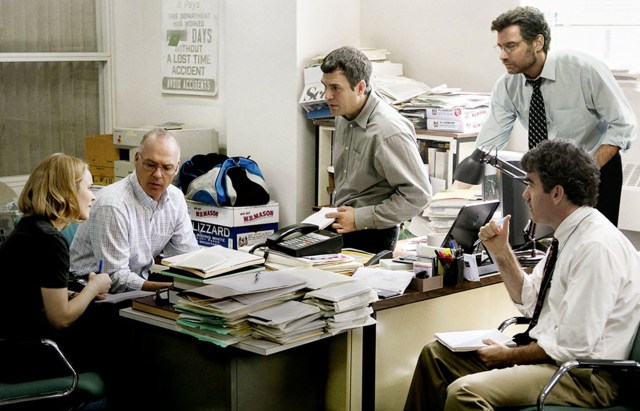
In 2002, journalists from the Boston Globe’s daring and prestigious Spotlight team broke one of the most earth-shattering and shocking stories to ever be printed. This is the story of a decades-old coverup and the efforts by a group of brave and unrelenting reporters to expose the truth of just how much the Catholic Church and their army of lawyers were hiding. 

The screenplay of Spotlight (by director Tom McCarthy and Josh Singer) isn’t showy, with people talking how real people talk aside from byline-worthy proclamations such as warning that “The Church thinks in terms of Centuries”, a story about “a bunch of lawyers turning child abuse into a cottage industry”. Most people, even those who write for a living, aren’t eloquent and reversed in their day-to-day. They make mistakes, act overly on emotion and even journalist I’ll wager struggle to remain impartial.

“How do you say no to God?” What a question. It makes the atrocities committed by the modern Catholic Church all the more inexcusable when you realise that those whose faith is an integral part of who they are had very little power to fight back against abuses of power. Sometimes all you really need is a good story. The best journalists know this well. With the story that Spotlight uncovered, you have scandal, you have human interest, horror, and a race against time. The victims’ grief and state of being isn’t in the least sensationalised, but dealt with sensitively and as a fact of life.

The film doesn’t glamorise or exaggerate the profession of journalism. Tempting as it might be to turn this into a thriller, it remains a slow exposé. It’s two hours of watching people gathering research, doing shorthand and resisting the temptation to break a big story before they have all the facts. Arduous as this sounds, it’s riveting stuff brought to life by a terrific cast, chiefly Mark Ruffalo, Rachel McAdams and Brian d’Arcy James. I never thought trying to convince lawyers to release key sealed files in a time frame could be so tense.

While I am completely against the publication of names of perpetrators until there is a reason to do so (the number of celebrities and normal people wrongly accused among those rightly convicted in the past few years is testament to this) the film does get across the need for stories to break in order to give more victims courage to come forward. The blame is clearly mostly at the Catholic Church’s feet, but lawyers and journalists also come under fire; the former for serving evil when it suits them and the latter for not acting quickly enough. It’s a low-key film throughout and there’s no real late-game twists, but there is a revelation that certainly changes your perspective of the situation.

Of the Best Picture nominees last year, none other than Spotlight should have won. THE REVENANT dazzled on a technical level, ROOM hit me right in the soul and THE BIG SHORT was really smart and really knew it (I just realise now I never reviewed it. Short version: glossy, rapid-fire and with amusing cameo-led vignettes to explain financial complexities. I still don’t understand financial complexities). Spotlight tells the story that needed to be told and does it with dignity. SSP

Posted in Film, Film Review | Tagged , , , , , , , , , , , , | 1 Comment

Review: Alice Through the Looking Glass (2016)

alice-through-the-looking-glass-tv-spot

Alice Through the Looking Glass (2016): Disney/Roth Films/Team Todd

Six years ago it seemed like Tim Burton had found the perfect material to marry with his distinctive visuals and irreverent take on the world: Lewis Carroll’s Alice books. The resulting film, ALICE IN WONDERLAND, may have been colourful but it was also misjudged, overblown and not all that nonesensical. Half a decade on and a sequel directed by James Bobin has appeared. Who actually wanted this?

Alice Kingsleigh (Mia Wasikowska) is brought back from her globe-spanning trade mission to Victorian patriarchal society with a thump. As her influence and her freedom dwindles in our world, things are no rosier on the other side of the looking glass, where in Wonderland her friend the Hatter (Johnny Depp) is dying. Alice must pay a visit to the embodiment of Time (Sacha Baron Cohen) to find a way to save Hatter and change Wonderland at large for the better.

ALICE THROUGH THE LOOKING GLASS opens on an action scene that is flashy but brings with it deeply uncomfortable imperialist implications. There’s only one reason why an English trade ship with noble patronage would be running afoul of Chinese pursuers in this time period, and it sure as hell wasn’t for exceeding their luggage allowance.

In a case of sledgehammer symbolism, Alice goes from being a real-life sailor to a sailor on an ocean of time when the plot kicks in in earnest. Time has a nice quip about mortality and living in the moment that is at odds with the rest of the leaden script,”Everyone lets go of everything eventually”. At one point Time’s minions combine for added strength, as we see seconds become minutes and become hours. I liked the visualisation of all of Time’s realm, from his clockwork castle to his very Terry Pratchett’s Death take on observing the living and patiently awaiting their demise and the way the dead are consumed by clouds of rust.

Just as Through the Looking Glass becomes more about time rather than nonsense, it owes far more to HG Wells than Lewis Carroll. It’s a time travel adventure rather than a nonsensical romp. It works on a level of spectacle for what it is, but doesn’t deliver on some pretty basic levels. Alice spends most of the film trying to find out what is the matter with the Hatter, and to a lesser extent the Red Queen (Helena Bonham Carter), but both turn out to be very ordinary answers. Unfortunately, whereas THE TIME MACHINE explored the themes and story potential of the rapid passage of time to great dramatic effect, you really can’t understand why Alice is prepared to break time to save her friend, especially when every scene that is supposed to build character through exploring their shrouded past is painfully uninteresting. The Hatter has daddy issues and the Queen harbours a grudge; are either if these really revelations?

Johnny Depp has extenuated his speech impediment to make up for his lack of character. His makeup seems to have gotten worse since last time too. At least seeing the Hatter family photo with their orange wing hair gave me a laugh and he’s more a plot device than a big player in this one. Mia Wasikowska needs to move on and continue to pick braver and more challenging projects that stretch her. Sacha Baron Cohen has a lot of fun with a thick German accent and time puns, and the character design of Time as a clockwork cyborg with mutton chops is memorable and pleasingly offbeat.

It’s slightly better than the first one, but aside from inventive visuals and a token effort to make Alice an early champion of women’s rights, Through the Looking Glass is not really worth your time. Or as Cohen’s character would say, this movie is not worth your Me. SSP

Posted in Film, Film Review | Tagged , , , , , , , , , , , , , , | Leave a comment

Review: The Legend of Tarzan (2016)

legend-of-tarzan

Fine figure of a man: Dark Horse Entertainment/Jerry Weintraub Productions/Village Roadshow Pictures et al.

If there’s a film I never expected THE LEGEND OF TARZAN to remind me of, it was THE LONE RANGER. Both films are beautiful looking genre pieces with entertaining set pieces and shudder-inducing cultural insensitivity. Johnny Depp should never have been allowed to play a Native American and you’re never going to get around the Colonial awkwardness of Edgar Rice Burroughs’ wise saviour of Africa being white. There is no good way to tell that story today.

John Clayton III, Lord Greystoke, otherwise known as Tarzan (Alexander Skarsgard) is called back to Africa to look into a sinister operation to replenish the Belgian Empire’s coffers. Together with Jane (Margot Robbie) and George Washington Williams (Samuel L Jackson), Tarzan must find out who is behind the devastation of the Congo and lead the natural world to fight back.

I’ll give them credit for this: they finally get past the ridiculousness of the loincloth by not having a loincloth. In the flashbacks Tarzan is naked ( used for comic effect, but as a man raised by apes would be) and in the present he wears trousers because he’s been part of the Western world for a while by then. The Victorian London we are shown along with the portrayal of Africa is a rough outline at best. Brits, Americans and certain Congolese tribes are nice, principled people (politicians aside), the Belgians and more violent Congolese tribes are cartoony baddies. I wasn’t asking for subtlety in a Tarzan story, but some shades of grey would have been beneficial.

Alexander Skarsgard does a lot better with the primal, animalistic behaviour (highlight: his display of kitten-like affection with a pride of lions) than he does with any truly human behaviour. When he’s not being an ape-man, he’s just some muscles shoved into hilariously small suits. Samuel L Jackson plays a fascinating real person who should not have been relegated to a supporting player/comic relief in a Tarzan movie. There’s a gag that is completely beneath Jackson and the remarkable man he is portraying. Jane is American now for some reason, so I don’t really understand why they didn’t allow Margot Robbie to use her natural Australian accent. Speaking of Jane, pointing out the damsel in distress convention does not make you not a damsel in distress when you spend 80% of the film captured. Christoph Waltz and Djimon Honsou are given criminally little to work with beyond props (including some rather insulting religious icon appropriation).

The visuals are nice, if a little hamstrung by the usual in-house Warner Bros grim and grey filter. Tarzan brutally battles an alpha gorilla in the film’s stand-out action sequence, and the animals and environments are all pretty convincingly realised.

The film’s finale is completely unnecessary. It’s like LORD OF THE RINGS meets the end of Guy Ritchie’s SHERLOCK HOLMES. You get an enemy army charged by unexpected reinforcements, ridiculous man-on-animal action and the demolition of Colonial architecture by the forces of nature.

Uncomfortable historical context, iffy acting and unnecessary action ramping aside, the thing that kills The Legend of Tarzan is that you can’t be made to care. The flashbacks to Jane’s first encounter with the Ape Man try to flesh out their relationship and add some poignancy, but when we’re brought back to the present the characters have become bland and completely lacking in chemistry. I can only imagine that director David Yates, usually such a reliable pair of hands, was already looking towards FANTASTIC BEASTS and was unable to give this project his undivided attention, because I can’t imagine why else this ended up so mediocre. We all have our off days, and that’s what The Legend of Tarzan is: a $180 million off day. SSP

Posted in Film, Film Review | Tagged , , , , , , , , , , , , , , , , | Leave a comment

Review: Arrival (2016)

arrival-movie-4-e1471529984165

Arrival (2016): 21 Laps Entertainment/FilmNation Entertainment/Lava Bear Films

ARRIVAL is nothing like the way it was marketed (though you can’t blame the marketing guys for trying to get people through the door by making it out to be a disaster movie). Denis Villeneuve’s latest is a razor-sharp conceptual thriller that makes up for a modest budget with a clever use of resources from lighting to sound and pure performance. In short, it’s something special.

Linguist Louise Banks (Amy Adams) is recruited by the American military to find a way to communicate with an alien race, who have just appeared in UFOs stationed around the world. What do the visitors want and how will their arrival change us as a species?

Arrival has you by the heartstrings from the off (think the opening of Pixar’s UP but rawer and less cute) and we’re eventually brought full circle to a heartbreaking and yet life-affirming ending. From the start Louise is shown to be a fallible, ordinary woman with a particular area of expertise. Adams goes on to carry the film almost single-handedly with a taut and impassioned performance that is among her very best. Jeremy Renner is reliable in support as physicist Ian Donnelly, but he is mostly there to provide timely explanations of scientific principles and this is definitely not his story.

It’s only when you watch a film like Arrival you realise how lazy some other films really are. You could count on one hand the number of sci-fi movies that acknowledge the realities here, the difficulties of changing gravity, alien atmosphere and extraterrestrials a) speaking our language and b) not being able to make their motives clear without a method to communicate with humanity. A huge amount of the story is dedicated to the slow development of a way to communicate with the aliens. Said aliens, the Heptapods, who as their name suggests are seven-legged and completely non-humanoid, don’t even have mouths. So comes the idea of communication through interpretation of writing and symbols, and the inky hieroglyphs our extraterrestrial visitors produce are shaped thematically appropriately to say the least. If the meaning of that last sentence didn’t leap out at you, don’t worry, just watch the film.

This quest for understanding comes about through the exploration of some pretty massive sci-fi themes, from our interpretation of time to emotion surpassing speech and body language as a method of expression. It’s certainly a talking point of a movie and the ending and its implications will have you discussing the meaning of most of the movie for the foreseeable future. I’m not going to be any more specific than that about the place the characters and this world ends up, just watch the film.

It’s another layered and sonically interesting soundtrack from Jóhann Jóhannsson, re-teaming with Villeneuve and making the score for this sci-fi as beautiful as SICARIO was oppressive. The same could be said for the film in general really: beautiful and positive sci-fi with some cool-looking UFOs (which are always shot from just the right angle to be an attractive shape). They’re a killer combination, both well-versed in tweaking the recognisable to make something original and vibrant. Screenwriter Eric Heisserer’s contribution can’t be overlooked either, though I’m still struggling to reconcile this work with the guy who wrote the remakes of A NIGHTMARE ON ELM STREET and THE THING.

I didn’t need a wall of screens with a representative of each nation confined to a square for the tactical briefing scenes. Whereas pretty much everything else in the film is convincing and creative, this rings so falsely and just comes across as ridiculous in contrast to the rest of the film. I also wouldn’t have minded seeing Louise making more explicit use of her multi-lingual skills (perhaps in the just mentioned ridiculous briefings with the world leaders) rather than doing most of her work from an iPad. These are of course very minor gripes in a pretty flawless lake.

Arrival is one of the films of the year; brainy, soulful and ripe for debate. Adams drives everything and Villeneuve has come up with a striking new way to look at our species’ place in the grand scheme of things. I’ve said enough. Just watch the film. SSP

Posted in Film, Film Review | Tagged , , , , , , , , , , , | 2 Comments

Review: Fantastic Beasts and Where to Find Them (2016)

fantastic-beasts

Fantastic Beasts and Where to Find Them (2016): Heyday Films/Warner Bros

I was just the right age for HARRY POTTER. The books were coming out in the years when I was really into my reading and I’ve grown up simultaneously with the cast of the films. Even with the involvement of JK Rowling and director David Yates, FANTASTIC BEASTS AND WHERE TO FIND THEM could have gone either way, but I’m extremely happy to report that it’s a colourful and thrilling ride.

Magizoologist Newt Skamander (Eddie Redmayne) arrives in New York carrying a case full of magical creatures and wouldn’t you know it? Some of them get loose. Newt finds himself on the run from the authorities with an unlikely group of allies as he chases his escaped beasts across the city and dark magical forces begin to gather…

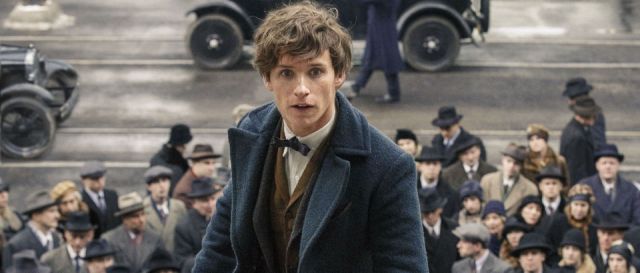
As attached as so many of us were to Harry, Ron, Hermione et al, JK Rowling has come up with a compelling new group of characters to follow. Eddie Redmayne is a perfect fit for Newt Skamander; wide-eyed and keen but concealing a deeply buried melancholy.  Dan Fogler is a revelation as Kowalski, not just thankless comic relief and audience surrogate but instead serving as the film’s grounding point and beating heart. He has an adorable chemistry with flirty psychic Queenie (Alison Sudol) and the endearingly awkward and duty-bound Tina (Katherine Waterston) rounds out the quartet.

Rowling has gone town on the real-world subtext behind the spell-casting, but it never feels forced or out of place. The Magical Congress of the United States of America (MACUSA)’s obsession with keeping the muggle/no-maj world segregated from the wizarding one lends the film some staggeringly dark socio-political implications, especially considering the rise of certain real-world powers a decade after this film is set. It will be interesting to see how heavily allegorical Rowling chooses to make this new story as we march on towards real human conflicts.

Until the final reel, the film wisely doesn’t try to be an action movie, giving viewers time to process the magic and the imagination of a range of creatures evading capture. The production design team are amongst the most talented in the industry, with eye-catching and imposing physical sets and convincing and dynamic realisation of creatures and concepts in CGI. The central set piece of the film is not a special effect destroying a city (though that does unfortunately make an appearance) but is a scene following Newt and Kowalski wandering through the magizoologist’s vast nature preserve watching its inhabitants living harmoniously in their respective habitats. I was pleasantly surprised that this key sequence which places you in the middle of the environment as the camera steadily explores searching for the colourful residents worked particularly well in 3-D.

The key message here is always that animals aren’t dangerous; only people. Just like HOW TO TRAIN YOUR DRAGON 2, Beasts preaches respect for, and understanding of, the power of nature and warns of the arrogance of mankind thinking it can control and subjugate the natural world. At a key point Newt’s anguished wails of “They’re not dangerous! Leave them alone!” fall on deaf ears as the agents of the Magical Congress prepare to act with extreme prejudice to preserve the peace.

It’s hard to top some of the moments from Harry Potter, but the new setting for Fantastic Beasts provides ample opportunities. Newt’s visit to the gleaming multi-leveled gantries of MACUSA, detouring to a goblin-run speakeasy (complete with toe-tapping jazz lounge number) and the adorable kleptomaniac Niffler running amock in a bank vault rank alongside some of the strongest images from Potter, wondrous Hogwarts reveal and chilling Dementor introduction included. By the way, I really want my own Niffler (I mean, just look at it!) and I’m sure I’m not the only one out there who does.

By taking us to strange new places and populating this expansion of the wizards game world with weird and wonderful sights, Yates and Rowling have ensured a new lease of life in this beloved franchise. Personally I can’t wait for the next one, as long as they get the casting right for a young Dumbledore. SSP

Posted in Film, Film Review | Tagged , , , , , , , , , , , | 3 Comments

We Need to Talk About Warner Bros

fantastic-beasts-1

Fantastic Beasts and Where to Find Them (2016): Heyday Films/Warner Bros

Warner Brothers have not had a good year at the movies. Between steadily disintegrating franchises like their relentlessly grim take on DC superheroes, villains and anti-heroes and complete non-starters like LEGEND OF TARZAN, it’s been ludicrously expensive with nowhere near enough to show for it.

Just look at the way the biggest movies Warners makes are marketed. I think SUICIDE SQUAD had one of my favourite movie trailers of all time: well-edited sonically and visually, entertaining and intriguing and showing just enough without ruining the surprise. Sadly the end product was clumsy and about as grim as the rest and every trailer for a blockbuster since has been “we can be funny like Marvel, honest!” Look at the ads for JUSTICE LEAGUE or KONG: SKULL ISLAND for evidence that they just want to be liked. They build trailers around (some admittedly good) gags, but I wouldn’t be surprised if this was the sole evidence of levity when the final films are released.

With their inability to effectively compete with Marvel (even by copying their formula) I wouldn’t be surprised if Warners started shifting focus onto the next best thing. After BATMAN their next most profitable franchise is easily HARRY POTTER, and wouldn’t you know it they just announced FANTASTIC BEASTS AND WHERE TO FIND THEM (a spinoff/prequel based on a glorified pamphlet) will now be five films.

We obviously don’t know yet how WONDER WOMAN or Justice League will be received, but if they turn out as terrible, over-stuffed and misjudged as BATMAN V SUPERMAN then there will have to be a Plan B. Fantastic Beasts and the exploration of the wider JK Rowling wizarding universe is Warner Bros’ backup mega franchise. Upcoming spectacle will apparently include a still uncast younger Dumbledore (has to be Jared Harris surely?) fighting Johnny Depp as dark wizard Grindelwald, which could be interesting. As long as the studio doesn’t keep mandating the release of sub-par cuts of the films to facilitate the cynical and greedy release of (just about) superior extended cuts further down the line, I don’t have much of an objection to seeing fewer miserable superheroes and more plucky wizards. SSP


Posted in Film, Film Feature | Tagged , , , , , , , , , , , , , , , | Leave a comment

A Few Thoughts More: X-Men: Apocalypse (2016)

xmenapoc

X-Men: Apocalypse (2016): Fox/Bad Hat Harry

I stand by my original review of X-MEN: APOCALYPSE, but now I’ve watched it again I have a few more thoughts.

I don’t have any real issues with the film’s opening. The original Four Horsemen aren’t given much opportunity to make an impact in the film’s fun opening action scene but their powers and appearance make them stand out for the brief time they’re on screen, unlike the thoroughly played-out CHARIOTS OF THE GODS? basis for the rest of the film’s setup.

They’ve never quite got Cyclops right in these movies. James Marsden was hardly in the original X-MEN trilogy and Ty Sheridan just turns him into an average stroppy teenager. Maybe that comes from retroactively making Scott the younger Summers brother in this take on the X-family. Cyclops should be a morally  unshakeable boy scout like Captain America or Superman, he should be there to lead his team and make sure they do the right thing and don’t hurt anyone unless they absolutely have to. Fair enough, his power is highly destructive and difficult to control, but he seems to have next-to-no problem-solving skills, no concept of strategy; he just runs in and hopes for the best. The end fight just amounts to the X-Men shooting their respective colour-coded beams of light at the big bad and there’s nothing creative about that.

Jean Grey’s (Sophie Turner) re-introduction once again wastes her potential as a character and as a concept (what if the most powerful being in the universe was a good girl…for now?) and makes me all the more hopeless that we’ll ever see a proper adaptation of THE DARK PHOENIX SAGA, my favourite run in any comic book series. It’s bombastic, it’s layered and out-there (literally – the X-Men take the fight to space and try and save the whole universe) and it’s nowhere near safe enough for a big studio to bet on.

Mystique should never have become a hero. FIRST CLASS gave her a logical motivation, but removed her edge. In DAYS OF FUTURE PAST she only occasionally seemed to remember what she was trying to achieve. Jennifer Lawrence is a fine actor, but I’m not convinced Raven was the right fit for her and she just looks tired and listless here.

Magneto’s arc works well enough, and Michael Fassbender sells being the unluckiest and angriest mutant out there, but I want him to move on to newer and better things now. For all the ways they botched his characterisation, having Apocalypse (Oscar Isaac) as the embodiment of an uncaring god works for this story. Magneto confronts him over his absence when their kind needed him most and he does not have an answer to give him, but a sliver of faith remains with Erik. The scene where the first mutant takes his would-be protege to confront his demons at Auschwitz felt heavy-handed when I first saw it (it still is that) but thematically it’s punchy and it gives him the only even vaguely logical reason out of the Four Horsemen to follow their deity.

By now most of you will know that Hugh Jackman makes his penultimate appearance as Wolverine, his cameo being the one and only reason for the plot to take a detour to Alkali Lake. Last time I think they struck the right balance between fanservice and moving the story forward, but here this balance goes askew and the film is drained by over-compensating spectacle in an effort to top Days of Future Past.

If Fox are going to continue to release X-movies that don’t star Deadpool then they need to take a step back, realise what they’re good at and prioritise character development over beefed up visuals. There’s always going to be superpowered fisticuffs and fireworks, but there’s no need to be bigger than the last time on every attempt. Bigger isn’t always better; you just need to be different. SSP

Posted in Film, Film Review | Tagged , , , , , , , , , , , , , , , | Leave a comment

Review: For the Love of Spock (2016)

"For the Love of Spock" - A Documentary Film

For the Love of Spock (2016): 455 Films/For The Love Of Spock Productions

I’m not the biggest STAR TREK fan in the universe. I was always more into that other franchise from a galaxy far away. That said, I enjoyed most of the movies and saw a handful of episodes, but even I knew what a big deal Spock was, and is, to so many. A deeply personal take on the man and the character from his son was probably the most affecting form that FOR THE LOVE OF SPOCK could take.

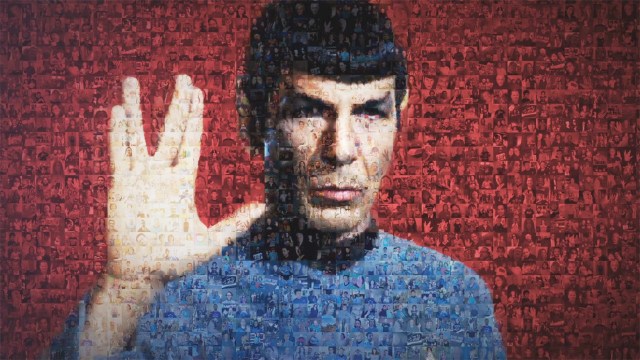
Love, affection, admiration, resentment. Adam Nimoy is the son of Spock, otherwise known as actor Leonard Nimoy. This documentary is how he saw his father, how he interpreted his unique impact on the world of culture and fandom and how he chooses to remember him today. 

Though Adam Nimoy admits that a film about his father must be one about the character of Spock (and vise versa) we never escape the ordinariness of the man. He went from selling fish tanks for plush offices, where he “cornered the market” to any number of real jobs before hitting it big as an a actor. He had a fascinating and unlikely story, and one well worth telling.

Nimoy’s own admiration of Lon Chaney, the Man of a Thousand Faces is fascinating coming from a man who became, perhaps above all others on television, known for one alone. He famously struggled with the all-encompassing nature of this persona, publishing first a book titled I AM SPOCK and afterwards another, I AM NOT SPOCK.

“Prior to Star Trek I never had a job that lasted more than two weeks”. In archive footage, Nimoy’s cackle at reading Variety’s review of the Trek pilot, describing William Shatner as “wooden” is wonderful. These little moments bring the whole thing alive. The cast of Trek all had well-publicised clashes with Shatner, but you get the sense that his relationship with Nimoy leaned more towards the “love” side of “love-hate”.

Shatner: “He could sustain a note…off-key, but he could sustain a note!”. Adam Nimoy isn’t above poking fun at his dad, splicing together the music video for Leonard’s famously awful Bilbo Baggins song and footage of the crew of the enterprise looking bewildered. He also has a pretty frank chat with George Takei about the existence of Kirk/Spock slash fiction on the Internet.

Adam Nimoy is a vibrant director. Like his dad his career path was not immediately apparent, practicing as he did as a lawyer before embarking on his filmmaking path. His style ranges from Ken Burns-esque tracking into stills to livelier and more colourful montages like the Flower Power sequence where he describes how his parents differed. He clearly doesn’t mind being on camera and makes no pretense that this is anything other than a very personal take on his father’s life and times. His emotions are laid bare, particularly in a scene where he revisits old correspondence, and old memories, from when their relationship was at its most trying. It’s also, as Spock would say, fascinating to see Adam experience a convention for the first time and seems to come away equally moved and bewildered by fans’ obsession with his dad.

For the Love of Spock is, at its core, just one man’s take on another. Adam Nimoy doesn’t hide his negative experiences with his father, but will proudly proclaim how strong their relationship became in Leonard’s later years. This isn’t an exposé, but you don’t get the impression that many would have particularly bad things to say about Leonard outside his own family, who suffered for his art. What comes through is an abiding feeling of love, the Nimoys’ love for one another, the fans’ love of Leonard and Leonard’s love of his profession and the phenomenon he was such an essential part of. SSP

Posted in Film, Film Review | Tagged , , , , , , , , , , | Leave a comment