12 for Twelve: The Best of the Twelfth Doctor

Series 10 may well be the best DOCTOR WHO series finale of the revived series. It’s certainly one of the darkest stories in the show’s history and a high point for writer Steven Moffat. Now Peter Capaldi’s time as the spiky twelfth incarnation of the time-travelling adventurer draws to an end, here’s my pick of his twelve must-see episodes.

doctor who db

Would sir like to see the back?: BBC

DEEP BREATH (2014) The Capaldi years started with this cracker, an episode that explored the pain and distress of undergoing Time Lord regeneration better than any other. Life may go on, but after his latest transformation the Doctor is left with PSD and Clara (Jenna Coleman) is completely unable to recognise her friend. More of my thoughts on this episode here.

doctor who ros

He looks cross (sorry): BBC

ROBOT OF SHERWOOD (2014) Did exactly what it said on the tin, much like Tom Baker story ROBOTS OF DEATH. Mark Gatiss has a lot of fun with the genre shakeup, but kept things pretty simple. It’s  your classic campy Errol Flynn-esque Robin Hood story with sci-fi gubbins behind the scenes and the Doctor in an ongoing spoon-measuring contest (watch the episode) with Monsieur Hood (Tom Riley). The Crusader-shaped automatons are really cool and Ben Miller is a pleasing, pantomime-y Sheriff of Nottingham.

doctor who moe

Hug?: BBC

MUMMY ON THE ORIENT EXPRESS (2014) It’s polished and tense and features one of the most chillingly realised Who monsters of recent years. Only the victim can see their very slow, but relentless fate approaching and in a clever gimmick, only the audience can see time counting down for each unfortunate. The Doctor and Clara dress for the occasion and Who superfan Frank Skinner is a likeable guest star, though I do wonder why it had to be Mummy on the Orient Express In Spaaace…

doctor who ma

Hands up, who can tell me where I parked?: BBC

THE MAGICIAN’S APPRENTICE (2015) If Moffat’s tenure as Doctor Who showrunner became known for one thing (aside from nearly-always reversing death) it was retconning the Doctor’s relationship with his enemies. The Master was once a mate, the Ice Warriors just wanted a home, and genocidal madman and Dalek creator Davros (Julian Bleach)? Why, he was just misunderstood. Or was he? Moffat keeps you guessing, opening with a beautiful moral dilemma for the Doctor, throwing in Michelle Gomez’s Missy for good measure and becoming a weird chamber piece by the story’s end.

doctor who zi

Nope, you’ve frozen again: BBC

THE ZYGON INVASION (2015) Truly meets the story potential of a shapeshifting foe that wasn’t quite met with the last Zygon episode, THE DAY OF THE DOCTOR. It’s quite a bleak story for Who, questioning what would happen if we had no real hope of beating our alien invaders and how or if we could process them appearing as doppelgängers of our loved ones. It’s a damning critique of military action over diplomacy and throws in a fair few plot sidesteps and morally grey probing for good measure.

HEAVEN SENT (By Steven Moffat)

In a glass cage of emotion: BBC

HEAVEN SENT (2015) It’s the Peter Capaldi show! Not since Malcolm Tucker told that poor civil servant to “Come the f*** in or f*** the f*** off in THE THICK OF IT has the actor given such a fine performance. Pretty much a single-hander, the Doctor is forced to go all GROUNDHOG DAY, trapped alone for eons and tearing himself physically and psychologically apart through guilt, paranoia and punching a really thick wall.
doctor who hrs

Will the Doctor and his partner please take to the floor…: BBC

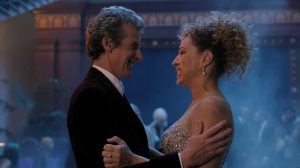
THE HUSBANDS OF RIVER SONG (2015) It might be undemanding, but a bit of romance and a lot of fun sometimes goes a long way. It’s only one of two good Christmas Whos (the other is A CHRISTMAS CAROL, mostly for Michael Gambon) and ends up a very enjoyable romp/chase adventure. It gave us a familiar but fresh relationship dynamic between the Doctor and River Song (Alex Kingston), plus it introduced a great soon-to-be-regular character in Nardole (Matt Lucas).

doctor who tp

Towel?: BBC

THE PILOT (2017) The emotional punch of Series 10 was there from the start, as the Doctor becomes a semi-reluctant teacher to Bill (Pearl Mackie) and the latter falls for a star-traversing water parasite (last seen in David Tennant’s THE WATERS OF MARS) which is piloting a rather attractive girl who catches Bill’s eye. The effects are sparing but striking and elements would come back round tear-jerkingly by the end of the series.
doctor who kk

This is my “I’m not going to let my house kill you”  face: BBC

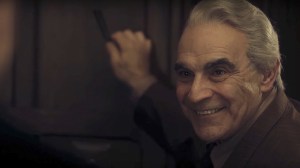
KNOCK KNOCK (2017) Why hasn’t David Suchet been in Doctor Who before? As the Landlord, he is greasily sinister and has plans for the students renting his big old house. A good old haunted house chiller that a little against the grain, the Doctor, Bill and her housemates do some SCOOBY DOO sleuthing before a really moving and human denouement. CG alien termites aside, it’s not a showy episode, but it’s an effective one.

doctor who eom

More tea, vicar?: BBC

EMPRESS OF MARS (2017) The Ice Warriors are the most under-used great Who villain. Who better than Mark Gatiss to bring them back (again)? A squad of plummy British soldiers are swept to Mars by a stranded Ice Warrior then have to go all ZULU as they face an “upright crocodile” hoard with their reawakened queen at their head. Against these imperialist invading aliens…the Ice Warriors have quite a fight on their hands.
doctor who weat

The 1960s called, they want their costumes back: BBC

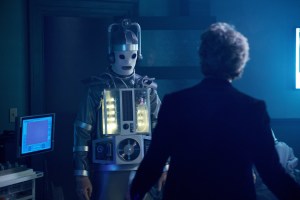
WORLD ENOUGH AND TIME (2017) The nifty science concept of black hole time dilation separating the Doctor and Bill on opposite ends of a colossal spaceship makes this story’s ticking clock even more ominous than usual. We then get an eerie and poignant origin for the Cybermen, with a Cyber-hospital filled with partially converted victim-patients and the eventual return of the much creepier original Mondasian Cybermen and a surprise guest spoiled by the Beeb’s publicity department.

doctor who tdf

This is the weirdest Mexican standoff…: BBC

THE DOCTOR FALLS (2017) Series 10’s finale gave us psychodrama in Bill’s existential crisis as a newly-converted Cyberman, a pleasing meeting between two Masters and Nardole getting to be a hero. I was a little disappointed Michelle Gomez’s performance as Missy became so dialled-down, probably to better contrast against John Simm’s impish Master. It’s a real tear-jerker of an episode with a moving mediation on death and what would be a poetic end to the whole show of the BBC were so inclined. SSP

Posted in Film, Film Feature, Television | Tagged , , , , , , , , , , , , , , , , , , , , , , , , , , , , , , , , , , , , , , , , , | 2 Comments

Review in Brief: A United Kingdom (2016)

There’s not a whole lot wrong with A UNITED KINGDOM, but at the same time there’s also very little to set the world on fire. You can imagine it becoming a firm favourite for cosy Sunday afternoon viewing in years to come. David Oyelowo and Rosamund Pike are both charming and the story, of a Botswanan Prince falling for a white Englishwoman during wartime, could be a fascinating one, but I don’t think this is the best version that could be told. I understand why director Amma Asante (an obvious talent) went for the emotional angle, and Seretse and Ruth’s relationship and the many hurdles they overcome are diverting enough, but the diplomatic incident the affair caused could have been explored in more detail and the antagonists made less cartoony. More context for the time, the politics and the world in general to underlying the big emotions on show wouldn’t have gone amiss, either. SSP

Posted in Film, Film Review | Tagged , , , , , | Leave a comment

Review: Notes on Blindness (2016)

A042_C005_0730RK

A new perspective: Arte France/Creative England

If you are able, stop what you are doing right now and go watch NOTES ON BLINDNESS. It is a sublime, painfully moving, almost religious experience. While it draws influence from many a source, you’ve never seen a documentary quite like this before.

In 1983, theologian John Hull went blind. Surgeries to halt or reverse his visual deterioration had all failed and before long he was faced with carrying on his professional and family life without the luxury of sight. This is the story of how Hull came to accept and utilise his blindness to feed his academic studies over a long and productive career.

For an impaired academic, one question was forefront on John Hull’s probing mind, the answer far from promising: “How do blind people read big books? They don’t.” Despite this crushing setback, he eventually manages to adopt a very pragmatic view on the way he must now live his life, pledging that “I was seeking to understand blindness or else it would defeat me”. Who, especially someone who took referencing academic writing, the very act of reading, for granted, would want to rely on volunteers painstakingly audio recording your reference materials? As humiliating as this might have been, the influx of audio cassettes eventually allowed for Hull to contribute meaningfully to the worpd’s understanding and acceptance of blindness, building on existing research and using his own experiences to guide and help the world think about life and human perception very differently.

Appropriately enough, it’s a primarily audio-reliant tale, though extended periods of blackness and deteriorating photographs are used to great affect. One moment like a surreal lucid dream (the scene where he imagines regaining his sight while walking around the house) the next like a waking nightmare (Christmas morning unable to really share in the joy of his children’s present unwrapping) the documentary keeps you beside Hull in a strange limbo. It works in ways as a horror film in addition to a biography, with Hull not only losing his sight but gradually his memories of images as well. His most vivid recollections of family, friends, places and experiences fade, try as he might to keep hold of them.

Hull’s journey is arresting and wonderful, but rarely the easiest of life stories to watch or hear him recount. Notes on Blindness expands the documentary short of the same name by co-directors Peter Middleton and James Spinney and again lets Hull tell his own story. Dan Skinner’s physical performance as Hull is mature and understated, a sign that there is much more in the usually comic actor’s arsenal than Angelos Epithemiou. The power of Hull’s story, the pain barely kept below the surface, washes over you and unfiltered reminiscences and philosophical musings works in tandem with a natural portrayal from Skinner.

Though very  much its own thing, Notes on Blindness reminded me of a few other recent documentaries. It’s similar to THE ARBOUR in its construction, with the pre-recorded subject’s words lip-synced by actors. The close proximity to a brilliant subject in pain is very like following Roger Ebert’s struggle with an increasingly ravaged body in LIFE ITSELF. Like MY BEAUTIFUL BROKEN BRAIN it capitalises on the unique advantages of the medium of film to tell a difficult story of re-learning, often incorporating experimental or arthouse stylings.

Few films, factual, fictional or somewhere in-between contain such levels of raw emotion and such a unique vantage point on living life to the full no matter what befalls you. It’s not easy journey for many, and it’s far tougher for some, but there’s always hope. SSP

Posted in Film, Film Review | Tagged , , , , , , , , , , | Leave a comment

Review in Brief: The Void (2017)

THE VOID, appropriately enough, starts with a void. It also starts as a taut, tense suspense horror but disappointingly becomes too derivative and something far less in its final act. Cult psychos without, Lovecraftian horrors within; the film is at its strongest evoking an eerie underlying weird or showing off its impressively realised practical body horror. Coming at you much like ASSAULT ON PRICINCT 13 by way of David Croenenberg, the film doesn’t go in for jump-scares or things hiding in the dark, but sustains unnatural imagery and depicts triply waking dreams becoming manifest as a source of tension. I haven’t the foggiest what’s supposed to happen in the last ten minutes of the film, but maybe we’re not meant to know. The Void is bewildering, it’s inconsistent, but it’s fascinating and memorable as well. SSP

Posted in Film, Film Review | Tagged , , , , | Leave a comment

Review in Brief: The Young Offenders (2016)

Two adorable scallywags on a pushbike road trip and demonstrating stupidity, heart and Gallic humour aplenty? I’m in. The dual leads (Alex Murphy and Chris Walley, sporting equally horrendous teen face fuzz and questionable fashion sense) could have great things on their horizon judging by their chemistry and charisma here. The problem with THE YOUNG OFFENDERS is that it never manages to top (or bunny hop) its hilarious and perfectly judged first half. It starts as a simple, no-nonsense teen road movie that wouldn’t feel out of place in the mid-to-late 80s. Unfortunately it drifts off track and tries to be too many things it really isn’t by the end. The choice of villain who appears late in the story left a bad taste in my mouth, but I’ll admit I’m a sucker for a black comedy, and nobody does black comedy better than the Irish. The charm, the honesty and warmth of this modest little venture more than makes up for them occasionally overreaching themselves.

Posted in Film, Film Review | Tagged , , , | Leave a comment

Review in Brief: Jackie (2016)

Natalie Portman is pretty near perfect as Jackie Kennedy. There’s nowhere to hide with her forever centre-frame and sometimes uncomfortably close up when she is at her most vulnerable. I would have preferred more scenes with the priest (sadly not possible with the terminally ill John Hurt in the role) to allow for a real contrast of Jackie’s personas. You could have had two juxtaposed versions of events with the First Lady’s public and private images dominating each telling of the day of the assassination. I was also a bit disappointed that they felt JFK’s shooting itself needed to be depicted, especially following Jackie’s earlier affronted query to Billy Crudup’s journalist, “I suppose you want a blow-by-blow?”. In the end that’s exactly what we get, and it just isn’t necessary. Far more interesting are the private scenes where Jackie obsessively crafts her image and tries to keep it all together with the world watching when all she really wants to do is let go and grieve. SSP

Posted in Film, Film Review | Tagged , , , , , | Leave a comment

Review: Jesus, Bro! (2017)

jesus bro

Our Lord and Savior: Walkaway Entertainment

For the uninitiated, MIDNIGHT SCREENINGS is a popular web series of car seat film reviews. Often said screenings are of so-called “faith movies”, which are popular in certain quarters of American Society, and quite baffling to everyone else. JESUS, BRO! is Brad Jones and his regular gang’s first feature, and what else could it be but a spoof faith movie?

The film opens with the firing of the local church Easter Jesus for inappropriate behaviour. Of course witnessing this has an impact on young Rick (Dave Gobble), who makes it his life’s mission to become the world’s leading athiest Youtuber. All that changes when he has a religious epiphany brought about by drinking highly potent craft beer…

Doug Walker’s slimy promoter telling Rick that “Your intolerant and condescending Vlogs are just the kind of thing we’re looking for” and later, “Happy people don’t get the viewership that angry people do” and Rick’s own “I want to see videos that confirm my pre-conceived biases on the world” all sum up the potentially poisonous impact of social media reliance. Being a Youtuber can be extremely lucrative and has helped to get otherwise unknown content creators an audience they never could have reached, but there are just as many drawbacks. Said contributors have been increasingly exploited by larger outlets and advertisers,their revenue streams stoppered, leading to an increasing number asking for funding direct from their subscribers on services like Patreon. This very movie was made possible by fans’ crowdfunding. While watching favourite subscribed video series has brought joy to viewers the world over, discussion of said videos’ subject matter has bafflingly not resulted in an open floor for civilised debate but an increase in hate speech and threatening behaviour when opinions clash, all with the anonymity the internet provides.

As evidenced with his appearances on Midnight Screenings, Dave Gobble gets very angry about things he is passionate about. As perma-grouch Rick he comes out with such acerbic gems as “Why would anybody worship someone who can’t even take a good flogging?” and “Admit it, you hated Jim Caviezel too!”. Allison Pregler as Rick’s “Annoyingly specific” girlfriend stands in for every bad exposition dump ever committed to film, but is also the real heart of the film, finding herself as she does on the sharp end of Rick’s abrasive personality more often than most. Everyone from Jones’ usual team along with crossovers from NOSTALGIA CRITIC are in there somewhere in fun cameos or reprising long-running in-jokes.

If you compare this to the team’s usual output (especially something like CINEMA SNOB) it’s decidedly, and intentionally, un-sweary. The jabs against a particular kind of person can be cutting, but never unnecessarily cruel. It also promotes a far more Christian message than the usual media and entertainment output of the supposed true faithful. It’s a message of understanding, of live and let live, of tolerance.

There’s some very pleasing Pythonesque skits in there, like when Rick’s alcohol-induced religious hallucination breaks down to reveal a cheap soundstage, or proclaiming as an act of faith “I want to take you to a stoning”, or when someone recounts out-of-the-blue “falling down a mine shaft and getting attacked by a cave bear”. It’s a grab-bag of comic styles, but no more jarring or inconsistent than the religous movies being made fun of.

Though it’s parodying a very specific type of American film and the conventions of such, it everything from IT’S A WONDERFUL LIFE and A CHRISTMAS CAROL to TRADING PLACES. Jesus, Bro! is the kind of faith movie the YouTube generation needs; amusing, heartfelt and with all the slightly shambolic fun of a movie made with friends on a shoestring budget. Thank Santa Christ for Jesus, Bro! SSP

Posted in Film, Film Review | Tagged , , , , , , , , , , , | Leave a comment

Review in Brief: Split (2016)

SPLIT brings back every single one of M Night Shyamalan’s worst habits as a director with interest. After the briefest of returns to form with THE VISIT (it was a straight horror: he can do straight horror) now he thinks he’s Hitchcock again. Trivialising mental illness and sexual abuse all for the sake of plot, the film might be carefully styled with strong shadows, weird camera angles and invasive close-ups, but it’s not the least bit thought-provoking and completely lacking in tension. Anna Taylor-Joy is strong, but James McAvoy takes too many easy shortcuts with his character: every trope for acting out madness or mania is there (of course there’s a Travis Bickle/Gollum mirror scene) resulting in his scenes being simplistic, unconvincing and borderline insulting one-man shows. Then there’s the end which might have been transplanted from an entirely different screenplay, and judging by the final Earth-shattering (Shyamalan thinks) reveal, it was. SSP

Posted in Film, Movies | Tagged , , , , , , | 1 Comment

Review in Brief: Toni Erdmann (2016)

Pretty much every review I’ve seen of TONI ERDMANN has been focussed on how unexpectedly good a two-and-a-half hour German comedy turns out to be. I find that overly reductive and more than a little patronising. American comedies are often too long, humour from across the globe is just as likely to hit or to fall flat. Toni Erdmann is simply a leisurely-paced tale of unhealthy family relationships and the bosses of large European companies being ruthless monsters. The performances, especially Sandra Hüller, are excellent, the situations uniquely funny, so when and if the remake with Jack Nicholson happens they are going to have to transpose this story of a highly dysfuntional father-daughter relationship to a hard-hitting equivalent locale. Writer-director Maren Ade brings the film real heart and soul but also more than a little anger, both at the socio-political climate of the EU and at families who block off their emotions to be more formidable at work or perhaps just because they’ve forgotten how to talk. SSP

Posted in Film, Film Review | Tagged , , , , , | Leave a comment

Review: Wonder Woman (2017)

wonderwoman-1280-9amembargo-1488818748850_1280w

Wunderkind: DC/Warner Bros/Atlas Entertainment

Through my own astonishing poor planning and lack of research, I’ve now seen WONDER WOMAN twice in the cinema, both times with subtitles. Luckily for me the film is compelling enough that I was drawn in and didn’t notice after a while. One unexpected bonus of having subtitles not only for the dialogue but also for all diagetic sound is that it provides a perfect summation of Wonder Woman’s cinematic debut: she roars.

Diana (Gal Gadot) leaves the island paradise of the Amazons to fight in the First World War, which she believes is being manipulated by the devious God of conflict, Ares. Together with American spy Steve Trevor (Chris Pine) and an unlikely gang of ne’er-do-wells, Diana’s experience of war, and of the horrors of the world, shapes her irrevocably.

Wonder Woman has moments that rank up there in the annals of superhero movies, and director Patty Jenkins should be admired for bringing freshness to the familiar. Diana’s smile of thrilled exhilaration as she first realises the extent of her powers; Wonder Woman showing just what thrilling and deadly miracles can be woven using a magical lasso in battle; WW casting aside her concealing cloak and striding out over No Man’s Land, the only splash of colour in a grey and desolate landscape.

Young Diana (Lilly Aspell) dreams if nothing more than following in the footsteps of a long line of warrior women. She wants to be a hero, to fight for everything good and moral. This ideology is brought into stark and thematically hard-hitting relief as she enters World War I, perhaps mankind’s most costly and pointless war. One of Diana’s first acts after arriving in the world of men is, thrillingly, storming into a cabinet committee to shame cowardly generals and politicians sending millions of men to die.

Wonder Woman is the second blockbuster of the year after ALIEN: COVENANT that is far stronger in terms of symbolism than it is with plot. Both films tread familiar ground and offer few storytelling surprises, but they are about so much more than the surface level. They are well-mounted retreads, but retreads nonetheless. They get away with it because of a handful of well-realised characters and a rich thematic seam that connects on another level.

In Gal Gadot, we get the most perfect casting of a comic book character since Robert Downey Jr in IRON MAN. She is Wonder Woman and brings with her some fascinating contradictions: she is naive but wise, both formidable and caring, strong of will but emotionally untested. She knows not what she is or quite where she fits into her world or ours, but she knows just what she has to do. Chris Pine is a charming foil who doesn’t over-do the comic relief, and in refreshingly progressive fashion, Steve and Diana’s relationship is, for the most part, based on mutual respect. Robin Wright and Connie Nielsen make the most of small but crucial roles, Nielsen in particular as Diana’s mother Hippolyta brings a dignified anguish to a potentially naff goodbye to her daughter (“You have been my greatest love and today you are my greatest sorrow”).

The German voices are annoyingly inconsistent in their usage, with actual German dialogue for background characters and up close English-speaking actors with silly accents (the forever awful Danny Huston being the worst offender). Confusingly, some scenes featuring other languages than German are fully subtitled, so who knows what they were going for.

My main issues with the film come in the final act, where the big bad’s plan is revealed to work in the basis of some strange reverse logic, and when he does finally turn up for battle the poor actor’s face is very obviously, and badly, transplanted onto a stuntman’s body. I don’t see why action in Warner Bros superhero movies often pops so badly against the greenscreen. The early fight scenes of the film convince because, for all Diana and the Amazons’ balletic fight choreography and impossible physical movements, they have one foot in reality and you can tell that the beach, the trenches or the bombed out village were really there in the form of real sets. The final showdown was clearly manufactured after the fact, and at this level, this budget, you really shouldn’t be able to tell so easily.

Wonder Woman is greater than the sum of its parts, and far more important. There is no reason she should have had to wait 75 years to get her chance on the big screen. A mythical being crossing into our world like Thor, but pre-dating him and thrown into a far more brutal period of our history. A god and a saviour like Superman, but bringing with her far more hope and progressive thinking than any of his recent big screen outings. It’s so good to have a hero that is earnest, honest and good to her core, because that is who we deserve to fight our battles right now. She is shaken by the horrors she witnesses, but she stays straight and true on her path and refuses set aside her idealism. As she puts it herself, she is that man, and yes, she roars. SSP

Posted in Film, Film Review | Tagged , , , , , , , , , , , , , | 4 Comments