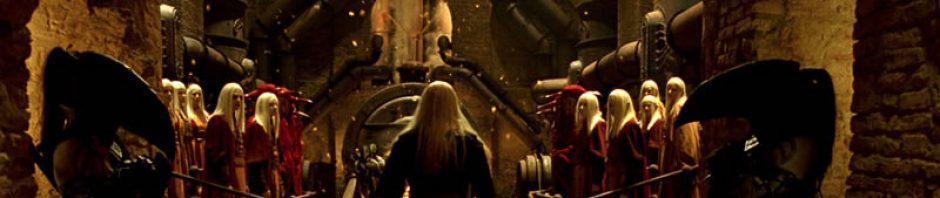
Well, I’ve certainly seen worse TEXAS CHAINSAW MASSACRE reboots. The last one, for instance. Asylum horror and hillbilly horror are both thoroughly outdated scare sub-genres, and LEATHERFACE tries a bit of both, approaching neither with any more subtlety than power tool butchery. As a Texas Chainsaw film it’s probably a bit too slick (not just with blood) but it’s got a pretty neat premise: which of our escaped band of teenage mental patients will turn out to be the titular skin-wearer? You can see the twists coming a mile off and nothing in it, from the scares to the tension-building to the performances are all that sophisticated. Kudos for finding an actor who looks just like a twenty year younger Jim Siedow (Dimo Alexiev) though: they didn’t need to do that, but it’s such touches like that, and the painstaking recreation of the Sawyer farmhouse from the 70s blueprints that ties this latest hit-and-miss reimagining to that depraved universe. SSP
Review in Brief: Leatherface (2017)
Review: The Open House (2018)
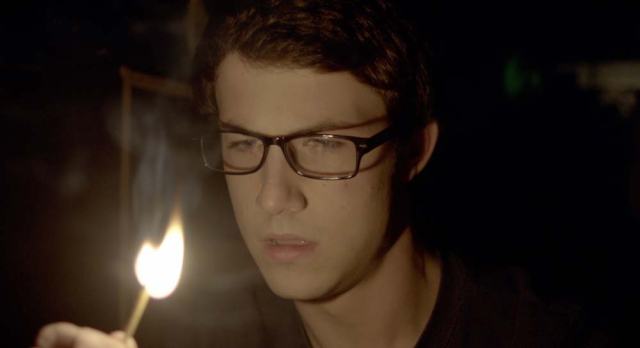
Fire indeed hot!: Netflix
My first new movie of 2018 is a Netflix Original, mostly because between moving house and being ill, I haven’t managed to get to the cinema to see any Oscar Bait in January. OPEN HOUSE has a lot we’ve seen before: dead dads, isolated locales with no phone signal, slightly off locals with vague yet specific warnings (“the quiet can get awful loud!”) and glimpses of weird things going on just outside your field of vision. There’s even a couple of scenes when characters go into a basement alone when the lights don’t work, because of course there are.
Following the sudden, tragic death of his dad, Logan (Dylan Minnette) and his mum Naomi (Piercey Dalton) take a sabbatical at her sister’s house for sale in the country, only having to clear out for the occasional “open house” day for prospective buyers. Try as they might to forget their troubles, their troubles follow them on vacation, as something else may have also done…
The house of the title is a ridiculously spacious, handsome building with plenty of room for things to go wrong. You don’t quite know from what direction the wrongness is going to come from, but you know it’s coming. Some of my favourite horrors/suspense films of the last few years (THE GIFT, HUSH, DON’T BREATHE: none of which does this film hold a temperamental match to) have made the very most of the scare potential of an ordinary domestic setting. It’s amazing how scary just a house can be with the right lighting, camera angles and Foley artistry. The previous sentence is true for a movie that does all of this well.
“You ever thought about how weird open houses are?” Well, for any non-Americans out there (including yours truly) I reckon the answer is yes, and it’s why we don’t do them. This is a much scarier story for a Brit where the concept is completely alien. It’s the mundanity of the horror here that could have made it special, made it last in the mind. Individual scares – bumps, lights cutting out, slamming doors and whip-pans aren’t all that frightening on their own, but it gains tension and traction when the pieces fall into place and you realise that the threat will remain nameless but all-too-real. Sadly, this is only the last ten minutes of the movie, not really enough to justify having to sit through the whole thing.
It’s difficult to get past the nagging feeling that Logan and Naomi wouldn’t go through half the torment if she just took shorter showers, and that she might feel a bit less vulnerable if she got the basement light fixed and put on something more than a towel to restart the pilot light. But hey, if real-world logic always applies to horror movies then we wouldn’t have horror movies.
Hamstrung as they are by how characters in horror movies are supposed to act, these are two really strong lead performances, Dalton and Minnette utterly believable as mother and son trying to overcome trauma. They play off each other well, the supporting cast are appropriately bizarre and off-putting, but the film as a whole comes across as more competent than memorable, far from a horror highlight this early in the year. It’s fine, but aside from the acting it’s little more. SSP
Review in Brief: The Big Sick (2017)
I’ve seen THE BIG SICK twice now, and both times it got me at exactly the same moments. These weren’t particularly emotionally manipulative or maudlin scenes, but the weight of emotion that had built up over the two hours of this true story just overcomes you. My first viewing was on a plane, and the edited, toothless version of this film is not the way to see it. If you watch as intended it’s razor-sharp, bittersweet and refreshingly unconventional in its key relationship dynamics. It’s Kumail Nanjiani’s story as told and acted out by Kumail Nanjiani, a potentially self-indulgent move. Nanjiani strikes the right balance though, keeping it honest (he doesn’t always come out of things well) and connected to what matters to him (falling in love with doing comedy as a living, his difficult relationship with religion and family expectations). Nanjiani and Zoe Kazan manage to be a compelling couple despite their relationship being (tragically, necessarily) one-sided, so Holly Hunter and Ray Romano bear a lot of the emotional weight as Emily’s distraught parents. It’s something special indeed. SSP
Review in Brief: The Limehouse Golem (2016/17)
THE LIMEHOUSE GOLEM is an odd, inconsistent beast. I liked that this murder-mystery takes place in a gritty, nasty vision of Victorian London: children being sold and horrifically abused, seedy backstreet businesses, no desirable place in society unless you’re lucky enough to be a man of means. Are you poor? Are you a woman? Are you “not of the marrying kind”? Say goodbye to any hopes of respect or freedom. The down and dirty historical kitchen sink drama portions of the film have real impact, as does the B-storyline in the music hall, but the murders and the mystery element are weirdly uncompelling, unfocussed and can’t decide whether it wants to be coy or gothically graphic from scene to scene. The cast are good (especially Olivia Cooke and Douglas Booth) but are often smothered by the muddled material, and the red herrings. SSP
Review in Brief: Beach Rats (2017)
BEACH RATS is a digital age twist on the classic coming-of-age/sexual self-discovery tale. Young men who are not yet “out” or are unsure who or what they are looking for in a physical or romantic relationship can escape online, test the water and arrange to meet with more freedom, but perhaps no more security, than ever before. Perhaps the most memorable line is the observation that “When two girls make out it’s hot, when two guys make out it’s gay”. It’s interesting telling this story within this setting and subculture, one we haven’t seen much on film before (it’s a very different Brooklyn to the one we usually see on film). Unfortunately this also means we’re following the kinds of douchebags who socialise at vape bars when they’re not popping pills. I didn’t find Harris Dickinson the most convincing leading presence in this, but I’m sure he’ll get there, ditto the filmmakers, who show more promise than inspiration at the moment. SSP
Review in Brief: Logan Lucky (2017)
I’ve never been a fan of Steven Soderbergh’s OCEAN’S ELEVEN: I find it insufferably smug, over-stylised and that it thinks it’s far cleverer than it actually is. Thankfully LOGAN LUCKY doesn’t share such pretensions, nailing on what it is from the start and putting colourful characters in entertaining situations above flashy plotting or spectacle. The story does throw in a few sharp turns, but it’s more slick misdirection than bending over backwards for the sake of a twist. Channing Tatum and his surprisingly convincing onscreen brother Adam Driver both turn in among their best work and Daniel Craig seems to relish not being Bond. There’s no reason for a Seth Macfarlane to be in this at all, even less with his atrocious English accent (Soderbergh has form for hiring actors to butcher dialects) but luckily he’s only in it briefly and doesn’t ruin the flow of this serviceable caper. SSP
Review: The Death of Stalin (2017)

Unlike the rug, he doesn’t really tie the room together: Main Journey/Free Range Films
If there’s a darker comedy out there than THE DEATH OF STALIN, I’m not sure I want to see it. This is the blackest of black humour, a seemingly impossible situation to derive laughter from, but Armando Iannucci somehow manages it.
When Joseph Stalin (Adrian McLoughlin) collapsed suddenly in March 1953, the prospect of his imminent death created the Mother Russia of all power vacuums. Even before Stalin’s body is cold (or he is confirmed as definitely dead) the most powerful comrades in the USSR begin in-fighting and back-stabbing, making deals and writing lists. Who will be the last man standing?
Iannucci and co have assembled one of the greatest comedy ensembles in years, made up of thespians, British TV talent and Hollywood big names. Jeffrey Tambor’s Malenkov is a buffoon who can’t remember who’s dead and who isn’t, but is still presumed Stalin’s heir apparent. Simon Russell Beale’s Beria is the monster amongst monsters, utterly terrifying (not to mention completely different to Beale’s usual luvvy persona) and prepared to do anything to advance his position. Michael Palin’s Molotov is a doddery old back-stabber, quick to change allegiances to save his skin. Steve Buscemi as Kruschev is the most disliked man in every room – the canny man who survives everything. No cod-Russian accents here: everyone uses their own cadence accept for Jason Isaacs who, for some reason plays his alpha Marshall Zhukov through the prism of Sean Bean.
The opening scene set at a concert hall is a mini-masterpiece in itself, with Paddy Considine’s musical arranger working his way steadily towards a nervous breakdown re-staging a performance that has just completed since Comrade Stalin “wouldn’t mind” a recording of. The more farcical elements of the film get pretty Pythonesque, and might be considered a bit “too silly” (someone gets stressed about their new suit getting ruined when moving Stalin’s body, everyone pushes and shoves to get the best position around their leader’s coffin as he lies in state) if most of it hadn’t actually happened. Of course appropriate that Michael Palin is hovering at the edge of many shots. If it wasn’t for all the mass murder and torture dungeons, this could be a petty schoolyard squabble; there’s enough two-faced bitchiness and shoving going on.
The overarching feeling you get from The Death of Stalin is one of tonal whiplash. It’s more successful than not, but bouncing from entire families being led out into the streets to be shot to name-calling around conference tables takes some getting used to. I found the score alternating between simple, playful motifs for the sitcom stuff and grandstanding orchestration for the larger story of the USSR in crisis more distracting than supportive of the story.
It’s as creatively sweary as you’ve come to expect from one of the creators of THE THICK OF IT and IN THE LOOP, and the dialogue has a wonderful rapid-fire rhythm. Ianucci’s other satirical work at least can be shrugged off as, “Well, that’s democracy for you” but here it’s hard to outpace the horror of an autocratic regime, even if you’re going for universal human silliness as your well of comedy rather than something more biting.
The Death of Stalin won’t be for everyone, but it’s a bold effort to find humour and human fallibility in the darkest of situations. You’re bound to laugh at some point, even if you feel like you really shouldn’t be, and seeing these actors sharing screentime convincingly playing historical monsters has intrinsic entertainment value. At the very least it’s a slightly jarring curiosity, but if you’re on board for Iannucci’s salty satirical gaze turned on a regime in the rear-view mirror, this will be a real treat. SSP
Review in Brief: The Dark Tower (2017)
The most disappointing thing about THE DARK TOWER is what might have been. Of course you can’t judge a hypothetical movie, only what was actually released, and what was released has been considerably cut down. A fascinating premise, dense mythology and references to Stephen King’s worlds aplenty are skimmed over and rarely leave an impression. Idris Elba and Matthew McConaughey are both good shouts for their respective roles, but rarely get the chance to show off. It still just about works on a basic level, with a decent action finale and glimmers of visual invention, but with so little time for anything to register (as the maddeningly fleeting references to the prolific writer’s works attest to) this ends up being the tamest and among the least satisfying of all King adaptations. You’re likely not going to remember much and you certainly won’t be seeing a sequel. SSP
Review in Brief: Most Beautiful Island (2017)
MOST BEAUTIFUL ISLAND is a creepy and tuned-in allegorical suspense thriller. From profound observations of the economic migrant experience, from being “tired of the possibilities”, when you are unlucky to be good-looking in case New York “eats you”. We follow Luciana (the stupidly talented Ana Asensio, who also writes and directs) on the worst working day of her life. She goes straight from dressing as a chicken to hand out flyers to babysitting a pair spoilt brats from hell to finally accepting an invitation to be a “pretty girl” at a seedy party in Chinatown (the kind of party accessible by goods cellar). Her journey throws up more and more warning signs, but Luciana continues for the promise of an easy $2000. The film’s final sequence is far stranger, and in a way less horrific than you might expect, but as a metaphor for what so many women like Luciana must go through when they arrive in the USA, it’s pretty powerful. SSP
Looking Back and Looking Forward: 2017, Part 2
Before we press on with Part 2 of my Review of 2017 (Part 1 here), just a few honourable mentions that didn’t quite make the Top 10, but are worthy of recognition for one reason or another. It’s been a difficult year behind the movies, but a lot of good has come out of the turmoil and there are signs of real change on the horizon.
Honourable Mentions:

Wondrous: Warner Bros
WONDER WOMAN / LOGAN I’ve put these two together because they prove the same two points. 1. There are still ways to keep superhero movies fresh; you just need a strong vision and compelling characters. 2. Hollywood’s favourite genre can still prove studio execs wrong (nobody wants goes to female-lead blockbusters they said; nobody wants to see a comic book adaptation that’s more indie family road trip than city-leveling fisticuffs). Full reviews here and here.

Skewering: Universal
GET OUT While for me this wasn’t quite up there with the best films of 2017, it is perhaps the year’s most important. It skewered hidden, unconscious middle-class prejudice but also worked on its own terms as a beguilingly weird genre movie. Give Jordan Peele whatever project he wants next and let him have a voice, loud and proud. Full review here.
Best of 2017:

Slipping: Passage Pictures
5. MARJORIE PRIME Who needs fancy special effects, or even more than a handful of locations when you have such a compelling quartet bringing a story of near-future loss and regret to life? Bound to strike a chord with anyone who has experienced a family member slowly, painfully, slipping away; Lois Smith is sensational. Full review here.
Distance: Wellington Films
4. THE LEVELLING The best British film of 2017 is one of the most confident feature debuts in years and full to the brim with pain and unexpected beauty. From horrific beginnings to unflinching dissection of what guilt can do to an already distant and unhealthy father-daughter relationship, it’s powerful stuff. Full review here.
Dazzling: Columbia
3. BLADE RUNNER 2049 Who would have put money on the sequel to Ridley Scott’s masterpiece matching, even sometimes surpassing it? In Denis Villeneuve you should trust, his follow-up bringing dazzling visuals, affecting and thought-provoking sci-fi ideas and perhaps the greatest performances from both Ryan Gosling and Harrison Ford. Full review here.
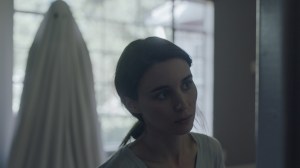
Poetic: Sailor Bear
2. A GHOST STORY Film can be poetry as well, but this manages to avoid art gallery pretensions by remaining emotionally connected and telling the most intimate of tales. It sweeps you up and takes you away, leaving you exhausted but strangely uplifted and still up for a lively debate about what the story actually is. Full review here.

Grin-inducing: TriStar
1. BABY DRIVER What a feeling it is when a film can make me (and my mum) grin ear-to-ear for its entire runtime. Edgar Wright produces his most original and dynamic extravaganza yet, a musical romantic thriller with a sturdy moral core. I usually hate this term, but there really is no other way to describe Wright’s achievement: it’s a tour de force. Full review here.
Worst of 2017:

Cack-handed: Netflix
5. BRIGHT I thought (and hoped) that SUICIDE SQUAD was a blip on David Ayer’s CV. Sadly it doesn’t look like it was, being another over-cooked, cack-handed and muddled effort that downplays real-world issues and wastes pretty much all the talent involved. Review in brief here.

Deafening: Paramount
4. TRANSFORMERS: THE LAST KNIGHT Stop. Making. These. They always get bigger and cram more unnecessary stuff in, but they never improve in quality. It’s yet another deafening, obnoxious and unpleasant offense from Michael Bay’s blockbuster war machine. Review in brief here.

Tortuous: Disney
3. PIRATES OF THE CARIBBEAN: SALAZAR’S REVENGE Stop. Making. These. Too. Like pretty much everybody, I’m tired of Johnny Depp, and if Jack Sparrow was starting to grate when he was putting effort him, now spending another 2 hours of nonsense with him amounts to torture. Review in brief here.
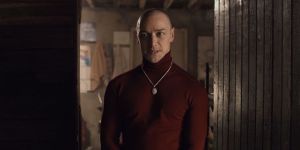
Insensitive: Blumhouse
2. SPLIT I really don’t get the mostly positive reviews of this: why endorse M Night Shyamalan’s worst habits as a filmmaker? You’re looking out for the twist from the beginning, and to get there you’ve got to wade through a whole lot of insensitive, exploitative, over-written drivel. James McAvoy’s performance(s) aren’t nuanced, they’re live-action Looney Tunes. Review in brief here.

Squirm-inducing: Paramount
1. GHOST IN THE SHELL How can every element making up a tentpole genre movie be this miscalculated? To be fair to them, this isn’t a direct remake of the anime cyberpunk masterpiece, but they trip over themselves to reference it and to squirm around the white elephant in the room, somehow making matters worse in the process. Full review here.
Overall 2017 was a pretty good year at the movies, but there’s a lot of exciting releases to come over the next few months, from the fireworks of Marvel’s BLACK PANTHER and AVENGERS: INFINITY WAR to long-awaited second features from bold auteurs Clio Barnard and Alex Garland. Happy New Year, and happier sights and thoughts on film. SSP

 SSP Thinks Film