
What does Yeon Sang-ho, do after directing companion zombie thrillers TRAIN TO BUSAN and SEOUL STATION? Why a comedy-soap-superhero movie, of course! PSYCHOKINESIS follows a deadbeat dad (Ryu Seung-ryong) using telekinetic superpowers acquired from meteorite-contaminated springwater to save his daughter (Shim Eun-kyung) and her neighbours’ shopping arcade from greedy business developers. A common theme among Korean comedies is family dysfunction and that’s in abundance here, with Roo-mi unwilling to take her dad, who abandoned her as a child, back, no matter what useful powers he’s bestowed with. Amusingly everyone who gets a demonstration of power acts shocked and amazed apart from Roo-mi, who just tells her dad to stop messing around. The action is pretty well executed for the budget, peppered with slapstick and chucklesome details (the henchmen all wear hard hats in the fight scenes because they’re the henchmen of a building company). Your mileage on this one will be pretty dependent on your tolerance for soap opera over-acting and goofy humour, but I really enjoyed it. SSP
Review in Brief: Psychokinesis (2018)
A Few Thoughts More: Infinity War

Brazenly flouting the time-honoured rules of the thumb war: Marvel/Disney
The following piece contains major spoilers for AVENGERS: INFINITY WAR.
So now the dust has settled and most people who really want to see Infinity War will have done, lets dig into what happened, who died and what could be on its way in next year’s Avengers follow-up.
Infinity War should have a second subtitle: A series of stupid and costly mistakes. The most heartbreaking thing about the film is that our heroes could have saved the day, but because they’re human (OK, some of them not literally) they screw up, they act rashly and give into their impulses. Thanos was banking on this and he knows as long as he keeps going and sticks to the plan someone among the twenty-odd remarkable individuals facing off against him will give him his opening.
Like all great villains, Thanos is convinced he’s right, that his wiping out of half of existence is for the greatest of greater goods (“I offered them a solution”). From the genesis of his grotesque relationship with Gamora, he priming her for succession. Nebula got all the physical abuse, what Thanos did to Gamora out of professed love is far more monstrous.
We see that Doctor Strange has resigned to his fate by the end, he knows what’s coming. It would have been kinder to Tony to kill him than have him live through this. I would imagine the deaths pre-finger snap are going to stick. Heimdall, Loki and Gamora, probably vision too, are gone. Everyone who was dusted out of existence – Bucky, Scarlet Witch, Black Panther, Falcon, Star-Lord, Drax, Groot, Mantis Spider-Man, Doctor Strange and Nick Fury post-credits – who can say? Well the Guardians, Panther and Spidey will be back because they’ve got sequels to get to.
So Red Skull’s just been bumming around on that rock for 70+ years, huh? It was an unexpected cameo, and it’s a key scene, but is it particularly relevant that it’s this character given that role?
The sequel has got to involve time-travel or reality-jumping. I wouldn’t be surprised if after this, realities didn’t remain separate and we’d have the main emotional punch of the sequel being not a punch but a forced separation of our heroes for the sake of the universe a-la DOCTOR WHO’s “Doomsday”.
For those who say it’s not especially thematically deep, I’d agree Marvel have done more layered and zeitgeist-y stories, but Infinity War draws on one big and affecting idea: the relative value of life. Cap warns Vision they would never “trade lives” to win the day, Thanos takes the life of the one person in existence he had feelings for to reach his goal, so in turn Quill endangers the entire galaxy because “the one” has been taken from him. That’s playing with some pretty heavy emotions right there. SSP
Review: Ghost Stories (2017/18)
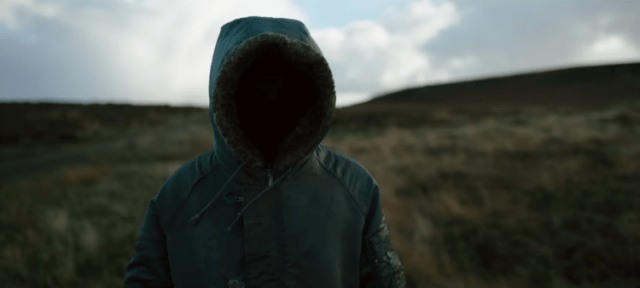
Dead stylish for a stroll on the moors: Warp Films/Altitude Film Entertainment
From SIN CITY to WILD TALES at the movies and INSIDE NUMBER 9 on TV, I do like a good anthology piece. Alas, TALES OF THE UNEXPECTED and THE TWILIGHT ZONE were before my time, so perhaps I need to dedicate some serious YouTube time to catching up. Presenting a collection of stories as such inspires creativity and thinking outside the box, and GHOST STORIES thinks outside the box in order to try and scare the bejesus out of us.
A paranormal skeptic (Andy Nyman) interviews three witnesses and investigates their stories of terrifying supernatural encounters. But what do the experiences of a nightwatchman (Paul Whitehouse), a teenage boy (Alex Lawther) and a rich businessman (Martin Freeman) have in common?
There’s a mundane answer to all these creepy goings on (if you don’t like fun) but any real explanation is kept entertainingly illusive. To start with it’s all very ALAN PARTRIDGE, but before long reality, mock or not, gives way to the eerie. I’m much more of a fan of the supernatural tormentor using spirits from throughout time to punish a guilty man take than the “it was all in his head” theory. Ether way you’re reading it, the repeated motifs and clues sprinkled throughout draw you in and keep you guessing.
The first story is an old fashioned one of a guy in a creepy place who goes looking for scary things in the dark armed with a temperamental torch. Here the ghosts, as is traditional, work better in the darkness so keep turning the lights out and mess around with the radio to make Whitehouse’s nightwatchman brick himself. The second one is odder and more self aware, leaving its creepiest aspects unexplained but following a lead who, though unstable, knows exactly what happens to you if you don’t leg it and lock the door (Lawther’s nervy, unstable introvert is a definite highlight). The final one upends everything and makes you reconsider everything you’ve just seen in a new context and lets Freeman play perhaps the most interesting role of his career.
It was a lot subtler a horror than I was expecting, the echoing drip of water against pitch blackness that opens it perhaps the only thing that really made me shudder. Of course there’s jump scares (audio and visual) but they tend to be done in-camera like the rest of the effects, popping in midway through an extended camera move or just strolling into shot only veiled by the time-honoured and strategically deployed shallow focus. This worked for me as a horror, the creeping dread and oppressive mood to it (similar to something like IT FOLLOWS) though I’m not sure it’ll be to everyone’s taste.
I’m always a bit more compelled by indie films made in my neck of the woods, and Nyman and Dyson have selected their locations around Yorkshire (eerie woods, imposing moorland and scarily empty working men’s clubs). Who’d have thought the vast cellars of a world heritage site attraction would make such a good stand-in for an abandoned asylum?
Co-author Jeremy Dyson, of course, is one quarter of The League of Gentlemen, and some of the gags, from slightly pervy ghosts to one character feeding something revolting to an unseen, likely deformed baby, are very Royston Vasey.
The question I always come back to with horror films is is it scary? With Ghost Stories I have to conclude the answer is “sort-of”. Mostly it’s more creepy than frightening, the ideas making you shudder after the credits more so than the imagery. I’d be interested to see how it compares to the stage play it adapts (also by Dyson and Nyman) but as a calling card for their future filmmaking careers, it’s certainly promising, certainly its own twisted, mischievous thing. SSP
May the Fourth Review: Star Wars: Episode V – The Empire Strikes Back
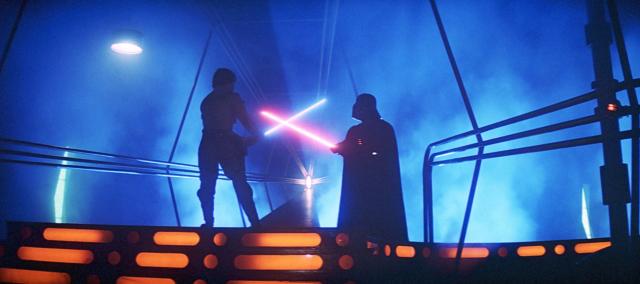
The Fourth is with you young Skywalker…: Lucasfilm
Yes, this Star Wars day I’m reviewing the big one.
With the original STAR WARS, George Lucas discovered that magic formula. But because he stepped back from his creation, the first sequel grew beyond him and became the most balanced and emotionally resonant film in the entire series, and a clear fan-favourite. It also used to be the darkest and most complex too, but then the divisive LAST JEDI came out and brought with it some moments that made the finale of Empire look positively straightforward and jolly in comparison. While I’ve probably seen Empire more than any Star Wars film (I agree that it’s the best by quite a margin: no bucking the trend for me) I still get that same unadulterated thrill I got when I watched it on VHS as a child.
The evil Galactic Empire has regrouped after the loss of their ultimate weapon the Death Star and a fleet lead by the merciless Darth Vader (David Prowse/James Earl Jones) drives their rebel foes out of hiding. As Luke Skywalker (Mark Hamill) goes searching for Master Yoda (Frank Oz) in the hope of completing his Jedi training, Han Solo (Harrison Ford), Princess Leia (Carrie Fisher) and Chewbacca (Peter Mayhew) flee for their lives with the vengeful Imperial forces in hot pursuit…
A lot is made of the challenge of getting Ford and Fisher to fit in the same shot given the foot in height difference. I’m sure it was fun getting Hamill and Peter Mayhew in shot together as well considering their height difference is half again what it was between the star-crossed lovers. When Vader enters Echo Base he doesn’t look quite as badass as his introduction in the previous film as he can clearly be seen watching where he is stepping (after Prowse tripped and faceplanted on a previous take). Another less cool Vader moment has him order his ship to divert to a clearer sector of space so he can get full space-phone signal. Let’s be honest, a lot of the Degobah stretch is muddy (storytelling as well as scenery-wise) but we now know keeping characters’ understanding of the Force as vague and generic as possible works better than the Prequels’ over-explaining of everything.
Empire features my favourite scene transition in Star Wars: wipe edit from “We’d better start the evacuation” to the amassing Imperial fleet and the slow reveal (via all-encompassing shadow) of Vader’s Super Star Destroyer and the first use of John Williams’ unimpeachable “Imperial March”. I also love in this scene how quickly Vader re-asserts his authority not only to his men, but to us the audience after ending the last film in such an undignified position. While the officers squabble about the latest batch of probe data, Vader takes a quick glance over their shoulder and immediately knows “That’s it, the rebels are there!” and orders a swift, surprise attack. No other Star Wars film gets across Vader’s relentlessness and chilling clarity of purpose as well as Empire, from his casual offing of clumsy and stupid subordinates to wonderful sardonic and not-so-veiled threats like “Perhaps you feel you’ve been treated unfairly?” In a lot of ways this is Vader’s film as he drives almost everything that happens in it.
The Battle of Hoth is the perfect Star Wars action scene, combining miniatures, stop-motion and live action elements so seamlessly it’s only just starting to show its age after 38 years. It’s also a hell of a lot of tense fun. The climactic lightsaber battle from atmospheric carbon freezing chamber to claustrophobic maintenance tunnels and out to the yawning chasm over Cloud City’s outer shell for that revelation is perhaps the finest finale in any of the Star Wars movies. Williams’ score is also his richest and most memorable work over eight movies of rich and memorable work. The galaxy far far away is sorely going to miss him after EPISODE IX.
The little character details Irvin Kershner added to make our heroes feel less like a typed page of script rushed through hair and makeup certainly helps the key moments of character development to land. Dialogue becomes more fluid, ebbing in and out and overlapping with action as apposed to stopping dead when someone has to do something (with Lucas’ writing you can practically still see the stage directions). Han manages to thump the Falcon lights back to life before attempting more permanent repairs in the bowels of the shipping all while never once letting it interrupt his argument with Leia, Chewie and Threepio. Han and Leia’s blossoming romance only works because Kershner worked on Leigh Brackett and Lawrence Kasdan’s script, and with the actors, so they sounded human. All the best movie romances start from a point of loathing until, try as they might, all resistance breaks down and they give in (“I love you” / “I know”).
There’s a reason this has become the go-to great sequel template: it expands its universe and grows its characters with far more humour and pathos than the film it followed. Have fun revisiting whichever Star Wars episodes you choose to, unless you’re the kind of sicko who chooses to watch ATTACK OF THE CLONES again. May the Fourth be with you. SSP
Review: Avengers: Infinity War (2018)

That better just be a really loud pizza guy at the door: Marvel/Disney
What a mind-boggling juggling act this is. So many characters, powers, locations, histories and they all have to be brought together in a coherent, entertaining and emotionally satisfying way after ten years worth of setup. An lo and behold, the creative team behind AVENGERS: INFINITY WAR did it…almost. I’ll have to watch this again soon with a less distracting audience, but for now I’m of the opinion it’s a very good, well performed superhero epic with a few flaws.
All has been leading to this. The Mad Titan Thanos (Josh Brolin) comes to Earth to complete his acquisition of the six Infinity Stones, which will allow him complete control over time and space, life, death and reality. Earth’s Mightiest Heroes the Avengers, bolstered by the Guardians of the Galaxy, the nation of Wakanda and the planet’s magical defenders, finally unite and make their stand.
“You’re embarrassing me in front of the wizards!” I worried that so many different tones and styles from the individual films wouldn’t fit together, but I needn’t have. Like the previous Avengers movies it’s big personalities butting heads that provides the most levity (Stark and Star-Lord, Stark and Strange, basically Tony brings out the worst in everybody) and from the off the veritable army of characters are split off into smaller groups with their own unique mission to accomplish. These team configurations are sometimes unexpected but usually engaging and, because the story spans the Galaxy, many Avengers never share the screen with each other.
Here’s what I’ll say about the deaths: there are some.
I know we like to rib Cumberbatch for his unconvincing New Yoik accent, but Doctor Strange almost completely steals the show here, boasting the most rounded performance among some truly imposing competition, becoming unexpectedly central to the plot (not unlike Adam Warlock’s role in the comic) and boasting about three times as many cool displays of power as anyone else. If Marvel really go to town on his weird, psychedelic corner of the universe in future movies then we’re in for a treat. A close second comes Brolin’s surprisingly nuanced vocals, somehow managing to get across that the big purple dude who wants to wipe out half the population of the universe still has a beating (but very twisted) heart. Most heroes get their time to shine (notably Thor, Iron Man, Scarlet Witch and Gamora) and fit as comfortably back in to these roles as you’d expect from an ensemble of many years. Obviously characters have got to fit in where they naturally can in the given story, but some (Black Widow, Black Panther and his supporting cast) do feel inevitably hard done by.
The Russo brothers have blended the style from their Captain America films with what Joss Whedon previously established for THE AVENGERS. The word of the day is “epic” and as such everything is made to look as imposing as possible with grandly staged, cleaner and less crunchy action. It’s perhaps why characters like Doctor Strange and Thor (Chris Hemsworth) tend to have less trouble standing out against the Armageddon, their powers being bigger and flashier than most of their teammates’. A few smaller moments stand out as well, like disastrous mistakes heroes make when their hearts overtake their heads and especially when we see the most disturbing image from the comic rejigged and brought to distressing life.
It can’t help but be conventional at times. The set pieces in the first two acts (the inventive and globe-spanning skirmishes with the very nasty “Children of Thanos”) are a lot more interesting and different than those in the third (pretty standard boss fight and big battle between armies) and are we really still not past “girl fights” as an action movie cliché? Oh look, they’ve got a woman on their team (a woman, one hastens to add, who is fully capable of tearing your spine out) better send our team’s ladies in!
It’s nigh-on impossible to dig into what works and what doesn’t in the plot without talking about, y’know, the plot. But people don’t want to know what happens so soon after release, so I’ll leave it at this: while a fair few moments carry weight due to how many movies we’ve spent with these characters, it does seem like there’s an all-too-easy out for what should be the gut punch of the movie. I’ve seen comparisons to EMPIRE STRIKES BACK and, yes, it’s tonally similar, but I get the feeling the fallout from Infinity War’s apocalyptic events will end up being far from permanent. We’ll find out next year exactly what tricksy ways they get around it, but for now sit back and enjoy the dazzling spectacle and partial payoff, because this was just the overture. SSP
The MCU: Six Thoughts for Six Stones
It’s been a decade since Tony Stark first made a scrap metal suit of armour with a fancy pacemaker to fight terrorists, and the Marvel Cinematic Universe shows no signs of slowing down, even with their Magnum Opus AVENGERS: INFINITY WAR just around the corner. What follows are six trains of thought on what makes the MCU what it is (for better or worse), loosely based on the six infinity Mcguffins this whole hullabaloo has been about…

Strike a pose: Marvel
1. Space (use of) Aside from the obvious fact that some of Marvel’s best offerings have been set among the stars, the series has used space in-camera consistently well too. From complex, multi-tiered action blocking exemplified by THE AVENGERS‘ Battle of New York to the more recent films’ Bond-esque globe-trotting (or Trek-esque planet-hopping). Each new instalment and director also tended to bring a distinct aesthetic tied to whichever subgenre the superhero movie is being spliced with this time. What visual influences Infinity War will draw on remains to be seen, but surely it can’t just be bigger, can it? We could all do with a few less explodey sky battles in modern blockbusters, so here’s hoping the vast team-up offers something a little different to keep things fresh.
He hasn’t thought this through: Marvel
2. Mind (and motivation) I’m not going to claim that the MCU movies are dumb (OK, IRON MAN 2 is pretty dumb) and I’m not someone who thinks superhero movies are nothing but irrelevant escapism, but I will say that the Marvel films tend to have serious problems with their villains. In the vast majority of cases (Killmonger and Zemo being the exceptions for having layers, Ronan and Kaecilius for being entertaining) their evil plans and/or reason for being doesn’t make sense and carries no weight. Apply any level of scrutiny and things start to crumble: I’ve always had many, many problems with the end of WINTER SOLDIER and I still don’t really know what Malekith or Red Skull’s end games were supposed to be. After being teased for so long, Thanos better be compelling and his masterplan needs some dark majesty.
Shot not appearing in this film: Marvel
3. Reality (marrying of many) While each Marvel film works on its own internal logic (within reason), the problem with the concept of a “shared universe” is that sooner or later when characters meet their respective realities also have to merge, and it’s not always a comfortable fit. The worlds of Thor and the Guardians will marry well, having been cut from the same space-operatic drapes, ditto for the tech-enhanced Iron Man and Spidey, post-Avengers Cap and Widow doing the old gritty espionage thing etc. But with Infinity War, Hulk-smashing together so many competing styles and tones could very easily overwhelm it, and it’s not something they can get past with quips alone (though past examples of characters making fun of each other, such as “Doth mother know you weareth her drapes?” have been highlights).
You dropped something: Marvel
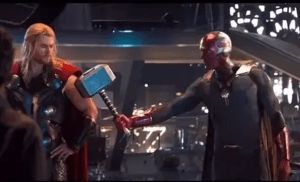
4. Power (levels and distinctness) Movies of the MCU pride themselves at inventing new ways to represent superpowers and the clashes between heroes and villains and heroes and heroes. With super-strong, super-gadgety and super-weird characters aplenty, everyone needs their own way to stand out from the ever-swelling crowd. Some of the most “wow” moments of the series so far have come from unexpected displays of power (Vision casually handing Thor his hammer in ULTRON, Thor weilding lightning with his bare hands for the first time in the Rainbow Bridge battle in RAGNAROK) and I’ve no doubt that the Russo Brothers has a fair few surprises for us in Infinity War on that score.

Behold, my fancy watch!: Marvel
5. Time (lines and consequences) For all the effort in constructing this vast and varied universe, the MCU timeline is a bit busted isn’t it? IRON MAN 3 firmly established the time frame of Tony’s story, and we obviously know when Cap went on ice, but the rest is anyone’s guess. Stephen Strange gets namechecked as a person of interest in Winter Soldier but this is pre his own origin story, so why would he be on a spy agency’s watchlist before he had his powers? Maybe it’s a timey-wimey infinity stone thing, but I think this kind of thing mostly comes from Kevin Feige giving each director a long leash; great for creativity, but not so good if you’re avoiding contradictions in continuity. While it’s also been criticised that we haven’t had any significant (permanent) deaths in the MCU, collateral damage to the world has always been in evidence (it was the non-Bucky reason for CIVIL WAR, after all) and those ultimate heroic sacrifices are coming, I feel.
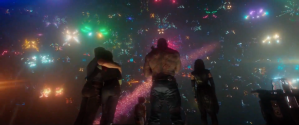
If only every funeral was this colourful: Marvel
6. Soul (emotion and drive) I’ll be fascinated to see how the final infinity stone manifests itself as soul really does take us back to what makes the MCU work. Whatever pyrotechnics and genre play each film puts on for our amusement, the only real reason this mega-franchise is still going so strong after a decade is that we care so much about these characters. They can do amazing things to save the world, but they still go through very human experiences, from embracing their responsibilities, going through severe PTSD, finding their place in a new and changed world, choosing between absent parents and present surrogates or simply learning not to be an ass, these heroes are us. Everyone answers the call to save the day for variations on a theme (it’s the right thing to do) but the whys are ever-changing and evolving in response to the state of the world and where the characters find themselves. Except for Cap, who still does all this because he doesn’t like bullies, which is something simple we can all root for.
See you on the other side of Infinity, the Marvel Cinematic Universe may (hopefully) be forever changed. SSP
Review in Brief: Blade of the Immortal (2017)
BLADE OF THE IMMORTAL is one-man filmmaking army Takashi Miike’s 100th feature and arguably his largest scale project to date. I doubt the man who makes Ridley Scott look sluggish even broke a sweat (only a film a year, Ridders? You lightweight!). This is about the closest you can come to seeing a living anime, heightened action, graphically striking compositions, ultraviolence and ridiculous hair all-inclusive. It should really be Blade of the Immortals, because it’s basically the Japanese HIGHLANDER, only not crap. It’s as OTT as we’ve come to expect from Miike, but the melodrama, flying limbs and spurting claret is balanced with a unique sense of humour (Manji may be immortal, but he definitely feels, and gets really annoyed by, sustaining another mortal wound) and some down-to-earth chemistry between Takuya Kimura and young Hana Sugisaki. It’s an unexpectedly sweet little relationship between these two, perfectly in contrast with how amoral and angry everyone else in this story is. SSP
Review: Isle of Dogs (2018)

Good boys?: American Empirical Pictures/Indian Paintbrush
ISLE OF DOGS…I…love…dogs. I only just got that. Anyway, I have a confession: I’m a cat person. I value their independence, their intelligence and their lack of need to be subservient to us. Anyway, while I don’t particularly like dogs I see all the joy they bring so many, many including, presumably, Wes Anderson. Anderson’s second animated film certainly feels more consistent in tone than FANTASTIC MR FOX and takes his obsessive, almost OCD visuals to a new level.
In future Japan dogs have been outlawed and sent to a trash island to prevent the spread of a deadly canine flu. When an eight year-old boy (Koyu Rankin) arrives on the island looking for his lost dog, a pack of alpha males nominally lead by Chief (Bryan Cranston) take him in and help in on his quest, while on the mainland the cat-loving, canine-ist regime plots to keep man’s best friend out once and for all.
While I understand the criticisms of cultural appropriation, I see it more as an affectionate tourist’s take on Japan. It’s the view of someone who’s been and had the time of their lives, and I related to this having been myself last year. I’d be interested to see how it’s received in Japan, whether it’s taken in what I think was the intended context, or whether it’s seen as a patronising. I’d also be fascinated to see how they address the language element, if in the Japanese version the dogs speak Japanese, then what do the Japanese humans speak?
Speaking of cultural appropriation in animation, how is something like KUBO AND THE TWO STRINGS so different? That film uses Japanese iconography to tell an original story that feels like a traditional Japanese fable and yet all the major characters are played by Western actors. At least Isle of Dogs cast Japanese actors speaking in their native tongue and presumably requiring a different type of direction.
It’s a stunning piece of craftsmanship, meticulous on every level. The challenges of getting realistic (if stylised) canine movements out of metal armatures must have been numerous. The rendering of a heightened Japanese culture (the opening temple ceremony, Taiko drummers and screen print-style prologue, very Japanese trash items in making up the background to the dogs’ escapades) and the witty juxtaposition of behaviours (efficient, unfeeling sushi preparation matched with efficient, unfeeling surgery) help to make the film its own thing.
This is among my favourite of Cranston’s performances (and that’s saying a lot). He plays Chief as a remorseful convict, he doesn’t know why he bites, but he does. He’d prefer to keep to himself for the sake of self-preservation and the safety of others, no matter what he really wants in his heart of hearts. I also really enjoyed Edward Norton as the pack’s micromanaging mediator Rex and Jeff Goldblum reining in most of his usual verbal flourishes as local gossip and spoiled brat Duke. There’s no reason – aside from being Anderson’s good luck charm – for Bill Murray to be in this; he’s got so little to do and say. There’s even less point in Tilda Swinton who has, I think, three lines total?
There are things in Isle of Dogs that didn’t quite bowl me over, aside from the not bothered by dogs thing, but they’re difficult to put your finger on. I think like a lot of Wes Anderson films, the Wes Andersonyness is both the best and worst thing about it. It’s almost aggressively quirky and isn’t the least bit bothered if the ending, and everything that’s been set up by the story and characters up to press doesn’t fit. Overall, especially if you’ve been to Japan, it’s a hugely enjoyable comedy/sci-if/fable. If you love dogs, it’ll be unmissable. SSP
Review in Brief: The Director and the Jedi (2018)
Whatever you thought about EPISODE VIII (and whether or not you need to get over yourself), behind-the-scenes documentary THE DIRECTOR AND THE JEDI brings chills (Frank Oz taking up the Yoda puppet again) and tears (filming Carrie Fisher and Mark Hamill’s final, painfully prescient scene together) in addition to giving the work of over-worked production crew-members more time in the spotlight. Starting with Hamill’s much-publicised criticism of old Luke: “I fundamentally disagree with your concept of this character and how you use him” it shows he and Rian Johnson never really saw eye-to-eye, but at least respected each other as artists. A highlight for me was a production designer commenting “If we cant fulfill his expectations…how can I trick him into thinking he’s still getting the same thing he asked for?” Let’s be honest, they didn’t need to build Luke’s green milk-giving sea cow and ship it over to Ireland or have brave (foolish?) puppeteers dangling over a cliff edge to operate porgs. None of it (including this doc) was necessarily, but it proves the passion. SSP
Review: Ready Player One (2018)
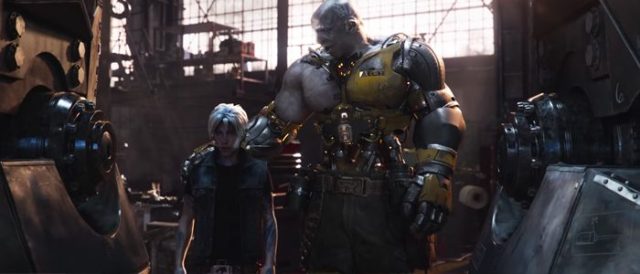
Playing with friends: Warner Bros/Ambin Entertainment
A thought kept occurring to me while watching Steven Spielberg’s READY PLAYER ONE: what would a director like Paul Verhoeven have done with this material? The movie would certainly have had more bite. Spielberg isn’t prepared to step over that line into satire. As usual he focusses instead on the emotional content and the wonder of the visual, which is fine. Just fine.
In a dismal future ruled by tech corporations, the commoner’s only escape is the OASIS, a near-infinite virtual pop culture adventure. When the creator of the OASIS, James Halliday (Mark Rylance) dies and bequeaths his company and his creation to whoever can complete a series of knotty challenges that delve into hist past, young hopeful Wade Watts (Tye Sheridan) steps forward…
Not a lot of extra thought seems to have been put into the world outside the OASIS simulation. It’s just a generic Big Business-run dystopia where the rich have become richer and the poor live in boxes. Do the underclass work? How do they live? Given the amount of time everyone spends in the virtual plane, has the OASIS become the basis of the world economy? We see pizza delivery by drone and the police turn up at the end so presumably some people not in the tech industry still have regular jobs. All these questions and more will remain unanswered, because this is (admittedly appealing) surface-level world-building only.
I would have liked to have taken a deeper dive into why players pick the avatars that they do, why some play as themselves with different hair and/or brandishing a famous piece of pop culture ephemera and others completely reinvent themselves. At one point one of the lead character avatars changes to reflect self-acceptance, but there’s certainly more room to run with this idea and enrich the characters. The characters in general seem like placeholders and don’t really connect despite some of the cast’s best efforts (Olivia Cooke and Rylance stand out).
Little to no critique of the film industry is in evidence (Spielberg doesn’t crap where he eats) but mostly it’s about how the games industry is being corrupted. Sorrento’s spitballing of ideas to make his games more profitable at players’ expense basically summarises everything wrong with AAA games publishers’ business practices today.
Pop culture references are a little laboured at first, but by the time a key (and poignant, given Spielberg’s relationships) film sequence is recreated they become far more satisfying. The film they choose for this set piece is surprising, and pushes the boundaries of 12A certification to the extent I worried a little about how well the younger audience members at my screening would be sleeping that night.
The “dump the whole toy box on the floor” fun of the finale gave me the same beaming grin, for the same reasons, as THE LEGO BATMAN MOVIE. There is at times a but too much visual information on screen at once to process, which may be intentional, the first reveal of the OASIS is probably supposed to be overwhelming to the senses, the whole thing designed to be something to be rewatched time and time again to play nerd culture bingo (or a killer drinking game). I’d like to think I got 80% of the references that I saw, and Warner Bros have some great property to draw on, with Spielberg calling in favours elsewhere to fill out the background characters. It seems like they desperately wanted Disney/Lucasfilm to let them borrow one of their icons (STAR WARS is a glaring omission in Halladay’s obsessions), but there is more than enough American and Japanese cross-over pop culture to populate this world as it is.
Ready Player One isn’t top-tier Spielberg, but there’s plenty to enjoy. It’s not deep, it’s not complex, but it presents its vibrant pop culture cornucopia in an appealing way, a way which is a lot more compelling if you stop over-analysing it. Not the most nourishing of cinematic meals, but a very tasty one nonetheless. SSP


