
You don’t really get gay romcoms. Why don’t you really get gay romcoms? You get gay characters in rom-coms, plenty of hard-hitting gay dramas and romances but not many films focussing on gay relationships in a comedic context. Simon Amstell gets self-reflective in this loosely autobiographical tale of a film director (Colin Morgan) stuck in a romantic and professional rut after a bad breakup and a struggle to create anything in the same league as his acclaimed feature debut. “I think people just think I made that film and then died” Benjamin proclaims. “I just wondered if you were still in the business of being interested in me?” is his way of asking a guy to give him another chance. It’s a little self indulgent, but Amstell’s willingness to make his self-insert character completely awful wins you back around. It’s sharp, it’s sweet and it’s worth checking out. SSP
Terminator: Dark Fate (2019) Review
Review in Brief: John Wick Chapter 3 – Parabellum (2019)
I’ve never been a JOHN WICK stan (am I using that right?). I like the films just fine – the first considerably more than the second – but I don’t quite see them as the action art form that some do. CHAPTER 3 – Ridiculous Title gets even more bogged down in the series’ convoluted mythology but offers plenty in the way of creative and often hilariously OTT fight choreography. Yes, John (Keanu Reeves) has a fight with some goons in a store with bladed weapons on every wall. Yes, Halle Berry’s canine sidekicks take on goons with guns and win. Yes, those guys from THE RAID 2 really have to tangle with Keanu… But I was actually a bit disappointed by how few assassins come after John in this one considering what had been set up and how few genuine surprises there were here. Saying that, would I watch another one of these? Sure, why not? SSP
Review: Joker (2019)

Not happy in himself: DC/Warner Bros/BRON Studios
The greatest trick the Devil ever pulled was convincing the festival circuit that JOKER was somehow profound. Don’t get me wrong, it’s not bad. It’s fine. But if it wasn’t for Joaquin Phoenix’s pained, spellbinding lead performance there’d be very little reason to see it.
In a rundown Gotham City facing garbage strikes, a poverty gap and violent social unrest a failed clown and wannabe comedian Arthur Fleck (Joaquin Phoenix) tries to make his mark on the world.
No, this isn’t based on any one Batman or Batman-adjacent story, and few elements of the wider mythology come into it aside from the prominent presence of the Wayne family. At one point I was afraid they were going to push a ridiculous and unnecessary extra twist on the source material but thankfully this is just a red herring. This is just another in a long line of multiple choice Joker origins, and that’s OK.
Phoenix’s take on the Joker is definitely a take – oscillating between pitiable and powerful, tragic and terrifying. He’s in every scene and the camera is rarely not tightly in his face. He’s really uncomfortable to spend any length of time with, but you’re transfixed, unable to look away and in it for the 2 hour long-haul with him. I can’t say any of the other performances or characters are worth writing home about – Robert DeNiro’s much-publicised role as Rupert Pupkin-with-success Murray Franklin doesn’t exactly stretch him, Brett Cullen’s Thomas Wayne is Trumpy and one-note and Zazie Beetz is disappointingly reduced to a plot device. Even the one relationship that might have been genuinely touching and sympathetic, that of Arthur and his frail mother (Frances Conroy) turns out to be a toxic one and is built on better film portrayals of these kinds of unhealthy mother-son relationships.
Mostly it’s relentlessly grim and angry about general injustices in the world. With more insight, even more specifically directed anger, it might have packed a punch, but a few moments aside it doesn’t. Scenes like the threatening escalation of a police chase through a train packed with protesting clowns and Arthur taking a quiet moment to dance in rapturous bliss in a public bathroom after committing his first atrocity are sadly few and far between.
The film also traps itself between excusing Arthur’s actions because of his mental health and the state of society (clunkiky summed up in monologue delivered to the audience towards the end) and seeing him punished for them. You’re clearly not meant to be able to get a clear picture of Arthur, but the filmmakers don’t really give you enough meat on either side of the argument to make an informed decision about how to feel about his actions.
Appealing cocktail of influences as Todd Phillips’ film is, it’s just so derivative. There’s nothing wrong with taking notes from Scorsese, but lifting entire scenes from TAXI DRIVER and especially KING OF COMEDY betrays a lack of inspiration. If we were to reduce this down to its base elements, Joker is a King of Comedy remake with added riots.
For all the things you could criticise the film for, glorification of violence isn’t one of them. Acts of violence in Joker are nasty, messy and realistic. Horrible acts, whatever the justification behind them, are shown to have lasting consequences.
I’d have much preferred to feel more strongly either way about Joker, to be able to really dig into something of substance, good or bad. As it is, it’s a mildly diverting curiosity not worth getting worked up about. Phoenix might win Best Actor – he probably should – but everything else will soon be forgotten. It’s not big, it’s not clever, but it’s watchable. SSP
The Peanut Butter Falcon (2019) Review
Review: Bait (2019)
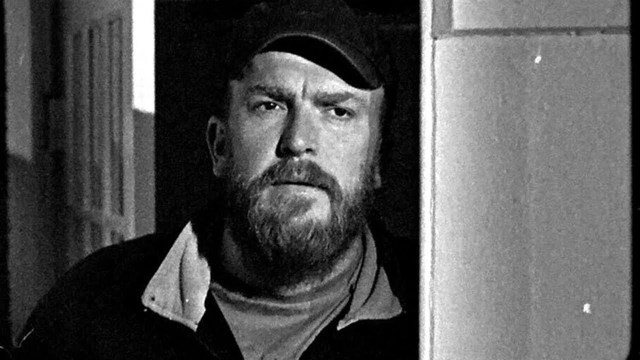
What’s a fisherman without a boat?: Early Day Films
It’s an interesting idea, reviving the 16mm shot film, I’ll give them that. BAIT has to be the most unique film of 2019, first-time feature writer-director Mark Jenkin getting himself out there, in the UK and the film festival circuit at least, and standing out by doing things differently on an ultra-low budget.
An out-of-work fisherman struggles to make a living in a Cornish village that now makes more money from city folk holidaying and stag parties partying. Will Martin (Edward Rowe) keep his place on the world and heal the divide between his family and friends who have been more willing and able to move with the times?
There’s a charming handmade quality to everything in Bait. When I first got out of seeing it I had to think, what on Earth was that? It’s a bit of a shock to the system to see something so rough and ready on a big screen. It definitely has a slightly trial-and-error first feature feel to it but you’ve got to admire Jenkin’s ingenuity getting it made and all through the process making the imperfections found therein real virtues.
This story is clearly of a time and place, tactile and rooted in an ancient and tragically dying profession in the British Isles. It’s political, skirting around the B-word and quietly seething about the whole situation. We’ve seen a lot of agricultural dramas over the last couple of years incorporating upcoming upheaval in the UK into their plots, it’s quite surprising not more seem to be looking to the seas to comment on the future of an island nation.
The low-fi techniques used to develop the film stock (using coffee and vitamin powder, fact fans) and the different conditions, weather, times of day etc the process was conducted in results in vastly different effects from shot-to-shot. For instance, the glittery speckles you can see in some scenes are dust and sand that settled when Jenkin was developing the film with the door open, and you’re meant to notice. The artifice, the process of filmmaking is being exposed for all the world to see.
The repetition of Martin’s daily routine, the tediously meticulous processes of being a fisherman is thematically important but verge on testing your patience. I know you can only use the footage that you have but the quite janky editing was a distraction. This especially goes for when violence occurs in this story – it’s a dark and upsetting turn of events and you can wish for a bit more filmmaking polish to retain the impact of these crucial scenes.
The sound had to be post-synced, which can be slightly jarring but gives Jenkin the freedom to peel back layers of the soundtrack to reflect Martin’s mental and emotional state at key points. Again, it takes some getting used to but it certainly adds to the overall effect.
The mismatched performance styles (some naturalistic, some more theatrical) took me out of the story a little; it’s not surprising to learn the different acting backgrounds and experiences of different members of the cast.
Bait is a fascinating filmmaking experiment and an impressive debut despite lacking punchy execution of some of the story’s key dramatic beats. We should see more features coming out of Cornwall, of and about a particular and distinctive place and the continuing democratisation of cinema so everyone can muck in and have a go, whether the aim is disguising or highlighting the filmmaking process. SSP
Review in Brief: El Camino: A Breaking Bad Movie (2019)
EL CAMINO is a decent epilogue to BREAKING BAD, but is far from the essential viewing its forbear was. Essentially Vince Gilligan has crafted an indulgently extended episode that ties up what few loose ends remained from the rise and fall of Heisenberg’s empire, and you could quite happily watch two or three key scenes from this and leave it at that. Aaron Paul is reliable ballast to build a new story on, but the story itself is missing BB’s scope and thematic richness, though perhaps appropriately the whole thing is really about seeing how different, how much better a man Jesse Pinkman is than Walter White, even under the most trying of circumstances. Expect moving cameos in flashback, gallows humour and Badger and Skinny Pete (Matt Jones and Charles Baker) stealing the show all over again. SSP
Review: Ready or Not (2019)

Her “something borrowed” is the ammo belt: Mythology Entertainment/Vinson Films
READY OR NOT is a good really time at the movies. No, it’s not revelatory or particularly groundbreaking or the next big thing, it’s just good and a whole lot of fun.
As tradition dictates, any new member of the wealthy La Domas boardgaming dynasty must play a game. Grace (Samara Weaving) chooses poorly and ends up playing the deadliest game of hide and seek around the family mansion, her in-laws armed to the teeth and in hot pursuit.
Co-directors Matt Bettinelli-Olpin and Tyler Gillett really want you to know that they know their way around the horror genre. From an impressive opening tracking shot through the film’s primary location of a classic Gothic mansion, establishing the geography and atmosphere of the wider story from the off, to confident pacing and knowing manipulation of horror tropes throughout, they pull it off. There’s also some real acidic wit to the script from Guy Busick and Ryan Murphy here, usually in mocking lines delivered by the quite terrifying Aunt Helene (Nicky Guadagni): “Brown-haired niece, you continue to exist” or more veiled-menacing threats by mother-in-law Becky (Andie MacDowell, great to see you again!).
While it is genuinely terrifying when the La Domas clan tool up and give chase, not all killer family members are made equal. One is off her proverbials on “prescription” pills and is equally likely to off unlucky maids and fellow hunters with an itchy trigger finger, another unlucky enough to given a crossbow in the ancient weapon lottery takes a tactical break in the bathroom to YouTube how to use it.
I much preferred the devious setup of Ready or Not, where you have absolutely no idea what direction or tangent it will take to the all-out splatterhouse it becomes. As silly as it sounds when talking about a slasher movie I didn’t like it as much when all subtlety went out of the window.
Speaking of all-out splatterhouse, I would put money on this receiving higher certification was not to do with the amount of gore throughout but the manner in which characters die – not easily. It’s not always seeing every detail but hearing someone horribly gurgling through blood and gasping for life that stays with you.
Samara Weaving is a find, imbuing an otherwise quite formidable Grace with endearing physical tics, like catching herself still doing the exaggerated sneak mime she was doing messing around with her boyfriend (Mark O’Brien) a few scenes later when her life is in real jeopardy and snort-laughing at the most and extreme unexpected turn of events.
Also it’s amazing in horror quite how many heroines only stop running and fight back once they become that tired trope of the final girl. In Ready or Not and something like REVENGE last year, our protagonists start off fighting for their lives and never stop, and have a will and adaptability to survive using any means or nearby household objects necessary.
I loved how Grace’s wedding dress is designed by Avery Plewes in such a way to gradually transform into a battered suit of armour as she endures her war against the family. The bodice turns into a breastplate, the brocade to tattered chainmail and the bride to a warrior fighting for her very survival on the most unlikely of battlefields. If you ever feel like your first meet with your in-laws is going badly, take solace that no-one’s opened up the weapons cabinet.
Ready or Not won’t change your life but your watch time will fly by, and very enjoyably so. If I liked rollercoasters, I’d compare this to one – it’s a thrill-ride with mischief, style and striking performances to spare. SSP
Review in Brief: Arctic (2018/19)
What kind of a madman would star in both movies called POLAR and ARCTIC in the same year? A Mads-man, that’s who (excuse the pun, or don’t, I don’t care). Despite the etymologically similar titles they couldn’t be more different projects. This is THE REVENANT two centuries further on and with a different bear. In very few films are you genuinely convinced that the hero is going to die, but Arctic is definitely one of them. It would be nigh-on impossible to survive on your own stranded in the Arctic Circle but Overgård (Mads Mikkelsen) has to drag someone else around on a sledge for most of the movie as well. It’s taut and harsh and gritty, only giving in to some slight romanticising in the final stretch. Survival nuts will get a kick out of the attention to detail and the research put in, everyone else will be compelled by another quietly dignified powerhouse performance from Mikkelsen. SSP


