My Clichés! I Can’t See Without My Clichés!

dennis

There are a few plot, dialogue and aesthetic elements that are used time and time again in movies that drive me to despair. Whether it’s through lazy screenwriting, lazy direction or just because filmmakers think they have to conform to what has come before. Here’s a countdown of my bottom five (hint: the worst is in the title).

5. Horror Move Behaviour

Thankfully this one has been spoofed for years with the SCREAM films and THE CABIN IN THE WOODS, so you rarely see this played straight-faced now. But a few decades ago, especially when Teen Slasher Movies were at their height, you could guarantee the morons on screen would go check the cause of an ominous noise, stumble into a darkened cellar alone and any number of other dumb things. Stupid, illogical behaviour to facilitate the plot moving forward, in other words.

4. “We have a situation/we’ve got a problem”

This one depends on the film genre (almost exclusively in Hollywood) you’re working in – if it’s a war or disaster movie, then someone always bursts into a bunker or war room and “has a situation”. If it’s a crime thriller or gangster movie then someone “has a problem” which needs to be “dealt with”. Cinematic shorthand it may be, but it’s also the epitome of screenwriting laziness. This was stale in the 90s, but it’s still used by sub-par filmmakers (Michael Bay) and even some good ones (Paul Greengrass) to say “we can’t be bothered with exposition” or “come see what we’re going to be doing for the rest of the movie”. It’s not a terrible idea to use this shorthand in order to “show, not tell” but it’s still overused.

3. They get together in the end…

I’ve not no problem with romance in movies. If you’re actively building up a relationship between two characters throughout a film (say, in a rom-com), or there’s a hint at a hidden attraction from the start, then fine – the payoff is very rewarding for the viewer. But why the need for characters to snog at the climax of a film just because they can? Lead man + lead lady does not = automatic chemistry. It often feels forced, pandering, and a cheap trick designed to beef up a film’s otherwise lacklustre ending. It also seems to be the Hollywood default position (especially in regards to marketing) and has been so since before the Golden Age so this one probably won’t be disappearing any time soon…

2. “NOOOOOOOOOOO!”

This is usually wailed after the death of someone the character cares about, accompanied by an exaggerated crane shot and the actor jerking their face up to the heavens. It’s been done too much in cinema, and lacks the dramatic impact it might once have had. It just too easy to make fun of now, to the extent that Darth Vader’s “noooo” from REVENGE OF THE SITH has become a meme, and the rest were expertly spoofed in the paintballing episode of SPACED.

1. “My glasses! I can’t see without my glasses!”

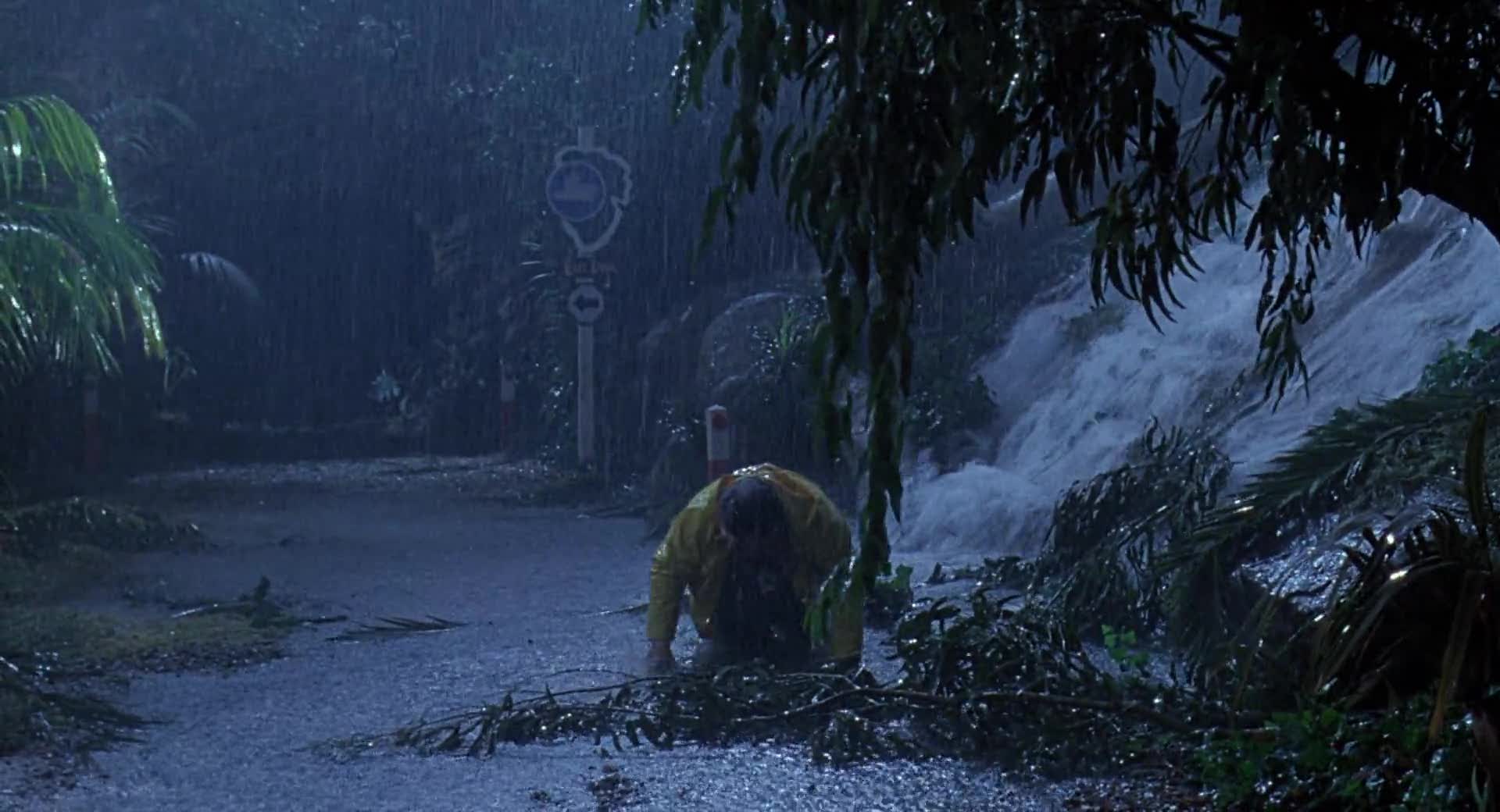
A confession – my most hated cinema cliché I take as a personal affront to me. Hollywood, take note: if you wear glasses to correct your vision, you don’t make a fuss if they fall off your face. You especially don’t explain your predicament, and the drawbacks of your poor vision without ocular enhancements out loud to the world. Do film audiences realise people who wear glasses have trouble seeing without them? They do? Then why are visually impaired characters forced to make such ludicrous statements? As much as I adore JURASSIC PARK, I don’t understand the need for Dennis Nedry (Wayne Knight) to scramble around looking for his specs for 30 seconds in the rain (though I do like his realisation of “I can afford more glasses”). Velma used to do it in SCOOBY DOO on TV, don’t put it in your movie, it comes across as painfully cartoonish.

Are there any more egregious examples of Hollywood clichés? Feel free to comment. SSP

Posted in Film, Film Feature | Tagged , , , , , , , , , , | Leave a comment

Rush: Two Perspectives

RUSH-Daniel_Bruhl_and_Chris_Hemsworth

This review of RUSH (2013) was written by Sam Sewell-Peterson and special guest writer Stefan Mackley. Stefan’s personal blog is Motorsportmadness.

The Film Buff’s Take

I’m not a sporty person, and am not particularly familiar with Formula 1, past or present. Ron Howard’s RUSH makes a connection not because it’s a convincing and visceral recreation of an infamous period in Formula 1, but because it convincingly and affectingly represents the clashing personalities of two passionate, but deeply flawed and fascinating men.

The racing set pieces that have featured so prominently in the film’s marketing, technically impressive as they are, mainly serve to punctuate the (for me) far more compelling scenes exploring the characters and relationships of Niki Lauda (Daniel Brϋhl) and James Hunt (Chris Hemsworth). That’s why so many critics are saying that you don’t need to be an F1 fan to get something out of it. You don’t – I’ve never watched a race in my life, but found Rush to be one of the most enjoyable films I’ve seen this year.

The pacing, visuals, editing, sound, script and particularly the performances are near-flawless. The story was ready-made to be told on film – the themes, the drama, the spectacle was already there waiting for Peter Morgan to adapt, and Ron Howard to put on screen. The film occasionally slips into being a conventional Hollywood sports or biopic movie style-wise, but thankfully finds its feet again quickly through humour, performance and sheer energy. All-in-all it’s another successful collaboration between Ron Howard and Peter Morgan, and a hugely satisfying film on most levels. If Brϋhl doesn’t get recognition for his smartly nuanced take on Lauda come awards season then I’d be deeply surprised. SSP

The Motorsport Fan’s Take

As an avid F1 and motor racing fan it would be easy for me to criticise certain aspects of this film regarding racing scenes and historical facts which are dramatized to cater for a mass audience. Hunt and Lauda, for example, are depicted meeting for the first time at a Formula 3 race which never happened and the CGI effect of Lauda’s near fatal crash is far from the most convincing.

There are a number of other “flaws”, but to pick over these and say it made Rush a bad film would be disrespectful to the performances of Brϋhl and Hemsworth and the brilliant script written by Peter Morgan.

This is a film with no real villain, instead allowing the audience to experience two very different characters but both with the same desire and will to win and who have mutual respect for each other. Add to that some incredible audio from cars of the era and some sensational cinematography and you have a film that lives and breathes a time when racing was dangerous and as Lauda claimed, “you had a 20% chance of dying”.

Put simply, Rush is stunning, and for any motor racing enthusiast to suggest otherwise based purely on the racing aspects is missing the point of the film entirely. It’s a film which shows the human side of the sport, when having a personality in F1 counted for something, and allows us to remember an incredible battle between two amazing drivers which was very much real. SM

Posted in Film, Film Feature, Film Review | Tagged , , , , , | Leave a comment

The World’s End

Nice art

Posted in Uncategorized | Leave a comment

Hammond’s Dream Goes Global

We now know that Colin Trevorrow’s fourth JURASSIC PARK film, to be released in the 2015 “summer of death” with be called the suitably imposing JURASSIC WORLD.

It’s a major event when any information is released about a film stuck so long in development hell. Along with the title, we now also know that the new film will be shot in 3D. This is good – if they absolutely have to go 3D, then it’s encouraging that it will be specifically designed for such technology (like AVATAR and HUGO), rather than enduring a rushed post-conversion to boost the box office (like many recent Marvel/Disney films).

While next-to-nothing has been released about the plot, the title implies one thing above all else – this instalment is going to be bigger than any of the previous films in this dino-franchise. There’s been speculation already that Jurassic World implies an established and functioning (at least initially) prehistoric amusement park, but I reckon it further implies that the action will be on a global scale, and the inevitable point where the attractions run amok won’t be confined to a single, isolated island. Never mind a solitary T-Rex roaring at the San Diego skyline, this could end up like PACIFIC RIM in scale. Just imagine how incredible it would be to see a herd of stegosaurus or triceratops stampeding down Wall Street, or a breaching plesiosaur in Hong Kong harbour! Perhaps the creatures escape while on route to the new theme park?

It’s all conjecture at this stage of course, but Trevorrow and co. have immediately set up some grand expectations for their film. Let’s hope it’s at least in the spirit of Michael Crichton’s original novels, even if it’s heading in a new direction.

No word yet on any returning cast members from the franchise, but Jurassic World is due out on June 12, 2015, which puts it slap-bang in the middle of the “summer of death” following THE AVENGERS: AGE OF ULTRON in May and preceding BATMAN VS. SUPERMAN in July. Looks like Universal is aiming to upset the two-way clash of Marvel/Disney vs. DC/Warner Bros.

2015 is still set to be the biggest year for blockbuster filmmaking ever. Good luck to all involved – you’re going to need it! SSP

Posted in Film, Film Comment | Tagged , , , , , | Leave a comment

Review: Festen (1998)

festen

This review was originally written for Subtitled Online August 2010.

FESTEN was the first film released following the Dogme 95 “Vow of Chastity”. The rules included technical restrictions (cameras to be low quality and handheld, no sound or music to be added in post-production) banning of excessive action, and not allowing the director a credit. The whole Dogme movement aimed to reduce cinema back to its simplest and most beautiful origins.

Festen opens with the Klingenfeldt-Hansen family traveling to the family-run hotel for a celebration. We are introduced to each family member on their arrival – Helge (Henning Moritzen) is the father, whose 60th the family has gathered to celebrate. His children are Christian (Ulrich Thomsen), the quiet and distant eldest son; the volatile and manic youngest child Michael (Thomas Bo Larsen) and Helene (Paprika Steen), the fiery and confident eldest daughter.

Also mentioned in conversation is the recently deceased youngest daughter, Linda, who committed suicide seemingly without motive, and for whom the family are still mourning. Helene visits her late sister’s room and finds a note. Michael has a violent and sexually charged argument with his wife, and Christian is re-acquainted with his childhood sweetheart, Pia (Trine Dyrholm).

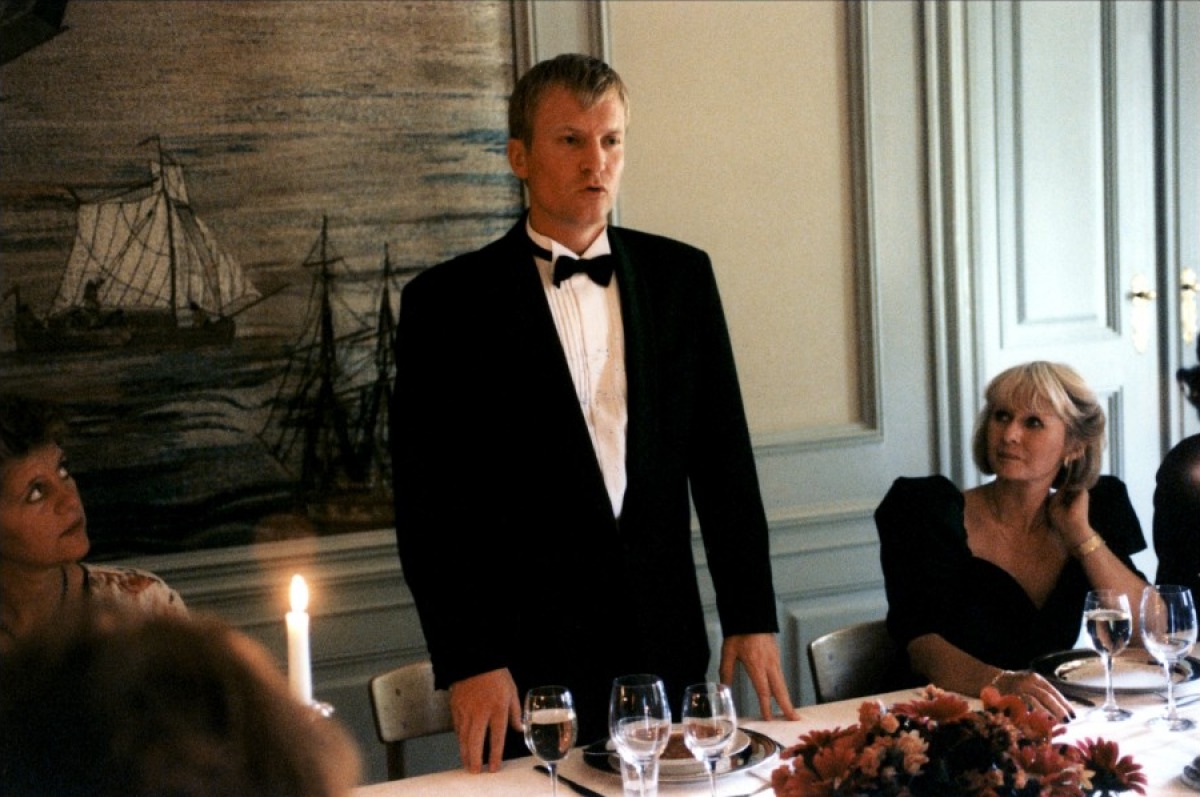
The evening celebrations begin normally enough – catching up with the relatives, then a civilised sit-down meal, too much wine and clichéd speeches. Everything changes when Christian stands to make his speech. He makes a horrifying claim about his father that sends the party into uproar, and is promptly ejected from the party. We spend the rest of the film searching for the truth. Are Christian’s claims true? And why did Linda commit suicide?

Festen shows you incredibly dark family drama at its very best. Thanks to Vinterberg’s down-to earth screenplay (which is so natural, it appears improvised at times), we instantly warm to (or at least empathise with) the characters, and can easily relate to them and what they are going through.

The film is a truly immersive experience, and due to the low-grade quality of the film – in compliance with the Dogme 95 rules – it looks like a home video, and through watching it you really feel like a member of the family, like you’re taking part in the festivities.

Be warned, though – Festen is by no means a comfortable viewing experience. Emotions run high throughout, and the dark family secrets revealed are truly shocking. Each revelation feels like a punch to the stomach, and just when you think it could never get worse, it does.

High quality acting is on show, both from the veterans (Henning Moritzen has been acting since the 1950s) and the novices (it was one of Paprika Steen’s first major film roles) and they all bring a little extra something to their characters. Of particular note are the actors who play the siblings – Ulrich Thomsen manages to bring across the tragedy and deep-rooted emotional scarring of Christian; Thomas Bo Larsen gives Michael just the right level of unpredictability and menace, while at the same time showing his unquestionable loyalty to his family; and Paprika Stern is captivating as the strong, independent woman amongst a family of flawed men.

The Dogme 95 rules that Festen follows (at least for the most part) will most definitely divide audiences. Your view of the whole film may entirely hinge on whether you see the vow of chastity as being restrictive or liberating, as overtly pretentious or refreshingly simplistic. Some of the Dogme rules could seem a little bizarre and needless to some – the cast, in theory at least, have to provide their own costumes (though the Festen crew did allow a cast member who did not own a tuxedo to borrow one), but others achieve interesting effects within the film. For instance, a scene with Michael and his wife in their hotel room required a swooping, high angled shot, and since the Dogme rules prohibited the use of cranes or steadicams, the cameraman attached his camera to the end of a mic boom (which, amusingly, can be briefly seen in a mirror in the room). The film also required cast members themselves to film some scenes, notably the dining room scene, which otherwise would have been far too awkward to achieve some shots in such a confined space.

Whether you’re a lover or a hater of Dogme, Festen will take you on an emotional rollercoaster that enthrals you throughout. In an age of big-budget, high concept filmmaking, it makes a nice change to watch a film so stripped down, yet so immensely satisfying. SSP


Posted in Film, Film Review, Subtitled Online | Tagged , , , , , , , | 5 Comments

Remake Victim: Paul Verhoeven

starship-troopers-570x320

Paul Verhoeven is an underrated filmmaker in Hollywood. Many think of him as simply a purveyor of trash, and it is true that he’s the man responsible for SHOWGIRLS and BASIC INSTINCT. But the Dutchman is also behind three of the smartest, most important American science-fiction films of the 80s and 90s – ROBOCOP, TOTAL RECALL and STARSHIP TROOPERS.

The man is a very clever director. He gets satire, and manages to present some challenging and brave material in hugely entertaining, engaging packages.

Verhoeven has sadly also been on the receiving end of an insultingly hollow remake of Total Recall, and two more remakes of RoboCop (the yawn-inducing trailer released last week) and Starship Troopers are on their way.

Beyond basic greed, why does Hollywood want to have another stab at this trio of sci-fi masterpieces? Here’s a breakdown of what makes Verhoeven’s three most successful sci-fi films so impressive and ground-breaking and why the remakes miss the mark (and the point).

ROBOCOP (1987/2014)

Like BLADE RUNNER and the JUDGE DREDD comics, both of which apparently heavily inspired it, RoboCop takes a cynical view of the future of law enforcement. Set in a near-future Detroit in the middle of a financial crisis and infested with violent crime, Edward Neumeier’s script for RoboCop touches on such sci-fi staples as robotics, A.I and free will, in addition to mercilessly satirising product marketing, big business and the justice system. Verhoeven takes these big ideas and adds his trademark hard-hitting extreme violence and cheeky humour to produce an incredibly satisfying end product.

The remake due next year does not look promising. The first trailer was bland, and made it look like every other sci-fi actioner produced over the last decade. The film is going to be rated PG-13 in the US, as director José Padilha insists the material doesn’t need to be bloodily violent to have the same impact. He’s wrong on that account. In Verhoeven’s original, the violence served a very tangible purpose; every act of brutality committed by Robo or the villains had an instant, visible consequence. This is going to sound a little distasteful, but imagine what impact Alex Murphy’s death scene would have lacked if you didn’t see him horribly brutalised in such a manner. It made you detest the criminals, and gave the later revenge plot line real dramatic weight, but you never forgot that these were real people (on-screen) being killed. The remake is going to be tame, ineffective and dull, despite an impressive supporting cast. It’s PG-13 to make money, nothing more.

TOTAL RECALL (1990/2012)

Yes, it’s a silly Arnie film. But it’s a really smart silly Arnie film. This adaptation of sci-fi legend Philip K. Dick’s short story WE CAN REMEMBER IT FOR YOU WHOLESALE is transformed by Verhoeven into a sprawling adventure involving spies, conspiracies and memory implantation. There’s big action sequences, Arnie one-liners, deformed mutants, a three-breasted lady and impressive animatronic and makeup effects – what’s not to like? Verhoeven and his writers also never feel tempted to answer concretely whether Quaid’s (Schwarzenegger) adventures really happened, or whether they were in his head, making it one to ponder and debate. It’s an early 1990s INCEPTION.

Len Wiseman’s 2012 remake claimed to be going back to the source material. That is a lie. It references Verhoeven’s film in terms of plot, character and even imagery far more than it ever does Dick’s short story. It doesn’t even take place on Mars, but instead in a Blade Runner rip-off dystopian Earth. It looks admittedly fantastic, and there’s a nifty car chase scene on a magnetic road, but it’s just too serious and emotionally empty – the characters are just so mechanical and unsympathetic, the script clumsy and lacking in elegance. The ambiguous nature of the plot is also mostly lost in the theatrical version, and only in Wiseman’s director’s cut is there a real hint that it might have all been a dream. It’s strange that the film ended up being so disappointing.

In remaking Verhoeven’s least nuanced sci-fi (discounting HOLLOW MAN) you hire a competent (if conventional) director who drains all life from the story, cast a better actor in the lead (Farrell) who somehow comes across as more wooden than Schwarzenegger, and have all the gloss of a big-budget blockbuster but largely ends up as unmemorable.

STARSHIP TROOPERS (1997/TBA)

Starship Troopers is often perceived as Paul Verhoeven’s dumbest sci-fi film (again, discounting Hollow Man), and that’s largely due to people taking it seriously. I don’t mean that Verhoeven and screenplay writer Edward Neumeier intended the whole thing to be one big joke, rather that the whole chest-pumping hyper-masculine frat-boy portrayal of the military doesn’t necessarily reflect the political leanings of writer and director. Rather this adaptation of Robert A. Heinlein’s 1959 novel is satirising it and its associated right-wing views.

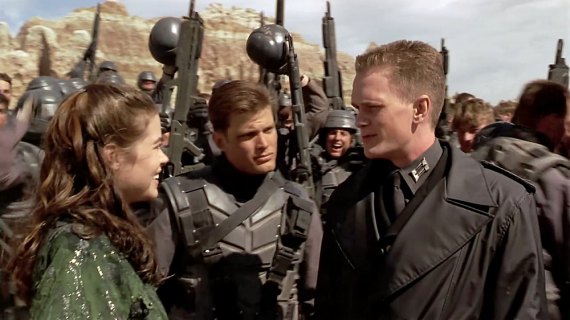
Verhoeven’s film puts the intergalactic war between man and the alien “bugs” on-screen in the manner of a pretty straight action movie. It also reproduces some of the political debates found in the novel. But something is profoundly different from the novel. Everything – the characters, the dialogue, the imagery is exaggerated to almost comic extremes (the officers of The Federation dress like the SS!). Everyone looks like they’re starring in a World War II propaganda reel – “I’m doing my part!”. Verhoeven and Neumeier also reprise their love of satirical commercials from their earlier collaboration on Robocop – “Would you like to know more?”. Starship Troopers is a satire, and it’s making fun of the extreme anti-communist views of the novel’s writer.

I’m not sure I agree as some do that Heinlein was promoting fascism in his book, only responding to his world at the time; communism was seen as a major threat to American liberties in the 1950s, and he was using the medium of science-fiction storytelling to warn against it. Loud, brash and deceptively clever, Starship Troopers may well be Verhoeven’s greatest sci-fi masterpiece.

And of course, a remake is on the way. Still “in development” and without any concrete attachments as yet, will it underwhelm as Total Recall did and RoboCop surely will? I fear the worst. Not only does Starship Troopers not need to be remade (the effects have aged remarkably well, and the satirical subtext is as hard-hitting as ever) I fear that the filmmakers will be tempted, like with the RoboCop remake, to make it suitable for pre-teens to maximise profitability. Starship Troopers is not a story for children, it never has been and it never will be. By it’s very nature, with its underlying political commentary (comic or not) it’s a story very much for adults.

They’ll probably add in the most glaring omission from the novel in Verhoeven’s original adaptation – the power armour the mobile infantry wear to fight the bugs. Admittedly, this has blockbuster potential, but again, why should children think warfare is cool? I’d also like to see anybody try to present the book’s military politics straight-faced and not be accused of being fascist today.

Film remakes are here to stay, and sadly some filmmakers are victims more frequently than others. Of course, you can always go back and watch the original, but how many are missing out on them altogether just to see another bright, shiny and empty reimagining? Who else has been a victim of multiple remakes? Join me next time to  find out. SSP

Posted in Film, Film Feature | Tagged , , , , , , , , , , , , , , | Leave a comment

Blood in the Snow: Let the Right One In vs. Let Me In

let_the_right_one_in71

This article was originally written for Subtitled Online September 2011.

The remake vs. original debate is one of the oldest and most frequently occurring in the film industry. Whenever original ideas run dry, Hollywood often turns to the untapped well of talent in world cinema. American remakes are numerous, but very rarely do the original films justice. LET THE RIGHT ONE IN and its American remake LET ME IN are extreme rarities in that they are both exceptional films in their own right.

In 2008, Tomas Alfredson wowed the world with his stunning film adaptation of Swedish author John Ajvide Lindqvist’s vampire novel Let The Right One In.  Alfredson’s film of the same name retained much of the traditional vampire lore, but it also put a new spin on the horror genre, and shed new light on pre-teen emotions and relationships.

Two years later, CLOVERFIELD director Matt Reeves and Hammer Film Productions remade the film, transferring events from Sweden to winter New Mexico. While some would argue Let Me In is not a direct remake (as Reeves claims to have based his film on the original book, just as Alfredson did), it does use many similar shots, and has a near-identical narrative structure as Let the Right One In.

Both films concern a lonely and bullied boy meeting and befriending a mysterious girl who moves in next door. Their relationship blossoms, but when it is revealed that she is a vampire, both of their lives (or lack of) are changed forever. Can he accept what she is and pursue their friendship, and will she be able to overcome her animalistic nature?

Is either film really superior? In truth, there is very little that elevates one film above the other. Let the Right One In is an atmospheric, extremely visceral and haunting experience that will stay with you for a very long time. It is relatively slow-paced, but that simply adds to the creepy atmosphere and sense of foreboding. It’s also thematically layered and ambiguous – the viewer is left to interpret some aspects of the film for themselves, and make a judgement about the motivations of the characters. Lina Leandersson’s Eli is also a far creepier vampire than Chloë Grace Moretz’s Abby, not least because of the last minute decision to redub her voice with another actress – the less child-like sounding Elif Ceylan. It gives Eli an unnatural, otherworldly quality ideally suited to the character.

Let Me In has a lot going for it, too, particularly in terms of characterisation. Kodi Smit-McPhee’s Owen is a compelling protagonist, and both Richard Jenkins and Elias Koteas add depth to the plot with their characters. In the original film, Per Ragnar’s Håkan was an enigma of a character, his motivations only hinted at, and was therefore almost impossible to relate to. In Let Me In, the brilliant Richard Jenkins brings life and emotion to his version of the character, and he therefore becomes much more sympathetic. He is an extremely troubled soul, obliged to serve and protect Abby not just out of fear, but out of love. In the scene where his attempts to kill a young man in his car are thwarted by the unexpected appearance of the victim’s friend, you almost will the killer not to be found – you are on his side. It’s also a nice touch that you never get a clear look at Owen’s mother; she is always just out of shot or out of focus, so you are alienated from her just as Owen is. The transference of the story from Sweden to the States also allows Reeves to draw comparisons between the film’s events and the heavily moralistic political stance of The Republicans of the 1980s, particularly noteworthy is the use of Reagan’s “Evil Empire” speech.

It is an extreme rarity to have both the original film and remake receive such critical acclaim, but that is just what occurred – both films were embraced by audiences and critics alike. This is completely understandable as both are great films. Let Me In does not fall into the trap that many remakes do, that is to say, it doesn’t simplify the original film for English-speaking audiences. The remake may have a little more money behind it than the original, but this added budget isn’t squandered on hiding weaknesses in the rest of the film – every stunt and effect adds something to the story.

Let the Right One In was an exceptional example not only of the horror genre, but of human drama. Rather than being an inferior imitation of this winning combination, Let Me In built on these successes and added a more fluid method of storytelling, rounded characters and an atmospheric soundtrack by Michael Giacchino. Both directors clearly have flair for not only visuals, but for storytelling. Their similarity of vision married extremely well. Alfredson laid some very sturdy foundations with Let the Right One In, so rather than simply rehash the film, Reeves simply had to polish an already brilliant jewel.

Both films stand as high points of the horror genre, and cover a wide variety of complex themes from loneliness to love to morality. With so little to separate the films, it merely depends on your preferred method of filmmaking. If you would rather watch a rawer, more natural film, then see Let the Right One In. If you favour a slightly more slick and character-driven film, then see Let Me In. If you see both, however, then you can really appreciate them for what they really are: far more than an original and a remake, Alfredson’s and Reeves’ films are the progression of the same vision. SSP

Posted in Film, Film Feature, Film Review, Subtitled Online | Tagged , , , , , , , , , , , , | 2 Comments

Jurassic Park 3D: Spared No Expense

Jurassic-Park-3D_05

I’ve loved JURASSIC PARK since I first saw it in the cinema as a small child. It’s a magical experience for me, and shows the real majesty of special effects work (both animatronic and CGI) when they’re done well. I was lucky enough to see it on the big screen again the other year, and last Sunday I went to see it again in IMAX 3D. So, 20 years on, and with a new visual gimmick, how does it hold up?

In short, pretty well. The effects are only just starting to show their age after two decades, the set pieces are still amazing, Michael Crichton and David Koepp’s screenplay retains enough of Crichton’s source material while streamlining the rest into an engaging, entertaining thriller. It’s still a very well put together family monster movie all-in-all.

I’m still fond of the cast too – Sam Neill, Jeff Goldblum, Richard Attenborough, Bob Peck, Wayne Knight, Samuel L. Jackson and especially the brilliant Laura Dern – it’s a great cast, the character relationships work and everyone is allowed to play to their strengths.

So, how well does the 3D work? Not particularly well, to be brutally honest. It’s not the quality of the transfer that’s the problem – the big effects sequences and the Hawaiian (sorry, Ilsa Nublar) landscapes look the best they ever have with the added visual dimension. But the problem here is Steven Spielberg’s original directorial decisions. He chose to shoot the vast majority of the dialogue scenes, and some portions of the action scenes in close or extreme close-ups. In a regular 2D film, this is fine. The events on screen feel more immediate, you notice the slightest change in an actor’s facial expression in response to their current situation. But in 3D, post-converted close-up shots don’t really work. Everything’s just too big – you find yourself really straining to keep anything but the actor’s nose in focus and the overall effect is just disorientating.

I also never noticed before how many shots of characters below the waist there are. Between the crouching, running, jumping and climbing I found myself mostly looking at people’s behinds in 3D when I wasn’t trying to focus on someone’s nose. But at least the dinosaurs look awesome with the added dimension, and that’s what really matters.

It’s never been a perfect film; there will always be plot holes, a few lines of dialogue that fall flat, loads of exposition and two really annoying kids. But in return you have mind-blowing dino-antics, fun performances from the adults and one of John Williams’ finest ever scores.

I still adore Jurassic Park, and was glad to see it again on a massive screen, but wasn’t overly impressed with the 3D-ifying. I sincerely hope every future anniversary/nostalgia re-release doesn’t have to come with this gimmick (seeing JP again in the cinema again without those glasses was far more rewarding). Still, it’s worth a look if you have the chance. SSP

Posted in Film, Film Feature, Film Review | Tagged , , , , , , , , , | 2 Comments

The Best Film I’ve Seen This Year: The Way Way Back

THE WAY, WAY BACK

You don’t often see comedies like THE WAY WAY BACK today, and that makes me sad. I’m tired with overblown, excessive, abrasive humour on film.

The Way Way Back, co-written and directed by Jim Rash and Nat Faxon is pretty much the polar opposite of the type of studio comedy movie that makes big money, usually by relying on elaborate comic set pieces (THE HANGOVER, BRIDESMAIDS, TED etc.) – it’s an independent, small-scale, personal and achingly honest tale of growing up. Not just the journey from adolescence to adulthood, either – the grown-ups have a lot of maturing to do too!

We follow Duncan (Liam James) a 14-year-old introvert who’s dragged on holiday with his mother (Toni Collette), her new boyfriend Trent (Steve Carell) over the summer. Duncan just wants to be left to his own devices, but Trent insists on making him join in with the “family fun”, continually belittling and humiliating him in the process. While seeking solitude from his torment, Duncan meets a local slacker Owen (Sam Rockwell) who runs the local, slightly crappy water park, and strikes up a fast friendship with him. The rest of the film is a series of tonally contrasting sequences, with Duncan having a utterly miserable time with Trent and his grating middle-aged friends, or enjoying the liberation the water park offers him, body and soul.

The story is an old one – countless films following shy teens learning to come out of their shell already exist – but they’re rarely as earnest and true to life as this. Born out of a childhood experience of Jim Rash (co-writer/director with Nat Faxon) which is replicated in the movie; when Trent bullies Duncan into rating himself on a scale of 1-10 before crushing his confidence, The Way Way Back always feels real and completely relatable, especially if you’ve had similar experiences growing up. From the very first, hugely uncomfortable (though darkly funny) scene, we’re part of this world. We recognise the situations, and they’re poignant and amusing.

Comparisons have been made to other Independent North American bittersweet comedy dramas of the last decade – LITTLE MISS SUNSHINE, JUNO, NAPOLEON DYNAMITE, AWAY WE GO etc. There’s certainly an element or two of these films in The Way Way Back (notably sharing the cast of Little Miss Sunshine), and I’m sure Rash and Faxon were influenced by them. It’s also obvious that these are the same minds behind the Oscar-winning screenplay for THE DESCENDENTS – the Alexander Payne-directed George Clooney vehicle had moments of extreme darkness but also of incredible hilarity. For every examination of life and loss, you have Clooney flapping down the street in sandals or creepily (and not so subtly) spying on neighbours. The Way Way Back also reminded me of a recent British film – Richard Ayoade’s SUBMARINE, which again follows an awkward, dour teenager struggling to find his place in the world.

The Way Way Back does indeed feel like a tribute to the last decade of a certain kind of comedy film. It also feels like a tribute to another time (though the film’s time setting isn’t concrete), a time when growing up wasn’t better or worse, simpler or more complicated, just different. Nostalgia can be a powerful tool in the right hands, but The Way Way Back leaves its own mark with good performances (particularly from the likeable Rockwell, the talented young James and the filthily funny Janney) as well as naturalistic scripting, and a large helping of heart throughout. We’ve all had one of those summers, back when the seasons seemed to last forever. The film made an impression on me, and made me wonder why more people don’t make movies like this any more – perceptive, feel-good, human experiences. Why does comedy always have to be cruel, loud, shocking or excessive? Why can’t it be quitter, gentle and heartfelt?

The Way Way Back is my film of the year so far, for its unashamed old-fashioned-ness and the emotional connection it made with me, an eternally awkward soul, as much as its long list of filmmaking merits. SSP

Posted in Film, Film Feature, Film Review | Tagged , , , , , , , , , | Leave a comment

Review: Cargo (2009)

cargo2009bdrip720pxvida

This review was originally written for Subtitled Online August 2010.

Switzerland’s first attempt at sci-fi, and writer-directors Ivan Engler/Ralph Etter’s feature film debut, CARGO harks back to numerous icons of science fiction cinema – from THE THING to THE MATRIX, and, most prominently, Ridley Scott’s ALIEN. It belongs to that particular breed of dystopian science fiction where the world is ruined and the human race is living on borrowed time.

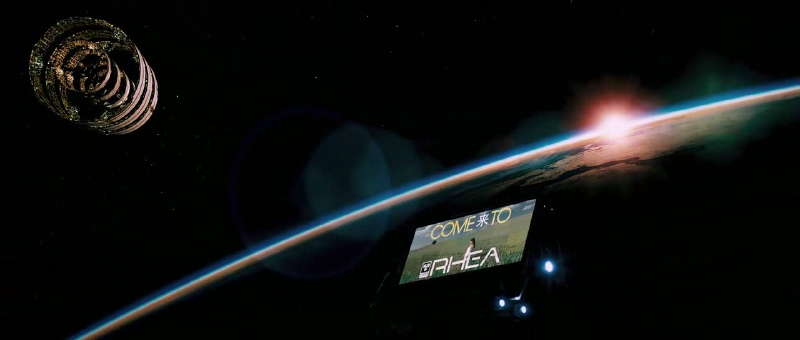
The film opens with Dr Laura Portmann (Anna Katharina Schwabroh) joining the crew of The Kassandra, a cargo transportation ship that is set to make a journey to the distant Station 42. Laura intends to make enough money to join her family on the planet Rhea – humanity’s last hope after Earth is left uninhabitable – by 2267. The people of Earth have been forced to flee their home planet and now live as refugees aboard cramped space stations rife with disease, famine and fear until they can be resettled more permanently.

After boarding the cargo vessel, Dr Portman is briefly introduced to the rest of the crew of sci-fi archetypes. There’s the old and grizzled Captain Lacroix (Pierre Semmler), the by-the-book second officer Lindbergh (Regula Grauwiller), a double-act of engineers Vespucci and Prokoff (Michel Finger and Claude-Oliver Rudolph), Yoshida the computer expert (Yangzom Brauen) and the mysterious Decker (Martin Rapold) – the security escort hired after a recent bout of terrorist attacks. All are put into cryo-sleep for the journey. Each crew member is awake for an eight month shift of the journey to maintain the vessel and cargo, and it is during Laura’s shift that strange things begin to happen. There are odd noises on the seemingly deserted ship, and something appears to be moving below in the cargo hold. She wakes the Captain and Decker and they investigate.

When Captain Lacroix mysteriously falls to his death while investigating the cargo hold, the rest of the crew are woken to decide on their next move. Suspicions arise about their cargo and their true mission. Both Decker and Lindbergh look like they are hiding something. What is the cargo they are transporting and why? And are the crew really alone on the Kassandra?

Cargo is visually impressive for a film considering its relatively meagre reported €4.2 million budget. The very first thing we see is a glittering space station hanging in low orbit of a colossal planet, then we then zoom right through a window in the side of the station. Here, we are taken inside, and we feel part of the cramped, squalid conditions of a space ghetto. The film is no less impressive when onboard the Kassandra, the corridors are all Ridley Scott-esque industrial piping shrouded in shadow, and the vast cargo hold looms ominously like a mechanical cathedral – you could scarcely get more creepily atmospheric locations.

Despite the visuals and the promising start to the story, Cargo has its problems. The most annoying thing about the film is how the writer-directors seem to have given into the pressure of audience expectations of a sci-fi film. It’s got the opportunity to be inventive, to stand out, but is actually not very different to a typical Hollywood film. The crew is made up of all the usual characters you find in every American sci-fi; we have the stiff and regimental officers, the smart-ass engineers and the computer expert of Asian ethnicity. Even the character of Laura is a little too close to Ripley of the Alien series (they both go on a similar character arc, starting fairly meek and quiet, before becoming independent heroines).

The first half of the film builds tension very effectively, and shocking revelations are promised from the start – we desperately want to find out what the crew are transporting and why, and what Decker’s secret agenda is. Unfortunately, when the truth is finally revealed, it’s a bit of an anticlimax, even if it does offer some nice emotional beats. We’ve seen it all before. The plot itself also meanders, and is more than a little incoherent in the final 20 minutes or so.

Cargo is a competent sci-fi, but it’s nothing special. The first half is effectively tense and engaging, but it loses its way towards the end. Visually stunning considering the budget, but unfortunately, it’s nowhere near original or creative enough to be considered a particularly revolutionary, or memorable sci-fi film. SSP

Posted in Film, Film Review, Subtitled Online | Tagged , , , , , , , , | Leave a comment