Review: Far From the Madding Crowd (2015)

far-from-the-madding-crowd

In the latest adaptation of Thomas Hardy’s groundbreaking period romance, Thomas Vinterberg directs, David Nicholls adapts the novel, and Carey Mulligan is our Bathsheba.

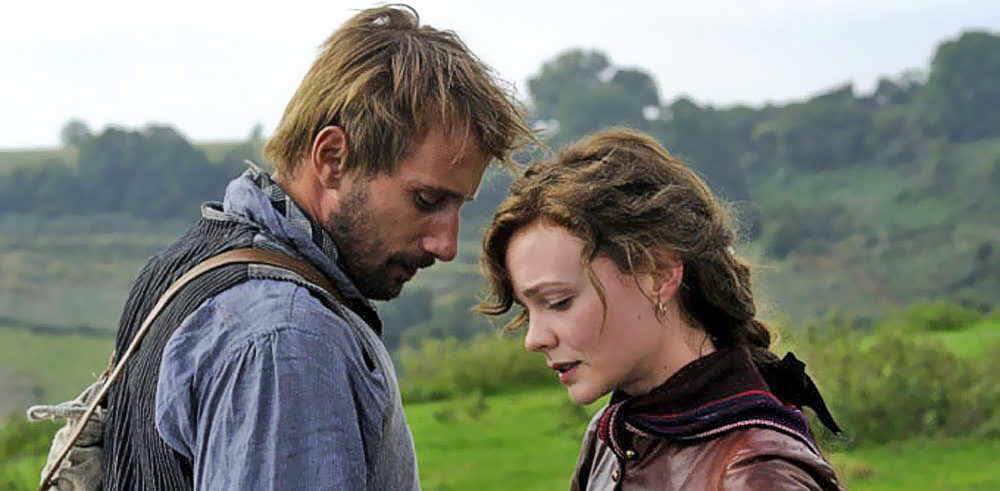
Bathsheba Everdene’s (Mulligan) fortunes change when she inherits a relative’s manor house and farmland, and she becomes a single woman running a business and getting fully involved in  back-breaking physical labour with her workforce. Her independence is threatened by three very different suitors proposing marriage – sharp, reliable and honest shepherd Gabriel Oak (Matthias Schoenaerts); withdrawn, nervy but nice neighbouring landowner William Boldwood (Michael Sheen); and impulsive, exciting soldier Francis Troy (Tom Sturridge). Who, if any, will Bathsheba choose, and will she be able to remain her own woman?

You might think that FAR FROM THE MADDING CROWD lacks the edge of Thomas Vinterberg’s previous work, but this is no tale of fluff and flattery. It can be rather harsh in its emotions and its landscapes, acknowledging the realities of these characters living in this time, and largely avoiding sun-dappled clichés. Farming is about the only industry where Bathsheba might be accepted as a working woman, even a superior to male workers at this time, since everyone, regardless of their gender, needs to be involved in the day-to-day running of farmland if a successful harvest is to be produced. There’s also  particularly harrowing scene early on when everything that can go wrong for a sheep farmer does, and everyone looks cold, windswept and exhausted throughout, as anyone tending farmland on the exposed coast of the British Isles should.

Three of four of the central performances are excellent. Mulligan is a formidable Bathsheba who convinces in mucking in around the farm. Schoenaerts is a thoughtful, towering Oak and Sheen is an intense but completely and utterly uncomfortable in his own skin Boldwood, and both make for understandable, attractive prospective husbands. Oak tries to woo Bathsheba with the gift of a premature lamb and the passing on of essential skills, and their best erotic encounters come from somewhat unexpected directions – giving a flock of sheep a bath or sharpening shearing scissors together. Boldwood on the other hand plans to shower Bathsheba with gifts and affection, and shares her love of singing, joining her in a loud medley of folk songs. I won’t say Sturridge gives a bad performance as Sergeant Troy, but the way he plays it, as a more gleaming tool than the one he whips around Bathsheba in the woods, somewhat undermines her fiercely independent character. Aside from his daring, what exactly is the appeal? He’s a drunk and a gambler, he talks down to her, he tries to muscle in on her business and control her life. Surely Bathsheba hasn’t just fallen for the youngest, prettiest of the bunch? I haven’t actually seen John Schlesinger’s film from the 1960s, but I’ve heard Terence Stamp does a much better job at making Troy a loveable monster of a suitor rather than the nasty piece of eye candy Sturridge portrays.

Vinterberg is great at constructing moments of still beauty, and he brings the very best out of the somewhat forbidding Devon landscape, and takes time to dwell on the seasons changing and the wonder of life itself. The living characters and their relationships are of primary concern, but the setting comes a close second. Nicholls finds humour and vitality in what could be rather staid and quaint material, making the very most out of when Bathsheba’s suitors get in very wrong in their attempts to impress her.

I didn’t find any real sense of the passage of time in evidence here. As far as I understand it, Hardy’s story is supposed to take place over a number of years, but here it feels more like several months, with only one passing of the seasons and a single bountiful harvest. This can make Bathsheba’s relationships with her would-be husbands seem a little too spontaneous and rushed, key moments seem to flash by in seconds.

Despite being a British film directed by a Dane, someone had the bright idea of Hollywoodising the story’s locale. Hardy’s stories take place in a fictional, romanticised take on Devon, but here, straight after the unassuming title card we are bestowed with the apparently essential information that we are in “Dorset, England” which is “200 Miles Outside London”. This astoundingly clunky introduction made me instinctively want to dislike the film that followed, but the level of craft, performance and the sheer heady romance and beauty of the thing swept me helplessly along nonetheless. SSP

Posted in Film, Film Review | Tagged , , , , , , , , , , , , , | 1 Comment

Review: Wish I Was Here (2014)

wish-i-was-here-5098

A lot of people thought Zach Braff had some nerve asking his fans to fund his new film through Kickstarter. A millionaire actor needs us to pay for his little comedy drama to get made. They might have a point, but the fact remains that WISH I WAS HERE might have never been made or released without audiences making it clear that it was something they would be interested in seeing. The number of producers involved (fourteen, for those who care) reflects just how much money and talent had to be outsourced, what a joint effort the film represents. Thankfully, the end result is pretty good. It’s nowhere near as complete and satisfying a film as Braff’s directorial debut GARDEN STATE, but there’s still a lot to like.

Aidan Bloom (Zach Braff) is having a bad time. His acting career in LA is stagnating, leaving his wife Sarah (Kate Hudson) as the increasingly drained family breadwinner, and his children are proving to be a handful. To make matters worse his father Gabe (Mandy Patinkin) reveals his cancer has returned with terminal aggressiveness, and with no other family to rely upon – least of all his layabout brother Noah (Josh Gad) – Aidan becomes his father’s sole carer despite needing more than a little life affirmation himself.

Zach Braff and his sibling co-writer Adam are funny guys. There’s some good gags throughout the film, my favourites including the sight of an Orthodox Rabbi in a high-vis vest; Aidan’s brother Noah giving up on the “saturated market” of app design to go into blogging; a group of auditioning black actors reminiscing bitterly about how they’ve all had to play Othello; Aidan’s son Tucker’s (Pierce Gagnon) rather alarming obsession with power drills. The whole thing has an appealing air of self-deprecation in terms of the references made to Braff’s real life in Orthodox Judaism and career as a (not always successful) performer.

Braff uses the character of Aidan’s father Gabe as an audience surrogate, voicing what many of us are thinking – you’re an actor and you’re complaining about your lifestyle? If you really wanted more disposable income so your kids could keep going to the nice Jewish school you want them to then you’d get a proper job. This is a clever idea in theory, beating critics of Braff’s priorities to the punch, though it doesn’t exactly make the Blooms pitiable – they’re going through a very middle-class struggle, after all. It’s a battle for comfort rather than necessity. Yes, Aidan’s dad will soon die, yes his children might have to change school and yes, his wife works next to a lecherous moron, but in the grand scheme of things their life isn’t all that bad.

The young actors playing Aidan Bloom’s children are both pretty special finds. Pierce Gagnon has almost boundless energy and an impish sense of mischief as Tucker and Joey King brings a thoughtful maturity, honesty and convincing awkwardness to Grace, a teen absolutely certain of her own beliefs but unsure if her family will ever fit in the way she’d like them to. Braff is good as Aidan, even if he still doesn’t look old enough to be a father of two, and dramatically speaking was more convincing as a man with depression in Garden State than he is as someone dealing with grief here. It’s always nice to see Kate Hudson and Mandy Patinkin getting decent roles, and both have believable chemistry with Braff.

It does at times feel like Braff is trying a little too hard to be quirky. Did we really need a scene where Grace puts a pair of steampunk-y welding goggles on her dying grandfather, a sequence visualising the childhood fantasies Aidan describes as a futuristic action movie, or a cool indie soundtrack that was quite so incessant?

The whole film is heartfelt but naive, perceptive yet idealised. Anyone who has lost a close relative knows you don’t usually get the notice to prepare the perfect sendoff, nor is your dying loved one usually in a fit state to impart some final words of wisdom. This is independent cinema with rather conventional Hollywood trappings, which is a shame, but at least the emotions seem real. It’s this humanity at the film’s heart that ultimately saves it from becoming too mawkish or “alternative”. SSP

Posted in Film, Film Review | Tagged , , , , , , , , , , , , , | 2 Comments

A Few Thoughts More: Avengers: Age of Ultron

avengers-age-of-ultron-3.png

Avengers: Age of Ultron (2015): Marvel Studios

The following contains spoilers for AVENGERS: AGE OF ULTRON.

I’ve seen Marvel’s second super-team-up a few times now, and my initial reaction (it’s alright, I guess…) remains much the same. Let’s get into a few more things I picked up on multiple, increasingly grudging, viewings with friends and family.

Though I really enjoyed one of the film’s key action sequences, the Hulkbuster fight, a few tweaks in character and plot would have not only improved the scene but the film as a whole by quite a margin. The Hulk (Mark Ruffalo) goes on a rampage because Scarlet Witch (Elizabeth Olsen) has hypnotised him to sew discord amongst his fellow Avengers at the command of her master Ultron (James Spader). This is just fine as reasons for triggering an action sequence go, but I wish Hulk was consciously making a stand against Stark (Robert Downey Jr) and his ideas, that he was fighting him because Ultron, as an idea, is wrong. Stark would still have a reason to use his last resort, and it would solve the problem the final film had of Bruce quite willingly helping Stark to make the same mistake twice in the same film. It would be a neater and more satisfying story overall, the scene would have more emotional and character clout, and it would lead neatly into setting up the CAPTAIN AMERICA: CIVIL WAR storyline to come.

I thought Vision’s (Paul Bettany) portrayal was pretty spot-in, though I still struggle with some of the hows of his making. “The Cradle” seems to work like a 3D-printer for organics, ideal for quick repair to serious injuries. However, its inventor Dr Chou (Claudia Kim) states that it can only recreate tissue, not a full living body, to which Ultron responds that they have merely lacked the right material, and produces his stolen vibranium. So, um, how does a fancy metal help you produce a living body again? If it’s just for the endoskeleton or some inner workings of your cyborg, then where does the organic material come from? Probably not one I should lose sleep over as Vision’s birth is completed with the addition of an all-powerful “Mind Stone” and a blow from Thor’s (Chris Hemsworth) hammer.

Speaking of which, what on earth was going in with Thor in this movie? After Scarlet Witch pokes about in his head he hallucinates the destruction of Asgard at his hands, and the end of the wider universe at the hands of Thanos (Josh Brolin), which sets up his own sequel and Avengers 3 & 4. But then he revisits his dream state by wading into a magic puddle and all of a sudden decides Vision will be a force for good. I guess it’s good they’re setting up big things for Vision – he seems almost to be taking on the mantle of the MCU’s Christ substitute from Captain America (Chris Evans) – but it all passes in a blur.

Marvel get past the thorny rights issues relating to Scarlet Witch and Quicksilver (Aaron Taylor-Johnson) by relabeling them “enhanced” humans instead of mutants. Quicksilver didn’t make a lot of impact for me, but I liked Witch as a J-Horror tinged power timebomb. I also liked a little beat I didn’t pick up on first, or second, viewing – she lets Stark go in the opening scene because she finds it amusing how inevitable (and stupid) his path is.

Unlike pretty much all of Joss Whedon’s previous efforts, the smaller scenes here tend to be weaker. The absence of Pepper and Jane at Tony’s shindig is explained in a hilariously clunky fashion (Marvel clearly didn’t want to pay for Paltrow and Portman cameos) and as I touched upon in my original review, there’s nothing natural, spontaneous or even very much warm about the intimate scenes. In the hands of less talented actors, Whedon’s over-constructed dialogue might have been more damaging here. The key dramatic scene between Natasha (Scarlett Johansson) and Bruce worked for me, despite all the flack it’s receiving for reducing her credibility as a truly feminist character (which I don’t agree with).

I can think of a couple of ways Whedon could have made the film’s finale more hard-hitting as well. If you can’t deliver the same delirious joy as the first film’s ending extravaganza, then you have to provide something else, if not something darker then something different. Instead Whedon did much of the same, only not as well. Maybe the Marvel high-ups put a dampener on his bolder decisions, because Whedon isn’t run-of-the-mill by habit. As I said in my initial review, I didn’t, and still don’t, dislike this movie, but I was disappointed. SSP

Posted in Film, Film Feature, Film Review | Tagged , , , , , , , , , , , , , , , , , , , , , | 1 Comment

May the Fourth Film Confessional: Star Wars: Episode III – Revenge of the Sith

Obi-Wan_VS_Anakin_2

Happy Star Wars Day everyone! I have a confession to make…I like STAR WARS: EPISODE III – REVENGE OF THE SITH. Ten years on and it’s still divisive amongst fans, but for me it’s the best of the Star Wars prequels by a long way, and despite some glaring weaknesses in filmmaking it also boasts some of the high-points of the whole saga.

Finally giving us Anakin Skywalker’s (Hayden Chistensen) transformation into Darth Vader, it’s appropriately dark and operatic in tone. Fittingly, the best scene in the film, and arguably one of the most memorable and important in the series, takes place in a futuristic opera house. It’s a simple premise – two characters, one telling a story to the other. Ian McDiarmid owns the scene as Palpatine with a lucid, amused and subtly menacing oration. “The Tragedy of Darth Plagueis” and Anakin’s reaction to the legend tells us more about both characters’ ambition, desires and perspective on the workings of their universe than every other Star Wars film combined. It’s a pretty knockout five minutes of screentime.

There’s a real humanity to the story of Revenge of the Sith as a whole too, even if the Anakin’s relationship with Padme (Natalie Portman) still doesn’t convince. The Order 66 scene is a classic gut-punch of real pathos, and the brutal and graphic conclusion to Anakin’s fiery duel with Obi-wan works as the peak of a crescendo of melodrama despite all the cringeworthy dialogue. The juxtaposition of the unnatural creation of Darth Vader and the natural birth of the Skywalker twins delivers as a memorable moment too. The emotions are as big and brazen as the themes, and it makes for a heady mix with Ben Burt’s flawless sound design and the striking visuals from Industrial Light & Magic.

Visually it wows too, particularly in terms of lighting, digital or otherwise. Just look at when Anakin goes to Yoda (Frank Oz) for advice about his horrible premonitions with that beautiful film noir high-contrast light and shadow, or when he marches through the sole corridor of light in the darkened Jedi temple with his Clone Trooper death squad to carry out his master’s twisted idea of justice. Lucas isn’t one for grabbing attention with his cinematography (it’s all pretty conventional) but his distinctive, classical scene transitions are all present and correct.

The combination of sound design and music especially impress. Next to EMPIRE STRIKES BACK I’d say it was John Williams’ finest Star Wars composition, and among the best scores of his entire career. The painful “Anakin’s Betrayal” and epic “Anakin vs. Obi-wan” alone make it worth buying the soundtrack.

Let’s make one thing clear – yes, the much derided script for the film is pretty terrible, but that’s not especially out of the ordinary for the Star Wars series. George Lucas has never been able to write good dialogue, that’s why the two good Star Wars screenplays, Empire and RETURN OF THE JEDI were written by others. It’s not quite as bad as the script for ATTACK OF THE CLONES (no sand monologues here) but it does have such gems as “My cockpit’s foggy”; “I have seen a security hologram of him…killing younglings” and “Chancellor Palpatine is evil!”/”From my point of view the Jedi are evil!” Lucas also seems to have developed an odd fear of conjunctives that makes all dialogue whether it’s bad in itself or not, sound stilted and robotic. I must confess, Anakin’s “We lost something” when crash landing only the front end of General Grievous’ (Matthew Wood) flagship into Coruscant does always get a laugh from me, and I liked the reprise of Obi-wan’s “Hello there” from A NEW HOPE as a greeting to droids (evil or otherwise).

I tend to watch Revenge of the Sith most years, and I always enjoy it, myriad flaws and all. OK I did once watch it skipping past every scene featuring Anakin’s unconvincing chemistry with Padme, but I still find myself going back time and time again. Maybe I’m just a glutton for punishment. May the Fourth be with you all. SSP

Posted in Film, Film Feature | Tagged , , , , , , , , , , , , , , , , , , | 1 Comment

Review: Avengers: Age of Ultron (2015)

Avengers-Age-of-Ultron-Trailer-1-26-1280x530

Check out my new toy: Marvel Studios

This might be staying the obvious, but the problem with setting the bar ever higher is that each time it’s a harder task to clear it. Marvel might well have now reached that stage. The studio has become synonymous with quality (for good reason) but not everything they touch can be solid gold. I was in the minority for not liking CAPTAIN AMERICA: THE WINTER SOLDIER, and I expect I’ll once again find few friends with the opinion that AVENGERS: AGE OF ULTRON isn’t all that. Don’t get me wrong, there’s a lot of fun to be had, but I’ve found too many issues to give this one a pass.

After preventing an alien invasion, superhero team the Avengers went their separate ways until the day they were needed again. Following their latest mission together, Tony Stark/Iron Man (Robert Downey Jr) revives a previously mothballed project to create a true artificial intelligence to bolster the “Iron Legion” of automated suits already patrolling the planet as a police force. As this AI, dubbed Ultron (James Spader) gains awareness, it rebels and sets out on its own considerably more radical path to cleanse the Earth. To come out on top again, the Avengers must now contend with their own demons, an army of replicating robots, and the superpowered  Maximoff twins (Elizabeth Olsen and Aaron Taylor-Johnson) who are still in a quandary about which side they’re fighting for.

It all starts promisingly enough. The Avengers unite again to tie up the loose ends from the Marvel series so far by raiding an Eastern European castle full of alien technology and controlled by evil global organisation Hydra. It’s a very shiny, dynamic action sequence which emphasises the Avengers’ team-working, and gives everyone ample opportunity to look cool. Here, we’re also introduced to the Maximoff twins (powers later summed up as “he’s fast, she’s weird”) who become a royal pain in the Avengers’ collective behinds from the off. After this, the whole affair goes a little bit squiffy.

The film’s lurching and tangled (not like a good mystery, like a roll of Christmas lights) plot made me realise just how lean, clean and no-nonsense the story of the first film was. THE AVENGERS was simply, who are these guys and why should they work together? In contrast, the plot of Ultron jitters from scene to scene, with seemingly no connective tissue. There simply too much plot. It’s not too complicated, and I’m not advocating the dumbing down of summer blockbusters so I can keep up, but Joss Whedon has attempted too much in the time, and with this many characters, to do any of it much justice. Too often we have a Deus ex machina moment where no obvious way forward presents itself, so instead we get “because science” or “because magic” as an explanation. Some might say that it’s just a superhero movie, why does an illogical plot matter? It always matters. No matter your genre, your movie’s internal logic has to work.

While plotting is the film’s most glaring issue, I also had big problems with character. I may have liked what they did with teasing Black Widow’s (Scarlett Johnannson) past, liked that they made Hawkeye (Jeremy Renner) a fully-rounded person, and liked that Scarlet Witch (Olsen) and Vision (Paul Bettany) got memorable and well-performed debut appearances. What I didn’t like was how Bruce Banner (Mark Ruffalo) makes some decisions that greatly reduced his credibility as a character. He’s a genius, and he’s witnessed what happens when science goes haywire (he’s the result of it), yet he still supports Stark twice in taking his experiments to the next stage despite the death and destruction they have already caused.

The biggest character problem I had was with the big draw for the film – Ultron. James Spader’s performance is fine, and it sounds like he’s having a lot of fun with it, but as a character I found him quite insufferable. You should be able to root for a great villain, enjoy every moment they’re on screen despite their evilness because they’re often more interesting than the heroes. Ultron, though born of his creator’s short-sighted genius (the first of many FRANKENSTEIN references) is a bit of a dull and stupid character. He’s too smug, too glib, too childish to be threatening. I also don’t get how you make the leap straight from mild frustrated rebellion against your master to instant genocidal tendencies. Is it just because he’s a killer robot and that’s what they do? Whedon could be smarter than this, he should be. It’s the second major film of the year after CHAPPIE to take such an interesting premise and proceed to do nothing with it. I wasn’t overly fond of Ultron’s design either. By mo-capping Spaders lip movements to a semi-rigid face he comes across as a little – and there’s no kind way of saying this – Muppety.

I was a little disappointed that this time round we essentially get less Banner, more Hulk, but the Hulkbuster fight is admittedly great. Like with the previous film’s Iron Man vs Thor (Chris Hemsworth), the very best action sequence in over 140 minutes (sequences which can often be an overload of visual information) is a personal affair, and unlike the comparable CGI-ed fight at the close of MAN OF STEEL, at least the two combatants look distinctive from each other, at least you can tell who is winning.

I also like how the Avengers actually stop mid-action sequence to save people, just like superheroes should, in a very Richard Donner’s SUPERMAN way. You might be fighting Ultron on an out of control train running through the centre of Seoul, but the well-being of the civilians always comes first.

As I said at the beginning of the review, Age of Ultron has some great moments. Whedon’s script and dialogue is still witty, if a little less sharp than in the previous film. There’s still some amusing banter amongst the team. Vision has several of these great moments, and I like how he becomes a thematic and symbolic representation of “the good monster” next to Ultron’s bad. Hawkeye probably has the standout moment of the film, when, in an attempt to rally a terrified Scarlet Witch, he simply points out the ridiculousness of their present situation and his choice of weaponry. More moments like this, or a more consistent effort overall might have made Age of Ultron rival Whedon’s last superhero extravaganza, because it’s certainly not lacking in ambition, just crying out for better execution. SSP

Posted in Film, Film Review | Tagged , , , , , , , , , , , , , , , , , , , , , | 8 Comments

Review: What We Do in the Shadows (2014)

what-we-do-in-the-shadows1

Mockumentary with the Vampire : Defender Films/New Zealand Film Commission

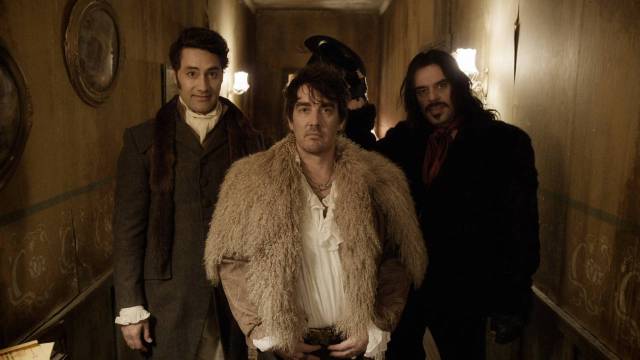
If you enjoyed FLIGHT OF THE CONCHORDS, chances are you’ll love this film too. It’s a spoof vampire sitcom much in the vein of Jemaine Clement and Taika Waititi’s previous comic stylings, but the performances, the gags and the treatment of the mythology make it really stand out from the crowd, perhaps even rivaling Conchords’ lavish musical numbers for memorability.

When a quartet of vampire housemates lets a small film crew into their lair to show that despite being undead they’re just like everybody else, hijinks ensue. You have the usual domestic squabbles and the very human sins of vanity, jealousy, passion and lust, but you also have the decidedly more vampiric concerns of living forever, nocturnal habits and how you lure your living victims in the busy modern world. Presented as a playful documentary exposé into an alternative group in society, the film progresses as a series of entertaining sketches exploring the personalities, foibles and the mindset of contemporary vampires living in New Zealand.

The film gifts us with a vampire archetype to stand in for pretty much every good vampire movie you’ve seen. You have a vampiric romantic a-la Francis Ford Copola’s DRACULA (Clement’s Vladislav), a fussy dandy in the vain of INTERVIEW WITH THE VAMPIRE (Waititi’s Viago), the young rebel LOST BOYS vamp (Jonathan Brugh’s Deacon) and finally the feral and silent NOSFERATU bloodsucker who lives in their basement (Ben Fransham’s ancient Petyr). They make for a fun mix of characters, and a believably diverse group of friends living together for reasons of both affection and convenience.

The film’s comic highlights include, but arean’t limited to – the challenge of looking your best for a night on the town if you don’t have a reflection; werewolves hurriedly shedding their best and tightest clothes so they don’t ruin them during transformation (“Jeans? You just lost those”); a pair of hypnotised (or just idiotic) police officers not seeing anything suspicious about stains, smells, corpses or bickering housemates floating on the ceiling; and the central outlandish trio traveling into Wellington on a night bus. You also get the added bonus of the actors’ gift for just looking funny, be it Waititi’s nervy, “please like me” glances at the camera, Clement’s pervert’s snarl or Rhys Derby’s macho mediator act as the alpha werewolf, you just have to smile.

It’s odd how few mockumentary features actually use documentary conventions to a large extent – usually it’s just an excuse to have your characters speak to camera. What We Do in the Shadows mostly commits to its premise. Talking heads, retrospective photo montages, introductory captions (displaying the characters’ advanced ages) and the kind of groovy vaguely-Eastern European soundtrack you tend to get with alternative documentaries all help to complete the package.

On the supernatural side of things, What We Do in the Shadows has some impressive, mostly in-camera special effects that transcend the film’s relatively modest budget. The makeup and gore is convincing and plentiful, and the bat and werewolf transformations are striking but used sparingly to instigate action or set up gags.

The film even finds time for a little meditation on mortality, and wittily explores how much it might suck (pun intended) to be a vampire in New Zealand today. The former theme is explored primarily through the vampire characters’ human familiars, who dedicate their lives to serving their masters in the hope of being gifted with eternal life as a reward. It worries Deacon’s familiar Jackie (the effortlessly sympathetic Jackie van Beek), who reckons she only has a couple more years as “the best version” of herself, and it downright infuriates Viago’s thrall, who is devastated to realise he has turned 90 and now faces being an eternally old immortal (though as his master points out, he did put on the wrong postage when sending his coffin to New Zealand).

Aside from the odd joke that doesn’t quite land (the punchline to the drawn out issue of Vladislav’s great rivalry with “The Beast” is a little obvious), the only thing I was left wondering when the credits came around was: why wasn’t this a TV series? Each scene/sketch could easily be expanded to an episode in its own right, especially considering the frequency and variety of the gags and this memorable group of characters who could all stand up to more screentime. I’m really nitpicking to find complaints though, and overall What We Do in the Shadows has turned out to be just as sharp and scary-funny as you could hope for. SSP

Posted in Film, Film Review | Tagged , , , , , , , , , , , , , , , , , | 3 Comments

The Grey and the Greyer: Heroes and Villains on Netflix’s Daredevil

daredevil-showrunner-goes-into-detail-about-brutality-kingpin-and-more

I know in the past I’ve defended Mark Steven Johnson’s much-derided Ben Affleck-led DAREDEVIL, but even I’ll admit it looks pretty ropey compared to Marvel’s latest forrey onto the small screen. It will surprise nobody to learn that Marvel/Netflix’s Daredevil is a hit, and a big one at that. The studio has been dominating the big screen box office for close to a decade, and the streaming service has been going from strength-to-strength as an alternative platform for entertainment for a while now too. The way we watch our movies and TV is changing. What also seems to be changing are the movies and television shows themselves.

Being a Marvel production, Daredevil was always going to be well-made on a purely technical level. The cinematography, lighting, choreography, production design and music are close to flawless. An aspect of bringing the show to life that could have gone either way – and gas done in the past with their less successful films – was the script. Would it be any good? Would it evoke the spirit of the Man without Fear? Would it do a anything different and exciting? The answer to all the above us a resounding “yes”, largely thanks to the boldness of vision and deft folding in of complex themes and morality throughout, all fronted by the series’ brainchild Drew Goddard and showrunner Steven S DeKnight.

Morality is a tricky thing to handle on such a far-reaching medium. You don’t want to appear preachy or self-righteous, but at the same time you don’t want to look like you’re condoning monstrous behavior in humanity. Daredevil gets this balance right, but doesn’t make it an easy ride, morally speaking, for the viewer. It challenges us, asks us to interrogate our own consciences. In it’s way, it’s (appropriately for the central character) very Catholic.

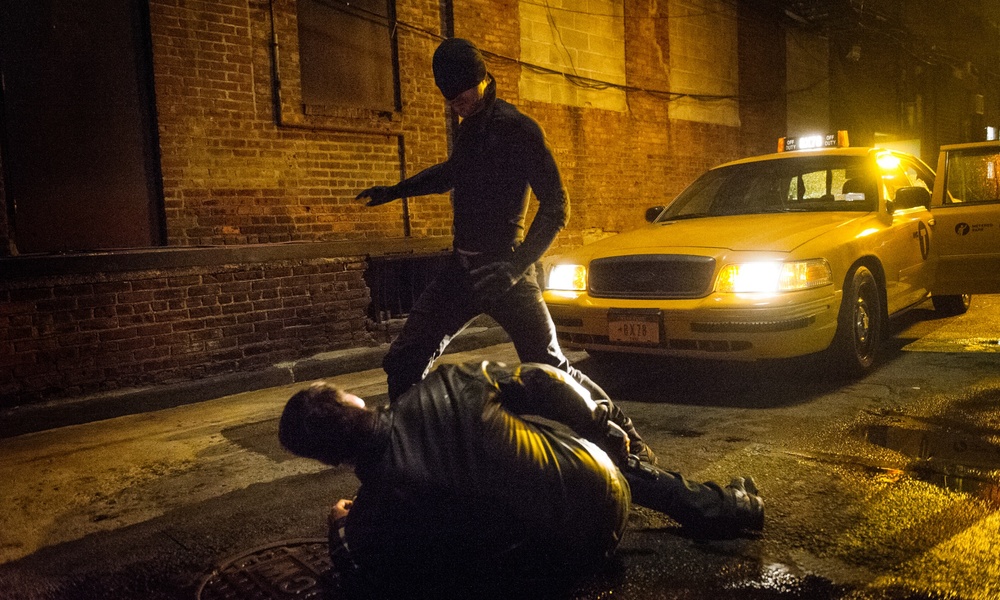
Either Matt Murdoch/Daredevil (Charlie Cox) or Wilson Fisk/Kingpin (Vincent D’Onofrio) could conceivably by the villain in this story. Both believe passionately, fanatically, in saving their city. Both can be violent and extortionate, it’s just a matter of extremes. One will beat someone to a pulp to gain information, stopping just short of killing them, the other will decapitate someone with a car door for embarrassing him in public. Extremes, see? OK, bad example. Daredevil’s the hero, Kingpin’s the villain. But that doesn’t mean I wasn’t sometimes on Fisk’s side, that I didn’t sometimes question why I was rooting for Matt. Both are capable of great cruelty, of atrocities, does it really make a difference what their motivation is? Is the quest for justice as a violent vigilante that much better than being driven to violence by greed and pride? As Murdock’s partner-in-law and best friend Foggy Nelson (Elden Henson) pointedly states late in the season (talking about Fisk, but applicable to Matt): “You can’t just run around killing people and call yourself a human being”. Neither our blind vigilante or our crime kingpin are idealists, rather this story follows the battle between a pragmatist and…another pragmatist.

It makes one hell of a difference that the writers bothered to humanise, to give layers to Fisk’s character early on. Charlie Cox is great, making Matt Murdock as compelling a protagonist as humanly possible,  but it is D’Onofrio’s light touch and emotional versatility playing the hulking crime lord that makes the most impact. He is a monster, but you can at least understand his motivation, you can see his point of view. Matt might be constantly fighting not to “let the Devil out”, but he could potentially be far more dangerous if he ever does entirely lose control. Fisk knows exactly what he is, he knows what he is capable of, Matt is still finding himself and discovering his limitations. They make for a fascinating contrast, not polar opposites by any means, just on different stages of their journey, and both forged in the fires of circumstance.

The plotting on the show is admittedly pretty standard (though well done) stuff, but as a character piece it really excels. It is Matt Murdoch and Wilson Fisk, their battle and their arguably similar view of a “world on fire”, their differing perspective of how to save it, that makes the show. I’m looking for great things for the rest of Marvel’s DEFENDERS TV event following such a powerful opening salvo. Bring on A.K.A. JESSICA JONES, LUKE CAGE and IRON FIST! SSP

Posted in Film, Film Feature, Television | Tagged , , , , , , , , , , , , , , , , | Leave a comment

Review: Get on Up (2014)

getonup1

You could do a whole separate film about Mr Brown’s myriad personal issues. You could probably do a whole film based just on the impact of Brown’s music during the Vietnam War (covered in a single scene here) but as the story of James Brown the performer, GET ON UP is a very rewarding two-and-a-half hours.

Born to an impoverished family in rural South Carolina, James Brown (Jamarion Scott/Jordan Scott) was dealt a duff hand early in life. His mother Susie (Viola Davis) abandons him and his father Joe (Lennie James) unable to provide, dumps him with relatives. After a spell in prison, the now adult James (Chadwick Boseman) falls in love with music and quickly becomes a superstar, and eventually one of the key voices in funk and soul, and music in general in the 20th Century. Told non-chronologically, Get on Up presents us with snapshots of James Brown’s life and career resulting in a colourful collage of a complex man.

I might be wrong, but I don’t think Chadwick Boseman did much of his own singing, instead being dubbed with Brown’s numerous live recordings for his performance scenes. I don’t begrudge this however, Boseman is a magnetic presence, and he moves just like the Godfather of Soul, and singing in addition to dancing to the level of Brown might have been asking a bit much of an actor.

I can’t fathom why director Tate Taylor and his writers felt there was a need to tone down Brown’s story. Surely, a life so full of drug-taking, romances and frequent nastiness should actually depict some or all of the above. We get a glimpse of Brown mixing something into his cigarette, and another brief scene of domestic violence, but apart from seeing his quick temper and him patronising his bandmates, we never really actually see Brown’s darker side (and boy, did he have one of those). It’s not like making it darker, rawer, would make it any less marketable. It might even have caused it to make a bigger splash at awards season. It could have been a legal thing, but other that that I can’t think of a reason for this slightly sanitised telling of James Brown’s life and times.

I’m not sure we needed Boseman as Brown occasionally breaking the fourth wall and addressing the audience directly, either. If you’re going to do something like this, you’ve really got to go for it – it’s got to be theatrical and over-the-top (think BRONSON) in order to make a point. If you do it three times at most in your otherwise grounded film, it can come across as a little smug, a needless additional frilly element to your already overstuffed story. Also unnecessary is dividing the story into chapters with lurid orange titles emblazoned across the screen. The plot does leap back and forth in time a fair bit, but the filmmakers could give us credit as an audience to notice the changing fashions and subtle age makeup to work out where we are in the story. It’s just a little inelegant.

Strange stylistic choices aside, the film has a lot to offer. The performance scenes are lively and well-executed, the period details make the film world richer and more believable. Boseman, as already mentioned, is mesmerising and has his subject’s Southern drawl down (though he’s far better looking than the real Brown), but the supporting players all impress as well. Of particular note is Nelson Ellis as Brown’s endlessly cool-headed, patient and faithful collaborator Bobby Byrd, Dan Aykroyd’s slick and well-meaning producer Ben Bart and Viola Davis with her brief but high-impact turn as Brown’s fragile mother who walked out on him as a boy.

Get on Up is a good film. It’s well acted, good-looking and entertaining  and it won’t make you feel like you’ve wasted 140 minutes of your life. It’s got the funk, to paraphrase Mr B. But after sitting for a pretty lengthy period of time to be told a story, I felt like I really should know more about the central figure. Aspects of James Brown’s life – usually the nastier ones – just aren’t covered in enough depth by this particular biopic. They’re not ignored, just hurried past, and that’s a shame. I’d be more forgiving of half-baked aesthetic and storytelling choices if we were getting the full story. I would recommend seeing Get on Up, but with the proviso that you pray to one day get a James Brown film that’s a little braver. SSP

Posted in Film, Film Review | Tagged , , , , , , , , , , , , , , | Leave a comment

Review: Nightcrawler (2014)

nightcrawler

NIGHTCRAWLER skewers the news industry mercilessly, perhaps the most brutal deconstruction of the business since Sidney Lumet’s superlative NETWORK. It’s hard-hitting and often shocking, but it also works as an example of the very murkiest of black comedies.

Louis Bloom (Jake Gyllenhaal) is a passionate but unstable young man. Yet to find a career or lifestyle to fit, he charges headlong into the morally dubious world of filming crime scenes for a sensationalist local news outlet. Lou plunges down this depraved rabbit hole, and as well as gaining a unique work satisfaction and finding his own place in the world, he brings with him an eager news exec (Rene Russo) and a desperate cameraman (Riz Ahmed) along for the ride.

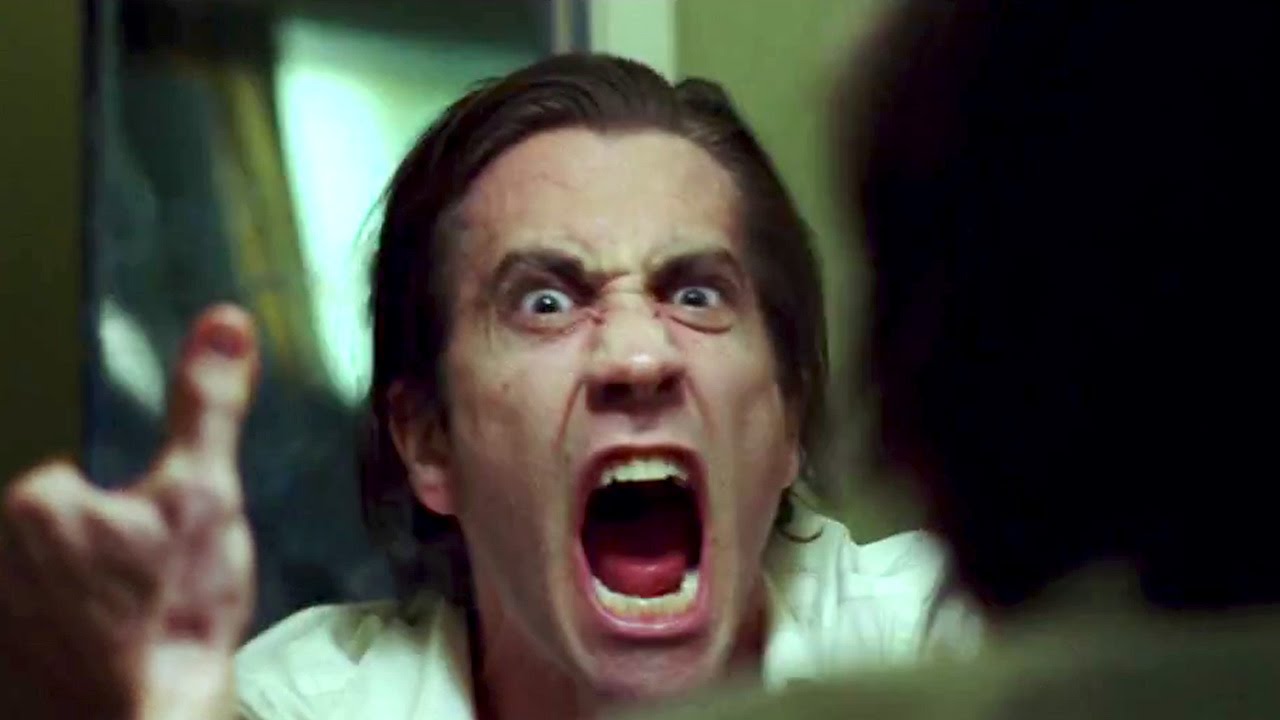
Four years ago, Jake Gyllenhaal starred in the completely and utterly vapid PRINCE OF PERSIA. The only way was up from there really. He’s had a good few years. There’s so much more to his performance here than losing an alarming amount of weight. Gyllenhaal makes Louis Bloom hollow and ghoulish and wrong on every level. His eyes are wrong, his voice is wrong, his movements are wrong; all without any evidence of humanity or empathy. It’s a barnstorming performance, but it was probably too challenging for most awards ceremonies (though even the glacial Academy couldn’t resist nominating Dan Gilroy’s layered screenplay).

Rene Russo convinces as a sharp and sure professional who will do anything to keep her current project afloat, but Nina also seems to be the only one to see Louis for what he is, a valuable asset who is not only willing, but gets a kick out of doing, the dirty work. She needs him to stay on top, but spots the danger of allowing him to get too close from the start. She has dinner with him as a professional courtesy, but is plainly terrified throughout. Essentially Russo is playing a more likeable, more stable, more human version of Faye Dunaway’s character in Network. Nina may not quite be “news incarnate” like Diana, but she’s no less willing to make a pact with the Devil to get a ratings boost. It’s also nice to see Riz Ahmed starting to break Hollywood, and doing a flawless American accent while playing Rick, easily the most sympathetic character in the film.

We’re along for the ride as Lou and Rick hurtle round the city on the dead of night looking for gruesome scenes to exploit. We don’t want to look, but can’t help but share Lou’s fascination, we can’t help but laugh uncomfortably at his tactlessness when interviewing or setting up the right shot, often as the emergency services are trying their damnedest to save a life. You could argue that the plot just ends rather than building to a particularly satisfying conclusion, but the characters’ journeys have gone as far as they can go by this stage, and you could easily view it as merely a snapshot of the life and times of Lou Bloom and the people who depend on his monstrosity for entertainment and profit.

The revival of urban sprawl/exploration of the psyche 70s-throwback films in recent years has also meant the revival of great original soundtracks. Cliff Martinez’s score for DRIVE was superb, and so is James Newton Howard’s for Nightcrawler. It’s sinister and oppressive to convey the right atmosphere for the story but it’s often pleasant to listen to and emotionally stirring as well, reflecting the way only Lou Bloom sees the carnage he’s viewing through his camera. Much like Ricky sees the serenity of that plastic bag floating on the wind in AMERICAN BEAUTY, Lou sees gore, the dead or dying, acts of violence as endlessly fascinating, affecting things.

Early on, Nina tells Lou that the news only attracts an audience if it’s about bad things happening to white people in good neighbourhoods. It’s an uncomfortable truth, but nevertheless an accurate one when talking about the ever-present divides along lines of class and race in contemporary America. Writer-director Dan Gilroy clearly feels Americans are long overdue confronting this reality. He puts the ball firmly in the viewer’s court and asks us to question our fascination with the macabre. Dan’s brother, fellow writer-director Tony Gilroy has a stab at social commentary in the BOURNE films, but with the subtlety of a sledgehammer. The more talented Gilroy sibling isn’t telling us what to think outright with Nightcrawler, only asking us to consider the moral implications of the way contemporary Western society functions.

Violence, after all, sells almost as well as sex does. The horrible things that one person can do to another has an undeniable draw, and if we get a chance to gawp at such horrors from the comfort of our own home, few would honestly pass up the chance. Lou Bloom’s view on the world may be wrong on every conceivable level, he may well be a monster, but he’s only giving us what we want. So is Dan Gilroy in many ways, but he’ll make us feel guilty for it. SSP

Posted in Film, Film Review | Tagged , , , , , , , , , , , , , , , , , , | Leave a comment

AGU MÉNDEZ TAKES ON THE OSCARS

This gallery contains 9 photos.

Some awesome work –

More Galleries | Leave a comment