40 Years On: Jaws (1975)

jaws2

On 20 June 1975, something came from the water to change the landscape of summer movie releases forever. 40 years on, and, rubber shark aside, JAWS is still an astounding piece of filmmaking, a masterpiece that bridges classic Hollywood and the modern blockbuster. It’s easily among Steven Spielberg’s most accessible, enjoyable and enduring works, which says something considering the length of his career and the variety of movies he has directed.

For those just hearing about these new-fangled things called movies, Jaws tells the story of a really big shark terrorising a small coastal community at the height of the holiday season. After a series of grisly deaths and the general atmosphere of panic rising, a cop, a marine biologist and a salty seadog set sail to find the shark culprit and destroy it.

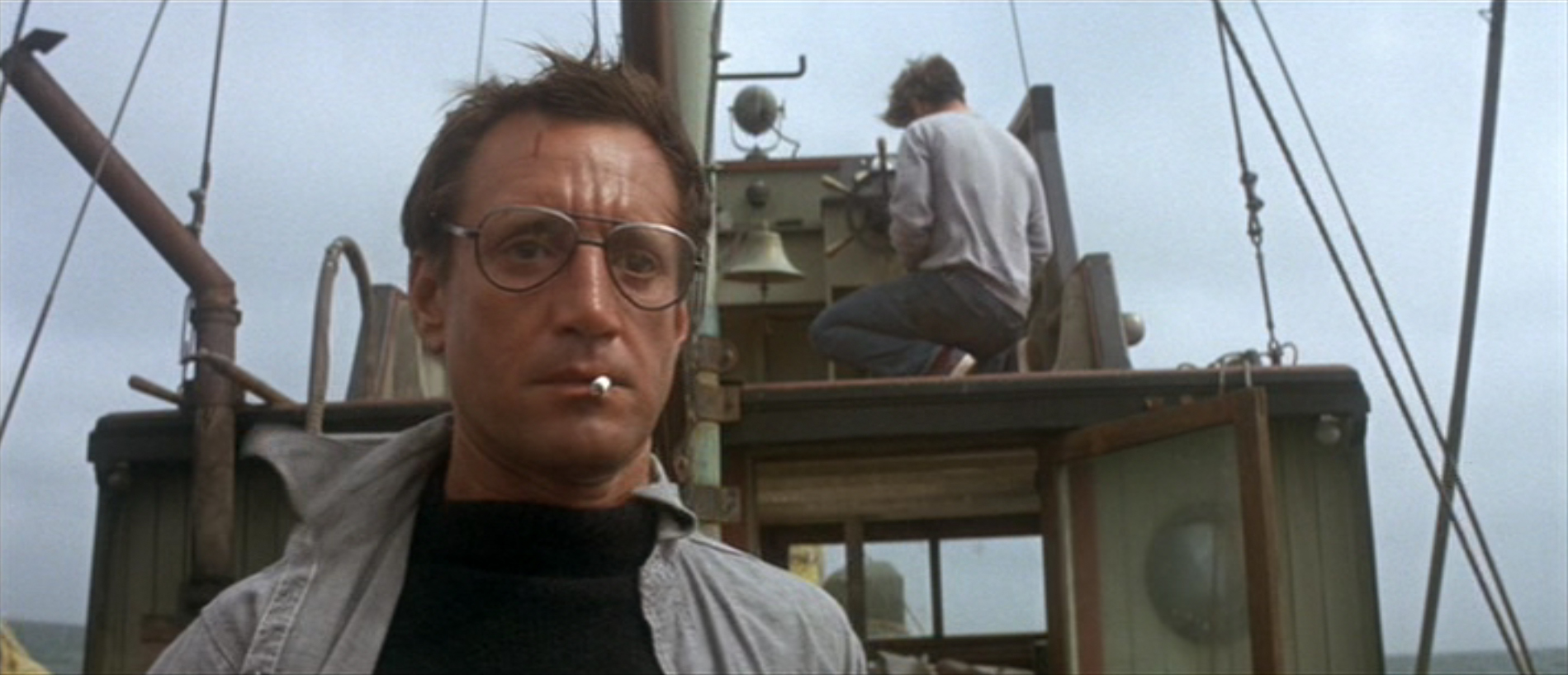
Iconic scenes, characters, dialogue and especially John Williams’ spine-tingling score aside, what Jaws really is is a masterclass in pacing. Rarely has a film been built so perfectly around a classic three act structure, acts that flow beautifully, feeding back and forth to further inform plot and character. The first act is a delicious character-driven identify-the-monster mystery. The second act sees things really get out of control and characters put through the wringer. The final act sees the hunter become the hunted in a high-seas adventure, where our characters are forced to work together to outsmart and defeat their foe. You may have noticed the importance of character throughout the story, and we are giving a trio of lasting, complex and fascinatingly different protagonists in Brody, Hooper and Quint, performed impeccably by Roy Scheider, Richard Dreyfuss and Robert Shaw.

Our heroes are a flawed bunch. Chief Brody is a nice guy driven to do the right thing, but he also has a certain disdain for the community under his protection; Matt Hooper knows his stuff and has youthful charm, but is also reckless and can be patronising to those less-educated; Captain Quint has been doing what he’s doing for a long time and is among the best at it, but he has demons to deal with and an intense dislike of those of a different class and/or background. These character flaws and abrasions come up time and time again as the trio prepare for their quest and ultimately have to work together when they set sail, but it all truly comes to a head in the infamous SS Indianapolis monologue delivered by Quint. Their differences are put aside as Brody, Hooper and Quint get sloshed, and a new respect and understanding comes about from Quint finally opening up about exactly why he hates and fears sharks so much.

It’s really quite incredible that Steven Spielberg still has such affection for this, his most traumatic work that had another potential disaster waiting for him round every corner. The on-set stories are legendary, from the near-constant loudspeaker announcement that “The shark is not working!” to Robert Shaw’s alcoholism and detest (duly reciprocated) for Richard Dreyfus, to the project going stupidly over-time and over-budget, resulting in Spielberg nearly being fired before he was allowed to complete the movie. It’s a testament to Spielberg’s tenacity and creativity that he managed to turn many of the film’s apparent weaknesses into strengths. The animatronic shark didn’t work, so we rarely glimpse it and our imaginations is left to do most of the hard work. Shaw hated Dreyfus, so there’s a palpable tension in Quint and Hooper’s relationship, with Brody (and Scheider) forced to play struggling peacekeeper.

Jaws is a film that lasts, a film just as thrilling and engrossing on the fiftieth watch as the first. There are few films I can quote verbatim, but Jaws is one I still love to challenge my dad to a quote-off, to see who will draw a blank first. The shark was always a bit rubbish, but the rest of the overall package is still so satisfying to experience time and time again. The film is still held in high regard for good reason, and is such a key influence to contemporary filmmakers today, from Bryan Singer’s production company Bad Hat Harry to Spielberg referencing it himself in TINTIN. Here’s to another 40 years of cinematic dominance, and in that time surely we’re gonna need a bigger movie. SSP

Posted in Classic Film, Film, Film Feature, Film Review | Tagged , , , , , , , , , , , , , , | 6 Comments

Review: Pride (2014)

pride-movie-2014

PRIDE is good-ish. They’re going for feelgood, and they certainly succeed in delivering that, but if you’re looking for much more then you might leave a little disappointed.

Following a chance encounter between student Joe (George MacKay) and a passionate group of gay rights activists lead by Mark (Ben Schnetzer), the group decide to stand with the plighted striking miners of a small village in Wales. While the Lesbians and Gays Support the Miners campaign and charity drive is gratefully received by some residents of Onllwyn, a key element protest support from such a source, and it is not long before unions across the UK hear of this bizarre alliance and the national press spin the story to their own ends, which leads to a landmark moment in the summer of 1984.

The film is gentle and funny and well-performed across the board. Bill Nighy hasn’t been this good in years, with an unusually understated and moving turn. We’re just so used to him hamming or adding whatever gravitas he can to stupid chunks of exposition in genre fare that it’s easy to forget he really can act. Nigh makes community leader Cliff shy and reserved but also passionate spokesman for his village, a character description fascinating in its contradictions. Also good are Jessica Gunning, Paddy Considine and Joseph Gilgun as key Onllwyn residents and one of the lower-key gay rights campaigners respectively. Oh, and Dominic West gets a fabulous dance scene. The curiously un-Welsh main cast do a fine job of putting on the accents and the inhabitants of the wider Welsh mining village sportingly engage in some light self-deprecation and stereotyping: “We don’t mind the gays and the lesbians, but don’t you dare be bringing people from North Wales down here!”.

My main problem with Pride was the almost complete lack of threat. Your comedy-drama tends to weigh a bit heavier on the former side without much jeopardy, and there is next to none of it on show here. I understand you don’t always have to actually witness atrocities, that some things imagined can have a far greater impact than what you see. This doesn’t change the fact that the film would have been more resounding had at least one darker sequence punctuated the relentless cheer and optimism. There’s a lot of talk about what indignities homosexuals and those working down the pits have endured at the hands of the government, but little evidence for it. We all know how badly the Miners’ Strikes affected the United Kingdom during the 1980s. We all know how dangerous it could still be to be a homosexual thirty years ago. But we don’t really get a feel for either. When Joe comes out to his parents, the camera pans away before we see the result, depriving us of a key moment of drama. We cut just before Gethin (Andrew Scott) is attacked in the street because he is gay.

At other points the film seems unnecessarily cut down, like we’re missing some pretty major plot and character points, despite running at just shy of two hours. Shortly after he has been cast out (offscreen) by his family for his sexuality and his involvement in the pro-miners campaign, we see Joe resolutely stride back into his family’s house after being ostracised to insult his sister and her fiancé. These are two characters we are apparently meant to dislike and take pleasure from Joe’s barbed insults despite the fact that we are meeting them for the very first time in this scene. That’s either bad writing or heavy-handed editing, and neither does a film any favours.

For a political film, Pride doesn’t seem all that political, either. The 1980s was the decade of angry UK politics, but you don’t get much a sense of that here. BILLY ELLIOT, which could be considered a companion piece, for all its romanticism, at least actually showed you the miners rioting and the consequences of the walkouts and clashes with police. This film, for all its good intentions, high-quality cast and uplifting tone lacks volatility and a powerful voice. SSP

Posted in Film, Film Review | Tagged , , , , , , , , , , , , , | 2 Comments

Review: Jurassic World (2015)

JWSuperBowlTrailer-Raptors1

I love JURASSIC PARK. It will always hold a very special place in my heart. It was the first film I saw on the big screen, and I saw it at the age that I, like so many other children, was obsessed by dinosaurs. It was a joy to see it twice more at the cinema when it was re-released in digital print in 2011 and the less impressive 3D version reared its head in 2013. I enjoyed elements of JURASSIC WORLD, but by no means all of it. It functions as a big summer movie and there are moments of brilliance, but somewhere along the way the magic has dissipated.

Third time lucky, and Jurassic Park has successfully opened. The arrival of brothers Gray and Zach (Ty Simpkins and Nick Robinson) at Jurassic World coincides with the theme park’s first major incident. The InGen scientists have been gene-splicing to maintain the public’s appetite for coming to see dinosaurs, and have created a monster, dubbed the “Indominus Rex”. When the Indominus breaks free to go on a rampage, and with her nephews lost somewhere in the chaos, park executive Claire (Bryce Dallas Howard) and Navy-trained Velociraptor-whisperer Owen (Chris Pratt) set out to find the boys and get out alive.

The new dinosaur is great. The Indominus Rex is well-designed and well-executed, and thematically speaking, as a confused and aggressive product of genetic engineering, it works. There’s a twist linked to its genetic makeup that can be seen a mile off, but again, from a story point of view, it works. All its scenes are worth the price of admission, particularly the final clash to restore balance to an upset ecosystem. When the Indominus isn’t on screen, however, things are decidedly less engaging. We see a dino petting zoo, and that’s just undignified treatment of these remarkable creatures, it somewhat removes any majesty or wonder dinosaurs might inspire when we see a child riding around on a little Triceratops.

Bryce Dallas Howard is really good as Claire, who really functions as more of a hero than Chris Pratt’s action man Owen. At least she gets some development. Claire is a career woman through-and-through, and has become emotionally detached to everyone close to her as a result. Howard makes her tough but human, and excels at bringing out little humourous touches to give the character a further dimension, from rehearsing the names of her stockholders using rather insulting word association on her way to a meeting, to scrambling aimlessly for the ages of her nephews, to her slight adaptation of her business suit to make it suitable for a jungle trek.

Chris Pratt sadly coasts, just about selling the ridiculous premise of training Velociraptors, but bringing little charm to a pretty unlikeable character who just happens to have the right skills for what is required.  Our main human villain is a lump working for a private outfit played by Vincent D’Onofrio, who clearly had his mind elsewhere (probably on DAREDEVIL). The only returning presence from Spielberg’s films is Dr Wu (BD Wong) who becomes exactly what we expect that particular character archetype to, but otherwise doesn’t do a lot. The kid characters aren’t annoying as such, but they’re simplistically reduced to a single character trait each – Gray remembers facts, Zach is a horny teenager.

It’s dumfoundingly rare now to see a major summer blockbuster clock in around the 2 hour mark. Jurassic World also stands out by not having its final act be entirely composed of action. The set pieces are big, but not oppressively so, and are well dispersed throughout the movie. The overall plot has a disjointed beginning, with setup scenes only feeling roughly stitched together, and things don’t really gain much traction until the Indominus starts causing trouble.

Appropriately Michael Giacchino, who has been the new John Williams for several years now, samples Williams’ original Jurassic Park score for key scenes. The only problem is he chooses to use the wrong elements of Williams’ score for these moments. The intimate end credits music for the first big reveal of Jurassic World? The epic “There it is!” music for an unremarkable scene traveling from one part of the island to another? Try again.

As the late great Robert Muldoon (the late great Bob Peck) said: “How many times? We need locking mechanisms on the vehicle doors!” Jurassic Park design teams have shown themselves to be extraordinarily thick, and here in the fully-functioning Jurassic World, we have “gyrospheres” that can seemingly roam anywhere the occupants like (shatter-proof or not, they’re just asking to be stepped on by an Apatosaurus!). There was a reason the jeeps in Jurassic Park were on rails, door locks or not. Something else stupid I noticed – why is InGen still called InGen? After two major incidents directly caused by the company and a related screw-up, surely you’d re-brand?

As a side note, I’m sure no offense was meant, but for anyone living in the UK the writers have chosen a very unfortunate abbreviation for Pachycephalosaurus in one throwaway scene.

In many ways I respect director Colin Trevorrow and his writing team for not resorting to too many nods to the original films (there are some) and actually moving the story forward. But if you’re not going to overtly reference what’s come before and get nostalgia points, you have to come up with something better, and sadly they don’t. There’s some nice action beats and a couple of decent gags (notably one that subverts one particularly tired trope), but Howard aside the performances aren’t up to scratch and most of it isn’t that memorable. It’s good to see unique talent like Colin Trevorrow getting such plumb gigs, but hopefully his next project hits harder and the next Jurassic film is more lasting. SSP

Posted in Film, Film Review | Tagged , , , , , , , , , , , , , , , , , | 1 Comment

“The hour grows late…” (RIP Sir Christopher Lee)

Christopher-Lee

Well today has been a sad one for film fans. Mere hours after news broke that the portrayer of Fagin Ron Moody had died at the age of 91, it was announced that Christopher Lee had also passed away at the weekend. The word “legend” is attached to many people these days, but Lee was one of the few fully deserving of that description. A man who led a life before show businesses almost as interesting as the film career that followed (he was basically James Bond), Lee was a giant of the industry and a master of his art.

DRACULA, THE WICKER MAN, THE MAN WITH THE GOLDEN GUN, LORD OF THE RINGS, STAR WARS, and so on. Lee was a film icon who brought to life (or afterlife) some of the most memorable characters – notably villains – in the history of film. The first half of his monumental career boasted an iconic Count, a low-key creepy Lord Summerisle and an entertainingly warped mirror image of James Bond in Scaramanga. In his later years he became equally beloved and detested by a new generation as Saruman and Count Dooku in The Lord of the Rings and Star Wars Episodes II and III respectively, and in both franchises he have weight to reams of complex fantasy exposition and turned booming out silly names with a straight face into an art form. His career spanned such a long time and he was such a prolific performer that everyone, no matter their age, will remember him for at least one role.

Much like his contemporary Vincent Price his career could have been a non-starter because of his imposing height, but again like his American counterpart Lee turned his physical attributes to his distinct advantage and was always a memorable presence onscreen even in smaller roles in the likes of GREMLINS 2 and most of Tim Burton’s films over the last decade.

For many, he is the once and future Dracula, or else the monstrous foil to real-life best friend Peter Cushing’s well-spoken heroes in a number of other Hammer productions. For me, because I’m in my mid-twenties, Lee will always be Saruman. He may have really wanted to play Gandalf (he would have been far too harsh) but he was perfect casting as the fallen white wizard, and Peter Jackson surely found it a great help to have a Tolkien expert (he read LOTR annually) on set to check out any doubts on Middle-Earth lore or Elvish pronunciation. One of the most touching, amusing moments from Jackson’s mountain of behind-the-scenes footage is the crew being equally fascinated and frustrated by Lee telling yet another remarkable but long-winded anecdote as they try to reset a scene in pickups for THE HOBBIT.

It’s a tired phrase, but you can’t say the man didn’t have a good innings. To lead such an interesting and varied life, and to carry on working right until your time to shuffle off this mortal coil is truly enviable. We’ve lost an icon of cinema this week, but he leaves behind a frankly ridiculous body of work to trawl through (including the odd heavy metal album); a thoroughly worthwhile endeavor if you have the time, or plan on living for as long as the now late great Christopher Lee. SSP

Posted in Film, Film Comment | Tagged , , , , , , , , , , , , , , , , , | 2 Comments

Review: Ex Machina (2015)

EX-MACHINA

It’s about time a movie delivered on the promise of an AI thriller, particularly in 2015, a year with such disappointing offerings so far. CHAPPIE was underdeveloped to the point of stupidity, and AGE OF ULTRON was muddled and overstuffed. After proving himself as an accomplished writer for the likes of Danny Boyle over the last decade-and-a-half, EX MACHINA sees Alex Garland finally try his hand at directing, and what a debut it is.

When Caleb (Domhnall Gleeson) unexpectedly wins a competition to meet the reclusive founder of the technology company he works for, little can he guess what his trip has in store for him. Over the course of a week, Nathan (Oscar Isaac) uses his starstruck employee as a guinea pig for a unique experiment. Caleb’s mission is to conduct a series of Turing tests on Nathan’s artificial intelligence, Ava (Alicia Vikander), to find out whether or not she can fool others into thinking she is human. As the trio test each other, it becomes increasingly clear that everyone has their own agenda, and nothing is as it seems.

As well as fielding all the usual discussions that come with the concept of artificial intelligence – free will, what it means to be human etc – Ex Machina is also a great film exploring the twin themes of observation and control. From the very first shot Caleb is being observed, he is observed from the moment he meets Nathan and especially when he comes into contact with Ava and she starts to process his “micro-expressions”. Likewise, Caleb also observes Nathan and Ava constantly, always trying to figure out what their endgame is. In terms of control all three of our central characters are battling for it, manipulating each other to gain the upper hand. Revealing which of the trio eventually proves themselves to be the master manipulator would be a major spoiler, but suffice to say its enrapturing to find out. The plot is a constantly shifting chess game of a character piece.

For the most part we follow just three characters as they watch each other and we notice both major and minuscule changes in their behaviour as the situation shifts. The task facing three actors under such close scrutiny was not a small one, but Domhnall Gleeson, Alicia Vikander and Oscar Isaac are well up to the challenge. Gleeson and Isaac are both extremely good fits for their characters, playing them as good-natured everyman and charming, subtly creepy schemer respectively, but it is Vikander who makes the biggest impression as Ava. We’ve seen a lot of robots in movies, and a good number of them appeared almost human. Vikander could have gone the full ROBOCOP with stiff, controlled physicality, but she cannily instead has chosen to make Ava natural in all but a few of her movements. After a while, you can forget she’s an artificial being until a slightly odd change in expression or movement that doesn’t quite fit the rhythm of a real person gives her away. It’s subtle, sometimes barely noticeable, and all the more uncanny for it.

The film has an eerie, uncomfortable atmosphere throughout, but this is balanced with moments of extreme beauty and glimmers of welcome and unexpected humour. Here Garland has proven himself a talented director with a clear vision right out of the gate, but he is first and foremost a screenwriter, and the script of Ex Machina perhaps represents his finest achievement to date. It’s layered and intelligent without being overwhelmingly science-y, preferring to always bring focus back to observe how its three core characters behave in each other’s company or how they perceive their place in the rich tapestry of life. Much like Nathan refers to Caleb, the film’s dialogue is snappy and quotable, summing up its complex ideas succinctly in profound, brief statements rather than dreary monologues. Garland also indulges his love of left-of-field plot turns and steadily piling up the tension for a thrilling horror-tinged finale.

The film is aesthetically distinct and memorable, but is not concerned with dazzling with fireworks. Ava’s introduction is one of those moments on film that will stay with you. It’s not showy, in fact it’s rather understated. In wide shot, against a wide window she walks slowly into view in profile, her robotic innards revealed by the light shining through her. The plot quickly finds a contrivance for Ava to conceal her inner workings and in doing so save the film’s modest budget, but it makes sense with her character and also makes the occasions when we do see her laid bare all the more startling.

I could dig far deeper into the themes, character motivations and plot of Ex Machina, but trust me when I say you really don’t want to know any more before you experience it for the first time. It’s a sci-fi you want to go into cold to get the very most out of it. I’ve probably said too much simply by writing this review. See it, see it now. If you’ve already seen it, then see it again, then debate it with others – it can only become richer and more enthralling on multiple viewings and through intense debate.  SSP

Posted in Film, Film Review | Tagged , , , , , , , , , , , , , | 8 Comments

Review: Tomorrowland (2015)

Tomorrowland-Stills

Thank goodness the concept of hope has returned to the summer blockbuster landscape. With TOMORROWLAND, Brad Bird may not quite have hit the dizzying heights of his previous movies, but he clearly relishes bringing back retro designs, fun action, endearing relationships, and generally taking science fiction back to a golden age where everything felt a little more positive.

Fifty years ago, idealistic boy inventor Frank Walker (Thomas Robinson) found his way to a secret utopian world. Now, through a series of unlikely events, razor-sharp teen delinquent Casey Newton (Britt Robertson) is brought together with the adult, turned cynical and shut-in Frank (George Clooney) and both embark on a quest to return to Tomorrowland and perhaps save their own world in the process.

This is a pretty straightforward plot, particularly by Damon Lindelof’s usual standards. With the dimension-traveling, the contrast between the drab and the vivid and the strong female characters it’s essentially THE WIZARD OF OZ with a sci-fi twist, but here they spend a lot longer getting back to the colourful other world.

Bird and his team have assembled a seriously good cast. I adored Casey as a character, she’s intuitive, funny and impulsive, she bungles and slips but always lands on her feet and always strives to do the right thing, and Britt Robertson has charisma to rival her A-List co-star. It’s good to see Clooney take the plunge with a project of this scale again, and the grouchy genius with a heart of gold role fits him like a glove. Raffey Cassidy is a scene-stealer as Casey and Frank’s guide Athena, and manages to remain interesting despite being lumped with a lot of the film’s exposition by being consistently exceedingly odd. It’s nice to see Hugh Laurie wearing his native accent again, and he lends gravity to David Nix, also making him understandable and amusing as well as frightening, as every great baddie should be.

Disney must have been thrilled that they’d just acquired Lucasfilm and STAR WARS, and the iconic imagery, sound effects and music they were therefore free to use in a key scene in a sci-fi collectables shop (Bird also smuggles in a few references to his own IRON GIANT). Brad Bird isn’t one for showing off with his camerawork or editing, but he does indulge his production designers to let their imaginations run wild and produce something pretty wondrous on a visual level. Jetpacks, steampunk rockets and multi-leveled bubble swimming pools suspended in mid-air are just some of the marvels on show.

It’s great to see a load of good old-fashioned slapstick in a big movie again. Robertson has great physical comic timing and Casey does get knocked around a fair bit, often as a result of her lack of awareness of her own surroundings. The action is flawlessly executed with great rhythm and gags aplenty to punctuate it. This particularly comes across in arguably the film’s most successful scene – Casey and Frank escaping the inventor’s house as booby traps spring out from the floors and walls like a depraved take on WALLACE AND GROMIT to take out their evil robot pursuers.

Sometimes telling the viewer about the themes of the film can be a little on-the-nose. Both Clooney and Laurie literally list off everything that is wrong with our modern world (the latter in a more amusing manner). I also found that what is in essence a linearly satisfying story takes one too many tangents, seemingly only to delay our return to Tomorrowland for another few minutes, and once we finally reach to the apparent utopia it wasn’t immediately clear what our heroes were actually trying to do beyond stopping the bad guy.

It’s a lovely sentiment to want to fix everything wrong with our world. Even if we do not have any immediate solutions to turn back the damage humankind has wrought, to have the drive to do something, anything, to heal it, it’s an admirable worldview. To stay positive and believe things can and will get better is something we could all strive for. It apparently hasn’t smashed the box office, which might suggest, depressingly, that the world doesn’t really like happy science fiction. What a bunch of misery guts.

The film might not be quite as deep as some might want their sci-fi to be. The big ideas are there, but generally in the background and not discussed in all that much detail. Bird and Lindeloff don’t put forward any real solutions to our current predicament beyond blind hope and working together for a better tomorrow. But that’s fine sometimes. Tomorrowland is a good ride with a sincere message and simple pleasures. Every now and again, you have to ask yourself – much like young Frank Walker does of David Nix in the opening scene – “can’t something just be fun?” SSP

Posted in Film, Film Review | Tagged , , , , , , , , , , , , , , , , | 1 Comment

10 Years, 10 Spectacular Sci-fi Films (2005-2014)

Predestination-TemporalAgent

Science fiction has become a film genre increasingly derivative and dispiritingly inconsistent in quality in recent years. 2012’s TOTAL RECALL was a terrible remake and PROMETHEUS was arguably guilty of cheapening its own source material, the ALIEN series, by existing alongside it but not answering any of the questions it left open. All is not lost though, as there have also been some astounding examples of sci-fi both from Hollywood and around the world over the last ten years, coming from daring filmmakers producing something thought-provoking, spectacular, or both. Here’s my pick of the the very best, big and small, and why you should check them out if you haven’t already done so; one from each year of the last decade.

serenity

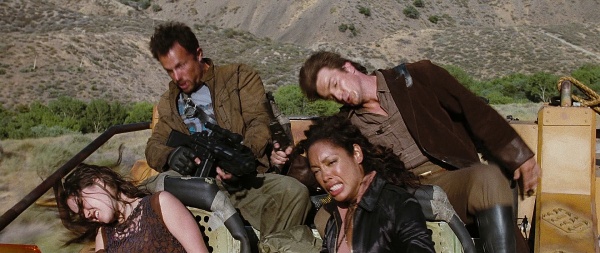
SERENITY (2005) As most know by now (especially the heartless Fox execs), FIREFLY was a really good TV show. Even if we never again join this wonderful band of misfits on their adventures in the Old-West-in-Space, SERENITY made for one hell of a send-off. As if spending some more time with these vivid characters in an exciting chase movie wasn’t excuse enough to see Serenity, Joss Whedon was finally given a decent budget to fully realise his imagination. His future was a ‘verse where terraforming, off-world colonisation and artificial population control are big issues, issues that either blend seamlessly into the background to add colour, or are brought front-and-centre as the basis for important plot points.

children-of-men1-e1405211126966

CHILDREN OF MEN (2006) I’ve always enjoyed Alfonso Cuarón’s allegorical thriller CHILDREN OF MEN, but revisiting it recently made me realise how terrifyingly plausible it is becoming with contemporary UK politics and society the way they are. The representation of the rise of extremism (both idealistic and religious) and the paranoia of the immigration issue is now all too real, and Cuarón’s dark tweaking of a still recognisable present and use of distinctive real locations works well in his favour to create a distinctive and relevant vision of the future. A rundown Clive Owen heads up a strong cast and Cuarón ‘s direction, particularly in one ridiculous (if simulated) long take, grabs hold and doesn’t let go. Humanity facing extinction is scary, but even more chilling is seeing that when the world goes to hell, Carling is somehow still served in pubs.

sunshine

SUNSHINE (2007) One of the many great things about Danny Boyle as a director is that he’s dabbled in pretty much every genre out there. The science in this psychological disaster movie is a bit iffy, but who honestly cares? It’s a thriller, not a lecture. Alex Garland’s script covers the physics in broad strokes, but more importantly and more thoroughly explores the most destructive and unstable aspects of human nature. Boyle gives proceedings visual flair and gives every character their moment to shine, and we see the stuff of nightmares as this crew of astronauts on a mission lose their grip on reality in response to very real dangers.

walleandeve

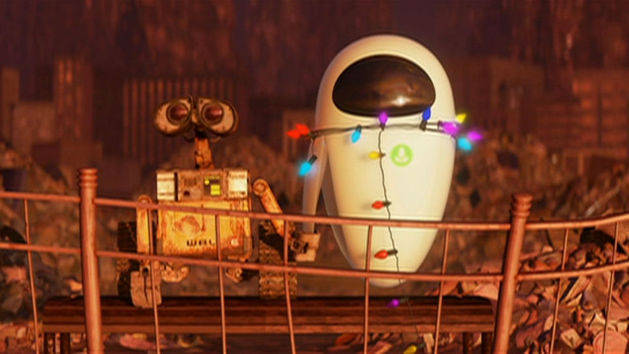
WALL-E (2008) Yeah, Pixar made the best sci-fi film of 2008. Think about that. Warm and witty as all Pixar films, WALL-E also had a big old brain, and presented us with a rather terrifying vision of our future. The first half is a cute tribute to silent comedy, then the film pulls out the smarts and the darkness, along with an affecting robo-romance. The titular scrap-gatherer may well be the most compelling protagonist Pixar have ever produced, and aside from the odd utterance provided by sound effects prodigy Ben Burtt, he does all his acting through twitching his metal grabbers and angling of his periscope eyes. He, his love EVE, and the universe they inhabit are miracles of animation.

district-9-1024x550

DISTRICT 9 (2009) Based on Neill Blomkamp’s short film ALIVE IN JOBURG, this very South African take on an alien invasion film comes with allegory and symbolism by the bucket-load. The extra-terrestrial visitors in DISTRICT 9 are terrified, diseased refugees who look an awful lot like prawns, and are crammed into concentration camps on arrival, kept out of sight, and out of mind to all but the civil servants and security forced tasked with keeping them under control. Everything changes one fateful day when middle-rung bureaucrat Wikus Van De Merwe (Sharlto Copley) visits the camp in District 9 with a documentary crew, and Blomkamp gets to have his fun showing us exactly what alien tech does to a puny human body. Blomkamp hasn’t come close to this since.

inception-spinning-top

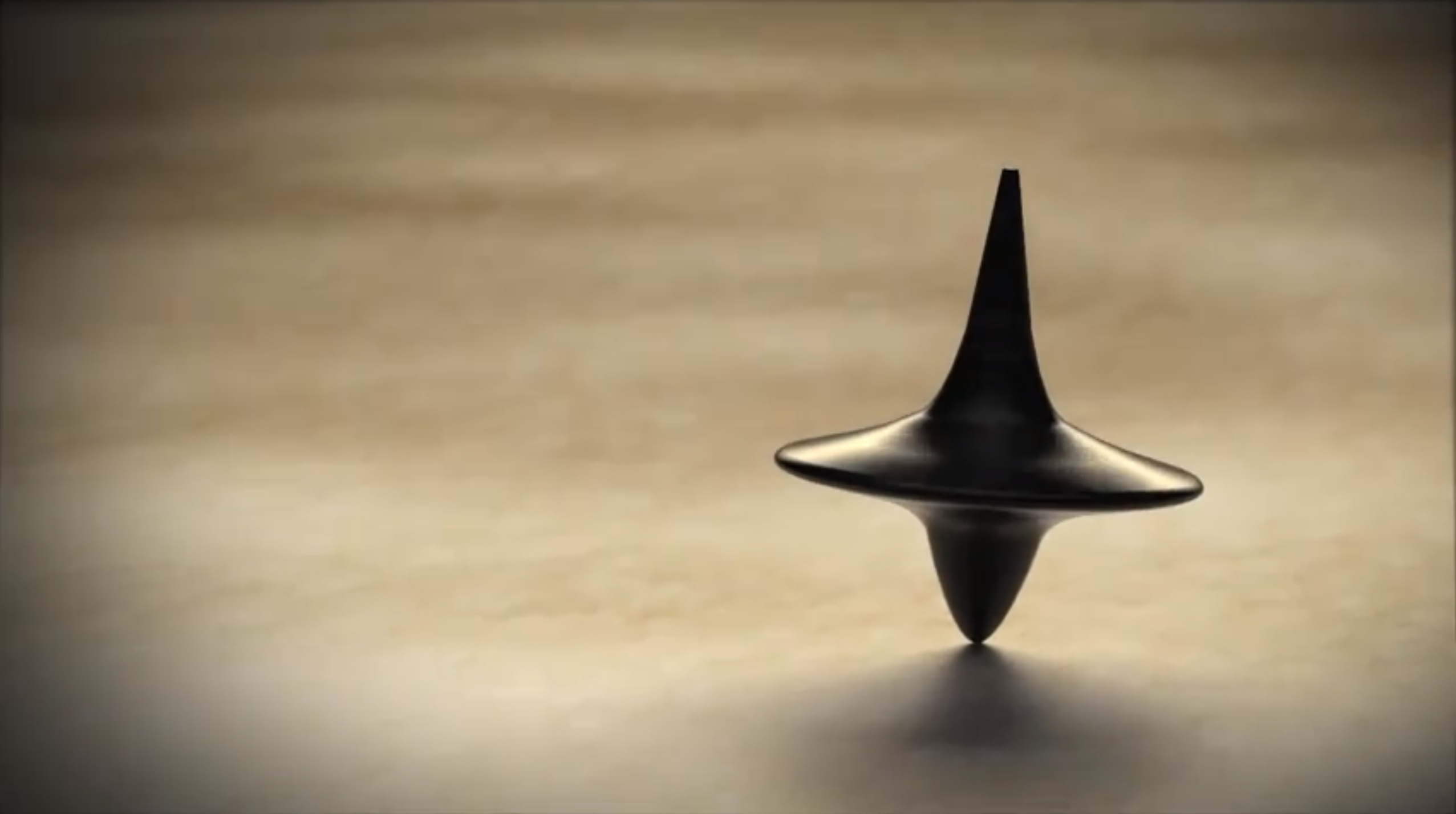
INCEPTION (2010) INCEPTION is probably the most talked-about sci-fi movie on this list. Was it a dream or not? It hardly matters. Christopher Nolan doesn’t like to spoon feed his audience, in fact at times he can make us work a little too hard (see: INTERSTELLAR), but Inception strikes about the right balance. It’s all down to your own interpretation, but you have a rich idea-loaded world, layered characterisation, thrilling action and already iconic visuals to get lost in while you work out how much of this superlative dream heist is real.

rise-of-planet-of-apes-uk-trailer

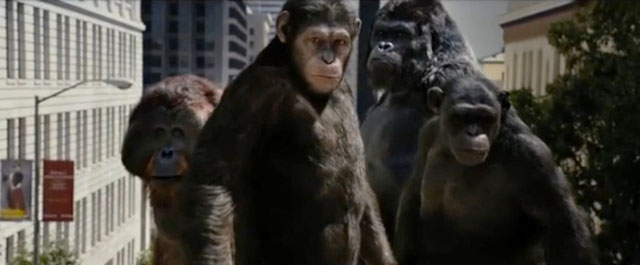
RISE OF THE PLANET OF THE APES (2011) DAWN is a better movie overall, but RISE OF THE PLANET OF THE APES is a better sci-fi with bigger concepts and a willingness to explore them. Can you honestly say you wouldn’t take risks and play God if you’d discovered a miracle cure to a devastating disease like Alzheimer’s? It’s a lose remake of CONQUEST OF THE PLANET OF THE APES, only much smarter, more fluid and dramatically gratifying. In that film the Apes’ uprising was pretty laughable, saved only by a Shakespearean monologue from Caesar, but here it’s a convincing and violent (if convenient) coup. Above all, Rise was the biggest landmark in performance capture acting since Gollum, and Caesar (Andy Serkis) would smash through that barrier yet again three years later.

safety_not_guaranteed_mark_duplass_aubrey_plaza_movie_review1

SAFETY NOT GUARANTEED (2012) The most difficult thing about recommending SAFETY NOT GUARANTEED is that I can’t really talk about why it’s worth seeing, or why it’s a good sci-fi film without spoiling it. Suffice to say it’s a good slow-burning mystery with both a consistent air of eeriness and a warm heart to it. Aubrey Plaza and Mark Duplass have great chemistry, but refreshingly their relationship doesn’t go where you expect it to. Here’s hoping for something as good and not too conventional when we all see what director Colin Trevorrow does with JURASSIC WORLD.

p2oe7mpvd83powiyshr5

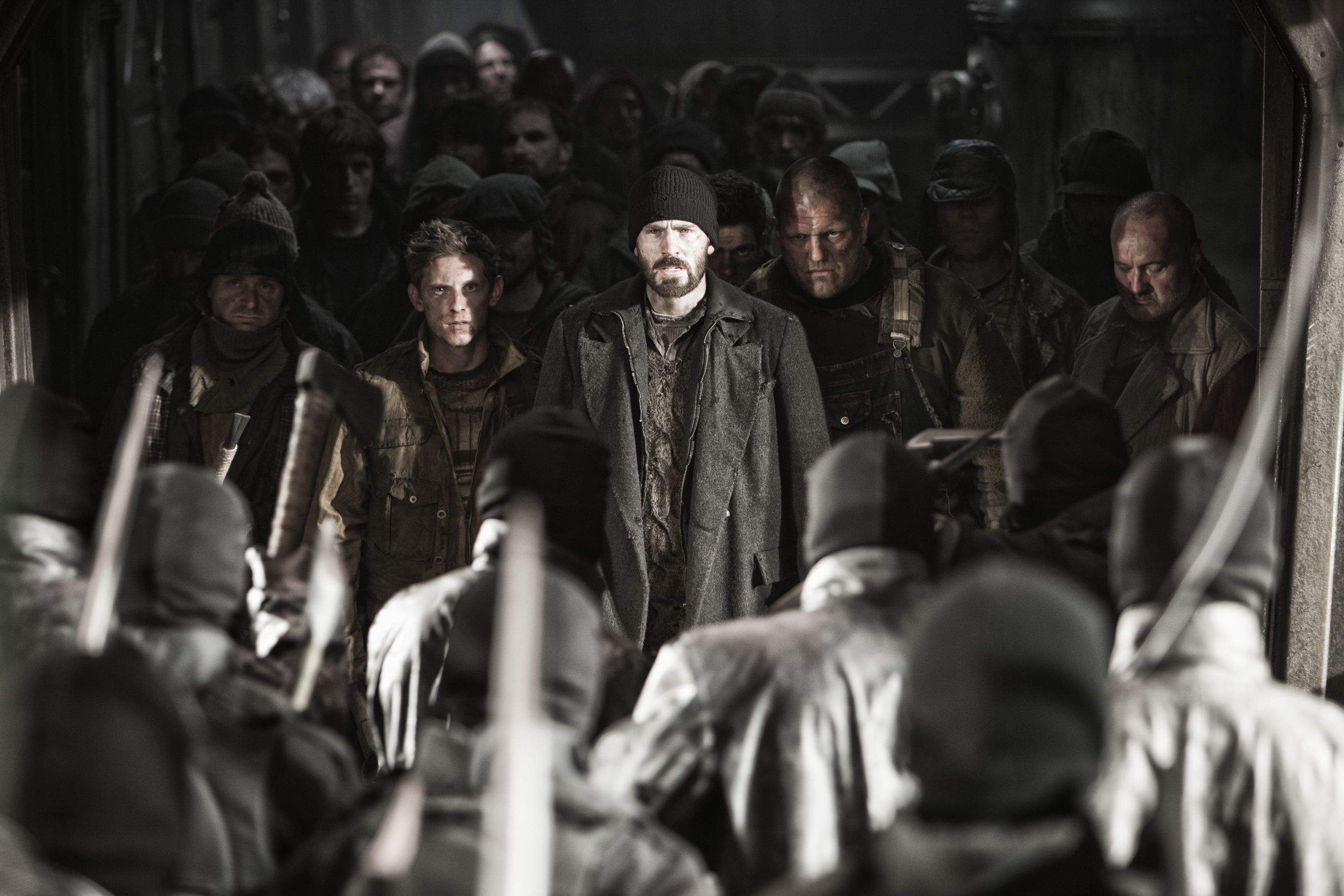
SNOWPIERCER (2013) SNOWPIERCER still hasn’t made it to my native UK, so I’ve had to get a European import, but I’m very pleased I’ve seen Bong Joon-ho’s latest. It works as an action film, a satire, a think-piece, a very black comedy all equally well. Bong makes the most of a good cast of character actors and violent set pieces in the confined spaces of a colossal train hurtling through humanity’s self-created ice age, but also manages to pump it full of environmentalist commentary stopping short of appearing obnoxious. I don’t reckon we’ve seen better sci-fi discussing environmental disaster and fuel crisis since the MAD MAX films thirty years ago.

predestination_4

PREDESTINATION (2014) If LOOPER made your head hurt, then PREDESTINATION will probably make your brain crawl out through your ears in a desperate bid to escape. It’s a real noggin-scrambler set in an alternate universe about not belonging, fate and the cyclical nature of time, where the twists come at you rapid-fire in the film’s final act. See it for great performances (Sarah Snook owns the film), a sharp and sensitive script covering issues rarely explored within the mainstream, as well as masterful plotting throughout from the Spierig Brothers. SSP

Posted in Film, Film Feature | Tagged , , , , , , , , , , , , , , , , , , , , , , , , , , , , , , , , , , , , , , , , , | 5 Comments

Review: Autómata (2014)

automata-movie-review-san-sebastian-film-festival

AUTÓMATA is interesting, but could have been more so. It’s competently directed, with a good eye for detail, but you find yourself craving more originality and tighter plotting overall.

In the face of disaster caused by environmental decay and warfare, humanity has turned to mass-producing robots to do their dirty work, until they mysteriously begin to fight against their programming and leave their maters to their self-made fate. Jacq Vaucan (Antonio Banderas) is employed by the sole manufacturer of automatons to find the “clocksmith” responsible for the world’s robots disobeying their masters.

The film borrows liberally from earlier, arguably better examples of Science-fiction. Robots are used as a labour force, particularly in hazardous areas, much like in DO ANDROIDS DREAM OF ELECTRIC SHEEP?/BLADE RUNNER and protocols are input to prevent them rising up against their fleshy masters, like in I, ROBOT. Asimov and Philip K Dick clearly have some big fans, but if you have to copy someone then it might as well be the two of the best, right?

Again, like in Ridley Scott’s filmed Blade Runner, this world is one near-constantly drenched by a depressing downpour, and the put-upon mechanical sub-class dream of something better. Tone-wise it’s similar to something like DELICATESSEN with its unsavoury, devolved and dying out society. The whole thing feels very European, which it should with the talent in front and behind the camera (writer-director Gabe Ibáñez, Banderas being only the two most prominent). So why on Earth is the thing in English? The only possible reason can be commercial, which is a shame because it might have been interesting to see a post-apocalyptic Spain for a change.

The film perhaps better explains, and demonstrates Asimov’s laws of robotics in practice than the Alex Proyas-directed adaptation of the author’s own I, Robot did, though it’s a little lame that the excuse given for why automatons can’t break their protocols to begin with is simply “because they can’t”, but it sets the plot in motion.

There’s some nice futuristic imagery here, as well as some interesting ideas for how this near-dead world might function – a holographic boxing match where we see the two fighters briefly towering over a city before a knockout; everyone using retro-future phone-pagers; home ultrasound kits; rain that “can be hazardous for your health”; the robots looking like toaster-humanoids with Stephen Hawking’s voice and red pinprick eyes, until they discard their blank faces to reveal insectoid inner workings as they are liberated.

For the most part it’s a decent enough industrial noir. I always like exploring the dramatic potential of seeing how wrong a supposedly “perfect” system can go. In this future law enforcers are halfway between cops and insurance brokers, which makes sense as both industries are protecting against something, one with the wellbeing of others more in mind than the other. The company Banderas works for are a bit like Blade Runners, only nastier. There’s not really much moral conflict that goes on in their brains, even when long-held theories are shattered. They’ve got a job to do and they will see it done.

Speaking of ROC robotics company, the figures that make up the upper echelons are an…interesting selection. The story is motoring nicely along, Jacq is well on with his ill-defined quest, then all of a sudden Tim McInnerny turns up rocking a terrible Americsn accent, along with a very confused-looking Grandad from OUTNUMBERED (David Ryall).

The plot does become scrambled as we go on, especially in terms of character motivation – who wants what and why? I’m not sure I understood anything at all in the last 20 minutes of the film, aside from the general emotional reaction I think Ibáñez was going for.

Confused and derivative as it can be, I like the spirit and visuals of Autómata, and the ambition it has to explore the concept of an AI learning to be as selfish as their human creators to ensure their own survival. It’s a good pastiche with high points, but it likely won’t stand the test of time. SSP

Posted in Film, Film Review | Tagged , , , , , , , , , , , , , , , , | 1 Comment

Review: Before I Go To Sleep (2014)

0cc68e27-e2a2-435d-ae51-cc8719edb59c

I’m not the biggest fan of Christopher Nolan’s mind-boggler MEMENTO, but at least it was packed full of interesting ideas. The opening of BEFORE I GO TO SLEEP is smothered by watery visuals and sound effects, then we hear a heartbeat, a ticking clock, an eye opens in extreme close-up. This was never going to be a nuanced one.

Christine (Nicole Kidman) lives a life in a day, every day. Due to an incident she can’t remember, she loses every memory of what has happened and who she is every time she sleeps. She wakes up to a man, Ben (Colin Firth) calling himself her husband, and another man, Dr Nash (Mark Strong) calling himself her psychiatrist. As Christine struggles to put together the pieces of her life before she loses everything again, it becomes increasingly clear that nothing is as it seems.

The film might as well have been retitled Unreliable Narrator: The Movie. From the off we’re looking for holes in Ben’s story, trying to figure him out. Perhaps that should be unreliable narrators, as Dr Nash doesn’t hold up to all that much scrutiny either, and you find yourself asking all the right questions of Ben and Nash as they spin their tales, which Christine, annoyingly, doesn’t.

The film doesn’t seem to realise that Christine has only lost her memory, she’s not an idiot. In (apparently) his first conversation with her, Dr Nash explains to Christine in excruciating detail how to switch on and use a digital camera. It’s a camera, not a bomb, give the woman some credit!

There’s some rather worrying gender politics in evidence. A vulnerable woman believes and does everything that two men tell her almost without question. Surely you’d be more frightened and guarded if you’d just woken up naked next to a likewise naked man with no memory? But no, Kidman plays a character written as an emotional zombie who isn’t all that bothered about being dominated by a pair of men who, for all we know, she has only just met. The Husband and the Doctor, both patriarchal constructs to be obeyed. It’s only when Ben and Dr Nash’s stories don’t seem to match that Christine starts to get suspicious.

It’s pretty obvious from the beginning that one of Christine’s unreliable narrators is responsible for her condition. The question is, who? The other question is, should we be encouraged to care more about finding the answer?

It’s cute that the symbol for preserving memories used in Memento is recycled here – the humble post-it note. Christine doesn’t quite go to the same extremes Guy Pearce’s amnesiac did to recall key information, however, she just records her thoughts towards the end of the day on her camera and is reminded by phone the next day to watch it back.

We have to ask if Christine would really consent to sex with a man she’s only known (in her terms) for 24 hours, just because he says he’s her husband? Their first scene of intimacy triggers that old memory loss movie standby – a similar situation triggering a vivid flashback to a previously foggy event. This is rarely a stylistic choice made by a thoughtful filmmaker, and smacks a bit of, “I’ve seen other people do this, so I’ll just repeat the technique”. I’m not even sure an amnesiac’s brain works this way, it’s just a very convenient plot device.

Kidman does all she can with a thankless role, communicating a lot through her eyes (which the camera spends a lot of time on), but Firth veers from creepy to looking bored scene-to-scene and Strong was clearly cast solely for having a chocolatey, authoritative voice.

The film had an interesting effect on me in that I nearly dozed off and forgot what happened in the previous scene on several occasions. In a sense, I was Christine in those moments, all because the film wasn’t all that engaging.

Aside from all this (and it’s a lot to put aside) the film isn’t particularly badly made on a purely technical level. It’s stylistically clean, if uninteresting. The third act nearly works as a mediocre slasher, and the final scene is admittedly quite moving. But there’s just too much clumsy or unpleasant stuff acting upon Before I Go to Sleep as a whole to enjoy the very few things it gets right. SSP

Posted in Film, Film Review | Tagged , , , , , , , , , , | 3 Comments

Review: Mad Max: Fury Road (2015)

mad-max-fury-road

Here’s an unpopular opinion: I don’t think any of the MAD MAX films are outright classics. They’re influential, yes, and iconic, but not great films. They’re fun distractions. MAD MAX: FURY ROAD comes the closest of the series to top-tier filmmaking, and may well prove to be the action movie of 2015. It’s wonderfully demented and mischievous, and the reasonably large budget allowed George Miller to at long last put exactly the level of destruction that’s been in his head for over three decades up on the big screen.

Max Rockatanski (Tom Hardy) is seemingly always in the wrong place at the wrong time. The nomad ex-cop is torn from wandering the post-apocalypse wilderness haunted by the memories of his murdered wife and child when he is captured by warlord dictator Immortan Joe (Hugh Keays-Byrne). Max is used as a mobile blood supply for Joe’s slowly dying disciple Nux ( Nicholas Hoult) who is in pursuit of his master’s five “wives” who have been smuggled out by previously loyal Imperator Furiosa (Charlize Theron). Let the chase begin.

Let’s not beat about the bush: Tom Hardy looks nothing like Mel Gibson, but he’s got his soft Aussie growl down. Hardy’s Max looks pleasingly bewildered throughout the film, with wonderfully pained facial twitches that almost say, “is this really happening to me again?”. He is also in an arms race of eye-acting with masked antagonist Immortan Joe (original Mad Max villain Keays-Byrne still has presence at twice the age), particularly in the first act where he is figuratively, and literally, muzzled. Max’s name may be on the poster, but he’s essentially a passenger, and Charlize Theron is the soul of this story as Furiosa, an enforcer who has a titanic change of heart, and ends up doing much of the dramatic heavy lifting. Nicholas Hoult brings unexpected heart to Nux, rapidly burning through his “half-life” (a clever hint that Joe’s tribe suffer from radiation poisoning) and simply looking for something he’d actually want to carry on living for. One of the most pleasant surprises in Fury Road was how character-driven it was, which is lucky considering the plot that is sparing to say the least. Stunning as the action always is, we are given moments of quiet to take stock of what is at stake, and it always comes down to what Max, Furiosa, Nux and the Wives are feeling as they struggle to escape their eternal living hell.

Another pleasant surprise was Miller retaining his independent spirit in the face of studio blockbuster dominance. Though Warner Brothers picked up distribution, Fury Road was created entirely in-house by Miller’s own production company. So we get all the massive explosions, high-octane revving and bloody violence the masses could want, but also arthouse trappings (cuts to black, one of Max’s battles happening entirely off-screen) deep characterisation and disturbing, brutal imagery. This certainly helps keep everything fresh.

One of the concerns about having a plot heavily involving the rescue of a quintet of sex slaves is what these characters might be reduced to for the sake of convenience. Thankfully, Joe’s Wives become one of the film’s greatest strengths, beginning as  plot devices, but becoming active agents of their own fates and fighting determinedly to liberate themselves by the conclusion of the story. In the previous three Max films, it was always about the battle for fuel, but Miller has expanded his dystopian war to be over mankind’s powerful need for water and breeding stock as well, because you can’t survive on petrol alone, obviously.

It must always be tempting when making big-budget sci-fi to overdesign everything. One of the reasons the vehicles in the original Mad Max trilogy looked like retro rustbuckets bolted to other retro rustbuckets driving straight out of a bondage dungeon was Miller’s tight budget. Now, in 2015, with change to spare for elaborate production design and special effects, the vehicles look exactly the same. I love this decision. It’s proof that you can throw a lot more money at a project to make it better without it losing its core essence; it can still feel like handmade, guerrilla filmmaking.  This is a future where nobody has time to think, they just do, acting on instinct and make the best of whatever they can find.

Speaking of just doing, one of the many highlights of Fury Road is one colourful character strapped to the front of a vehicle who plays riffs on his flame-belching guitar non-stop during the action scenes. I couldn’t help but chuckle every time we cut to the little fella, and though he doesn’t have dialogue or a name (I don’t think?), I shan’t forget him in a hurry. The film’s heavy, percussive score by Junkie XL is nearly as relentless as the carnage, and gives all this spectacle irresistible rhythm and power.

The real appeal of the first three Mad Max films was the insane stunts. In a way it’s a shame that every life-threatening leap, cartwheeling vehicle or searing explosion looks so glossy, because many will presume it was all computer generated. Most of it wasn’t. A lot of the CGI Miller and his effects artists employ is simply to erase the sophisticated rigs and wirework that allowed his ludicrously talented army of stunt performers to do what they do best in safety, or to make the landscape (Namibia this time instead of the Australian Outback) look even more imposing.

Fury Road is packed full of ideas, is exhaustingly action-packed, well performed, bold, funny and dark. And yet, I’ll confess that I didn’t quite get the buzz from watching it that I’m sure many did. George Miller’s long-delayed return to Mad Max rarely puts a foot wrong, but maybe you have to really love Mad Max to get the most out of it. While Fury Road didn’t have that special spark for me,  I’m sure I’ll be seeing it again and would enthusiastically recommend it. SSP

Posted in Film, Film Review | Tagged , , , , , , , , | 4 Comments