Review: The Lady in the Van (2015)

lady in the van

It’s always nice to sit back and watch a great actor do their thing. THE LADY IN THE VAN is often just that: Maggie Smith, Alan Bennett’s words. and a camera. You might not think Bennett’s stories would be particularly appropriate for film adaptation – internal monologues and modest interiors aren’t exactly inherently cinematic, after all. But when the story is this bizarre, poignant and funny, then you’ve got to ask, why not?

The comfortable Camden lifestyle of playwright Alan Bennett (Alex Jennings) is interrupted with the sudden arrival of the overbearing Miss Shepherd (Maggie Smith) a demanding and quite possibly mad homeless lady with airs and graces that defy where she finds herself in the world. How much will Alan let Miss Shepherd dominate his life, and is the writing she inspires a fair trade for her moving her hideous van onto his driveway?

As Miss Shepherd, Maggie Smith had to have both a well-honed comic sensibility (she is playing an unavoidably funny character) and also to mine a mountain of pathos as the character’s past comes to light (she is also playing an unavoidably sad character). There are both poo jokes at the story’s beginning and an aching dramatic crescendo at the story’s close. There is no limit to Smith’s versatility and she is very well-practiced in the role, originating it as she did on stage. Bennett himself is given not one but two voices, that of the introverted, thoughtful “writer” and the more disgruntled, confrontational “liver” (pun, I’m sure, intended). Alex Jennings equips himself admirably in both roles, stopping short of parody and making both Bennetts likable, flawed, and witty, and all of this achieved despite him not really looking much like Alan Bennett.

As Bennett self-deprecatingly describes the beginning of his latest work, “It’s not exactly Proust is it? It’s not even JB Priestley”. He does himself a disservice. Miss Shepherd, were she not a real person, would be a wonderful invention of a character. Something about the stage production I saw a few years back, despite the immediacy of it, left me a little cold. This film, despite the sometimes unnecessary fleshing out of who Miss Shepherd was and where she came from (in many ways she works better as an enigma)  affected me far more greatly. Bennett would be appalled.

Though the film belongs to Smith and Jennings, it is also packed with the cream of British acting talent, particularly those who have so successfully straddled stage and screen. Most of THE HISTORY BOYS cast have cameos, Jim Broadbent is great as a despicable and abusive retired policeman, and Roger Allam plays the ultimate cultured tosser who dismisses Bennett’s latest play as “That domestic…thing”.

It’s no surprise that Nicholas Hytner has been given the task of helming most of the Bennett film adaptations. After staging the writer’s work for many years and so confidently and sensitively transferring the UK’s favourite play The History Boys to film, who else would Bennett trust? While it’s mostly appropriately low-key in stylistic terms, Hytner does indulge a few showier (but not over-done) moments to accommodate Miss Shepherd’s outlandish personality and her unexpected god-fearing nature. While I do think it works better to meet her at the same time as, and with the same level of bewilderment as Bennett, I understand why he gave her past life more of an introduction here.

Despite some of the compelling mystery behind Miss Shepherd being explained away (Bennett full admitting that these elements are made up by him to service his story and quiet his mind), this remains a hypnotic  story of an unlikely pairing between strangers which is still best summed up by Miss Shepherd’s oft-muttered sentence add-on, “Possibly”. We know only that there was a lady in a van who moved onto Alan Bennett’s driveway. Her name was possibly Miss Shepherd. She was possibly once a nun. She was possibly on the run. She was possibly mentally ill, certainly eccentric. Alan Bennett was fascinated by her, and this is his story told in fine fashion to lift the spirit. Possibly. SSP

Posted in Film, Film Review | Tagged , , , , , , , , , , , , , | 2 Comments

Review: Bridge of Spies (2015)

tom-hanks-bridge-of-spies

The thing about Steven Spielberg is that he’s consistent. A couple of clangers aside (and 1941 and A.I ARTIFICIAL INTELLIGENCE are at least terrible in interesting ways) you can usually rely on him to deliver something special. That goes double for when he’s telling a fascinating true story with plenty of substance, and BRIDGE OF SPIES is just that.

As the Cold War reaches its most fraught level, Soviet spy Rudolph Abel (Mark Rylance) is exposed on American soil. The American Constitution gives every man the right to a fair trial, and this unenviable task falls to insurance Lawyer James Donovan (Tom Hanks). Where as most would do their duty and nothing more, Donovan is determined to represent Abel well and secure a prison sentence instead of the blood the American public are clamoring for, lest the Soviets capture one of their own. Meanwhile, a top secret spy plane and its pilot is shot down over the Russian border…

Hanks is having a great few years. As James Donovan, he plays a man utterly dedicated to his profession and to his convictions. He takes on the monumental task of defending an enemy of the state and decides to give him the best representation possible, despite his friends, family, and the nation at large expecting him to do the bare minimum. That is not the man Donovan is. There is certainly something of Atticus Finch about him, a brilliant man in an impossible situation doing his job to the best of his ability. Following the various tribunals and prisoner exchange negotiations, Donovan traveled to Cuba on behalf of JFK to negotiate the release of prisoners from the Bay of Pigs debacle, which could be another film in itself.

Just give Rylance the Best Supporting Actor Oscar now, OK? The whole opening sequence is dedicated to Rudolph Abel’s calmness and attention to detail, and Rylance sticks to this unflappability throughout in his portrayal. He forms a compelling and unlikely friendship with Donovan, who understandably wonders why Abel isn’t acting more worried about his fate, and he simply inquires “Would it help?”

The film looks great in a very classical way. Every shot is carefully constructed by DP Janusz Kaminski, with oppressive high-contrast lighting for the scenes of Abel in prison, warm, sunny colour tints for New York, grey and dead for East Berlin. There are some lovely little details in the dressing of the recreated 1950s city streets, and in the Cold War paranoid homes and schools.

The Coen Brothers were brought in to give the already-excellent screenplay by Matt Charman a little added vim, and you can tell. Donovan’s rapid-fire back-and-forth with a G-man in a bar liberally using “Your guy/my guy…” and uncomfortable smiles is quintessentially Coen. We never really get the answers for what information Abel did actually feed the Soviets, or what damage he might have caused, only that he was a man doing his job, just like Donovan.

It’s a long film, but doesn’t feel it, which is a good sign. I liked that it’s not too weighty and downbeat. It’s dramatic and utterly engrossing, but it’s also quite funny at turns, and always very grounded in humanity. Donovan’s home life may be built around a traditional (almost) nuclear family, but they are an endearingly squabbling and flawed bunch. In a great scene around the dinner table, Jim tries simultaneously to console his daughter (Eve Hewson) who has just been stood up by a date; to explain to his son (Noah Schnapp) why everyone, even a communist deserves a fair trial; and break it to his wife (Amy Ryan) that he will be the man giving said communist that fair trial, putting a spotlight on their family.

A few moments were a little too on-the-nose for me though. Did we need to glimpse the building of the Berlin Wall as we pass through the city, or a juxtaposition of an atrocity in East Berlin with a idyllic moment back in the good old U S of A at the end? The film’s only action sequence, brief but high-octane also seems to have been transplanted from an entirely different movie.

The timely release of Bridge of Spies and the talent involved in the project makes it a little surprising it hasn’t done better at the box office so far. Trust me, it’s not a downer and it’s not hard work. It’s political and deals with serious subject matter, but in the most riveting manner possible, and with great performances, meticulous direction and elegant writing to support it. Overall it’s a very satisfying package and one well-worth checking out. SSP

Posted in Film, Film Review | Tagged , , , , , , , , , , , , , , , , , | 1 Comment

Review: The Hobbit: The Battle of the Five Armies Extended Edition (2015)

dwarven ballistas BoFA

It’s over. We now have Peter Jackson’s final Middle Earth Extended Edition. It doesn’t dramatically improve THE BATTLE OF THE FIVE ARMIES but it certainly isn’t a pointless exercise in making your lean movie unwieldy like extended DESOLATION OF SMAUG. Battle is probably still the weakest of the Hobbit movies in its original cut because of jerky plotting and shaky characterisation that undermines some good acting. It also ends up being the Extended Edition most worth a watch due to some great embellishments.

The dwarven company of Thorin Oakenshield (Richard Armitage) have reclaimed their homeland from the great dragon Smaug (Benedict Cumberbatch). No sooner have entered the mountain kingdom of Erebor, armies of elves, dwarves and displaced men gather outside baying for a share of the treasure, and a vast army of orcs blackens the horizon. How can hobbit burglar Bilbo (Martin Freeman) and wizard Gandalf (Ian McKellen) help the races of Middle Earth to put aside their differences to halt the tide of darkness, and just how much further has Peter Jackson been able pump up the titular battle?

The great thing about home releasing, and of Jackson putting so much extra effort into this new cuts of his movies, is that he doesn’t mind what age rating it gets, and nor do Warner Brothers. He’s allowed to run riot and make the action as mischievously excessive and bloody as he likes. The sequence we glimpsed in the film’s trailer but was absent from the final cut (whether unfinished or just saved for the Extended Edition) involving a blade-wheeled chariot turning swathes of orcs and trolls into dogmeat is fantastically excessive.

While such a sequence would never be put in such a lucrative film on its initial release lest it pump up the age rating, other scenes were more bafflingly cut and only restored here. Why wouldn’t you want to see Bofur’s (James Nesbitt) tender goodbye to Bilbo? Or the lovely little gag where Radagast (Sylvester McCoy) warns Gandalf how temperamental his magic staff can be before bequeathing it to him. Seeing the elves and dwarves actually engage in combat with each other before hastily uniting to fight the orcs gives the alliance more dramatic heft. This also gives us more of an opportunity to see the contrasting fighting styles of the races and to witness the thrill of dwarves kicking elven ass (a great invention of ballistas that fire spinning projectiles that bat away arrow volleys is a particular highlight).

We finally get a real sense of the different personalities of each member of Thorin’s company (previously a challenge) as each approach being involved in a massive battle in their own unique way. Bifur (William Kircher), Bofur and Bombur (Stephen Hunter) prove to be a rather deadly family until on the battlefield (and yes, Bombur finally says something) and even old Balin (Ken Stott) gets to prove he’s still got some fight in him.

Of course with any of Jackson’s box set behemoths you have a hoard of extra features on the minutiae of blockbuster filmmaking to work your way through. It’s lovely to see Christopher Lee giving one of his final interviews for the section on Dol Guldur, and after joking he did all his own stunts “easy”, he poignantly sums up why he chose acting as his profession: “To be seen, and to be remembered”.

I’m sure a fair few of you, like me, now own every version of the Middle Earth movies. I’ve fallen for buying the theatrical cuts then the Extended Editions six times now (seven if you count KING KONG). Having said that, no matter how much I’ve added to Peter Jackson’s Lonely Mountain of money, I don’t regret it when I look at my DVD shelf. They’ve all brought me a lot of insight and a lot joy. SSP

Posted in Film, Film Review | Tagged , , , , , , , , , , , , , , , , , , , | Leave a comment

Review: Mr. Holmes (2015)

mr-holmes

Ian McKellen and Bill Condon have done it again, but in perhaps the exact opposite fashion to how they approached their stunning not-really-biopic of James Wale, GODS AND MONSTERS. In that film they wrapped a real person in the trappings of fiction, here they take a fictional character and present him as a real, grounded person.

Sherlock Holmes (Ian McKellen), consulting detective extraordinaire, is retired. He has been for some time, and potters away his twilight years while battling the twin demons of guilt and dementia. As he tends his bees and tries to recall an unsolved case that ended particularly badly, he drives his housekeeper (Laura Linney) to distraction and befriends her inquisitive young son (Milo Parker).

It’s equally tragic and amusing to see that the great Sherlock Holmes, once the scourge of criminal masterminds everywhere, is reduced to investigating a redundant bee murder-mystery to occupy himself in his retirement. It’s a compelling little element of the story nonetheless, and the closest thing in the film we ever actually get to Sherlock’s great cases, which we only see fragmented flashbacks of (usually involving jealous husbands) or black-and-white film-within-film dramatisations (an amusing conceit). With the help of young Roger, this is Holmes proving to himself as much as the world observing him that there’s still something going on in the old grey matter.

Mr. Holmes revels in blending reality and fiction though the foggy prism of dementia. Like Arthur Conan Doyle’s original stories, it is Dr Watson who retells Holmes’ cases, only in this world the public has lapped these tales up and sees the detective as a minor celebrity. It’s a very deliberate move not to show Watson properly in flashbacks – I doubt this version of Sherlock even remembers what his old friend looked like. It’s a very hard-hitting visual way of representing an ailing mind (not to mention a classic example of “show, don’t tell”) when Holmes’ doctor (a snide Roger Allam) asks him to keep a diary with a mark on the page for every time he forgets a name, date, or event. The doctor later flips though the pages and we see black splodges rapidly spread like a pandemic eclipsing the white paper. Holmes’ brilliance is slipping through his fingers and nothing, not brisk ocean swims, nor the engaging company of a young protégé nor obscure Japanese homeopathic remedies can stop it.

Anyone with an elderly ailing relative might find elements of this film upsetting. Through a combination of flawless makeup and McKellen’s measured turn as the ailing sleuth, you’re never in doubt that you’re watching a remarkable man as a shadow of his former self. Director Bill Condon and McKellen clearly gel, and seventeen years after Gods and Monsters they create another performance for the ages together. Whereas Whale was charming and benign on the outside with a seriously dark and damaged core, McKellen’s Holmes has a prickly personality and is often consumed by his own legend, but can be a kind-hearted and supportive mentor to young Roger (Milo Parker) and is clearly becoming equally frustrated at and frightened by his loss of faculties.

Laura Linney’s Mrs Munro isn’t cruel for wanting to move away with her son and leave Mr Holmes to his guilt and what remains of his memories, but she is completely and utterly worn down by the demands of the job that should by rights be that of a nurse, not a housekeeper. It’s a dignified and exhausted performance from her with her charge deeply frustrating in his behaviour and habits, only very occasionally showing a flash of brilliance (more impressive to her star-struck son) to make it all worthwhile.

While it could probably stand to be a little longer, and to explore his early greatness in more depth, Mr. Holmes isn’t aiming to be a new take on a Sherlock Holmes film, but rather explore how cruelly dementia can ravage any person leading any life. Taking an icon of literature usually so confident and at ease and reducing him to a frightened husk is a wonderful and painfully poignant idea, and Condon and his cast all do finely detailed work to bring Mitch Cullen’s A SLIGHT TRICK OF THE MIND to life. SSP

Posted in Film, Film Review | Tagged , , , , , , , , , , , , , , | 1 Comment

Review: Fast & Furious 7 (2015)

Furious-7

Well this one’s just shot straight to the top of the list of movies it’s OK for guys to cry at. The untimely death of Paul Walker in 2013 has cast a shadow over the latest instalment of Universal’s ever-revving blockbuster franchise, but aside from a fitting nod to its former star, FAST & FURIOUS 7 manages to avoid putting a dampener on proceedings.

After the near-fatal injuries his brother receives at the hands of Dominic Toretto (Vin Diesel) and his gang, rogue operative Deckard Shaw (Jason Statham) begins to exact his revenge, hitting his opponents where it hurts. But is this extreme game of cat-and-mouse really just about one family wronging another or are other factors at play?

It seems like more work has gone into the script than usual for a Fast & Furious film. There are some real zingers sprinkled throughout, like the smirking enigma Mr Nobody (Kurt Russell) debating with Dom’s team how to bring down Shaw: “Wanna know how to kill a shadow? You shine a little light on it”.

In case you couldn’t keep up with the human story behind the tire smoke, Dom spells it out for us with “I don’t have friends – I have family”. The gang have had a few last missions now, but now they’re retired it’s a very personal attack on multiple fronts that gets them moving again. This is the first time there’s been any chemistry, let alone passion between Dom and Letty (Michelle Rodriguez). All it took was some convenient amnesia to reignite the fire of their relationship. The series hasn’t reached full-on spoof levels yet, but it doesn’t take itself overly seriously unless it’s required in order to move the characters forward.

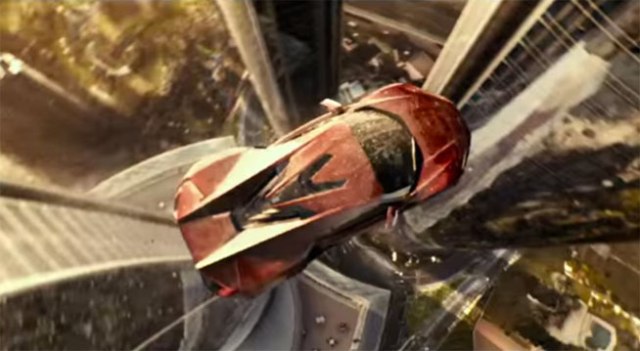
For the joyously silly moments you have Brian’s (Walker) panicked exclamation of “Dom, cars don’t fly!” before Dom makes a car fly, and loads of convenient Corona buckets stowed just out of shot until Dom gets his thirst on. For Dom’s final showdown with Deckard sees (of course) our hero wielding a pair of wrenches and his adversary using bits of car he’s just torn away with his bare hands. It’s this style of frenetic action, always technically glossy but with tongue-firmly-in-cheek that audiences are quite rightly still turning out for seven films in.

While the script has clearly been given some extra thought to make the characters shine (though Tyrese Gibson’s Roman is getting annoying as hell), some more effort could have been put into the plotting. It can never seem to decide who’s chasing who, and who wants what and why. The main driving force behind the plot aside from good old-fashioned revenge is both sides wanting to acquire the ultimate hacking/surveillance software “The Gods Eye”, but we’re never given a proper rationale for its use. Shaw is helping a terrorist cell get it because of reasons, Dom is helping Mr Nobody get it because of different reasons. Just roll with it, basically.

Much like FAST & FURIOUS 6, they’ve added a formidable female opponent into the mix, which of course means Michelle Rodriguez has to fight her. I do find it particularly sexist when you hire athletes of the calibre of Gina Carano or Ronda Rousey, but only let them take on Michelle Rodriguez when they could absolutely destroy Diesel or Walker. Maybe they’d make the argument that Dom and Brian would be too gentlemanly to fight back, I don’t know.

The team give Paul Walker a wonderful sendoff, and I really don’t think it would be possible to handle his tragic death any more sensitively. You do notice his scenes they probably had to finish off with stand-ins when the editing or lighting changes drastically for no real stylistic reason, but the best is made of a bad situation. Most touchingly of all, when the time comes to bid a fond farewell to Brian, it no longer seems like it is Dom talking about losing a brother, but Vin Diesel mourning the loss of Paul Walker. It’ll be interesting to see where they can take the story next, and if they can keep making such enjoyable action movies even without one of their stars, then I say keep the Fast & Furious movies coming. SSP

Posted in Film, Film Review | Tagged , , , , , , , , , , , | 1 Comment

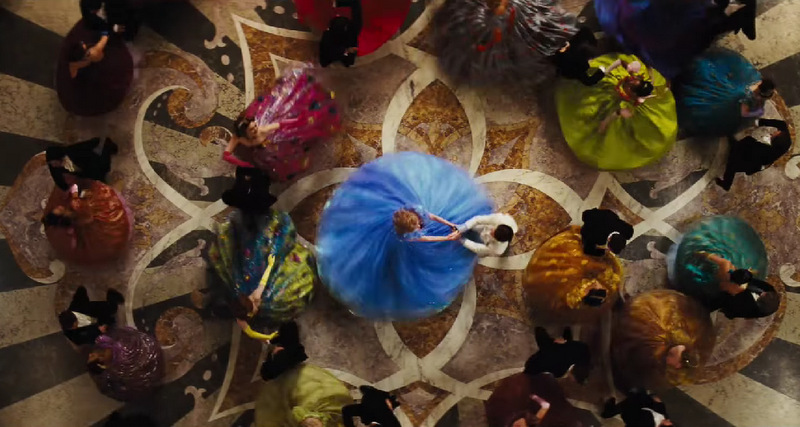
Review: Cinderella (2015)

cinder-ball-floor

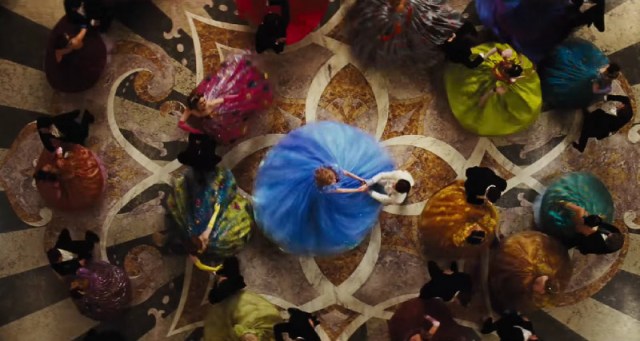
May I have this dance?: Walt Disney Pictures

Did you really have to put the talking mice in it again, Disney? Rodents shouldn’t have facial expressions! I’ve never really had that much affection for Walt’s 1950 animated “classic” – I always found it a bit simpering and wet. Kenneth Branagh’s take on CINDERELLA for me was a vast improvement.

Once upon a time Ella (Eloise Webb) was a happy and carefree child. Her life is rocked with the tragic  deaths of both her parents (Hayley Atwell and Ben Chaplin) and unfortunately her father sought solace in another before he passed. Now the fully-grown Ella (Lily James) finds herself in the enforced servitude of her stepmother (Cate Blanchett) and her daughters (Sophie McShera and Holliday Grainger). Ella has a good heart and a naturally positive nature, but she might also need the help of a little magic to improve her lot in life…

Of course, being a European fairytale adapted by Disney, Ella is extremely unfortunate to have two perfect parents who love her. Being nice in these kinds of stories doesn’t usually result in a long life expectancy. We never saw Cinderella’s parents in the animated film, but they’re given very sympathetic faces here in Atwell and Chaplin to make it all the more heart-wrenching when Ella loses them both in quick succession and falls under the thrall of her cruel step-relatives.

The other thing Disney do well apart from death is morals. “Have courage and be kind” is a doozy. Lily James coveys this ideal radiantly whenever she’s on screen, but even Ella’s patience and good nature can only be stretched so far (unlike the animated character, who practically lay down and submitted). Here she is actually given a reason to stay in her parents’ house and put up with her horrible treatment. She also meets her prince by chance long before the ball, resulting in a certain spark but not quite love at first sight (their feelings understandably take full hold on their second, grander meeting). Their scenes together are key of course, and Lily James and Richard Madden make them shamelessly romantic and a little bit sexy.

Blanchett has Lady Tremaine’s heartless, icy grin from the cartoon down to a tee, and revels in her Machiavellian scheming. I liked the take on the Ugly Step Sisters here too – ugly within, fair without, and without a drop of wit, talent, or self-awareness between them. Helena Bonham Carter makes for a pleasingly dotty Fairy Godmother who always seems to speak through the bottom row of her fake pearly teeth.

It’s handsome and well-appointed throughout, with stately cinematography and stunningly lavish production design. Cinderella and the Prince’s costumes (courtesy of the ever-reliable Sandy Powell) for the recreation of the iconic royal ball scene results in a little heart-flutter, as they should. Also lovely is Patrick Doyle’s score.

Unlike Disney’s previous fairytale reimagining MALEFICENT, adding richer details to this story has resulted in more satisfying whole. We didn’t really need to know why Ella becomes known as Cinderella, but the film does satisfyingly explore the importance of “marrying for advantage” over love, the only real option for royalty and aristocrats in 17th Century Europe. The royal family throw their ball to guarantee the future of the kingdom as their monarch (Derek Jacobi) ails, and Lady Tremaine sees it as an opportunity to secure her family a life of privilege through manipulation. She is not given unnecessary reasons for her horribleness, she just is.

It helps that it’s all played pretty straight (mice aside) and traditional. The story is expanded just enough to make as much sense as a fairytale can, but smartly nobody tries to dial down its inherent romanticism. It doesn’t reinvent the wheel on the pumpkin carriage, and these are characters you’ve seen countless times before, but it’s a reassuring, pretty and appropriately embellished fairy tale. If Disney has to keep remaking its animated back catalogue, (and apparently it does) then I hope for more like this. SSP

Posted in Film, Film Review | Tagged , , , , , , , , , , , , , , , , , , , | 2 Comments

Review: Spectre (2015)

NE8cWXni9u1Lbd_1_b

From the moment we see the gun barrel sequence back in its rightful place right after the studio logos, SPECTRE makes its intention clear – we are firmly back to formula.

Following revelations made at his childhood home, James Bond (Daniel Craig) takes the search for a shadowy worldwide terrorist organisation into his own hands as MI6 is forcibly merged with MI5 and the 00 Division axed. As Bond begins to dig through the pasts of both old friends and enemies, it becomes increasingly clear that one man has been behind every major challenge and trauma in his life…

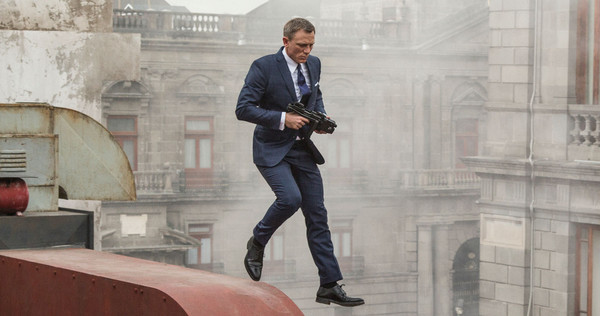
Every critic has been waxing lyrical about the film’s opening sequence, and I won’t buck the trend. It’s a very handsome extended tracking shot through Mexico City’s Day of the Dead, and it’s great to observe how effortlessly Bond moves through crowds and keeps track of his target. This flows straight into a stomach-turning helicopter rumble where you must question Bond’s logic of attacking the pilot while airborne. It’s all very slick, exciting and very cool. This sequence, paired with the expressionistic meeting of SPECTRE members puts the film in contention with SKYFALL and THE SPY WHO LOVED ME to be the best-looking Bond ever.

After nine years of playing a stony-faced spy, Craig now seems much more comfortable with Bond’s quips, and these moments of levity, like asking a mouse at gunpoint “who do you work for?” or telling a downed security guard to “stay” help to prevent the grand, moody sweep of the rest of the film from feeling too monotonous. He still looks great in a suit and you really believe he could kill you, which helps. His take on the world’s most famous secret agent also pleasingly has an arc – Bond is still a bit of a blunt instrument after all this time, but he’s come a long way from chucking his dead friend in a skip.

Léa Seydoux as Madeline Swann is a Bond Girl refreshingly aware of her place in the grand scheme of things. She is fully capable and very human, but not to a fault. Christoph Waltz is of course perfect casting. Before his character’s reveal he’s a judgmental silhouette who can make his subordinates quake with a tilt of the head or a whisper, but when he moves front-and-centre he becomes every bit the maniacal supervillain you could hope for. Waltz makes him charismatic and equally chilling and funny, mocking Bond’s “interchangeable” love interests and making one of the best villainous declarations in recent memory (“I am the author of all your pain!”). Ben Whishaw threatens to steal the show once more as a frustrated, borderline tantrum-throwing younger Q, and Ralph Fiennes’ more actively involved, idealistic and irritable M this time locks horns with the slimy surveillance-obsessed C (Andrew Scott). Dave Bautista colours his performance as the hulking Mr Hinx with little quirks, and his FROM RUSSIA WITH LOVE-riffing rumble with Bond on a train, instead of being nasty and confined, pretty much breaks the whole locomotive. The sidelining of Naomi Harris and Monica Bellucci is disappointing to say the least, but the Bond movies have never managed more than one interesting female character per film, and this has never been OK.

There is a definite attempt to tidy up the messiness of Craig’s previous Bond movies. We all suspected that Quantum was really SPECTRE renamed by EON’s lawyers, but this finally confirms it, and somewhat elevates what has come before by revealing it all as a sinister puppet show (noticeably skipping over the ugly and rushed QUANTUM OF SOLACE). It’s all very convenient, full of obvious twists and tumbles over itself to retroactively fix what didn’t work on a storytelling level before. There are cameos harking back to Craig’s tenure as 007 as well, though I did feel like we were missing another from a key someone.

Much like Skyfall, there is a definite dip in the second half of the film. If your best moments are front-loaded in your film, you have to do something bold to cap everything off. It doesn’t have to be bigger, but it has to be brave, or at the very least interesting. The end of Spectre feels tacked on, clumsily trying to please fans and file off the edges of the story to fit the pre-shaped hole and it’s mostly unnecessary. The Sam Smith theme song has been tortuous since its first radio airing, and the uninspiring tenticular title sequence doesn’t make it any less so.

From the outset, Sam Mendes and co. were committed to fully restoring the James Bond status quo. It’s nice to have things back in their rightful place and there are certainly some high points in Spectre, but also no real surprises. SSP

Posted in Film, Film Review | Tagged , , , , , , , , , , , , , , , , , , , , | 1 Comment

Halloween Series Retrospective: Evil Dead

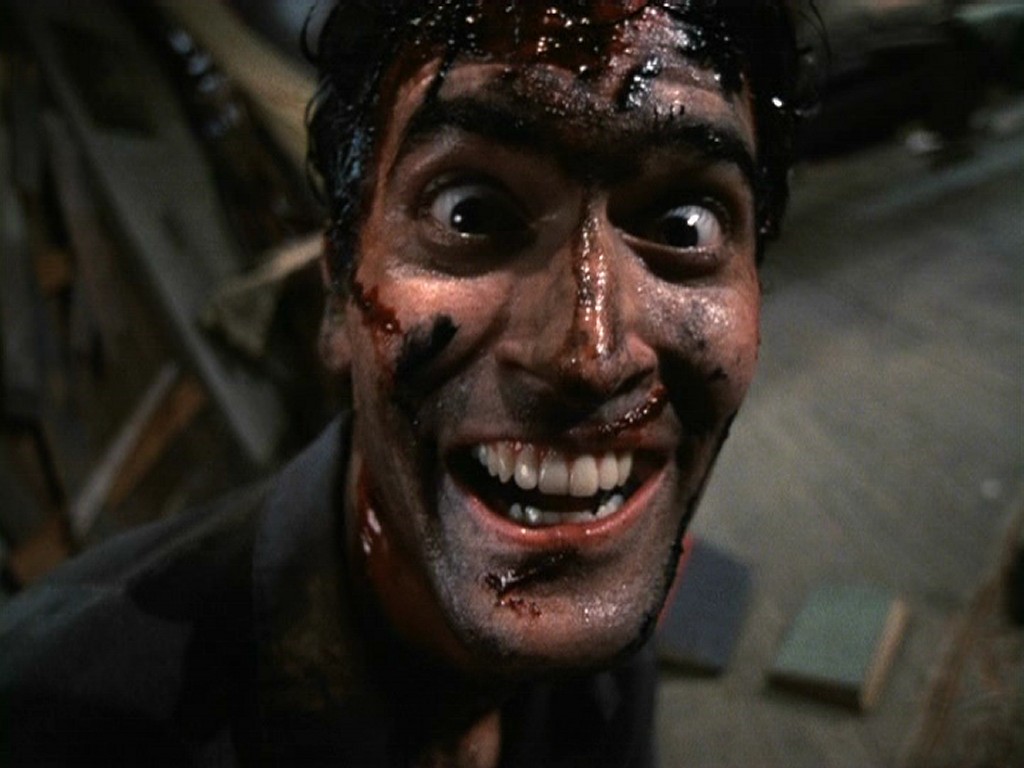
army1

Evil Dead II (1987): DeLaurentis Entertainment Group/Renaissance Pictures

This is the segment where I pick apart a well-worn film series and see how well it’s aged, and how well it hasn’t. In the leadup to Halloween I’ve revisited Sam Raimi’s beloved horror-comedy series EVIL DEAD. Groovy.

THE EVIL DEAD (1981) It may be really rough and ready, but even Sam Raimi’s first feature is full of style and proof of what can be achieved with no money and plenty of passion and perseverance. The behind-the-scenes stories are just as interesting as the final product, and anyone who attempted to film anything of any length surely couldn’t match the troubles Raimi and co ran into – Bruce Campbell’s brother fell off a cliff their first day of shooting! Despite its shonkiness it remains the scariest of the series, with otherworldly makeshift special effects, bucket-loads of syrupy blood and genuinely creepy sound design. Perhaps THE EVIL DEAD’s cult status was inevitable, with a one-location cabin in the woods story, amateurish acting, continuity issues that came from a longer-than-planned shoot and copious “Shemping” where crew stood in for actors who had abandoned the project due to fatigue or frustration, it all becomes part of the charm of the piece.

EVIL DEAD II (1987) The first fifteen minutes of EVIL DEAD II polishes and streamlines what was memorable from the first film, then things really go insane. Ash (Campbell) takes his girlfriend to an isolated country cabin again, but this time there’s an occult archaeologist, his daughter and a redneck couple fighting deadite possession too. It somehow feels both overstuffed and a little stretched, but there’s plenty to like here. One moment alone makes this sort-of sequel worth a look, a moment that perfectly sums up the funny-sinister tone of the series – the wonderful long take that follows the supernatural presence chasing Ash through the cabin, doors, walls and windows posing no barrier. Bruce Campbell was never going to be a serious leading man, but as a comic foil for himself there are few better, and his tooling up for battle montage is rightly iconic.

ARMY OF DARKNESS (1992) The final (so far) stage of Ash’s adventure is more of a hit-and-miss affair. Why bother with scar continuity if you’re not bothered elsewhere? Why am I asking that question? Nobody cares! There is next-to-no attempt to scare anymore, only to entertain as a kind of gory battle movie full of Three Stooges gags. Probably a few more jokes fall flat than last time, but you can’t help but chuckle at Ash conveniently finding a manual entitled “Steam Plant Operation” at just the right moment, nor at the glee with which Campbell plays Evil Ash. The Evil Dead films were never even close to polished-looking, but Raimi clearly really wanted to make a blockbuster, and stretched his dollar to the limit here so ARMY OF DARKNESS looks, charmingly, like something made in the mid-60s.

EVIL DEAD (2013) If a film’s worth sort-of remaking, it’s worth doing twice. Though not really part of Raimi’s continuity, this new take got his whole-hearted seal of approval. The campy black comic sensibility is pretty much gone, and the only time you might find yourself laughing is at the sheer extremity of the gore (there’s flaying, dismembering and a literal storm of blood at the finale). The idea of taking a friend to an isolated cabin to go cold turkey makes a lot more sense than hanging out in a creepy shed on your summer holidays, and Jane Levy completely owns the film as Mia, fighting both her addiction and possession by the malevolent forces that reside in the woods. We’ve yet to hear of any more of these new scarier and more serious Dead movies, but we have got Campbell’s return in ASH VS EVIL DEAD to look forward to this Halloween… SSP

Posted in Film, Film Feature | Tagged , , , , , , , , , , , , , | 1 Comment

Review: Crimson Peak (2015)

crimson-peak-trailer

Poor old Guillermo, why does nobody want to see your movies on the big screen? The worrying thing about CRIMSON PEAK being the second del Toro film in a row to underwhelm at the box office (despite the considerable draw of Tom Hiddleston in period dress) is not so much that it’ll stall his creative drive (it won’t) but that it will make studios even less likely than they already are to gamble on riskier projects.

After tragedy befalls her early in life, Edith Cushing (Mia Wasikowska) turns her vivid imagination to writing fiction, unconcerned with how this career choice will impact her socially and romantically. When the handsome Sir Thomas Sharpe (Tom Hiddleston) arrives seeking her wealthy father’s patronage for his family’s potentially lucrative clay mining business, Edith returns as his wife to his ancestral home of Allerdale Hall in northern England, where secrets are buried in the blood-red clay and spectres and Thomas’ sister Lucile (Jessica Chastain) stalk the halls…

Much like the manuscript Edith completes at the beginning of the film, this is not a ghost story, but a story with ghosts in it – there is a difference. It’s a story of deception, of the darkest side of human nature, of memory and of madness. The ghosts represent all of these things. And like with all of del Toro’s work, flesh-and-blood people are shown to be far more frightening than the supernatural.

Crimson Peak proudly appoints itself like the early Hammer film such as CURSE OF FRANKENSTEIN, but with the addition of gruesome J-Horror-esque ghosts. I was pleased that when the film does fully embrace its place as a horror film it took the Japanese line rather than that of many American horrors of recent years – the scares are prolonged and disturbing, coming from unsettling and uncanny imagery matched with eerie sound design rather than jump scare after jump scare.

Being of the Gothic persuasion,  the film is a melodramatic affair, with performances, becoming more gleefully over-the-top as the mystery unfolds and revelations are made. Jessica Chastain steals the show as Lucile Sharpe, oozing  withheld menace until something flips and the very walls seem to shake with her manic wrath. A tortuously tense scene has a simple premise and a chilling flourish from Chastain – as Lucile feeds a wavering Edith porridge in bed, she shudder-inducingly scrapes the spoon against the side of the China with each movement. Wasikowska is good as always, her china doll appearance harmonious with the period setting and Edith’s character, but she is asked to comment aloud on what is going on around her all too often and unnecessarily (she opens a secluded storage box and exclaims breathily “wax recording cylinders!”). Hiddleston’s position as geek heartthrob, rather than limiting him, actually liberates his performance. Thomas is endlessly charming and you want to fall for him as madly as Edith does, but you’re never sure how far into darkness del Toro will be prepared to take him as a character. In the end it’s clear this director does not fear the Hiddlestoners.

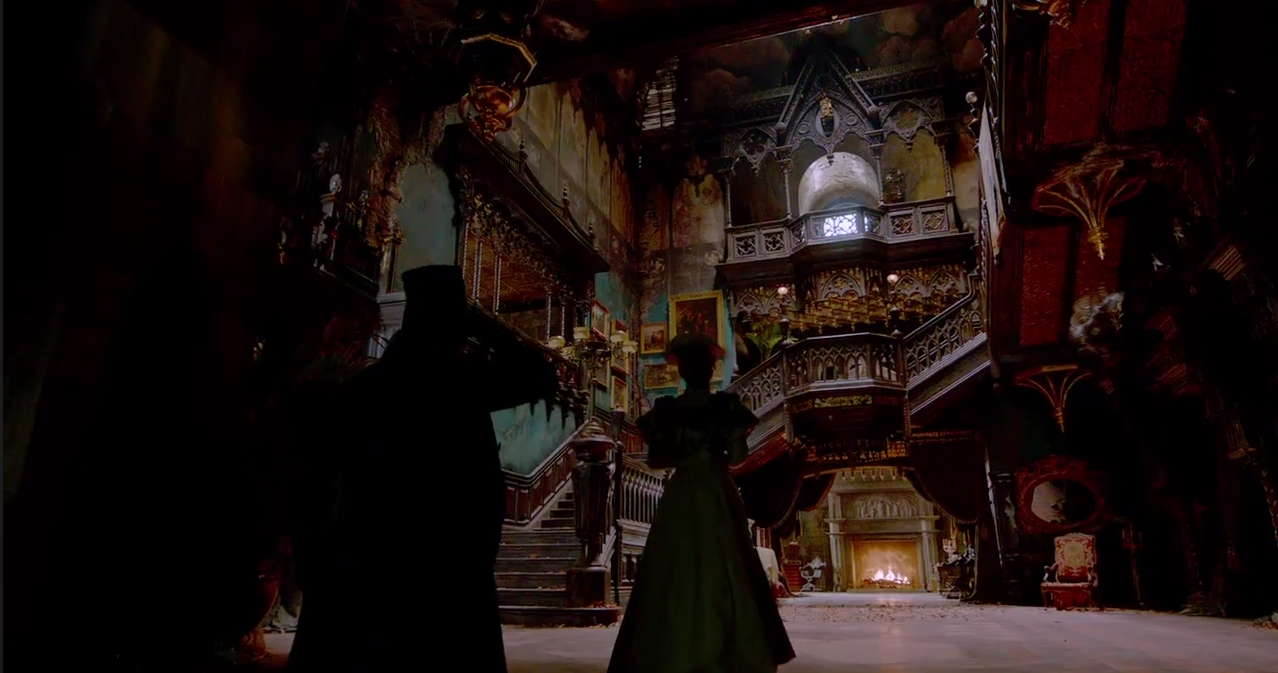
The film is stuffed full of symbolism, like Edith as a delicate yellow butterfly being slowly smothered by Thomas and Lucile, two great black moths. It’s also del Toro’s bloodiest film to date by quite a margin. Del Toro is perhaps the most aesthetically meticulous, detail-obsessed Hollywood filmmaker working today (perhaps joint with with Peter Jackson). His usual visual hallmarks – insects, clockwork mechanisms, iconography of death and religion, imposingly beautiful architecture – are all present and correct, and he still seems to relish creating rich worlds you feel you could reach out and touch.

Del Toro also like a bit of self-reference, THE DEVIL’S BACKBONE sharing the most DNA, including an almost identical intro and outro thesis on the nature of ghosts. A nice visual del Toro continues to use is his undead manifestations adopting part of the environment that they died in. Santi in Devil’s Backbone was distorted and rippling because he died in water, whereas most if the ghosts of Crimson Peak are scarlet and caked in grime because they died on top of a clay deposit.

The plotting could generously be described as jerky. Del Toro and co-writer Matthew Robbins probably spend a little too long building up to Edith’s arrival at Allerdale Hall. There’s intrigue and foreshadowing, but a little too much Victorian faffing about in the first half  of the film as well.

Maybe 2015 audiences weren’t ready for the return of Gothic Romance. For all its gorgeous production design, atmosphere and thematic depth, the plot is a little disjointed and turns by key cast members being intentionally exaggerated won’t be for everyone. If this was Guillermo del Toro’s attempt to bridge his Spanish-language films with his Hollywood efforts, then it ends up feeling trapped between the two disciplines. I enjoyed it, but won’t deny it’s more of a flawed and fascinating talking point than something that works in its entirety. SSP

Posted in Film, Film Review | Tagged , , , , , , , , , , , , , , , | 1 Comment

Review: Suffragette (2015)

suffragette

By rights, there should have been more films made on the campaign for women’s suffrage in the United Kingdom by now. It’s a great story that is more relevant than ever today, and it’s completely dumbfounding that 2015 sees the release of SUFFRAGETTE, the first major film devoted to the subject.

We open in 1912 as the Women’s Social and Political Union’s campaign for the right of British women to vote gathered pace and resorted to increasingly violent methods to attract the attention of politicians. Maud Watts (Carey Mulligan), an East London laundry forewoman, stumbles upon the Suffragettes’ latest protest and quickly transforms from a bystander to a prominent and active member of the movement, risking being ostracised by her family and wider society, as well as imprisonment in her fight for the vote.

Performance-wise, Suffragette a mixed bag. Carey Mulligan is the rock-solid heart of the film as the dignified, defiant working-class Maude, and Helena Bonham Carter plays well Edith’s pained weariness after years of being a useful member of society who has no say in it due to her sex. The film might have been more interesting from Edith’s perspective actually, from the point of view of a middle-class educated woman who has been invested in the fight for years rather than someone who falls into it. Ben Whishaw strikes about the right balance playing Maud’s husband Sonny, while representing patriarchy he is not presented as a cartoonish misogynist (that’s Geoff Bell’s job) but opposes his wife’s campaign more out of fear for the stability of their family unit than out of cruelty – he’s ignorant and closed-minded for sure, but his concerns come from a position of caring for their son George (Adam Michael Dodd).

At the other end of the scale, Brendan Gleeson does a good Brendan Gleeson impression as the policeman on the Suffragettes’ tail (and sets up a throwaway gag about the early 20th-Century idea of covert surveillance), Adrian Schiller does a rubbish welsh accent playing David Lloyd George, and Meryl Streep’s two-minute cameo as Emeline Pankhurst is completely and utterly pointless, seemingly just there to have something to put in the trailer. I’m not saying Pankhurst shouldn’t have been in the film, prominent figure to her movement as she was, but she works just as well as an offscreen presence, an idol for the woman on the street.

The strongest scenes are those set in the laundry where Maud works. The noise level alone is nerve-wracking, and the oppressive, super-heated atmosphere and the levels of abuse barely hidden from plain sight makes it unimaginable that so many had to work in these conditions right up until their untimely deaths.

Laundry scenes aside, I found myself wishing the film had been more harrowing. For a political film discussing historical atrocities and using them to comment on society today, it just didn’t seem angry enough. I had a similar problem with last year’s PRIDE. There are shocking moments, like the ominously jangling trolley being pushed along a prison corridor leading into the force-feeding scene, or seeing a crowd of female protesters being assaulted by the police in front of Parliament, but these are just fleeting glances filmed with a handheld camera. If we were made to watch even a single extended sequence depicting the extent to which these women campaigning for their independence and their freedom were violated by authority figures, the film might have lingered on the mind more. The only reason that I can think of that the film cuts around these key aspects of the plot is that writer Abi Morgan and director Sarah Gavron wanted to allow every girl in the country to see it. This is an admirable aim, but it might result in the film being more of a perennial text in schools than something that lasts or makes an impact outside the education system.

Suffragette does go out on the right note – simply showing a list of years that women were allowed to vote from in countries around the world. It hammers home how backward-thinking the UK was compared to countries like Australia and the USA, but also makes you gasp audibly at how late on Switzerland caught up with the Western World.

If this is the first film in a trend, then Suffragette represents something significant, a belated opportunity to explore in cinematic form a key period in history, the first step on the road to British women gaining control of their lives. But as the first of something, perhaps the film was bound to be a little too broad an undefined to make a real impact. There are great films to be made on women’s suffrage, but this is not it. SSP

Posted in Film, Film Review | Tagged , , , , , , , , , , , , , , , , | 1 Comment