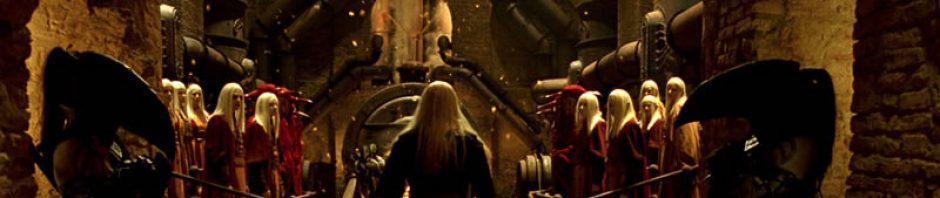
ELVIS & NIXON is an intriguingly simple title and unfortunately, a pretty disappointing final product. In the depiction of this remarkable partly true, partly hypothetical series of real-world events, Kevin Spacey makes for a good Nixon. He’s slimy and calculating but because he’s such a gifted mimic he stops short of being a caricature. The same unfortunately cannot be said of Michael Shannon, who can do Elvis’ lackadaisical drawl, but physically could be replaced by any other actor in general film to be a more physically convincing King (Alex Petyfer playing Elvis’ confidant in particular looks noticeably more like Presley next to Shannon, which is unfortunate because they share most of their scenes). Shannon just about justifies his casting with the wounded way he plays a line about a stillborn brother, “They out him in a box”, but elsewhere he is disappointing. The whole thing is very TV movie: completely watchable, but nothing screaming must-see, nothing striking stylistically or even offering up all that many reasons to care full-stop. The central dialogue scene between two of the most influential men in the world is great, but that only makes up about fifteen minutes worth of the film and is not quite worth the wait. Would it be that much of an ask to make some of the side characters more interesting or to give the time period more socio-historical context and conflict? SSP
Review in Brief: Elvis & Nixon (2016)
Review: War for the Planet of the Apes (2017)

No monkey business: Chernin Entertainment/20th Century Fox
As the simian flu virus continues to ravage what little remains of human society, Caesar (Andy Serkis) and his tribe of intelligent apes continue to carve out their own place in the world. When a ruthless Colonel (Woody Harrelson) raids Caesar’s camp and takes the ape’s nearest and dearest from him, Caesar is forced into increasingly rash action to defend his species.
Shall we just take a moment to appreciate how versatile a director Matt Reeves is? From intimate extended scenes of apes hanging out and chatting in sign language to a version of the Battle of Helm’s Deep…but with apes and the finale of ZERO DARK THIRTY…but with apes, there seems very little he can’t do. While nothing is quite as striking as the last film’s initial silent stretch or Koba’s tank hijacking, you can still look forward to fireworks, intensity and original imagery throughout.
I loved that the war of the title isn’t what you expect. After all, only humanity is stupid enough to still propagate warfare after the world as we know it has come to an end. The Colonel and his encounters with Caesar are pleasingly difficult to predict as well and thankfully the story doesn’t come down to man good, apes bad, but as always with this series it’s, man complicated, apes less so.
Serkis clearly used Clint Eastwood as his reference point for Caesar in this film. While he’s the most gifted with spoken language among his kind, he’s still economic in his speech by human standards and he’s got a great withering glare and he becomes a Bill Munny from UNFORGIVEN-esque vengeful loner as the plot progresses. It’s this need for revenge, that very human desire, that causes Caesar to make mistakes and to put his kind in further jeopardy, whatever his original intentions were. Harrelson’s Colonel is built up a lot so you expect some grand revelation about his identity, but again he isn’t what you expect and his justification for his actions may well be pretty ordinary and all the scarier for that. The strange parker-wearing hermit Bad Ape (Steve Zahn) is the real breakout in this film. It’s always Caesar’s story and Serkis’ playground, but in this new character something endearing, incongruous and thoughtfully funny is created.
Apes’ apishness is used wittily as a plot point on several occasions. The majority of ape interactions are still signed and subtitled (what other blockbuster wouldn’t have found an excuse for more verbose apes by now?). Reeves has faith in his audience being engrossed enough in this world and compelled by the simian characters for these scenes to flow like a standard scene of dialogue. We also get a display of distressed ape hitherto never seen in a film since it was possible to create photorealistic primates. It’s a pleasant moment of light relief in an otherwise gloomy film, and I won’t ruin it by describing it exactly – you’ll know it when you see it.
Nova and Cornelius, Alpha & Omega. Reeves is an Apes superfan, and peppers the new film with references to what has come before and/or is still to come. You could read these as earlier versions of the same characters, which would make the original film’s sophisticated ape society only a couple of decades away (unlikely) or you can read them a cyclical nods to the series history, much as the new Caesar is a tribute to the original from the end of ESCAPE FROM THE PLANET OF THE APES.
Speaking of referencing what has come before, I love Michael Giacchino’s work on the score here. Jerry Goldsmith’s distinct unsettling high-pitched refrains are used sparingly at key moments and Giacchino’s music in general conjures the appropriate moody atmosphere and palpable tension, in addition to proving his aptitude for revitalising and remixing soundtracks we know, much like Reeves does with his movies.
There is no need to carry on this story any further. It has been told. War for the Planet of the Apes resolves organically and satisfyingly. We know where this particular tale is heading and all the characters involved at this point have reached their natural end point. It’s vibrant and thoughtful and expansive in a pristinely rendered film world. The line between the real and the motion-captured characters has never been so blurred and summer blockbusters have seldom been this rich a viewing experience. SSP
Review in Brief: A Cure for Wellness (2016/17)
A CURE FOR WELLNESS is clean and cold, calculated and stylish horror. It’s about time we had a psychological scarer about that oft-heard euphemism “Going to Switzerland”. I think it’s aiming to be a scathing critique of non-stop modern work habits and the impact this has on your health (that’s not to say it’s necessarily a good idea to check in to an archaic sanatorium on a Swiss mountainside). There’s shades of the Gothic and the folkloric, elemental underpinnings and creepy contradictions and certainly the creeping dread of films like THE WICKER MAN. It should be credited for how effectively sound and music are used to build a sense of unease as well. Most critics’ ire has been reserved for three film’s final act, and that’s fair. The final 20 minutes or so of this 140 minute horror-thriller is messy, schizophrenic and squanders the revelations that have been teased for over two hours. The world-building, the atmosphere and the increasingly icky scares (if you fear eels and/or brutal dentists then look away) are all firmly in director Gore Verbinski’s wheelhouse; if only the whole affair was tightened up and thought through fully, we might have been looking at a classic rather than a curiosity. SSP
Review: Okja (2017)
I’ve loved the work of South Korean genre-manipulator Bong Joon-ho since university. Criminally, we never got his last film SNOWPIERCER in the UK (at least not officially), so the fact that his latest, OKJA, has gone straight to Netflix is a real boon, a leap forward in film democratisation, whatever Cannes Film Festival says. Bong hasn’t lost his distinctive black sense of humour. Asking your granddaughter “Which of your parents do you miss the most?” by their graveside. Cops and animal activists slipping all over polished floors as they attempt ineffectual battle with each other. An activist taking his beliefs to the extreme and swearing off all foods. It ain’t subtle. Okja doesn’t have subtext so much as text. The meat industry is bad, the people and produce of other countries is exploited by the USA, maybe if we go know animals we wouldn’t want to eat them. And then there’s whatever Jake Gyllenhaal was doing. Bong doesn’t present us with a solution, but seems to present the problems at hand with a bit of a helpless shrug. It’s pretty entertaining, with good work from Paul Dano and young Ahn Seo-Hyun, but you won’t be as compelled when the story leaves South Korea for the film’s messier second half, no matter how cute the pig-hippo-dog of the title is. SSP
Review in Brief: The First Film (2015)
Boast time: I’ve met David Wilkinson. He gave a guest lecture on film distribution while I was studying Film at university. As a fellow Yorkshireman, I wanted him to be right about the first film being produced in this great Northern English county by French expat Louis Le Prince. The investigation he undertakes, the evidence he compiles and the argument he delivers is convincing, if not definitive. For me, more exciting than the story of THE FIRST FILM is the story of the first reverse-shot, but I suppose that wouldn’t be such a catchy title. Wilkinson is an engaging presenter telling a story personal to him and very keen to steer any discussion towards his side of the argument. A few more differing opinions wouldn’t have gone amiss, but I get why the final film is how it is: this could be Leeds’ time to shine, and the possibility that a Yorkshire city was at the cutting edge of a new art form shouldn’t be dismissed as ridiculous. Wilkinson’s feature documentary’ focus might be narrow, but it comes from a good place, a desire to tell an obscure story and to artistically big up your home town. SSP
Review: Spider-Man: Homecoming (2017)
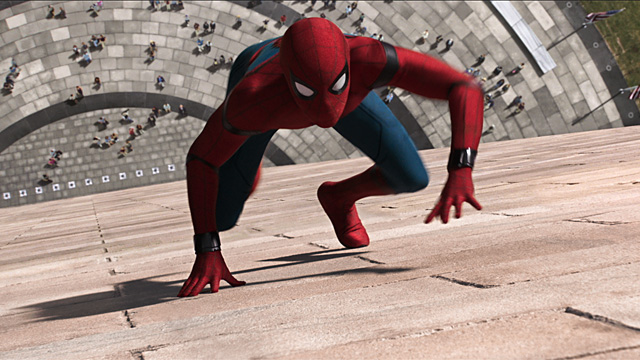
Do any spiders get acrophobia?: Columbia Pictures/Marvel Studios
SPIDER-MAN: HOMECOMING is a case of too many cooks. This isn’t surprising considering this is a joint venture between Marvel (who provide the universe the film inhabits, plus that stamp of quality) and Sony (who retain the characters and the profits). Marvel clearly thought this one-sided deal was worth it if it meant their plans for the future of their cinematic universe required fewer lawyers. What we end up with though, is a film with undeniable highlights, but which is trying to be two very different things.
After proving himself pretty useful fighting alongside the Avengers, Peter Parker/Spider-Man (Tom Holland) goes back to school and eagerly anticipates his next team mission. But when the next big world-saving moment is not forthcoming, tough love superhero mentor Tony Stark/Iron Man (Robert Downey Jr) advises Peter to remain a friendly neighbourhood hero a while longer, just as a threat closer to home reveals itself…
Homecoming seems primarily concerned with being an Avengers side-story, and as such it’s a mixed bag. The “Battle of New York” from the first AVENGERS film gives the alien tech-salvaging villains their motivation, but often gets in the way of what should matter more: Peter Parker. As a high school movie it’s far more successful: light, breezy, funny and good-natured, but again you wish more time would be dedicated to Peter’s everyday as a secretly remarkable teen rather than his desire to become a full-fledged Avenger. Director Jon Watts does small-scale well, he’s good at digging into character, but I don’t know whether he’s really an action director. The fiery jet crash at the end of the film is quite impressive, and there’s a funny FERRIS BUELLER-riffing chase through suburbia, but elsewhere it’s a little action-by-numbers.
For those looking there are nods to the comics in background details and name-dropping, even some playful ripping at the Wall-Crawler’s previous incarnations. I’m not a fan of the new gadget-laden spider-suit, then again it does allows for some decent gags as Peter tries to work out what does what. The new design of the Vulture, on the other hand, is very cool indeed – steam-punky sharp edges, deadly and firmly grounded in this world’s reality.
Tom Holland was born for this role, with earnesty, an appealing groundedness as Peter and an eager spring in his step as Spidey. His chemistry with best friend Ned (Jacob Batalon) is charming, the latter given most of the film’s best lines (when he discovers Peter’s secret, the first question on his mind is, bafflingly, “Do you lay eggs?”). The quality of the rest of the young cast is admirable, though not many leave a particularly lasting impression other than unusual outcast Michelle (Zendaya). Michael Keaton takes the working-class reinterpretation of Adrian Toomes/The Vulture and runs with it: he’s tough, he’s scary and he makes sense. For years the cleanup crew for superhero battle sites have remained tantalisingly off-screen, but scavenging for profit here gives the villains their whole reason for being (like a vulture, get it?).
Let’s talk about Robert Downey Jr’s glorified cameo. Because that’s what it is. Chris Evans is in the film about as much as Downey, and Captain America only appears in “stay in school kids” videos (because of course the School Board would use Cap as propaganda). I’m actually pleased he’s not in it a lot, because the Stark-Parker relationship doesn’t really work, unlike Spidey’s dynamic with pretty much everyone else in the film, even the villains.
If you haven’t seen the previous Marvel movies, you will be completely lost. This is not a Spider-Man movie you can just jump aboard. Whereas CIVIL WAR effectively and neatly truncated Spidey’s origin in a single dialogue scene, overall I feel retroactively making this character fit into this universe has made Homecoming unwieldy. Like the last couple of movies, it’s stuck with setting up future events rather than making the story at hand the best it can be. When it’s in the moment, it’s a breath of fresh air, but when it’s more interested in what is to come several films down the line it gets tiresome. SSP
Review in Brief: John Wick: Chapter 2 (2017)
JOHN WICK: CHAPTER 2 loses some of the original’s freshness, but it retains a tonne of entertainment value. The action scenes are inventive and bloody, of particular note a glossy ENTER THE DRAGON homage (yes, it’s a homage, not a lift: Enter the Dragon doesn’t get rights to mirrored hall fight scenes for perpetuity) and an almost casual silenced gun fight that quite literally goes over the heads of an oblivious crowd. Delving further into the world of assassins doesn’t hold up to, well, any scrutiny, though it does gift us with the pleasing sight of the assassins’ switchboard staffed by prim 40s secretaries with innocuous arm tattoos. Hokum as the mythology is, some of the bit players (notably Ian McShane and Peter Serafinowicz) look like they’re having a hell of a lot of fun explaining it all. It’s a ridiculously good-looking film too, all neon and shadows and a striking bathhouse assassination scene working out neater and more strangely beautiful than you might expect. If only more polish had been applied to the script and the lead performance, because Keanu Reeves is out-acted by his suit. SSP
Review in Brief: Resident Evil: The Final Chapter (2016)
At least the first one had momentum. RESIDENT EVIL: THE FINAL CHAPTER represents a tired franchise thankfully put to bed (until the reboot). The competent action is made far less enjoyable by Paul WS Anderson’s usual janky editing and tendency to rip off Guy Ritchie. The script doesn’t even have the decency to entertainingly bad, it’s just completely uninspired and too much of it amounts to goodie Milla Jovovich and baddie Iain Glen snarling “damn you” at each other. The returning characters are asuninteresting as ever and the new ones don’t really leave a mark, other than Doc (Eoin Macken), who’s cool because he fights zombies with a nail gun. There’s a big twist as well, which is staggeringly easy to guess if you pay attention to the stuff from the previous movies they’re recapping at the beginning. It’s dumb even by the standards of this series, with the undead – walking corpses – shown to give off heat signatures and Alice repeatedly abandoning her teammates or making the same mistakes she has done previously in retreads of earlier films’ action scenes. Yes, they do the laser corridor for a third time, because of course they do. SSP
Review: Baby Driver (2017)
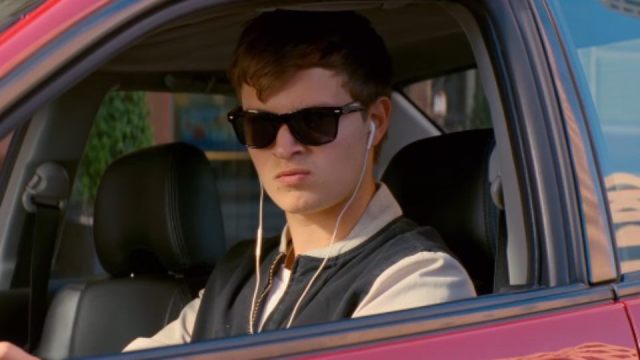
What do you mean, you don’t like my playlist?: Working Title Films/Big Talk Productions
Baby (Ansel Elgort) has a gift: as long as he has the right track playing in his damaged ears, he can make a car do anything. This talent is exploited by criminal mastermind “Doc” (Kevin Spacey) on a series of dangerous heists, and Baby goes along with it with the assurance that soon his debt will be paid. But when that day comes and Doc goes back on his word, Baby has a choice to make, a choice that may put his loved ones in harm’s way.
Not since the first GUARDIANS OF THE GALAXY has a soundtrack been used so effectively to drive story and character. I think this is what most people wanted SUICIDE SQUAD to be from that first “Bohemian Rhapsody” trailer: dynamic action progressing, building, lulling, and building all over again in time to a stonking music selection. It’s not just track selection for the sake of it, the shape and structure of the whole story is inseparable from the music. The musical highlight for me is definitely a chaotic second act shootout into a foot chase set to the appropriately mad and lengthy “Hocus Pocus” by Focus.
The opening bank robbery getaway is an action masterclass, a pulse-quickening rush where you see Baby does almost supernatural things with his car. The execution of these elaborate sequences is faultless, the stunt work eye-popping, but what makes them really sing is Wright’s peppering of sight gags in and amongst it all. This might not be broadly speaking a comedy like his other work, but the humour and lightness of touch is still there if you’re looking for it. From song lyrics appearing on wall to characters bickering on the job and even a swift reprise of “er…the first one” from SPACED, Wright provides plenty of fuel for mirth.
It’s all Baby’s-eye-view, a (relatively) innocent outlook on crime. We generally find ourselves staying in the car with him as the heist happens offscreen. The debate about how far just being an accessory to crime can go is front-and-centre and our hero (mostly) refuses to cross that line. This is a real star-making turn from Elgort, and you’ll fall in love with Baby from the very first scene as he does a car seat bop along to “Bellbottoms” as his gang does crime over the road. If we weren’t invested in Baby’s story and that of his significant others – new flame Debora (Lily James) and foster dad Joseph (CJ Jones) – the film couldn’t work no matter what spectacle was on offer. We really want them to get through all this OK, highly unlikely as it is they will all be unscathed. Elsewhere supporting players can be a little thinly sketched, though Spacey’s condescending put-downs are fun (pointing out to Jamie Foxx’s Bats that it wouldn’t take a murder victim long to spell out his name on a ouija board) and John Hamm threatens to steal the show wholesale in the film’s final stretch as “Buddy”, the friendly face of psychopathy.
Baby Driver will likely end up being the feelgood film of the year and with such pleasing energy and boundless creativity on display I reckon it’s going to be a keeper. A moral gangster fairy tale about doing the right thing, or doing the wrong thing for the right reasons, it’s satisfying to see in Baby a lead character with an uncomplicated view of the complicated world he finds himself part of. Edgar Wright’s return was well worth the wait, and its great to see such a talented filmmaker not only get his groove back, but evolve as well. SSP
TV Review in Brief: American Gods Season 1 (2017)
The Brian Fuller-fronted adaptation of Neil Gaiman’s neo-fantasy epic AMERICAN GODS for me is a great take on this material. It vividly recreates many of the weird and wonderful moments from the first stretch of the book, but the series’ greatest strengths come from deviations it takes from the text. Contemporary political and religious commentary comes via African god Anansi (Orlando Jones) and a whole load of Jesuses. But it is with Laura Moon (Emily Browning) and Mad Sweeney (Pablo Schreiber) that the show plays its strongest hand. They were both interesting but under-utilised characters on the page, but they become a fascinating reluctant double-act on screen: the giant leprechaun and the dead-wife. Their origins are tweaked, their backstories greatly fleshed out and focus shifted and humour or pathos added to their every scene. Browning is undoubtedly the series MVP and the two episodes she leads are definite highlights. Here’s hoping future seasons will bring the other characters such depth to go with the striking visuals and mad ideas. SSP

 SSP Thinks Film