
BERLIN SYNDROME takes simple exploitation film premise, “nice boy you met on holiday turns out to be a kidnapping psychopath” and goes far deeper into the psychological makeup of these characters who could very easily just be archetypes. It portrays an exaggerated, but completely and chillingly believable abusive relationship, with levels of abuse both simple and far less easy to define. It’s a film of fascinating character contradictions. Andi (Max Riemelt) morally judges people but physically and emotionally imprisons women, Clare’s (Teresa Palmer) bids for freedom become much less determined as long as her captor keeps her in relative comfort. Her only question for him is “How did you choose me?” which says a lot about her perspective on life. Director Cate Shortland (a really good choice for the long-anticipated BLACK WIDOW movie) contrasts upsetting material and emotional turmoil with steady, meticulous and beautiful shot construction, moments of stillness allowing you to take a breather from Clare’s waking nightmare and hope things get better. SSP
Review in Brief: Berlin Syndrome (2017)
Review: The Meg (2018)

There’s always a bigger fish…: Apelles Entertainment/Di Bonaventura Pictures
Keep an ear out for this exchange in pubs over the next few months: ” Did you see that Jason Statham Giant Shark Movie? Yeah, it was alright I guess”. That’s how THE MEG is going to be remembered because let’s be honest, it’s not a catchy title, nor is it a movie that lingers. It’s been a long time coming (adaptation attempts have been floundering for about 20 years) and for what it is the finished product is sporadically fun.
Rescue diver extraordinaire Jonas Taylor (Jason Statham) is reluctantly called in to retrieve a research team who have become trapped exploring the Marianas Trench, releasing a prehistoric monstrosity in the process. Reaching the surface is only half the battle, and before long a 20 metre set of jaws is heading towards the heavily populated Chinese coastline, fast.
Jason Statham plays Jonas Taylor completely straight-faced, God bless him. He finally gets to play a role that requires extensive swimming and him putting his (actual Olympic-level) diving skills to good use. Shame he doesn’t get to use his martial arts experience on the shark. I think he’s called Jonas because apparently naming him Jonah in a film like this would have been too on-the-nose (though this does come from the book). He does what he does well, but he and everyone else in the cast is acted off the screen by the young Sophia Cai.
While the first half is pretty unremarkable, the second is fun because it gets really silly. Once we get out of the undersea lab and the action heads towards a (very) populated Chinese coastal resort you’ll have to fight back a smile at the trashy entertainment on offer. I’m down for any movie with Jason Statham being dragged behind a boat as a human lure for a giant shark.
The plot, such as it is, isn’t up to much. I’ve no idea what Rainn Wilson’s sleazy billionaire’s business is, or what the science team are actually aiming to do with their aquatic sci-fi lab. At least the boffins in DEEP BLUE SEA were trying to cure Alzheimer’s disease! I’m not going to say an uninvolving story and paper-thin character is fatal to a film like this, but it does help to place it firmly in the junk food film category.
A late-stage emotional outpouring between father (Winston Chao) and daughter (Li Bingbing) lacks impact because their relationship doesn’t seem all that dysfunctional. In fact, they’re open and supportive of each other throughout the film and neither seem to have real flaws. If I were a cynical viewer I’d say it’s because they’re the two most prominent Chinese characters and you don’t want to annoy your co-financiers. It’s possibly the most annoying thing about large co-productions like this, that Chinese stars and the country they represent always have to be spotless heroes.
I completely agree with people who have suggested that The Meg isn’t quite bad enough. That’s not to say it should be bad on a technical level, in terms of film language, but it could have really leaned into its silliness more frequently. The effects and the action are fine, but I found myself perplexed by a relative lack of one-liners. Though I had a lot of fun with portions of the movie, I’m not sure there’s a lot I’m going to remember for the foreseeable. Say what you like about other bad shark movies, at least JAWS 2 offs the shark in a really entertaining way and Deep Blue Sea has the shark turn on an oven containing LL Cool J. Jason Statham being dragged behind a boat just can’t compete. SSP
Review: Ant-Man and the Wasp (2018)
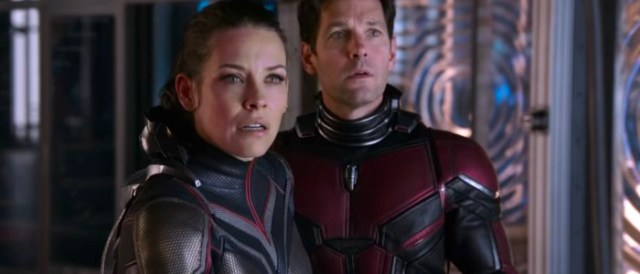
Diminutive Dynamic Duo: Marvel/Disney
Is this going to be Ant-Man’s lot in life, to be the minty Tic Tac chaser for Marvel’s biggest, meatiest and most extravagant releases? The first ANT-MAN blew me away, a jolt of irreverent energy coming straight after the unwieldy AGE OF ULTRON and making a far stronger, more confident impression. ANT-MAN AND THE WASP might not be able to match the stakes of INFINITY WAR or the thematic richness of BLACK PANTHER but it’s still very satisfying on its own terms.
Scott Lang’s (Paul Rudd) long two years of house arrest for his actions as an unregistered superhero are coming to a close, but not quite in time for him to help Hope Van Dyne/The Wasp (Evangeline Lilly) and her super-scientist father Hank Pym (Michael Douglas) try and bring the long-lost Janet Van Dyne (Michelle Pfeiffer) back from the quantum realm. As their secret experiments ramp up, other power players seeking to misuse Pym’s technology enter the field…
This is perhaps Marvel’s most heartfelt franchise, being smaller-scale (thematically and actually) but with big emotions and immediate consequences for characters’ loved ones. Straight out of the gate Scott is back with his daughter Cassie (Abbie Ryder Forston on scene-stealing form again), the fate of the wider world insignificant compared to his need to be there for his daughter. In the first film, Rudd’s dramatic chops proved to be a secret weapon, the pain behind his eyes never quite outshone by his scoundrel swagger, and he really carries over his versatility into the sequel. He’s still funny, Scott employing close-up magic out of sheer boredom and messing with an agent who really wants a friend (the brilliant Randall Park) but it’s the pathos that connects.
Very deliberately, Scott’s Ant-Man suit is on the fritz. All the time. This allows for the Wasp to come forward, to take charge, to, repurposing Mantis’s wonderfully muddled turn of phrase from Infinity War, to “kick names and take ass”. Wasp’s first fight sequence where she makes very short work of a gang of armed henchmen in a lobby and then a kitchen sets the tone and makes it clear she is a deadly force to be reckoned with, and Hope is rarely not the focus this time; it’s her story. The action scenes is general are packed full of gags and laden with invention, particularly in the car chases that involve last-minute miniaturising to avoid obstacles, or popping back to normal size to cause pursuers to crash.
They have a pretty different way of dealing with their villain problem in the end, and wonder of wonders a Marvel film’s final act doesn’t involve an aerial battle or two special effects punching each other. On both accounts Ant Man and the Wasp’s final stretch is weirder and more conceptual than I ever expected, but I don’t want to talk about it in detail and ruin the surprise.
They’ll have to get the de-aging effects right in the (as far as we know) entirely 90s-set CAPTAIN MARVEL, or they’ll break the movie. They’re almost there with Douglas and Pfeiffer playing 30 year younger versions of themselves in flashback, though they still haven’t quite got rid of that doll-like look from certain angles.
Some of the cast are under-served, understandable in a large ensemble of Avengers, but given the downsizing you’d think they’d find more for people to do, with Laurence Fishburne doing a bit of running around in a cardigan and Walton Goggins doing a bit of running around in a nasty cream suit. The “Luis tells a story in his unique style” gag is a lot less funny on repeat as well, despite Michael Peña’s talent.
Ant-Man and the Wasp may be uncomplicated, but it delivers as a thrilling, funny and soulful super-romp. It also helps to set up what will likely be the most interesting phase of the Marvel Cinematic Universe, its second decade where surely everything will change. SSP
Review: Mission: Impossible – Fallout (2018)
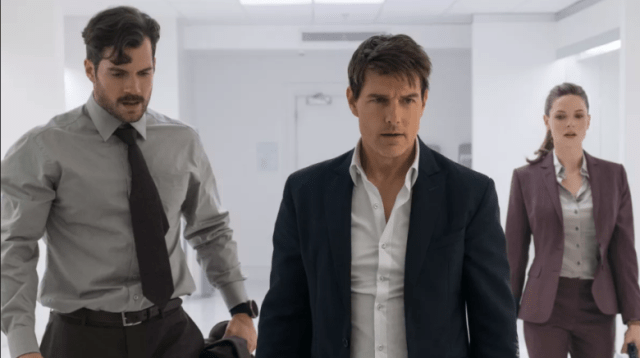
The faces of bathroom PSD: Paramount Pictures/Skydance Media
Get excited, but not too excited; MISSION: IMPOSSIBLE – FALLOUT is probably only the third best Mission we’ve chosen to accept. While I think I’ll always prefer the self-awareness of GHOST PROTOCOL and the sheer style of ROGUE NATION, there’s still a helicopter’s conveniently detachable payload’s worth to like in this, the series at its biggest and boldest so far.
Following a mission gone very wrong, Ethan Hunt (Tom Cruise) and his IMF team hunt down three nuclear warheads and those who would detonate them wherever they might be hiding across the world. Complicating matters further are CIA guard dog Walker (Henry Cavill) attached to Hunt’s team to prevent further costly slip-ups and the need to deal with a dangerous and influential new player in the world of shady brokering (Vanessa Kirby).
Fallout outdoes itself in terms of the series’ trademark tricksiness. That’s not to say the plot is overly complicated (it’s not) but if like me you always thought the worst part of these movies is the stupid masks (that apparently include extra height to allow Cruise to convincingly become Jon Voight and Philip Seymour Hoffman over the years), prepare to get a little annoyed. If you like that plot device being deployed liberally and unexpectedly, then you’re in for a treat.
Refreshingly, there are finally a few nods to Cruise’s (relatively) advancing age, from taking (slightly) longer to get up after being put down to not really keeping up in a punishing bathroom brawl between three combatants. You also don’t see Hunt receiving serious medical attention very often either, so he is human after all (Cruise or Hunt? Take your pick). Returning writer-director Christopher McQuarrie gets a little bogged down in the M:I grammar, spending a long time on inelegant exposition and throwing so many complications at our heroes you almost expect them to finally concede the mission is indeed impossible this time, but this is par for the course on film number six.
Vanessa Kirby threatens to steal the whole show with only a handful of scenes as arms dealer the White Widow, always brimming with cunning and making the very most of her character’s connection to a previous series power player. There’s still so much joy to be had in watching Cruise playing a superhuman who nearly always screws up and has to bring it back from the brink. It’s also a great deal of fun to watch Cruise lock horns with a hulking Cavill in a rare villainous role, a great scalpel vs lump hammer battle if there ever was one. I’m quite amazed by how long Walker has survived doing what he does, I’m more astounded that he managed to become the CIA Director’s (Angela Bassett) top guy, because he is shown time and time again to be monumentally thick. Elsewhere Rebecca Ferguson doesn’t quite get to be as high-impact as Ilsa Faust this time, despite her having to tie up Rogue Nation’s loose ends in a satisfying fashion (her plot is unfortunately sidelined for a good chunk of the film). Long-standing fans of the series will be delighted to see Ving Rhames and Michelle Monaghan getting proper screentime again, and they ground proceedings considerably in and amongst all the chaos.
The stunts are as amazing as you’ve heard. Competing action franchises can’t really keep up because as bombastic as they might go, as perfect as the action conception or location scouting might be, other ongoing action franchises don’t have Tom Cruise. Fallout’s most eye-popping action sequences are probably the HALO jump, with Cruise doing the skydiving (and SFX putting a thunderstorm around him for good measure), and the helicopter battle at the end, with Cruise doing most of the flying (and SFX allowing for the fight to continue even after the helicopters are reduced to rolling cockpits).
Mission: Impossible – Fallout is one hell of a ride. It might feel unsteady on its feet to start, and suffers from the same niggling doubts as most of the previous franchise entries, but once it has momentum it really doesn’t let up. The stakes couldn’t be higher, Tom Cruise couldn’t be madder, he couldn’t have a more entertaining ensemble supporting him. You almost want Cruise to just leave it here, go out on a high after three pretty stellar entries back-to-back, but you know he won’t. SSP
Review: The Station Agent (2003)
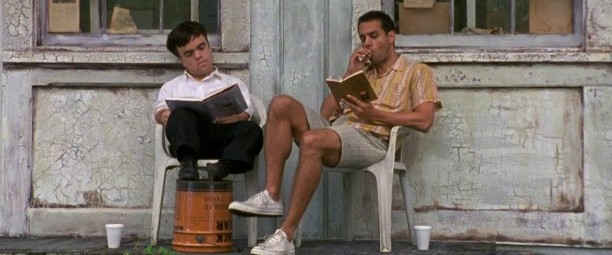
A little light reading: SenArt Films/Next Wednesday Productions
THE STATION AGENT is an unassuming but punchy little film well worth your time. Measured pacing, naturalistic performances and the trainspotting subject matter might not seem like selling points, but trust me, they really are.
After the sudden loss of his only friend, train enthusiast Fin (Peter Dinklage) moves into an abandoned station agent’s house to indulge his passion on his own. But try as he might, Fin cannot help but begin to open up to two fellow outcasts, the chattiest snack van guy around (Bobby Cannavale) and an accident-prone eccentric (Patricia Clarkson).
I relate to Fin perhaps more than almost any other film character I can think of. He’s a thoughtful introvert who, for some reason, is really attractive to extroverts. As a bunch, we don’t want to be rude, but we’d prefer to be left alone if given the option. From personal experience I’ve found that extroverts tend to gradually wear us down and through their sheer persistence they eventually break through, making us better, more balanced people in the process. .
At its heart, The Station Agent is all about alienation, so what better subculture to feature but trainspotters? That’s not me trying to make fun or pick easy targets (all power to you if that’s what you’re in to), but as a passion, it’s a niche one that quite often asks for solitude, or at the very most spotting in pairs. You must spend so much time wrapped up in your own thoughts or focussed so intently on what is front of you or just speeding past on a track, the rest of the world could pass you by.
Dinklage has one of the best “why does this crap keep happening to me?” faces out there. Most casual viewers today just think of him as Tyrion, and I for one can’t wait for the day, in about a year’s time, where he can start to take on more interesting, low-key roles again. The dynamics of the core trio are fascinating, with two introverts in Fin and Olivia and an extrovert in Joe, we see how the balance of conversation, power and comfortableness shifts as any one of the three isn’t around. “I’m not used to having people in my house, especially loud people” grumbles Olivia to Fin as Joe’s voice booms from the next room.
All three friends are going through pain and trauma, Fin from birth (who has become numb to it all), Olivia later (recovering but recurring hurt) and Joe later still (still coming to terms with what is still going on in his life). All they really have is each other and the presence of mind to enjoy the little things.
Fin’s dwarfism is obviously referenced, and it is often a subject of ridicule or fascination to other characters, but the film isn’t really about that. Even in a key scene late on, when Fin confronts a crowded bar over how he is perceived, it’s more about him admitting he is, and always will be, a loner. Arguably, it is Fin’s chosen hobby, associated trappings and general shyness that impact his life more than his stature. “It’s really funny how different people see me and treat me, because I’m actually a really simple, boring person”. This key scene is not saying “Look at me, I’m a little person!”, it’s “Look at me, I’m an introvert!”.
This is one of the best “summer of nothing” movies I’ve seen, and it’s all down to the characters working so well together, even when they don’t seem to be getting on. They need each other and they probably always will, and the realness of it is the sweeter side of bittersweet.
Tom McCarthy tells hard-hitting stories packed to the brim with soul, whether factually true (SPOTLIGHT) or emotionally true (The Station Agent). If this unassuming little gem of a film with a big, throbbing heart has passed you by, The Station Agent is well worth seeking out. SSP
Review in Brief: You Were Never Really Here (2017)
Well this was a cheerful watch. I say that sarcastically, though apparently some people found this one strangely uplifting. Maybe it’s that whole lost soul thing on a mission thing. Joaquin Phoenix always manages to go the extra mile, to the point where his range of complex characters always end up being compelling but rarely, if ever, end up being sympathetic. I guess it could be argued Joe is a gentle kinda guy (he loves his mum despite their strange, strained relationship) , but he does (thankfully mostly unseen) horrible things in his hunting down of horrible sexual abusers. Lynne Ramsay is a really good actor’s director who doesn’t make enough films, not to mention being bold enough to guide us through dark and distressing material with nightmarish flair. You have to be in the right mood to watch YOU WERE NEVER REALLY HERE (I’m not sure if I was) but it’s worth a watch for the affecting scenes between Phoenix and young Ekaterina Samsonov alone. SSP
Review: Incredibles 2 (2018)
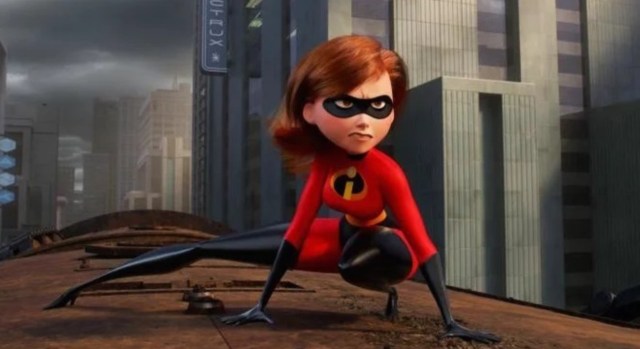
Elastic, animated: Pixar Animation Studios/Disney
We knew this was coming. As Elastigirl said in her interview at the beginning of the Incredibles’ first outing, “Settle down? I don’t think so – I’m at the top of my game!”. She has always been the strong, most capable one despite her husband being able to lift cars. No question, INCREDIBLES 2 is her story.
Following a particularly destructive afternoon of city-saving, super-family the Incredibles are arrested and taken into protective custody. With their public reputation in tatters and their home life increasingly fraught, billionaire siblings Winston and Evelyn Deavor (Bob Odenkirk and Catherine Keener) offer to re-brand and restore superheroes to glory, with Elastigirl (Holly Hunter) as their campaign mascot. With Helen saving the world from jeopardy 9-5, Bob (Craig T Nelson) is left at home with the kids, including Baby Jack Jack who is about to reveal an impressive, and hugely destructive array of powers all his own.
I got that unmistakable nostalgic tingle as the film began, the red, Incredibl-ised Disney/Pixar logos, the soft brass of Michael Giacchino’s theme ramping up… My friends and I were in our early teens when the first Incredibles came out, and there’s a certain appeal going back to a favourite movie world years later and picking up the story exactly where we left it.
This is the best superhero movie of 2018 (yes, even better than that one). The way this superhero team work together and combine their powers primarily to save civilians over beating up the villain is a great example of something bafflingly often forgotten about in superhero movies. Combined, the opening sequence and the finale are a more faithful take on Superman than Superman’s last six film appearances and considerably better than any cinematic portrayal of the Fantastic Four so far.
The film would have a very strong case for being Pixar’s best-looking film, no mean feat considering the company it keeps. Animated humans have rarely been this expressive, the environmental effects from the first film that are now starting to show their age here look photo-real in a stylised kind of way and every action scene plays out over multiple planes and keeps you guessing where it’s going next through the sheer amount of inventive visuals being thrown at you every second.
Jack Jack’s antics alone is worth the price of admission. I was holding my sides with wonderful pain at any scene built around people (and raccoons) unexpectedly encountering his powers. See the film on the biggest, best digital screen possible and you can hear him moving around the auditorium as he dimension-jumps. Speaking of this particular power, Bob seems creeped out but unsurprised that Jack Jack can still hear everything across dimensions.
As I said in my Incredibles review, Brad Bird has a real gift for breathing life into animated characters. I love that Bob tries to leap at another opportunity of returning to the glory days before he is pushed aside by his wife, the more precision, tactical and less collateral damaging hero. Helen gets a real rush out of proving that she’s still got it and Bob’s insecurities of course finally boil over in spectacular fashion. Violet’s (Sarah Vowell) worst teen nightmares end up happening in quick succession with only a minor input from her powers, Dash (Huck Milner) is in a much less complex place in his life, when his parents put their foot down on future family super-adventures, his reaction is sticking out his chest and proclaiming melodramatically, “It defines who I am!” This all rings really true.
The identity of the new masked villain is all too easy to guess, mostly because the list of possible suspects is really short. Arguably too, the film might be accused of being a bit too talky for kids. Bird aims to make animated movies for everyone, but when the pace slows and the fireworks stop, the little ones might get fidgety.
Much like HOW TO TRAIN YOUR DRAGON 2, I wouldn’t say that this is superior the original, but it is deeper. INCREDIBLES 2 is thrilling in new ways, heartfelt in an old-timey fashion and it still has something new to say about the world today through the medium of a alt-universe period superhero movie. Pixar has some serious work on their hands to not disappoint in their next effort at a sequel. SSP
10 Years On: The Dark Knight (2008)

Put on your game face: Warner Bros/Legendary Entertainment
With my latest look back at the staying power and impact of a key film, I have to address an elephant in the room. Everything about THE DARK KNIGHT, even after a decade is still overshadowed by Heath Ledger’s tragic and untimely death. Yes, Ledger’s Joker is utterly spellbinding, his Clown Prince of Crime is a jerky, volatile, nihilistic terrorist fully deserving of plaudits. But Ledger is far from the only reason why the film is still held in such high regard after a decade. Many would argue that this was the year the Academy could have caught up with the world, that the Dark Knight was worthy of at least a shot at the grand prize. It’s also thought that it’s precisely because of TDK’s snubbing that the Best Picture shortlist was increased, though it would take another decade for genre pictures to get real recognition with THE SHAPE OF WATER and GET OUT.
Three years after he first donned the cowl, billionaire Bruce Wayne (Christian Bale) works with Lieutenant Jim Gordon (Gary Oldman) and DAs Rachel Dawes (Maggie Gyllenhaal) and Gotham’s new White Knight, Harvey Dent (Aaron Eckhart) to clean up their city once and for all. But when in their desperation the mob turns to a man they don’t fully understand (Heath Ledger) Batman’s secret identity and the safety of everyone he loves is put on the line.
This is a seriously strong ensemble piece, with Bale as an increasingly downtrodden, conflicted Bruce Wayne; Maggie Gyllenhaal bringing the attitude and heart that was missing from Katie Holmes’ portrayal of Rachel; Michael Caine and Morgan Freeman bring a little welcome brevity to this otherwise pretty moody film, not to mention the force of nature that is Heath Ledger. I’d be hard-pressed to decide between Gary Oldman and Aaron Eckhart as the film’s MVP. Oldman’s performance as Gordon is grounded and extremely human – if Batman’s war with the Joker is the main driving force for action and spectacle in the film, then Gordon’s story provides the most scope for genuine drama. I also can’t heap enough praise on Eckhart for his performance as Harvey Dent, whose crusade to clean the streets of Gotham leads to his ultimate, tragic, downfall when he is horribly disfigured, becoming Two-Face (my favourite Batman villain). Eckhart carefully builds Dent’s character and motivations layer-by-layer for maximum pathos, and I like that they touch on his character’s more recent comic portrayals as being a bit unstable before his accident and becoming a violent vigilante rather than a straight villain.
Other than the cast’s performances, I think what really makes The Dark Knight is its thematic richness. The idea of duality and antithesis is continually emphasised – justice vs. injustice, order vs. chaos, Batman vs. The Joker. Even Harvey Dent, with his position openly and publicly fighting crime, is the polar opposite of Batman, a secretive, anonymous vigilante – they are two sides of the same coin, with the possibility of one becoming the other in the right (or wrong) circumstances. The film also looks beautiful, in no small part due to Nolan’s use of IMAX cameras for key scenes, including The Joker’s thrilling bank heist introduction, the action-packed Gotham freeway chase and the grandly imposing establishing shots of cityscapes. Hans Zimmer/James Newton Howard’s eerie and layered score also deserves a mention – this is not the epic, orchestral sound he made for the rise of a hero in Batman Begins, but a dark and disturbing musical accompaniment for a hero’s fall.
All the best Batman films are about his “one rule” directly or indirectly. The Joker will never truly be defeated because Batman will never cross that line to snuff out the pain and suffering he causes once and for all. That’s one of the main reasons why The Dark Knight and UNDER THE RED HOOD hit so hard as stories: they’re prepared to skewer the Batman.
Where The Dark Knight fails is in one sub-par sequence that threatens to derail the whole film. Everything from the hostages on bomb-rigged boats to Batman’s final confrontation with the Joker is overblown, overacted and thoroughly unnecessary. The film would be much better off if this sequence was deleted entirely, if the joker was dealt with more swiftly, then we could progress more directly to the film’s operatic finale with Two-Face.
With a far more formidable baddie, higher stakes and a hero suffering a crisis and hanging up his cape halfway through (for about five minutes) The Dark Knight hits all the darker superhero sequel story beats you might expect. Where it becomes really interesting is in discussing how much of a superhero film something with such a grounded aesthetic and so much allegory and symbolism and melodramatic tragedy really can be. Is The Dark Knight really a crime-thriller with Batman and the Joker in it? By throwing off the shackles of the superhero blockbuster, Nolan has allowed his series to mature, to comment on serious and relevant issues to the modern world.
Christopher Nolan has created a very smart, rich, and exciting thriller that is as different to Batman Begins as is possible to be. There’s very little to criticise apart from that misjudged, flabby sequence towards the end, and the film is technically superb. If only Nolan left it here, left us wanting the film we deserved, but not the one we needed right now. Oh well, an inferior concluding chapter can never take this masterpiece from us.
Review: The Incredibles (2004)
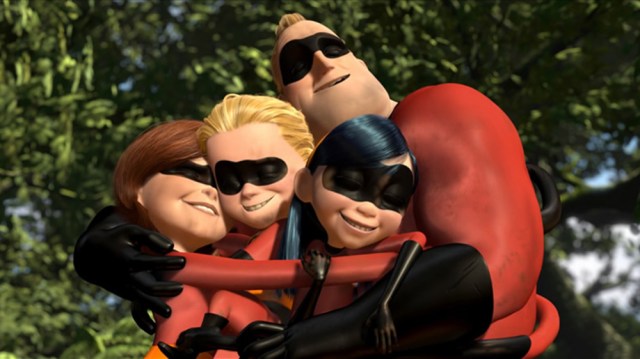
We are family: Pixar Animation Studios/Disney
Can you believe THE INCREDIBLES came out fourteen years ago? For millennials like me, that kind of thought makes us feel old. It’s a film that still holds up despite how much further on animation has come, this vibrant superhero-spy-family-sitcom really has legs, legs moving in a blur.
Following a backlash against the destructive actions of superheroes, capes are outlawed and heroes forced into early retirement. Two heroes, Mr Incredible (Craig T Nelson) and Elastigirl (Holly Hunter) marry, settle down and have three children, but a normal suburban life isn’t enough to keep Bob’s appetites for adventure sated for long. But someone is watching Bob when he has a crimefighting relapse, and soon an oportunity that seems too good to be true comes along, calling Bob and the Parrs back into action…
Brad Bird sets the tone from the start, with a Mr Incredible in his prime giving an awkward interview and opining ,”No matter how many times you save the world it always manages to get back in jeopardy again…Sometimes I just want it to stay saved, for a little bit!” The world may be heavily stylised, it may be animated, but it’s based in some form of reality that we recognise. Bird writes animated characters that feel more real than real people. The Parr family, their employers, friends and foes are all archetypes but askew, more interesting archetypes. Mr Incredible is the classic super-strong hero who finds humdrum domestic life as Bob Parr much bigger challenge than saving a city, who dreams of re-living the glory days to get his mojo back. Elastigirl put her successful superhero career on hold to settle down as stay-at-home mum Helen Parr, but is the family rock and the real leader when her powered family spring into action. The Parr kids Violet (Sarah Vowell), Dash (Spencer Fox) and Jack Jack have additional pressures than those usually encountered in growing up being in a family of supers and superfan-turned-supervillain Syndrome (Jason Lee) represents the (far more scarily relevant today) tragic and extreme end result of toxic fandom.
The shiny superheroics peppered with knowing gags are fun and all, but it’s the domestics, the arguments, broken dreams and unwavering support for family that really sticks. The contrast between the incredible and the everyday is key. Mr Incredible gets a new mission / Bob spends an evening drying waterlogged books with a hairdryer etc.
Michael Giacchino’s John Barrie-tinged jazzy score is one of my absolute favourites of any film. The music isn’t the only debt the film owes to early Bond movies. Interestingly, The Incredibles is probably more a spy movie than a superhero movie by quite some margin. The superhero references are relatively few and far-between: the family dynamic and power set from the Fantastic Four, heroes forced into retirement and past their best from Watchmen. For the spy (mostly Bond) stuff you’ve got the recruitment by recorded expository message; the cover of a mysterious unspecified job with lots of time away from home; the government handler; the gadget vendor who goes by a single letter; the villain’s scheme (monologued); the villain’s island paradise lair; the villain’s apparent defeat, surprise return then actual defeat at the end.
A lot of creativity may have gone into the action, but a decade-and-change on and some of the environmental effects are looking a bit ropey. Wet hair and skin goes shiny but doesn’t behave quite right; fire, ice and lava doesn’t look especially convincing in motion. The heavily stylised character and retro-futurist digital sets are timeless, but some of the binding elements of this world are starting to get a slightly uncanny sheen.
The grab-bag of technology and mix of decade-specific design details gives the film a similar alternative universe feel to something like BATMAN: THE ANIMATED SERIES before it or ARCHER to follow. There are references to the “Glory Days” being some time in the late 40s, so the Parr family “present” must be the early 60s, but an early 60s set along a different path. It’s a distinctive, timeless world full of characters who make a genuine connection. It’s clever, inventive and it makes a connection. It’s a bit of a classic. SSP
My Favourite…Sci-fi

Motion controls never look this cool IRL: Twentieth Century Fox/Dreamworks
My favourite science fiction film is MINORITY REPORT. Far more than Tom Cruise running and jumping (though he does plenty of both) it’s at once a big ideas sci-fi, an exhilarating action-thriller and twisty mystery.
Washington DC, 2054. The PreCrime Initiative which predicts crimes of passion and apprehends perpetrators before they can cause harm, is a daily reality. Using a trio of psychic “Precogs” the DC Police force have virtually eradicated violent crime and are preparing to roll out the programme across the country. The system works, every time. Or does it? Everything changes when Chief John Anderton (Tom Cruise) is named as a future murderer…
The rules of this world are quickly and elegantly established, with nary an exposition dump (well there’s a little to fill in the gaps when Colin Farrell’s character first arrives at Precrime) but it’s all for the purpose of being manipulated, bent and broken as the plot thickens.
The Precog vision is a really effective visual; cold, distant and eerie. It’s also intentionally limited, focussed enough that the viewer’s mind as well as the psychic dreamer’s tends to focus only on the details the storyteller (whether Spielberg or the film’s big bad) wants you to see, allowing for the rug to be pulled out from under us, and Anderton, multiple times.
It’s amazing how close this film got with predicting near-future technological developments. A lot of these ideas may have been well on their way in the early 2000s, but it would be amusing to find out how many concept/development meetings at the big tech firms ended with “good, but make it more like Minority Report”. Motion controls, VR, HUDs, personalised advertising, widespread retina and facial recognition software – it’s all here!
I perhaps unfairly said in my READY PLAYER ONE review that Spielberg can’t, or won’t, do satire. This film is the exception, adapting the premise of Philip K Dick’s short story and expanding on it to create a grotesque mirror of the American Justice System. It packs an even bigger punch now, because you know some people would vote for preemptively incarcerating potential murderers if it was an option. “The fact that you prevented it happening doesn’t change the fact that it was going to happen”.
It’s among Spielberg’s most philosophical films as well, being all about fate or lack thereof. It plays with this concept throughout, from the horrific implications of the flaw in the “perfect” system and the fact that, in theory, nobody can act spontaneously (“Put the gun down John, I don’t hear a red ball!”. Anderson’s son Sean’s disappearance is never solved, which grounds his experiences and his life without meaning to a huge extent; the only closure he ever gets is hearing a “what if?” story from Precog Agatha (Samantha Morton).
Of course there’s a grieving, broken father stuck in the past; it’s a Spielberg movie! The film also has one of the best jump-scares since the head popping out in JAWS. He has a lot to answer for in how a lot of modern sci-fi looks. You can spot a lot of the same assembly line gags as seen in ATTACK OF THE CLONES (filmmaker friends will talk…) and JJ Abrams’ shiny, lens-flarey STAR TREK could never have happened without the same aesthetic being used in Minority Report. The sick-stick and the sonic gun, despite only being used once apiece make their mark as some of the coolest ever future weapons. The police spiders are such a creepy idea, and the birds-eye-view of their apartment search offers the wonderful site of a couple stopping their domestic mid-flow to be scanned before immidiately resuming. I also love that Spielberg just blew these metal critters up several hundred times to create his WAR OF THE WORLDS tripods.
Everyone has a streaming cold, which is probably significant(?). Unless it’s just a genre-appropriate CHINATOWN reference. Peter Stormare’s mucussy sinister appearance as a backstreet surgeon (“Nothing quite like taking a shower with this large fella with an attitude you can’t even knock down with a hammer”) feels like a he’s playing a part in a Polanski picture. Spielberg rarely goes this dark in a genre piece.
Did we need the sentient vines attacking Cruise? Not really. Should they have thought about how stupid it is that Anderton can get back into Precrime using his old eyes in a baggy without setting off any kind of alarm? Probably. But these are nitpicks and don’t effect my view that Minority Report, among mind-expanding sci-fi and mind-bending mystery is a particularly satisfying package. SSP

 SSP Thinks Film