Oscar Review: Boyhood (2014)

_76125916_boyhood_mason_dad

BOYHOOD is not a masterpiece. And yet it’s probably still worthy of an Oscar in 2014, a pretty patchy year in film overall. Judging by the pattern awards shows so far seem to be following it’s all-but a shoe-in for the top prizes, with only BIRDMAN as an outside favourite. For me, Birdman, THE THEORY OF EVERYTHING and FOXCATCHER are better films, but at least Boyhood is interesting, a feelgood movie, and at least it stands out from the competition, and that might just be enough this year.

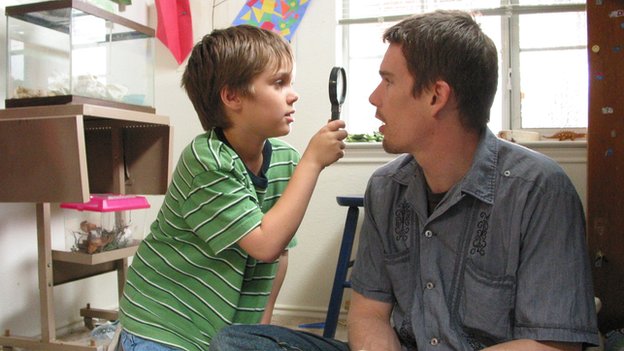
The story, as you might expect, follows a boy. Mason (Ellar Coltrane) from age five to eighteen, along with his older sister Samantha (Lorelei Linklater), his occasionally present dad (Ethan Hawke) and his loving mother (Patricia Arquette) and her succession of boyfriends of inconsistent quality. We sit in on, and become part of, this family’s life for over a decade, and we witness the impact your upbringing can have on the person you become in adulthood.

The story behind the making of Boyhood has been well documented. It almost became a go-to opening question for interviewers to put to writer-director Richard Linklater – “will your secret passion project ever be finished?” What was Linklater thinking when he decided to cast a young actor and follow his development within a loosely scripted structure for the the next twelve years? It’s one of the most risky and awkward ways possible to make a coherent film. His team even had a contingency plan in place in case Linklater died, now that’s dedication to your art! Amazingly, the end result hasn’t collapsed under its own weight, and works pretty well.

By the project’s very nature, it’s a mass editing process of a mountain of footage, and it becomes a film of moments. We have unexpected moments, moments of beauty, moments of heartbreak, moments of innocence and moments of pathos, all presented organically without any distracting time-stamps beyond passing references to iconic moments of popular culture in the 2000s. All the moments you expect – Mason’s first kiss, his first drugs, an awkward sex talk with Dad – are there. Others you don’t expect – the family uprooting and re-starting life in a new town, Mom’s abusive boyfriends kicking off, Grandpa’s gift to Mason for his 16th birthday of a double-barrelled shotgun – are also there. Everything is well-judged, fluid and totally believable. Well, perhaps not the very Hollywood romantic ending where Mason is literally looking off into the sunset, that was a little on-the-nose.

Much like the British family sitcom OUTNUMBERED, the film is far better when it focuses on Mason as a child, when he’s just behaving like a kid would off-camera and there’s not much structure to the scenes. As Mason grows, the script seems to kick in, Coltrane as Mason begins to make decisions and more obviously to “act” and it all feels much more choreographed, less naturalistic and less effective at drawing you in. Coltrane seems to be a good actor, but I don’t know whether this project alone (he did the odd small part in addition to this, but this is still his breakthrough) gives us enough of a sense of the kind of performer he will become. Thankfully, he has a great supporting cast around him, with Hawke and Arquette providing layer upon layer to their characters, separated parents struggling with very different aspects of parental responsibility. Lorelei Linklater might have got the role of Samantha for reasons of nepotism, but she proves to be a gifted and likable presence, and her love-hate relationship with Mason as the bossy older sister always feels genuine.

You have to ask what Boyhood is actually receiving all these awards statuettes for. Is it being recognised because it’s considered a genuinely superior example of filmmaking than everything else released in 2014? Is the act of revisiting and filming a boy’s life over a decade and constructing a story that flows at the end of it all what is impressing everyone? Is it the achievement, both the artistically singular one for Linklater, and a collective effort from the ensemble that is receiving praise? Has it just struck an emotional chord with enough people? Is it just very lucky to be released in hit-and-miss 2014? We may never know for sure, though if it wins the big prize tonight then I’m sure everyone and their dog will be discussing it. SSP

Posted in Film, Film Review | Tagged , , , , , , , , , , , , , | Leave a comment

Review: Gone Girl (2014)

gone_girl_67551

GONE GIRL is a solid mystery, a satisfying examination on the ins and outs (mostly outs) of relationships, but it’s a truly great film about the power of the media image and its complete and utter dominance in contemporary society.

On the surface of it, Nick and Amy Dunne (Ben Affleck and Rosamund Pike) are the perfect couple. They’re successful, attractive and seemingly happy; they are the envy of everyone they know. When Amy suddenly goes missing in suspicious circumstances, a media campaign sparks country-wide search, and Nick becomes the prime suspect for disposing of his wife.

We have classic David Fincher here. Gone Girl is cold, calculated and immaculately formed (Fincher is such a perfectionist in everything he does that I’m sure he was really annoyed  that he couldn’t re-shoot the scenes where Affleck had gained Batman bulk). It’s also, next to FIGHT CLUB, the funniest film he’s ever made. It’s almost never comfortable comedy – Nick automatically reverting to full scumbag mode at the worst possible time, one of the cops muttering that describing the missing Amy’s personality as “complicated” is “code for bitch” – but funny is funny, black comedy is still comedy.

Like most good mysteries, the devil really is in the details. There are clues aplenty to be spot and mull over (in addition to those in envelopes literally marked “clue”) and once everything slots into place you’ll be kicking yourself for not appreciating the significance of some telling moments. I’ll admit I was expecting a more surprising final twist in the tale, but having said that the one we’re given works well enough, and keeps you involved in the plot even after you know who did what to whom (which was crucial considering at this point you’re still only about two thirds of your way through the film).

The casting for the film is very canny indeed. Affleck won the role of Nick because of the distinctive smile vapid he reserves for the media, Pike is Amy for her ageless, ethereal quality. Together they become equally one of the best and worst on-screen couples in history. Their scenes crackle with sexual chemistry, with lust, but also seethe with the purest rage. Film characters almost never have to be likeable to be compelling, and Amy and Nick are both pretty detestable in their way, but are nevertheless completely captivating. Nick is an insensitive, gullible moron who can’t help but look guilty, Amy is a ruthless, manipulative siren. At least Nick’s sister Margo (Carrie Coon) seems like a good person, because they’re in short supply in this story. As great as Pike and Affleck are, their show is almost stolen by Coon and Kim Dickens as the investigation’s lead detective, who both play the story’s two sharpest and most perceptive characters, and the only ones who could really claim to function as human beings. Neil Patrick Harris and Tyler Perry both turn in solid performances as Amy’s ex and Nick’s lawyer respectively, but neither get enough screentime to make a lasting impression.

Fincher and screenwriter Gillian Flynn (adapting her own novel) wittily deconstruct contemporary society’s infatuation with gruesome stories in the media. Amy doesn’t have to be missing for very long at all before the nationwide search has a catchy tag “Find Amy” and her face and life story is plastered across newspapers, websites and press conference walls. Those following the story want Amy found, but equally they want to see the culprit humiliated and punished, their suspicions and their gut instincts to be proven correct. You can practically see onlookers circle like wolves when Nick makes a major gaffe of inappropriate behaviour not long after his wife goes missing. It represents human nature uncomfortably accurately, particularly the essential part schadenfreude plays in our existence.

On a moral level, this is a story that pushes you, that is designed to make you feel deeply uncomfortable. Just when you think events have taken their darkest turn, we get yet another gut-punch and by the end you feel deeply uneasy. Despite this feeling, miraculously it’s not a film in the “I admired it but couldn’t enjoy it” camp. On the contrary, it’s a really satisfying, dare I say it, fun, film in spite of all the depraved horribleness. Fincher might have cornered the market in terms of making entertaining films that he judges you for finding entertaining, and he’s certainly not softening as his career progresses. On the contrary, I think he might be becoming more removed from the rest of humanity with every film he makes. He remains a formidable, reliable and fascinating creative force on the film stage. SSP

Posted in Film, Film Review | Tagged , , , , , , , , , , , , , , | Leave a comment

Review: Into the Woods (2014)

into-the-woods-9

Musicals, like comedy films, are very difficult to review. Musical taste, just like what makes you laugh, is such a subjective thing. Generally you’re either a Stephen Sondheim fan or you’re not. For me, INTO THE WOODS isn’t a great musical. It works, sometimes admirably, but it can be an inconsistent affair to sit through.

Once upon a time, a baker and his wife (James Corden and Emily Blunt) strike a deal with a witch (Meryl Streep) to lift their curse of childlessness. They pledge to bring the witch a cow as white as milk, a cape as red as blood, a slipper as pure as gold and hair as yellow as corn for a ritual that will restore her vitality. Meanwhile, a boy (Daniel Huttlestone) is taking his cow to market, a girl wearing a rather distinctive windcheater (Lilla Crawford) is off to visit her grandmother, a servant (Anna Kendrick) desires to attend the royal festival and a damsel (Mackenzie Mauzy) awaits her true love in a tower. Their lives may be worlds apart but their heart’s desires lead them all into the woods…

Johnny Depp is just awful, but he’s only in it for about ten minutes, so that’s alright. I’m not really familiar with the Broadway show, but I imagine Disney had to tweak the source material to make it more suitable for a family audience. Even now though, Depp’s single number as the Wolf might as well be re-named the “To Catch a Predator” song. There’s a general feeling of creepiness throughout the film really, which is pretty odd for a Disney blockbuster, but it does allow for one of the first genuine, gruesome adaptations of the Brothers Grimm’s vision of CINDERELLA (complete with delightfully foul Stepmother and Stepsisters played with relish by Christine Baranski, Lucy Punch and Tammy Blanchard). Disney are getting into a concerning habit of either adapting unsuitable material for their blockbusters and having to tone it down later (as they did here), or putting in bizarrely dark and adult moments at odds with the rest of the film (much the same as THE LONE RANGER and MALEFICENT).

I really liked a lot of the songs – Sondheim’s music is swelling, the lyrics tricksy and complex. The very best of the cast is Emily Blunt as the Baker’s Wife, who she makes warm, funny and somewhat bewildered by a lot of the fairy tale goings-on around her. Blunt also completely gets Sondheim’s sense of humour, the amusing subtext of his lyrics and has a lot of fun conveying it. Lilla Crawford threatens to steal the show as a mischievous, bread-scoffing Little Red Riding Hood with a formidable singing voice, and Anna Kendrick and James Corden certainly have the pipes for their extravagant numbers. With Meryl Streep you get about what you expect from her Witch, but she should not have an Oscar nomination just for turning up. Chris Pine’s Prince works as a joke of a character, and his key song, “Agony” (sung in front if a waterfall with a lot of posing) is a brilliantly cringe-worthy comic set piece for an arrogant prig to launch into.

The film looks great too, with the costumes and production design lending themselves well to the feeling of a rich and layered fairytale world. This isn’t a gleaming Disneyland, but a dirty, ramshackle magical land inhabited by broken, eccentric dreamers. Speaking of everyone having a dream, I was reminded alarmingly regularly of Disney’s big comeback film, TANGLED, and particularly the musical number involving the bandit patrons of a grotty inn singing about their wants in life, which wouldn’t really look out of place among the numbers here.

The film’s main weaknesses come in the second half, and would have been difficult to avoid in faithfully adapting this particular show for the screen. The main thrust of Sondheim’s story is that yes, those living in a fairy tale do live “happily ever after”, but no, “ever after” does not last forever. After a very satisfying quest story has wrapped, we’ve still got to sit through a disaster movie tacked on at the end when a “lady giant” (said with gleeful surprise by Blunt) decides to hunt down Jack. It gets bigger in scale, but is ultimately slim pickings in terms of drama, and far less interesting in terms of character (our heroes go from having a compelling variety of aims in life to them all simply wanting to not die).

I found myself liking, not loving Into the Woods. I was engaged in the story throughout, but rarely riveted. If you usually like Sondheim’s work, you should be happy with the execution here by a solid cast and a proven director of staging musicals on film in Rob Marshall. Just be wary of the release under a Disney banner, because this one really isn’t for kids. SSP

Posted in Film, Film Review | Tagged , , , , , , , , , , , , , , , , , , , , , , | Leave a comment

Spidey Slings Home…Sort-of

The last few hours have had the internet in a frenzy. It was announced earlier that at long last, Sony has brokered a deal with Marvel/Disney to allow Spider-Man and associated characters to appear as part of the Marvel Cinematic Universe.

For those who aren’t aware of the legal ins-and-outs of the modern Superhero movie’s dominance of the blockbuster landscape (“isn’t Spider-Man a hero from Marvel comics? Why can’t he hang out with Thor and Iron Man?”) the issue comes when you’re discussing who owns what intellectual property, and how much money they’re allowed to make from it. A decade and a half ago, long before Marvel was one of the biggest and most profitable film studios on the planet (before 2007/8 they had very little to do with the production side of things) and their characters were sold to whoever would have them for a quick cash injection – Fox bought X-MEN and the FANTASTIC FOUR, Sony snapped up SPIDER-MAN. A professional rivalry and competition for lucrative superhero movie ticket sales has thus-far kept Peter Parker’s world separate from that of Tony Stark and company. That is, until now.

Sony, you may have heard, have had a rough year. Between leaks, hacks, controversies and their major films doing well, but not quite well enough, the studio looked in pretty dire straits. They needed a boost to keep their hottest non-James Bond property alive, and this timely deal with Marvel could give them just that. While they are still in ultimate creative control, they now have an opportunity to share in Marvel’s success and the audience loyal to the MCU series. While Marvel’s head Kevin Feige must be rubbing his hands at the story potential Spider-Man’s addition brings, Sony ultimately needs Marvel a lot more than Marvel needs Sony.

There has so far been no confirmation of when and how the web-slinger will join Marvel/Disney’s expansive continuity, or what it means for the current inhabitant of the red and blue suit Andrew Garfield (who isn’t popular with Sony execs after admitting the last Spidey film was a mess) and the already announced and in early production SINISTER SIX. It’s probably a fair bet that one or both will go away.

This is of course no guarantee we’ll be seeing great Spider-Man films again, but they surely can’t be as cynical, miscalculated and ugly as THE AMAZING SPIDER-MAN 2 with the support of the Marvel brain trust, can they? Only time will tell. SSP

Posted in Film, Film Comment | Tagged , , , , , , , , , , , , , , | Leave a comment

Review: Lucy (2014)

lucy

Well, I guess I should be grateful that it was all in focus and the film itself was mercifully short. Aside from that, LUCY, Luc Besson’s latest attempt to return to his 1990s form fails in spectacular fashion.

Lucy (Scarlett Johansson) is traveling the world. She’s a free spirit, but is entirely too trusting of seemingly like-minded individuals. While in Taipei she is tricked into taking a locked briefcase to a hotel suite where she is taken prisoner and the suitcase’s contents of experimental narcotics forcibly implanted in her stomach. Whilst in holding awaiting her lethal cargo’s transportation, she is brutally beaten and the drugs enter her bloodstream. As the chemicals cause her to transcend the laws of nature and physics, Lucy seeks revenge on those responsible for her abuse and particularly their leader (Choi Min-sik) and sets out to meet the only man who has any comprehension about what is happening to her (Morgan Freeman).

Lucy uses a well-worn fallacy of a concept as its starting point. Humans, we are so often told, only ever use 10% of our mental capacity. Only we don’t. We use about that much at any given moment, but it depends on how strenuous the task being undertaken, the person, what’s going on in your environment and many other factors. Basically it’s a lie, and the film builds on this fundamental misunderstanding of the brain to create something completely and utterly nonsensical.

I don’t hate stupid movies. A dumb, or undemanding film can provide a bit of light relief, some incredibly enjoyable escapism from the dreariness of your day-to-day. What I do object very strongly to is an unintelligent film masquerading as something clever, trying to sell itself as something intellectual. If the themes of survival, natural selection, mutation and so on were in the background, in the film’s subtext, fine. But Besson for some reason thought it was a bright idea to cut to stock footage of animals hunting their prey as Lucy is taken against her will to bludgeon his point into our skulls.

I object to the fact that Lucy isn’t a character, but a plot device, and she doesn’t even seem to realise it. She’s a victim first, then an instrument of revenge and a facilitator of action when she gains her powers. I’m sick to death of the threat of sexual violation being used as an excuse for spectacle. Yes, Lucy should fight back against her captors, no we should not be cheering for how being kidnapped, beaten and turned into a human smuggling receptacle inadvertently turns her into a superhero. Scarlett Johansson makes the best she can of such weak material, but she is better than this. Choi Min-sik is certainly better than this, but is clearly pining to break through in West. I’d say Morgan Freeman was better than this material too, but he’s not really anymore. He hasn’t been for years. Now he just turns up in things to read the story aloud to viewers who aren’t paying attention.

Luc Besson’s screenplays have rarely portrayed other cultures, or even his own, in a positive light. By writing films that cling to stereotypes for the sake of plot – Albanian human traffickers in TAKEN/TAKEN 2, Pakistani terrorists in FROM PARIS WITH LOVE Italian-American gangsters and rural French idiots in THE FAMILY and now Taiwanese drug smugglers in Lucy – he just come across as a xenophobic, self-hating Frenchman. While you might it’s all in good fun, or not meant to be taken all that seriously, it’s alarming how often Besson plays these representations completely straight-faced. Even if they are used in jest, a filmmaker employing stereotypes in their stories does still convey a meaning, it still has an impact on the viewer and their perception of the world.

Even the action isn’t all that good. There’s a bombastic car chase towards the end, but most of the time Lucy just uses telekinesis to throw her opponents around because no one could be bothered with fight choreography. As Lucy’s powers become more godlike, the visuals only become more music video-y. Super slow motion and playing around with light refraction was executed much more beautifully (and considerably cheaper) two years ago in DREDD. Plus, in Dredd, by painstakingly developing the relevant technology in the real world, they didn’t have to do all the hard work in post-production by slapping lurid special effects over everything caught in-camera. The effects-driven finale of the film is probably trying to say something, but I’ll be damned if I know what.

Of all the films released in 2014, Lucy didn’t make me quite as angry as THE AMAZING SPIDER-MAN 2, but it determinedly continues the formally very talented Monsieur Besson’s downward spiral. Lucy might have worked better as an all-out trash fest and ditched its woefully misplaced intellectual aspirations. SSP

Posted in Film, Film Review | Tagged , , , , , , , , , , , , , , | Leave a comment

Review: Kingsman: The Secret Service (2014/15)

kingsman-the-secret-service

Matthew Vaughn has delivered another very enjoyable action-comedy that never quite reconciles certain tonal dissonances, but makes up for it with energy, style and confidence in abundance.

Eggsy (Taron Egerton) has a tough life. His dad died when he was young, he lives on a tough council estate under the same rood as his mother’s (Samantha Womack) abusive boyfriend (Geoff Bell) and he is sorely lacking a purpose in life. That is until super-spy Harry Hart (Colin Firth) appears and puts Eggsy forward for the grueling training programme to become an elite international secret agent, or “Kingsman”. Eggsy’s training becomes the least of his worries when tech billionaire Valentine (Samuel L. Jackson) emerges with a sinister plan to make the world a better place.

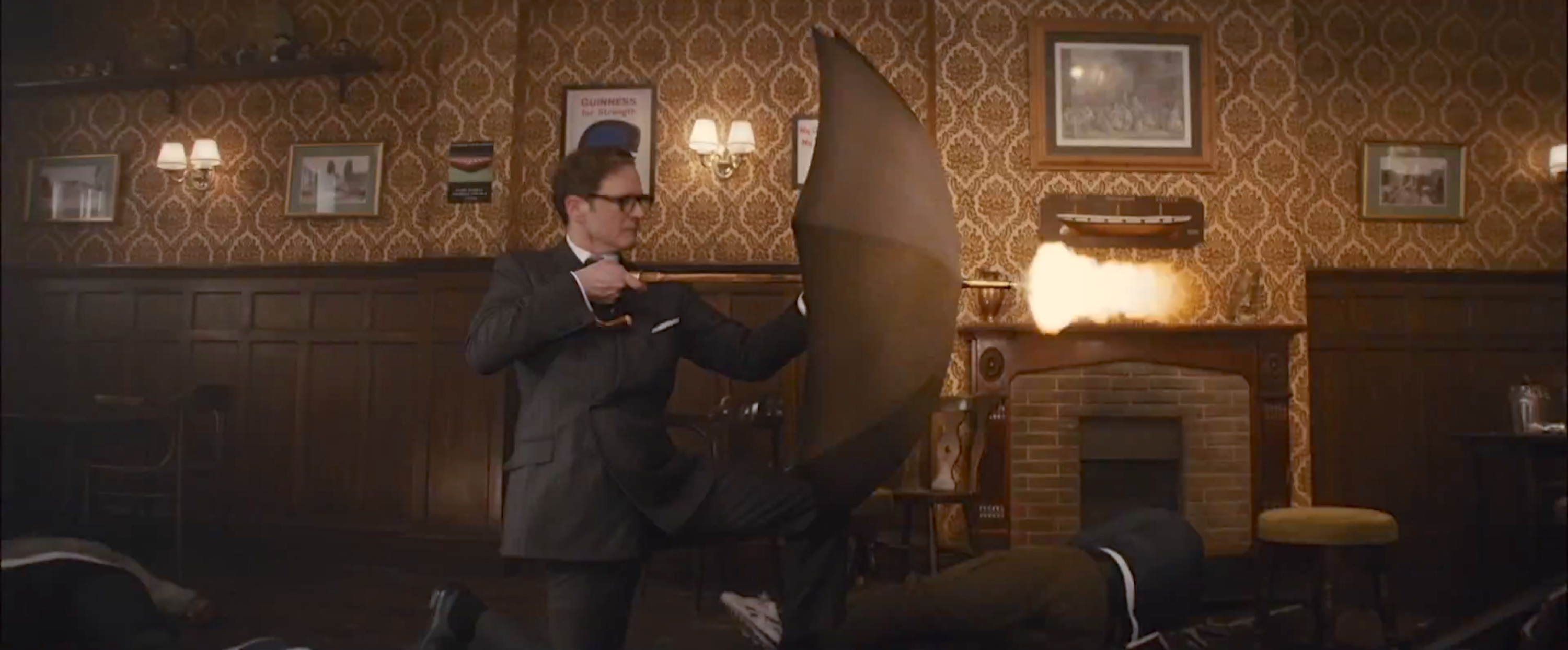
Firth is fabulous as Harry Hart, a deadpan Bond-meets-Palmer-meets-Bourne, skillfully balancing charm, warmth and chilliness as a professional killer living with deep regrets. He looks great in his fancy threads, holds himself like a royal and also equips himself very impressively in the action sequences, where he seemingly becomes detached from reality, his movements blur and he dispatches opponents in very cool, but quite frankly horrible ways. Newcomer Taron Egerton is a real talent, bringing movie star charisma beyond his years and effortlessly providing Eggsy with determination, a mischievous quality and an inherently caring nature. A Scottish-accented Mark Strong provides a lot of the laughs as the wisecracking Q-esque recruit trainer Merlin, and Samuel L. Jackson’s Valentine makes for a creepily credible lisping villain (like Al Gore if he was a terrorist), albeit one who is backed up by a cartoony henchwoman wearing bladed prostheses (Sofia Boutella). Michael Caine gets a look in by the virtue of being Harry Palmer.

The film is very sure of itself, and knows exactly what it wants to be in stylistic and aesthetic terms. It’s like Vaughn has been finding out what kind of filmmaker he wants to be up to press, and Kingsman represents him finally happy in his own skin. The structure of the plot feels very X-MEN: FIRST CLASS, the feel and the pace of the action is very similar to KICK-ASS. A crack editing team also helps to make the action dynamic and striking throughout the film, even when it becomes more conventional fare towards the end.

The comedy in the film veers from the gentle, for instance Eggsy mistaking his chosen companion pug for a bulldog puppy, or Harry insisting on finishing his “lovely pint of Guinness” before he sets to trouncing some pub thugs, to the far rowdier spectacle of Harry making one hell of an impression on a Christian fanatic.

We haven’t had a major British film sink its teeth into the thorny and complex subject of class for a while. To Vaughn’s credit (interestingly, an aristocrat by inheritance himself) he doesn’t demonise either level of society , he merely acknowledges that both toffs and plebs are people, and there are good and bad examples of both. At one point, Harry wisely advises Eggsy that being a gentleman isn’t anything to do with your accent, but how you conduct yourself, a good lesson for all to live by.

The reference points in the film are pretty blatant – Moore-era Bond (gadgets, gags), THE IPCRESS FILE (big paranoid plot, Harry Palmer himself), TV’s THE AVENGERS (er…umbrellas?) – so why did the filmmakers feel the need to point out how clever they’re being in deconstructing this iconography? There’s even a scene where Harry and Valentine discuss over dinner how Spy movies are too serious now, and another where Michael Caine’s Arthur reels off a list of fictional spies who all funnily enough have the initials JB. It’s just a little too on the nose.

I can’t say the spy training scenes are particularly exciting or entertaining, or not easy to predict the outcome of, nor do they mesh well with the slick thriller elements that make up much of the rest of the film. I was also a little disappointed that we never got to see Roxy (Sophie Cookson) in action. The film dedicates so much time to establishing our female lead is a match for any of her male counterparts, but when the chips are down all the real fighting is still left to the boys. At least they didn’t resort to a cat-fight between her and Gazelle.

There’s a key sequence at the end of the second act of the film which I, personally, found really challenging to deal with on a moral level. Despite this, I understand why the scene had to be there and the important purpose it serves for the story. Avoiding spoilers, it involves Harry gruesomely building quite a body count of nasty individuals (nasty, but still people) in a iconographically offensive setting. Again, it’s an important scene for the story as a whole, for Harry’s development and the expression of the film’s key themes, but I find the choices made in the execution of these ideas deeply uncomfortable. Maybe that’s the point.

Kick-Ass is still the closest thing Matthew Vaughn has to a masterpiece, but Kingsman: The Secret Service comes a close second in this slightly anarchic genre-twister’s filmography. The fact that it’s clearly very comfortable in its blood-stained Oxfords and it actually has something to say about the world in addition to being a really fun ride allows you to overlook the odd misstep or shortcoming. SSP

Posted in Film, Film Review | Tagged , , , , , , , , , , , , , , , , , , , , , , , | 3 Comments

Review: Maleficent (2014)

maleficent

MALEFICENT’s opening narration: “Let us tell an old story anew and see how well you really know it” might as well be the House of Mouse’s filmmaking mantra at this point in time, and basically gives them license to do whatever they want with their pre-existing material. The studio seems determined to do a live-action remake of all their animated greats at some point. We’ve seen a bloated ALICE IN WONDERLAND and an uninspiring THE SORCERER’S APPRENTICE already, and have CINDERELLA and BEAUTY AND THE BEAST coming up.

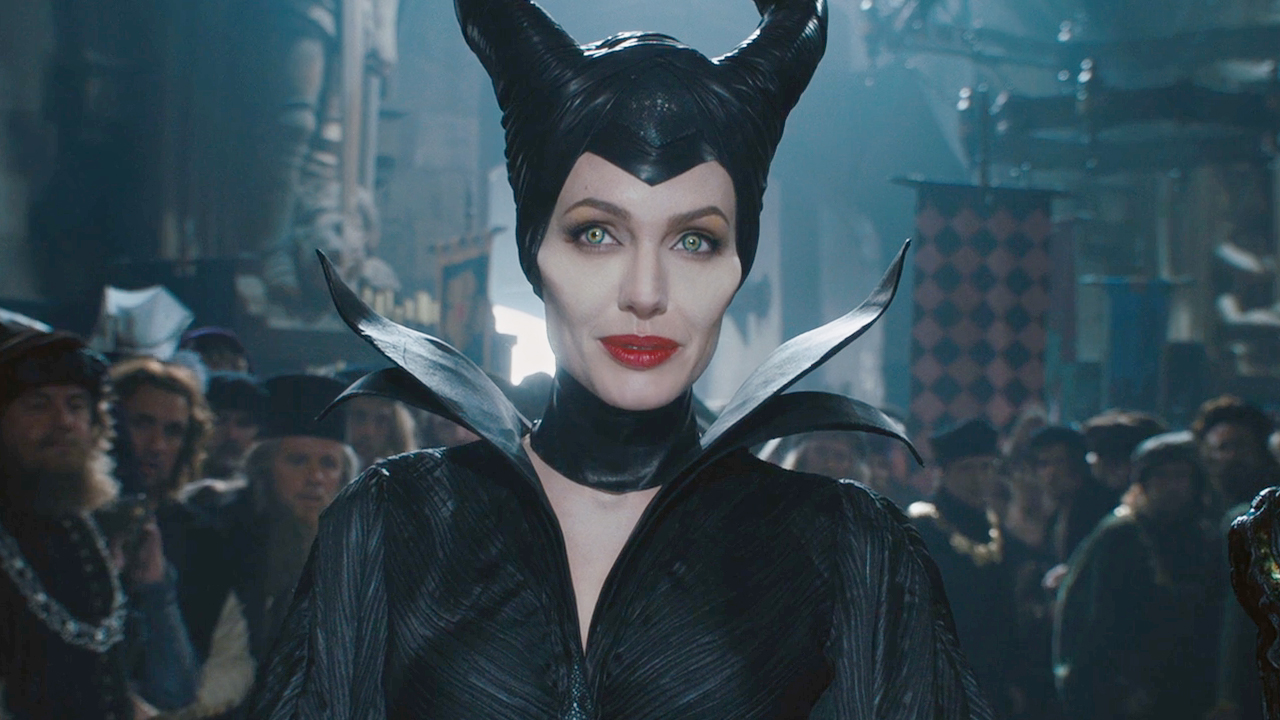
We all know the story, an evil fairy bewitches a royal baby to eternal sleep from her 16th birthday until the curse can be broken by true love’s kiss. As well as dipping in and out of the imagery from the Disney animation, this version of the tale follows Maleficent (Angelina Jolie) from the start, reimagining her as a guardian of nature, and tries to examine her motivations and the hitherto unexplored relationship between her, King Stefan (Sharlto Copley) and the young Princess Aurora (Elle Fanning).

The mythology presented here is muddy and confusing, specific yet somehow also too generic. The land of the fairies, here dubbed The Moors, and is never particularly well explored or explained, and we never really learn how it works or anything beyond the fact that Maleficent is the region’s guardian (for some reason), it’s guarded by tree creatures and there are various very Disney creatures who like having mudfights in streams. The generic Medieval Europe land of men is of course ruled by an evil-just-because tyrant and he has an army of useless cannon fodder under his command. The humans are so inept that a plot device had to be invented to make them a credible threat to Maleficent and her kind. We all know silver is deadly to werewolves, apparently iron causes agony for fay folk too.

There also seems to be a fundamental misunderstanding about how European royal dynasties work in terms of how one inherits the throne. It’s established early on that Stefan is a lowly peasant who only ended up part if the king’s household through ambition and blind luck. He is not royalty. Yet after one “great” deed, he’s named (offscreen) heir to the crown, seemingly without any opposition from the nobility or anyone pointing out that he’s not from the right stock. I mean, there must be powerful nobles and pretenders positively swarming once the king (Kenneth Cranham) pops his clogs, but no-one puts up a challenge to Stefan – surely he’s not that terrifying (painful accent aside)?

SLEEPING BEAUTY has been padded to within an inch of its life, and the filmmakers have failed to take note that what made the devious fairy villain so compelling and fascinating in the original animated feature was her enigmatic nature. She was scarier and more interesting because we didn’t know anything about her. The shark in JAWS was only frightening when we couldn’t see it, and Maleficent is only chilling when we don’t understand her. Now we know everything, and it turns out she’s just another woman scorned, an archetype too often relied on by lazy screenwriters in Hollywood, and disappointingly adopted here by female writer Linda Woolverton.

There’s a key scene early on that delivers a nasty shock perhaps too intense for much of Disney’s target audience. Jolie plays it well, heartbreakingly in fact, but the deeply uncomfortable and adult subtext makes me question why it’s in a family film at all. It will confuse children, who will understand Maleficent is in pain, but not what else that pain implies, and likely lead to some awkward questions from them which adults will struggle to answer.

We do get a nice little twist on the only way to break Sleeping Beauty’s curse ( which seems to last all of ten minutes of screentime), but by the time this happens everything else in the story is reduced to an indistinct fantasy stodge. There are some cool-looking tree creatures that amazingly manage to look not much like ents. The director is a veteran VFX designer, and this certainly comes across in the construction of the fantasy setting and action scenes, though at times it feels more like Robert Stromberg is experimenting, trying every idea he has out and putting it on screen before it’s fully-formed. The recreation in live-action of Maleficent’s infamous first appearance at Aurora’s christening is admittedly perfect. The look of the scene, the feel of it, Jolie’s performance all become a flawless whole.

Aside from these elements that at least make Maleficent a curiosity, the film doesn’t really work, from out-of-the-blue changes in character motivations to the downright horrifying sight of the Frankenstein grafting of Imelda Staunton and Juno Temple’s faces onto fairy bodies, to Copley’s even more horrifying Scottish accent and hammy performance. It’s sadly not a film particularly worth your time, and you’d be far better off watching Disney’s original animated take on Sleeping Beauty. Though if people paying in droves to see a mediocre-to-poor film is what it takes to see more female-lead major (hopefully better) releases, then I guess it’s a necessary sacrifice. SSP

Posted in Film, Film Review | Tagged , , , , , , , , , , , , , , , , , , | 3 Comments

Snowpiercer: A Continuing Frustration for UK Bong Joon-ho Fans

Film fans who reside in the United Kingdom are still yet to be allowed watch Bong Joon-ho’s English-language directorial debut – the dirty, violent dystopian sci-fi parable SNOWPIERCER – without dealing with the frustration of DVD imports lacking English subtitles or resorting to illegal downloads. No viewer, especially viewers from a country where Bong’s previous work has become increasingly popular on home media, should be put through this.

The issue, as far as I can tell, stems from Harvey Weinstein’s push for a dumbed-down shorter cut for the film’s US release. The Weinstein Company acquired the distribution rights for the key English-speaking territories, and after locking horns with director Bong over which version of his film should be shown (Bong understandably wanted his own cut, his own vision, Weinstein favoured a less ambiguous and more marketable film) it seems like the damage has been done and there are, as yet, no further plans for any kind of release in the UK.

Aside from the obvious issues of art vs. entertainment, integrity vs. blatant profiteering, I’m astounded that the Weinstein Company essentially seem to have now ditched the project by the wayside. Snowpiercer was enthusiastically received by audiences and critics alike, both in Europe and in the USA when the director’s cut eventually got a release following strong petition support. Plus, if it’s a question of whether it will sell or not, it’s got Captain America in it!

Bong Joon-ho is one of my favourite directors. I wrote my BA dissertation on the representation of Korean society in his films three years ago. I was overjoyed when I heard he’d taken on such an interesting project, his first venture into big(ish) international spectacle filmmaking. I was then devastated when the film hit hurdle after hurdle to get a wide release, then apoplectic when it emerged that we likely won’t see Snowpiercer hit British shores in any form any time soon. I don’t want to sound whiney, but it’s just not fair. Fans of Bong Joon-ho, Korean cinema, international co-productions or just interesting creative projects shouldn’t have such an obstacle as geography get in the way, especially in a world where viewing film and television is increasingly being liberated.

With the situation as it stands, I grew tired of waiting. I didn’t resort to an illegal download or torrent, because I refuse to support such practices on a moral level. I ordered a Spanish import DVD so I could finally have some experience of the film. I loved what I saw – it’s gritty, violent, whip-smart and still with Bong’s unique, slightly depraved brand of black humour. I’m pleased I’ve seen it, though I still feel I’ve missed out on some nuances of Song Kang-ho’s character since his dialogue is entirely in Korean (only the absolute essentials are translated by a sci-fi plot device) and the Spanish DVD didn’t have an English subtitle option (and why should it?).

Here’s hoping UK audiences might at least be allowed to legally download the film at some point. We’re owed that. I suppose we should really be grateful we’ve been forgotten entirely rather than having our intelligence patronised by Harvey Weinstein. Rant over. SSP

Posted in Film, Film Comment | Tagged , , , , , , , | Leave a comment

Review: Foxcatcher (2014)

foxcatcher-movie-official-traile

Foxcatcher (2014): Annapurna Pictures/Likely Story

Director Bennett Miller’s movies tend to take a sideways view on real life. Everything about his filmmaking style is restrained, but the stories he chooses to tell (or re-tell) are so odd and remarkable you really couldn’t make them up. FOXCATCHER might be Miller’s most downbeat film to date, but it’s also an enthralling slow-burning character piece that explores heady themes through a close study of what a passion for sport, whether you’re a competitor or not, can do to someone.

In the late 1980s, millionaire philanthropist and sport enthusiast John du Pont (Steve Carell) began his patronage of the American professional wrestling team. Taking Olympic gold medal winner Mark Schultz (Channing Tatum) under his wing and into his home, du Pont also turned his vast estate into a training facility for “Team Foxcatcher” in the hopes of sharing in his athletes’ glory. Yet his real desire was to work with Mark’s elder brother and fellow Olympian Dave (Mark Ruffalo) who is far less willing to submit to a mentor offering him his dreams on a platter.

John du Pont isn’t a showy antagonist. There’s no spectacle about his introduction, no long corridor and swelling score before Clarice Starling meets Hannibal Lecter in THE SILENCE OF THE LAMBS. This was a real man, a real disturbed individual, not a pantomime baddie, and we first  meet him in an unremarkable wide shot.

When we finally get a good look at him, du Pont looks equally drawn and fleshy, as unwell physically as he is mentally unstable. Carell behind the remarkable makeup is almost unrecognisable, and doesn’t resort to unnecessary tics and affects. It’s a subtle, chilling turn from the actor formally known as Brick. You often can’t quite put your finger on what makes du Pont so frightening, just that something is very, very off about him. He’s at once over-familiar and removed, confident and awkward. He’s also narcissistic to the extreme, for evidence just look to the amusing/uncomfortable helicopter scene with du Pont coaching Mark on exactly how to introduce him at a dinner they are attending all the while off his head on “just cocaine”. Another key scene in understanding this story is when Dave Schultz, try as he might, can’t in good conscience lie to a documentary filmmaker and say that du Pont is a good coach, much less a mentor figure. While it’s mostly very serious, hard-going stuff, there is a certain amusement to be had at du Pont’s inflated perception of himself, especially when you notice no-one around him is taking him seriously, beyond instinctual wariness of an eccentric.

While Carell has been gifted the meatiest role, Tatum and Ruffalo make Mark and Dave siblings that are believably loving, supportive, but always removed in a very male way. The Schultz brothers clearly have serious problems of expression and communication. It’s equally amusing and sad to see that when they hug each other they automatically revert to a wrestling position rather than showing any genuine human affection. Speaking of the wrestling, Tatum and Ruffalo have clearly put in bucket-loads of blood sweat and tears to look convincing as world-class wrestlers (not to mention Ruffalo committing to a truly unenviable haircut) and all of the wrestling matches we see have a visceral impact, excitingly punctuating a tense and talky drama. Looking in from the outside, you wonder how the Schultz brothers ever fell for du Pont, but at the same time we can’t really blame them for being drawn in by the great rewards he offered.

There are a coupe of minor drawbacks to this otherwise excellent film. I don’t know why Vanessa Redgrave bothered to turn up for what couldn’t have been more than a day’s work as John du Pont’s dressage-loving shut-in of a mother, and her character only seems to be in the story to give its villain some mommy issues to add to already impressive list of neuroses. Time seems to pass in fits and starts too, almost as if in an effort to keep the story organic and unobtrusive, Miller doesn’t seem to want to time stamp his story unless he has to (like when a specific wrestling match is being portrayed). This is fine, but it does give the impression that events happened far more spontaneously than they did in reality, over months rather than many years.

Foxcatcher is a story about ambition and ego, pride and the corrupting power of certain lifestyles. It doesn’t demonise John du Pont, nor does it elevate the Schultz brothers to tragic, heroic American heroes. They are all just human beings made what they are, and are not, by circumstance. The impressive set pieces and the inky black mood of the film will draw you in, the performances will floor you. SSP

Posted in Film, Film Review | Tagged , , , , , , , , , , , , , , | 1 Comment

Review: Birdman: or (The Unexpected Virtue of Ignorance) (2014)

michael-keaton-in-birdman-movie-4

Often the films that are not entirely successful end up being the most interesting, especially when they are attempting something new. BIRDMAN is one such creature, an ambitious and sometimes jarring exploration of the id and the ego filmed as an illusion of a single continuous take. I think I enjoyed it, but I get the sense it’s going to be a film that I may reassess for better or worse on repeat viewings.

Two decades ago Riggan Thomson (Michael Keaton) hung up the wings of Birdman, a hugely popular movie superhero, in order to pursue more respectable acting fare. Now well into middle age, Riggan attempts to adapt, direct and star in an ambitious play on Broadway, all the while being frustrated by accidents, the clashing personalities of those around him and being belittled by his own tortured psyche which has manifested as the voice of Birdman himself.

A few things I do know for certain – the performances in Birdman are stellar, the visuals are equally beautiful and dumfounding, and I highly doubt that I’ll ever fully understand the thing as a whole. I usually love films that play with the audience’s concept of reality, that’s why two of my favourite directors are Spike Jonze and Darren Aronofsky. Birdman takes this twist of perception to the extreme – you’re never sure how much you’re witnessing is in Riggan’s head, or how weird this world actually is. It’s pretty much left to your own interpretation whether Riggan just suffers a severe crack in his psyche (my personal view) or whether he’s a seriously disturbed man with actual superpowers. We witness him doing impossible things, but we could very have been tricked as an audience in exactly what we’re seeing here, since Riggan is usually on his own and of a volatile state of mind when he appears to levitate or move objects with his mind.

The disguised editing used in the film (the main gimmick critics have picked up on) keeps our concept of time and place fluid, as one scene seamlessly blends into another. GRAVITY’s Emmanuel Lubezki proves once again to be a master of digital manipulation of the image. It’s an aesthetic that takes some getting used to, but after a while you hardly notice, as you’re utterly enthralled by this black, twisted world of delusion and self-destruction. It’s very clever when we see Riggan going round a corner and all of a sudden it’s later that afternoon, a little less clever when they resort to a time lapse of the sky, because that’s cheating. I can understand why director Alejandro G. Iñárritu wanted to attempt it, and it’s an undeniably impressive artistic feat, but I can’t say it’s an essential part of the film’s makeup, for that you’ve got to look to the performances and the screenplay.

Keaton hasn’t been this fine in years. His casting was clearly very well-calculated, all the meta BATMAN stuff (“I haven’t been Birdman since 1992”) adds colour and a satirical edge to proceedings. Riggan is never remotely likeable as a character, but he’s a fascinating, self-obsessed, nutty oddball, and his scenes ego-sparring with consummate method professional/awful human being Mike Shiner (Edward Norton playing a parody of himself) and bickering with his alienated, recently out of rehab daughter Sam (Emma Stone) crackle with energy and honesty. Riggan takes it well on the surface when people question his talent for the art, but as soon as he’s on his own he becomes an animalistic, narcissistic jerk utterly consumed by his warped self-image. His jerky Times Square exposure is on of the funniest, most terrifying set pieces in years, but you never feel like Riggan doesn’t deserve everything he gets. Mike and Sam both have character flaws as well, but you tend to have a bit more sympathy for their personal and professional predicaments, largely due to the clever choices Norton and Stone make in their performances. Zach Galifianakis is almost unrecognisable as Riggan’s permanently on-edge lawyer, and also good is Amy Ryan as Riggan’s frustrated but still caring ex-wife. If there are weaknesses in the ensemble they are Naomi Watts and Andrea Riseborough, but more because of the thankless roles the script gave them than any faults of the actors’ own.

No aspect of the entertainment industry gets off lightly in Iñárritu’s razor-sharp script co-written with Nicolás Giacobone, Alexander Dinelaris and Armando Bo. Birdman mercilessly attacks the obscene excess of blockbuster filmmaking, the colossal egos of movie stars and celebrities, the ridiculousness of movie stars becoming theatre actors and the hypocrisy behind arts criticism at one point or another. The venom with which Keaton as Riggan lays into a TV news item about Robert Downey Jr does make you wonder what he really thinks about superhero movies today compared to their equivalent in the 1990s.

While I have enjoyed other, films far more this year, I can’t fault Birdman’s almost universally masterful performances or its technical and artistic aspirations. It may well be one for the ages, or it may not. Basically, you just have to see this one for yourself. Go, then, watch and make up your own mind – is Birdman the height of arty dramedy pretentiousness or a completely unique expression of genius? You decide. SSP

Posted in Film, Film Review | Tagged , , , , , , , , , , , , , , , , , , , , , | 2 Comments