If The Force Awakens really is that good, what then?

star-wars-force-awakens-official-poster

It’s an equally enticing and scary prospect for STAR WARS fans, the thought that if THE FORCE AWAKENS really does deliver on all it promises, then THE EMPIRE STRIKES BACK will no longer be the quintessential trip to a Galaxy Far Far Away…

Following the derided prequels, we’re pretty well conditioned for disappointment as a fanbase, for carefully managing our expectations and fearing the worst. It’s looking like this time round though, all involved are offering far more than just shiny SFX, not to mention 100% less Jar Jar.

32 years later, we finally gets to explore the question of “what happened next?” and we won’t have to read anything beyond the opening crawl  to get our answers (sorry, Expanded Universe devotees). Finally we can embark on the next stage of the adventure that took place a long time ago, and hopefully it’ll be the right combination of nostalgic nods and bold new strides. Everything we’ve been shown thus-far (just enough to whet our appetite) indicates we could be in for a treat. From proper alien suits and animatronics bolstered by motion capture to real-world gyro droids, to the already iconic “broadsaber” and what seem to be Galactic Empire/Darth Vader imitators determined to oppress more successfully than the last lot of fascist scumbags, it all looks to be making the jump to lightspeed.

The original cast are back, the newcomers are eclectic and exciting talents, Lawrence Kasdan has written the script, John Williams is composing the music, Ben Burtt is still the sound design guru. JJ Abrams is actually a lifelong fan of this franchise, and if he managed to create a good STAR TREK film and a mediocre one when he didn’t really care, imagine what he could produce when his heart’s in it?

It’s a given that The Force Awakens is going to do massive business, and it could very well allow for Star Wars fans to love an instalment of the space opera made post-80s. If it’s fantastic, or even just very good, hell, if it’s on par with RETURN OF THE JEDI (the 3rd best Star Wars in my opinion) all will be well. If Episode VII even teeters on the same territory as the prequels, or if Abrams takes lazy short-cuts a-la STAR TREK INTO DARKNESS, he will never be forgiven. He will be the other guy following George Lucas himself to have spoiled Star Wars.

Dare to hope, Star Wars fans. The title may be rubbish, but try to see the glass of blue-whatever-that-was as half-full. Already booked my tickets for December I have, have you? SSP

Posted in Film, Film Comment | Tagged , , , , , , , , , , , , , , , , , | Leave a comment

Review: Sicario (2015)

sicario_image_2

In his wheelhouse and out of her depth: Black Label Media/Lionsgate


In case you were wondering, SICARIO opens with a card establishing that the term is derived from a Roman slur for violent Hebrew zealots and translates as “hitman” from Spanish. These dual definitions hint at two of the many ideas influencing this far from straightforward story.

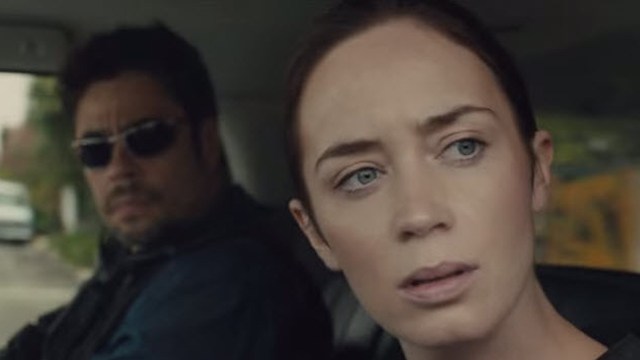
When FBI hostage specialist Kate Macer (Emily Blunt) is called south of the American boarder under false pretenses by CIA man Matt Graver (Josh Brolin), she soon finds herself swept up in a daring but morally bankrupt mission to bring down the leaders of a prominent drug cartel. Will she, and can anyone, stay on the straight and narrow when facing such corruption and fighting an unwinnable war?

The film presents Mexico in imposing aerial panoramas as a vast, sleeping beast criss-crossed with throbbing veins of traffic. We are gifted with one of the most Roger Deakins-y shots of all time when Matt’s tactical team is crisply highlighted in silhouette against a sanguine sunset. Deakins’ photography becomes more low-key and naturalistic when on the ground, and is usually from Kate’s perspective, focussing on little details she notices about those around her and what they say about their characters – Matt’s wearing of flip-flops at a tactical meeting, Alejandro’s twitching hand as he takes a power nap. Director Denis Villeneuve shows a lot of skill at staging the film’s gritty set pieces, most prominently an operation taking place in the dead of night that is filmed for real with thermal imaging cameras. Though he could doubtless have handled something if larger scale, he keeps these beats brief and to the point, never egregious. The night op scene aside, the explosions and gunshots never come from where you expect, and this, along with Jóhann Jóhannsson’s eerie score makes you permanently on edge.

The cast really are at the top of their game. Emily Blunt finds the right balance between vulnerability and steely determination as Kate begins to realise she is, and always will be, the only person on this team who wants to do the “right” thing. Benicio Del Toro is gifted one of his meatiest roles in years, and he makes Alejandro a fascinating, chilling enigma of a character, someone with far more justification to do the terrible things he does than Matt, who’s just a jerk being jerky (something Brolin has a lot of fun conveying). It’s great to see young British talent breaking Hollywood, and Daniel Kaluuya equips himself admirably here. What’s not great is seeing Jon Bernthal playing exactly the same character he always plays.

We see horrors for sure, but what we don’t see is, as always far more disturbing – just what will Alejandro do to this man that will require an entire water cooler bottle to wash the evidence away? Other things we don’t witness, being kept out of the loop on some key story points keep us in the dark as much as Kate is. The state of bewilderment the tricksy plot often puts us in seems entirely intentional.

There are periods of nigh-on unbearable tension throughout, but of particular note is a long convoy ride through Cartel-controlled territory, with Kate catching glimpses of unspeakable things out of her window, and a stylish Western-style confrontation over a dinner table that forms the film’s climax.

The film ends with the innocents the war on drugs impacts upon. It’s a somewhat heavy-handed image, but powerful nonetheless. Though much of the film is from an American perspective, cutting back to a few key characters caught at the centre of the War on Drugs throughout brings the message home, makes it clear that this is not an American issue no matter how much the US Government might want to play world police. Some might find the loose ends left over unsatisfying, but I always feel stories set here and now and which comment on current events would be selling their audience short if they tried to tie things in a bow. Sicario is just really well crafted, thrilling, relevant, and not quite what you’d expect. SSP
Posted in Film, Film Review | Tagged , , , , , , , , , , , | 6 Comments

Review: Macbeth (2015)

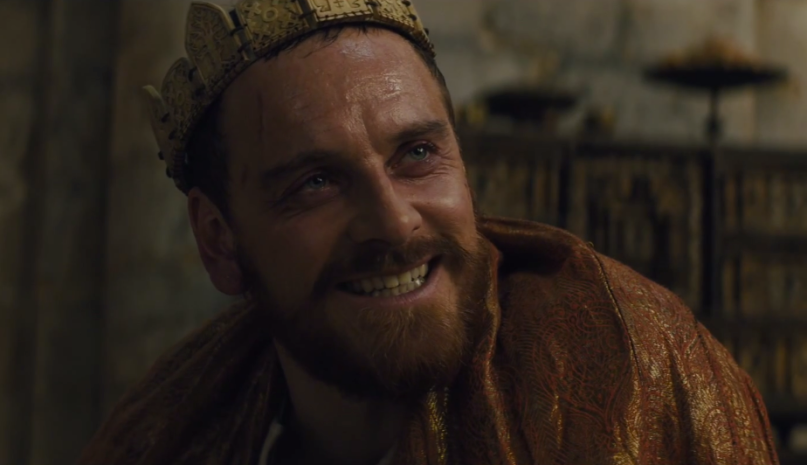
michael-fassbender-macbeth

Everyone knows the Scottish Play. Featuring characters and dialogue iconic enough to ingrain itself in culture the world over, you need very little help to make this story memorable. But director Justin Kurzel doesn’t do anything by halves, and has brought everything he can to MACBETH, only his second feature following the fantastic but cripplingly depressing SNOWTOWN. The end result is rather spectacular.

Hail Macbeth! After winning a great victory for his king, Macbeth (Michael Fassbender) is told by a trio a witches that he is destined to rule Scotland. Spurred on by his Lady (Marion Cotillard), Macbeth murders King Duncan (David Thewlis) and claims what was foretold. This act may sate his ambition, but it does not quiet Macbeth’s mind, his paranoia causing him to hallucinate spectres and rule his new kingdom with an iron fist. 

Justin Kurzel is an aesthetically accomplished director who uses imposing frost and fog, apocalyptic fire and ash and dazzling shafts of light to vividly illustrate this well-worn story. Macbeth showcases the most desolate yet impressive scenery Scotland has to offer, occasionally enhancing the light or skyline to set the mood. The fog, incredibly, is real though – the crew apparently lost Marion Cotillard in it at one point.

Kurzel also uses time, sound and music (courtesy of Jed Kurzel) to great effect to hammer home Macbeth’s deteriorating mental state, with arty and effectively jarring jump-cuts becoming more frequent as the titular monarch’s mind unravels. The opening battle of the film is brutal but staged elegantly with slow motion and freeze-frames emphasising what war can do to a man.

For all its prettiness and layered themes, the film lives or dies on the performance of the actor playing Macbeth. Thankfully, Fassbender has rarely been better suited to a role, with his permanently haunted eyes and increasingly mentally and emotionally erratic behaviour as his madness takes hold. His gentle amusement with which he plays “Is this a dagger I see before me?” contrasted with the bouncing-off-the-walls mania as he tries to banish the spirit of a dead friend with a banquet hall of onlookers witnessing, terrified. These moments from the play are familiar, but refreshed, given new life. Cotillard is plays down what can be a bit of a pantomime villain role in Lady Macbeth. She’s as nuanced and subtle as Fassbender is flamboyant, and completely inhabits the inner conflict of the character setting her man on a path that, try as she might, she is unable to halt.

Paddy Considine and Sean Harris are as consistently excellent as ever as a pained Banquo and an unhinged Macduff respectively, and David Thewlis rounds out the cast and gives weight to the just King Duncan. The portrayal of the witches here is pretty interesting. There’s three of them as always (Seylan Baxter, Lynn Kennedy and Kayla Fallon) but they’ve been cast younger, and two of them are shown to have children. I like this acknowledgement that Medieval witches weren’t sinister spinsters but ordinary women with families and a specific and useful set of skills. Fear not, Shakespeare purists – though more realistic in their representation, the witches still fulfil their primary purpose in the play of spouting prophecy and foreshadowing characters’ deaths!

I would have found it less distracting if Marion Cotillard used her own Parisian accent rather than attempting Received Pronunciation. If you can’t do a Scottish accent, fair enough, don’t, but why bother with something else that doesn’t sound quite right? I’ll admit I’m not one who finds Shakespearean English easy to follow, but it certainly sounds clearer to me in Scottish accents as the rhythm fits so well.

It’s a lean, no-nonsense and almost pacey adaptation of the Bard’s tragedy. A lesser director might have been tempted to chuck in a second battle towards the end of the film when the heir apparent to the throne of Scotland, Malcolm (the uninspiring Jack Renor) turns up, but Kurzel smartly sidesteps this and just shows the armies forming their battle lines and leaves it to Macbeth deciding all in a much more personal fashion. If I’m really picky, I don’t think a (however brief) opening crawl was needed to contextualise the story. We know it’s set in Scotland, we’re about to see a battle and betrayal so we don’t need to be forewarned. This does result in a great dramatic wipe into our hellish establishing shot.

Justin Kurzel’s Macbeth is aesthetically and aurally distinctive, faithful to the shape of Shakespeare’s text but not opposed to tweaking elements where needed. Even for those not versed in theatre or archaic sentence structure, the uncompromising brutality of the story, the thoughtful and complex performances and the delicious darkness of the characters and their journeys towards inevitable damnation will make this one a real crowd-pleaser. SSP

Posted in Film, Film Review | Tagged , , , , , , , , , , , , , , , , , | 1 Comment

Playing Catchup: The Paul Thomas Anderson Edition

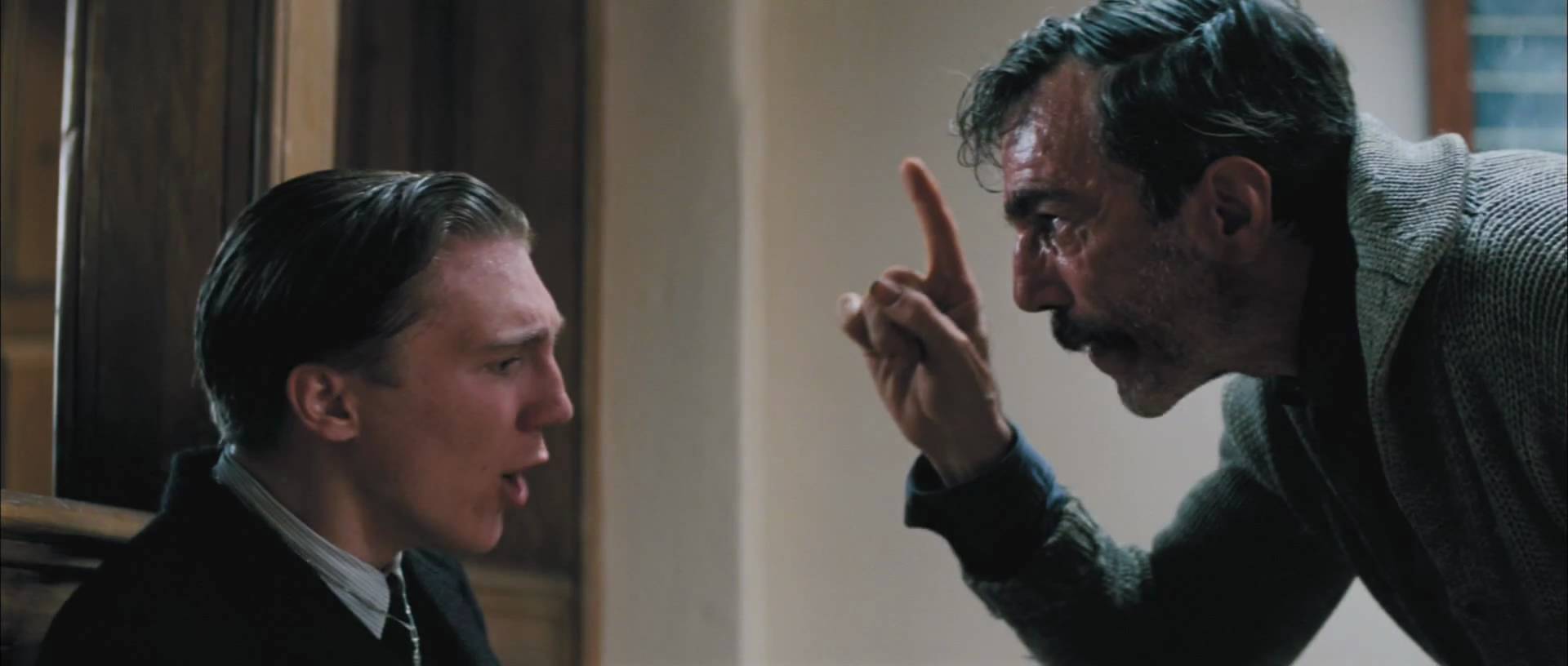
there will be blood

It’s that time again – time to fill in a few holes in my film knowledge. Until a couple of months ago, my knowledge of Paul Thomas Anderson, considered my many critics to be the greatest auteur working today, was limited. This wasn’t a conscious, choice, I’d just not gotten round to watching much of Anderson’s oeuvre. I had seen THE MASTER, which I didn’t much care for, and INHERENT VICE, which I enjoyed but didn’t understand. Now I’ve watched two of his most highly regarded works (I’ve still got to find time for MAGNOLIA), and this is what I made of them.

BOOGIE NIGHTS 1997) A porn industry melodrama that’s not really about the porn industry. BOOGIE NIGHTS has one of the best ensemble casts of the last 20 years – Mark Wahlberg, Heather Graham, Julianne Moore, Philip Seymour Hoffman, Burt Reynolds, William H Macey, Alfred Molina, Don Cheadle – some filmmakers would do unspeakable things to recruit such a talented lineup. People forget that Wahlberg is often a really good actor, none more earnest and natural, and Eddie/Dirk Diggler’s journey from a nobody with a dream to a narcissistic ass, encountering on his way people who are all broken in one way or another, is a compelling one. The confidence in which Anderson styles his breakout film, the conviction with which he discusses the somewhat controversial subject matter not to mention how guides the story from a cheeky romp to a black exploration of the ego is to be marveled at.

THERE WILL BE BLOOD (2007) A few films further on and Anderson put together this bona fide masterpiece. His oil epic is grand and gritty and hard-hitting, but also unexpectedly funny and very human. There’s some nice juxtapositions between actual religion and money as a religion, and he opens up a very relevant debate about which holds the real power in the hearts of men. Jonny Greenwood’s score builds from rhythmic to oppressive and back again, adding to the story but stopping short of becoming unenjoyable as a piece of music (which I found with The Master). Probably a good starting point for those uninitiated to Anderson’s body for work – yes it’s long (they’re all long), but it’s got imagery that wouldn’t look out of place in a disaster blockbuster in the first half and weighty drama galore in the second, all held together by a magnetic and terrifying Daniel Day Lewis. Plus it ends on a gag as black as the oil that courses through Daniel Plainview’s veins.

Most pleased I’ve now seen: There Will Be Blood (because now I see why it’s considered one of the best films of the last decade, and it wasn’t anywhere near as depressing as I feared). SSP

Posted in Film, Film Feature, Film Review | Tagged , , , , , , , , , , , , , , , , , , | 1 Comment

Series Retrospective: Pirates of the Caribbean

still-of-johnny-depp-and-orlando-bloom-in-pirates-of-the-caribbean -svarta-pärlans-förbannelse-(2003)-large-picture

I haven’t done one of these for a while, I don’t think since the first year of this blog. This is the segment where I pick apart a film series and see how well it’s aged, and how well it hasn’t. Since I’ve re-watched them all again pretty recently, I thought this time I’d take a look at the Disney juggernaut that is PIRATES OF THE CARIBBEAN. There’s honestly not an instalment of the franchise so far that I actually dislike, but there’s certainly superior and inferior movies within it, certainly a couple stumble more than others. I can’t say anyone really needs another instalment either, but without further ado…

THE CURSE OF THE BLACK PEARL (2003) Back when it was merely an experiment in swashbuckling, testing the waters for if there was still an audience appetite for this sort of fare, Pirates of the Caribbean was an exciting prospect. Who honestly expected a movie (however loosely) based on a theme park ride to be so satisfying? Disney knew, and boy, have they milked this cow for all she’s worth. CURSE OF THE BLACK PEARL had momentum, great action and an endearingly cheeky tone all steered by Johnny Depp’s Keith Richards impression and Geoffrey Rush’s boo-hiss villain. Even Keira Knightley and Orlando Bloom, blandly written or not were (just about) more sweet than annoying at this stage. It was an old-fashioned romp with a supernatural twist, and different to almost every other summer movie. Sadly it’s spawned many a poor imitation since.

DEAD MAN’S CHEST (2006) It’s undoubtedly my favourite of the series. Davy Jones and his coral-infested crew of the Flying Dutchman are wonderfully realised, and Nighy’s performance as Jones married with ILM’s effects work helps to make him the most memorable and arguably the most sympathetic character of the series, the physical embodiment of heartbreak with a squid beard. The Pirates mythology is expanded just enough to keep things fresh, with a paranoid Jack trying to escape his past and cheat death at the expense of his crew (and let’s be honest, much of the supporting cast’s screentime), all before the plot fell overboard in part three. It’s an ambitious, proper fantasy blockbuster with a good twist at the climax, plenty of wit and a great setup for the concluding chapter.

AT WORLD’S END (2007) Extraneous and over-stuffed it may be, but there is still a lot to like about AT WORLD’S END. Yes, you could probably halve (at least) the time Jack pisses about in limbo (this is where Depp started to become more irritating than charming). The double-negative dialogue also becomes parodic, Chow Yun-Fat might as well not have turned up, and none of the key plot points hold up of you think about them too much. But the most expensive action scene as of 2007 is still stunning (that glorious camera sweep around Jack and Davy Jones atop the mast alone…), plus Hans Zimmer delivers one of his richest and most bombastic scores and the series’ key villains are offed in fine, poetic fashion. While the villains may go out well, but it’s criminal that Tom Hollander’s Governor Beckett, the most nuanced and interesting Pirates character so far, was given so little to do here.

ON STRANGER TIDES (2011) All of a sudden, we’re in a Hammer movie! Ian McShane is genuinely fabulous as Blackbeard, over-acting and out-acting and everyone who dares to share the screen with him. Depp’s Cap’n Jack is wearing very thin at this point, and so is Rush as a newly bewigged privateer Barbosa. The mermaids are great, contributing the best – if too brief – action scene in the film (they’re scaly shark-vampires) even if the relationship between Philip the priest (pre-HUNGER GAMES Sam Clafin) and Serena the mermaid (the brilliantly named Astrid Bergès-Frisbey) is even more dead-eyed and wet than Will and Elizabeth’s became in the previous trilogy. Though it’s still not quite a chore to sit through the movies, but there is a lot more uncomfortable shifting of your weight and a lot of filler, even here in the shortest trip to the Caribbean so far.

Who knows to what extent the next movie will be artificially inflated, but hopefully there will be something worth seeing in it too, or at least something other than Johnny Depp mugging. SSP

Posted in Film, Film Feature | Tagged , , , , , , , , , , , , , , , , , , , , , , , , , | 1 Comment

Review: A Little Chaos (2014/15)

a little chaos

A LITTLE CHAOS is a plumb job for Alan Rickman, requiring him to shoot some pretty people in pretty surroundings, then being able to orate and flounce around to his heart’s content when he himself occasionally appears on screen. We are treated to the unexpected joy in hearing him say the word “macaroon”. Sadly he is also responsible for a clumsy and awkward little scene where a mourning King Louis takes an afternoon off to whinge about builders and eat pears.

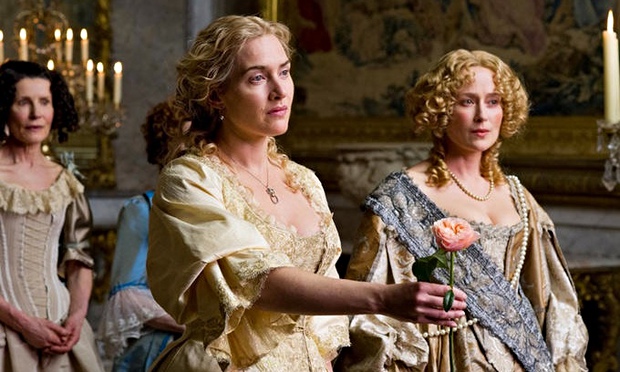
It is 1682, and King Louis XIV (Alan Rickman) commissions a lavish addition to his gardens at Versailles to mark the occasion of his holding court there the following year. For this most important of tasks, the King’s landscape designer André Le Nôtre (Matthias Schoenaerts) trusts in a female designer unknown at court, Sabine De Barra (Kate Winslet), inspired by her sheer creativity and the resolute resistance to order she shows in her work.

Ooo, she moved some topiary in her potential employer’s garden off-centre, how chaotic! Despite this clunky introduction to Sabine’s approach to her art, the film does flag up the importance of not imposing order on everything, lest you drain it of life.

Sabine is a lady, but only just. She’s still well out of her depth mingling with those at court. There’s a lovely moment when she is invited to a reception with the King at the Louvre, only to flee at the withering stare of courtiers as she pokes her head round the door. She likes to do everything she can in her work by her own hand and is not just accomplished as a designer of pretty things but also has an understanding of engineering. I liked how practical she is, though it might have been a bit much to show her try to assemble a performance arena almost single-handedly when her workforce deserts her, and later struggling alone with a sluice gate in a howling storm. There’s rolling you sleeves up and getting stuck in, then there’s silliness.

I don’t think that Sabine necessarily needed the past sob story (the set up to which, in flashback, is unfortunately hilarious) to give her motivation – can’t a woman just want to be an artist? Also did this story really need an antagonist working against her, and did it have to be yet another baddie played by Helen McCrory? Both of these additions just smack of artificially pumped-up jeopardy that imbalances the film as a whole.

Stanley Tucci, as always, is a scene-stealer as the King’s high-camp younger brother, self-described, and somewhat understating it as “the other end of the fashion scale” to everyone else (he’s even had some dainty little fabric shoe covers made for the rare occasion when he has to walk through the countryside).

It’s a nice touch that McCrory’s Madame Le Nôtre holds such power over her husband André. He has the fame, the status as an accomplished garden designer and gentleman, but he does not have the necessary skill required to make waves in the right circles. He needs his wife to charm, to speak to the right people and keep his name alive at court otherwise he is nothing.

Sabine De Barra may a fictional character, but who’s  to say a woman didn’t have an idea that inspired improvements to the gardens of Versailles? History being male-dominated as it is, it would be unlikely to have been recorded if this were the case, so we can forgive Rickman and co-writers Alison Deegan and Jeremy Brock a little artistic license to make their point.

I loved the details in both the grand and the more everyday settings – the peeling paint, the grime and the dust on windows, paper and implements for eating and writing strewn around every surface, the bizarre methods of European royal autopsies. It all looks lived in and helps to sell the wider world this story is part of.

Gardening as an “act of faith”, always striving to “recreate Eden” is a lovely idea, but one that needs to be handled, narratively speaking, with more delicacy, like you were tending roses, not chopping wood. The film’s pace is leisurely, which is fine, but it feels slow because the interlinking scenes between key moments are inconsequential. We needed more moments of beautiful stillness or a more profound script to make A Little Chaos memorable, as well as a far less awful CG-transition to go out on. SSP

Posted in Film, Film Review | Tagged , , , , , , , , , , | 2 Comments

Review: An Inspector Calls (2015)

an-inspector-calls-featured

This review contains spoilers for JB Priestley’s 1945 play, as well as subsequent film and TV adaptations.

For the most part, the BBC’s TV adaptation of JB Priestley’s classic AN INSPECTOR CALLS, broadcast last weekend, is polished, if conventional. The left-wing, anti-capitalist undertones of the play have never been more relevant to British politics and society and the addition of a feminist slant appropriate for a modern audience courtesy of screenwriter Helen Edmundson is a welcome one. It’s well performed across the board (unsurprising given it stars David Thewlis, Ken Stott and Miranda Richardson) and it is a handsomely put together by director Aisling Walsh. Taking the first half of the adaptation in isolation, it would be good, but unmemorable. During its final act though, this adaptation becomes something pretty special.

The an engagement party held by the wealthy mill-owning Birling family is interrupted by the sudden arrival of Inspector Goole (David Thewlis). The Inspector questions the Birlings one by one over the suicide of a young woman, Eva Smith (Sophie Rundall), and despite the family’s denials and pleas of ignorance he seems to hold each and every one of them responsible one way or another.  

Pleasingly this version of An Inspector Calls restores Inspector Goole’s powerful final monolgue that was bafflingly absent from the 1954 film. The stage play ends shortly after the Inspector’s final flourish, leaving the audience with their thoughts and the Birlings with their squirming consciences. It is at this point that Edmundson’s TV adaptation strikes, when we are at our most vulnerable state. Sophie Rundle is a dignified, heartbreaking Eva Smith/Daisy Renton and David Thewlis as the Inspector, her sad guardian angel, both performances working in harmony to reduce the viewer to an emotional wreck during the crescendo of pathos at the end of the piece. Never before have the future echos/time-travel elements of Priestley’s story been handled so elegantly and so poignantly.

The BBC’s adaptation progresses much as the 1950s Guy Hamilton/Alistair Sim film, particularly in terms of narrative structure. It’s not taking place on stage, so it expands beyond the limitations of a chamber piece. Rather than making extensive use of studio backlots it relies on the genuine and tactile Victorian background of Saltaire, West Yorkshire (JB Priestley’s backyard) where the flashbacks and connective tissue scenes were all filmed. Much like Hamilton’s film, we experience the tragedy of Eva Smith through the guilt of the Birling family as they recollect their parts in her eventual destruction. Unlike the film, we actually witness first-hand her graphic demise. At this point time itself appears to warp, giving way to the sheer tragedy of this innocent, unlucky and mistreated young girl’s fate. As he appears in the morgue, the look in Thewlis’ Inspector’s eyes – the perfect mixture of sadness and rage – neatly sums this sociopolitical fable up.

I wouldn’t quite rate the BBC’s take on An Inspector Calls quite as highly as the stage production overseen by Stephen Daldry that I saw a few years back, taking place as it did in an impressive, and oppressive, giant doll’s house. For me it certainly has higher impact and is more faithful to Priestley’s vision than the Sim film, as iconic as that adaptation is considered. I’d enthusiastically recommend  seeking this TV movie out, enjoy, think, and of course make sure you catch An Inspector Calls the next time it’s on a stage near you. SSP

Posted in Film, Film Review, Television, Theatre | Tagged , , , , , , , , , , , , , , , | Leave a comment

Review: Legend (2015)

legend5

The first time we see Ron Kray, he’s talking animatedly about taking another man’s sausage. Over the two uneasy hours we spend with him he progresses to claiming to be able to see the future, and doesn’t seem to be joking. From the start, we’re wary of what he is capable of, that he could boil over at any moment, but simultaneously we struggle not to laugh. He’d be a spoof character if Tom Hardy’s performances as Ron and his slick, charming and calculating twin Reggie wasn’t so well researched. Brian Helgeland’s LEGEND isn’t celebrating this despicable pair of crime lords as some have surmised from the title, but rather acknowledging the power and influence they held, the East End mythology they are entwined with.

By the early 1960s the Kray Twins (Tom Hardy) ruled a good portion of London’s East End through charm and intimidation. Reggie is a smooth talker who knows everyone’s names and which buttons to push. His volatile brother Ron, fresh out of the asylum and much more of a blunt instrument, scares everyone in his old neighbourhood witless, particularly when Reggie isn’t around to keep him in check. Reggie begins a relationship with starstruck local girl Frances (Emily Browning) just as his enemies, both criminal and law enforcers, begin to close in.

Needless to say Tom Hardy and Tom Hardy are phenomenal. I don’t think any other actor working today plays charismatic scumbags quite like him. Watch his other other showy sort-of-biopic BRONSON for further evidence of this if you haven’t already. In Legend, he may be the same performer, but he might as well be two different actors for the range of different quirks he imbues the twins with. Reggie is strutting, streetwise and beguiling, a reluctant gangster who prefers the euphemism “club owner”. The deceptively attractive Kray is still capable of stark brutality when required, of course. Ron is a hulking gorilla, proud of his criminal ability and willing to flaunt it along with his homosexuality and his cod-philosophical outlook on life. His instability makes him a threat to friend and enemy alike – even Reggie is a little scared of his brother. No character in recent memory is as jarringly equally terrifying and hilarious as Hardy’s Ron Kray.

I’m still undecided whether or not Emily Browning is actually a good actor, but she’s decent here as Reggie’s beloved Frances and the story’s (mostly unnecessary) narrator. Her commentary on events that unfold is over-explanatory and brings you out of the story, but it does serve a purpose eventually. The rest of the cast are filled out with character actors who are either solid (Paul Bettany as an over-the-top rival gangster) or completely wasted (poor Christopher Eccleston playing the cop on the Krays’ tail).

When the film shifts focus away from the Krays it stumbles, neither giving the supporting cast of talented actors a whole lot to do, nor adding much to the story at large. I don’t know how much was cut from scenes exploring the Met’s investigation into the Krays (it wouldn’t be the first time a character played by Eccleston has suffered in the edit) but as it appears in the film, the investigation begins, then is called off, then they get ’em. Three scenes, that’s it. There’s also a storyline involving American gangsters offering the Krays an alliance that goes absolutely nowhere. You don’t really mind because Hardy’s scenes that make up the majority of the runtime are so riveting, but it is an issue.

The very best films about amorality don’t need someone frowning in the corner at all the questionable behaviour on display. Audiences, on the whole, are not idiots. Much like Martin Scorsese did in THE WOLF OF WALL STREET, Brian Helgeland lets the Krays’ monstrous actions speak for themselves. Look at the scene where the Krays meet in a “neutral” pub for a summit with their gangland rivals. Quickly realising they’ve been set up, Ron storms out insulted when he realises the thugs opposing them don’t have guns. As Reggie quips and kills time, producing brass knuckle-dusters to make a point, Ron re-appears over their foes’ shoulders, horn-rimmed glasses removed, wielding a couple of hammers and ready for action. The scene that follows may be sickening, but it’s visceral, flawlessly choreographed and makes concrete that this pair are a force to be reckoned with.

Helgeland and Hardy have created a high-impact black comic fable. It’s imbalanced in the Krays’ favour in terms of coverage, meaning that other players in the cast miss out, but this just adds to the central pair’s allure. For the East End of London, the twins were a black hole dragging all in to their oblivion. The damage they did and the people they hurt is their legend and their legacy. SSP

Posted in Film, Film Review | Tagged , , , , , , , , , , , , , , , | Leave a comment

Review Embargoes: A Catch-22 for All Involved

Fourbar

To embargo or not to embargo? That is the question. Whether gagging journalists’ criticisms pre-release or simply not showing anyone your product before the big day, it’s a major concern for film studios and their flagship blockbuster products, not to mention their audiences.

Let’s not mince words here, an embargo is rarely a sign of something glorious. Josh Trank’s FANTASTIC FOUR had a review embargo, for all the good it did. With Fox bafflingly gutting the movie before abandoning it by the wayside late in the day, their only real hope for a decent return was to dupe enough viewers into the cinema before word spread. The majority of JJ Abrams projects – CLOVERFIELD, STAR TREK, SUPER 8 – consciously do the same and you can put money on him clinging to the same strategy for STAR WARS, whether it’s turned out good or bad. Most horror films aren’t screened for critics prior to release, though this is arguably more to do with the perceived critical disdain for the modern genre as a whole. Marvel, on the other hand, don’t seem to mind if word gets out early, which either indicates unshakable confidence in their product or a certain arrogance. Marvel do have the small matter of most of their films being released in Europe before they are stateside due to Disney’s distribution deals, so you can’t imagine even the world’s most powerful studio could silence or sue every critic across the pond until the home release comes around.

While prominent figures in the industry like Abrams have argued for a “mystery box” approach to film marketing (the admirable aim of preserving the surprise of viewing the film for the first time by revealing as little as possible ore-release), you’ve also got to understand that journalists have a job to do. Yes, they shouldn’t say in their early review that *sigh* SPOILER Darth Vader is Luke Skywalker’s father or that Kevin Spacey is Keyser Soze, or more recently and less relevant that Benedict Cumberbatch is actually Khan, but they should be able to inform their readers/viewers and, since they often see films earlier than most, they should be free to write a detailed and well-argued review prior to public release.

The theory behind review embargoes is to get bums on seats before bad word of mouth spreads, to recoup as much of your failed movie as possible in a short space of time. But surely you’re shooting yourself in the foot if an embargo is nearly always the sign that a film studio has no faith in a movie, that it is unable to survive on its own merits. Just releasing a bad movie, especially one part of an established franchise with a built-in audience would probably still result in breaking even. After all, there are plenty of audience members out there who say, “who cares what the critics think?”

Personally, I try not to read too many reviews of films before I see them simply because I write my own and don’t want my opinion too coloured. As I’m not a professional, I’m seeing movies at the same time as everyone else. The vast majority of viewers have no such restrictions and should actively seek out as many different reviews as possible to make an informed choice of which film to pay to see. If they are unable to access any information beyond studio-sanctioned PR before they’re buying a ticket, how fair is that?

I know we don’t live in an ideal world and dirty marketing tricks are very much part of the Hollywood film business, but film studios really need to stop trying to blind-side their audiences and just make good movies. That way the futile act of having review embargoes will die all by itself. To embargo or not embargo? It’s not a question really. SSP

Posted in Film, Film Comment | Tagged , , , , , , , , , , , , , , | Leave a comment

Review: Inherent Vice (2014)

inherent vice

Usually, a film’s plot or lack thereof is something I can rant on for hours about. Usually, if the plot doesn’t work, the film doesn’t work. That said, this is not a usual film, and I can say with absolute confidence that the plot of INHERENT VICE does not matter. Don’t get me wrong, I tried to follow it, but soon realised that knowing what was going on wasn’t actually adding to the viewing experience. It’s one of the most plotless plotty films around and all the better for it.

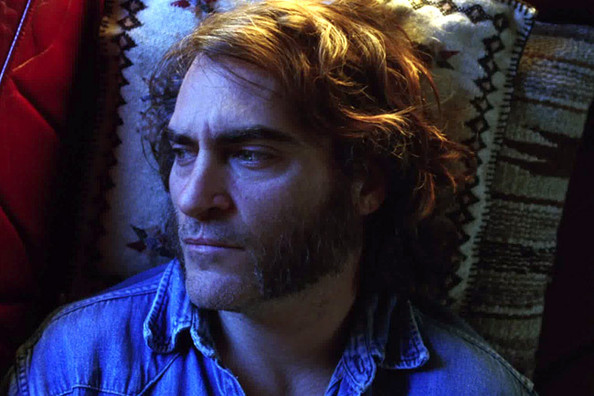
Drug-addled PI “Doc” Sportello (Joaquin Phoenix) takes on a trio of cases from unusual clients, all the while with obsessive Detective “Bigfoot” Bjornsen (Josh Brolin) breathing down his neck, and his ex Shasta (Katherine Waterston) reappearing on the scene with clear ulterior motives. As the plot strands converge and the truth gets increasingly lost in Doc’s inebriated haze, what has and hasn’t happened, as well as who was ultimately responsible for what becomes increasingly unclear. 

Inherent Vice ends up being one of, if not the, funniest films of 2014. Through Doc’s drug-blurred perspective we witness a cast of eccentrics stumbling through life and looking hilarious while they do it. Phoenix has the perfect part-transcendent, part-comatose stare, you can just imagine what Doc’s personal hygiene routine doesn’t include, and he makes for a really good comic foil to the nonsensical plot. Phoenix flexes comic muscles we never really knew he had, proving himself a master of both a naturalistic incomprehensible drawl and exaggerated pratfalls. Who else but Paul Thomas Anderson would see his comic potential, especially after the harrowing THE MASTER?

Brolin too has a lot of fun as Bigfoot, another very amusing character, but one who has absolutely no inkling that he’s funny. I don’t think I’ve laughed harder this year than I did at how this hard man eats what I think was a chocolate-covered banana (somehow keeping a straight face) while ferrying Doc back to the police station. Katherine Waterston plays Shasta as magnetic and enigmatic enough to rival any noir femme fatale, a character who seems to exist on an entirely different plane to everybody else. She’s almost supernaturally in control of herself in this world of the lucky and the foolish. Benicio Del Toro, Owen Wilson and Reese Witherspoon turn up in colourful fleeting roles seemingly just so they can tick “worked with Paul Thomas Anderson” off their bucket lists.

The film reminded me most of Robert Altman’s THE LONG GOODBYE, only our gumshoe is more inept and addled, but still actually seems to care more about solving the mystery at hand. Elliot Gould’s take on Marlowe, as great as it was, never really seemed to be all that bothered if he got to the bottom of his case, it was all “OK with me”. Doc is handicapped by his substance abuse and the general battiness and unpredictability of pretty much everyone he encounters, but he ultimately wants to succeed, to do his job well. Of course you could actually follow what was going on in the inky blackness of The Long Goodbye. Even Inherent Vice’s stoner-noir cousin THE BIG LEBOWSKI looks positively coherent in comparison, but the individual disjointed scenes in Anderson’s film are arguably more vivid and memorable than Altman’s or the Coens’. All three noirish efforts share an aim to deconstruct the nebulous idea (not genre) that is film noir and its common conventions. Boiling it down, it’s all about evoking a feeling – whether comic, darker, or a bit of both – of unease.

Paul Thomas Anderson doesn’t do short movies. His films are an experience, pure and simple, and appropriately enough, his latest seems to be constantly asking us, “are you experienced?” Inherent Vice is a trip in every sense of the word, and while you might feel a little fazed, dazed, and fizzled out at its conclusion, hopefully you will feel it was a worthwhile trip. It’s certainly the most cheerful, outright enjoyable thing in Anderson’s filmography, and as long as you don’t require coherency and neat resolution in your stories, it’s likely it’s a film that will stay with you for the foreseeable future. It’ll stay with me, even if I don’t entirely remember what, if anything, was solved in the end. SSP

Posted in Film, Film Review | Tagged , , , , , , , , , , , , , , , , , , , | 1 Comment