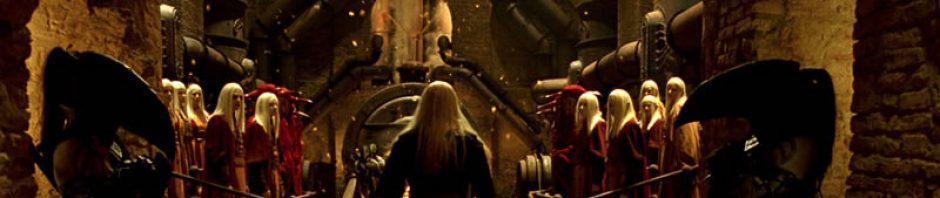
How can you make a Predator, an alien big game hunter who always has technological superiority on his side a compelling protagonist? You make him the shame of his family with a serious chip on his shoulder, strip him of his toys and pair him with a chatty android. It’s so simple! Yautja hunter-in-training Dek (Dimitrius Schuster-Koloamatangi) lands on a planet with death by flora or fauna around every corner and reluctantly teams up with a legless Weylend-Yutani research Android (Elle Fanning) for survival. On balance, BADLANDS probably isn’t quite as refreshing and perfectly-conceived as Dan Trachtenberg’s previous Predator movies, PREY, and KILLER OF KILLERS but it’s still propulsive, the alien designs are cool and the action hugely creative. The mismatched dynamic between Dek and Thia is also a joy, their back-and-forth punctuating a splattery alien quest movie and providing some much-needed heart. Bring on the next one. SSP
The Bride! (2026) Review
Sam’s Oscar Best Picture Catch-up
Trainspotting (1996) 30th Anniversary Review
Looking Back and Looking Forward: 2025
Making movies certainly never gets any easier. Arguably the industry has never faced as many challenges as it currently is just to survive.
Rich people wanting to get richer no matter the cost, powerful people quashing freedom of expression and the disenfranchised having a voice, and a combination of both resulting in monopolies diluting creativity, consumer choice and access to art that actually says something about the world.
Then there’s A.I., a tool that was supposed to reduce monotonous, repetitive tasks and enhance our ability to perform more complex processes in science and medicine and instead it’s being used to steal art, kill artists’ jobs and open the floodgates to a tsunami of pointless copy-and-paste slop. Still, somehow film endures (for now).
Before my Top 20 of 2025, here are my favourite individual scenes from last year.
Top Scenes of 2025:
THE FANTASTIC FOUR: FIRST STEPS – Wormhole Escape
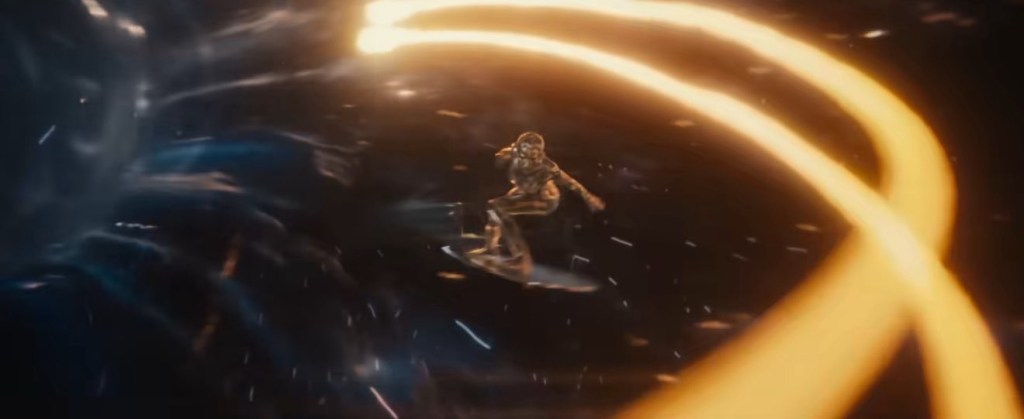
The Fantastic Four flee the world-eating space god Galactus through a wormhole, and his seemingly invulnerable herald the Silver Surfer (Julia Garner) follows, while on board their ship Sue (Vanessa Kirby) has gone into labour. This is the kind of thrilling scene fans of the Cosmic Marvel universe have been waiting for decades to see – pulpy, emotionally heightened and visually eye-popping.
THE LIFE OF CHUCK – Street Dance
Seemingly ordinary accountant Chuck Krantz (Tom Hiddleston) walks by a drumming busker (Taylor Gordon), then stops, starts tapping his feet and breaks into an elaborate dance with a partner (Annalise Basso). This is one of the most eye-catching big screen musical scenes for years, ten minutes of pure, unadulterated freedom and joy that builds complexity and momentum perfectly in time to the rhythm of the drums.
MISSION: IMPOSSIBLE – THE FINAL RECKONING – Sevastopol Flip
Ethan Hunt (Tom Cruise) searches for a weapon to fight A.I. antagonist the Entity in a Russian submarine trapped under Arctic ice, before the whole thing starts rolling with him inside it. This is an all-timer of a Mission stunt, going from creeping claustrophobia to sheer visceral terror as Ethan navigates the debris-strewn flooded corridors before gravity inverts and throws him from one wall to another.
ONE BATTLE AFTER ANOTHER – Road’s Eye View
As past-it revolutionary Bob (Leonardo DiCaprio) closes in on the people who kidnapped his daughter Willa (Chase Infinity) she has already made her escape with her captors in hot pursuit. Everything comes to a head in a three-way car chase on a winding desert highway, all strikingly filmed from cameras placed under the vehicles, the twisting undulating roads hypnotic as tension in the scene steadily builds.
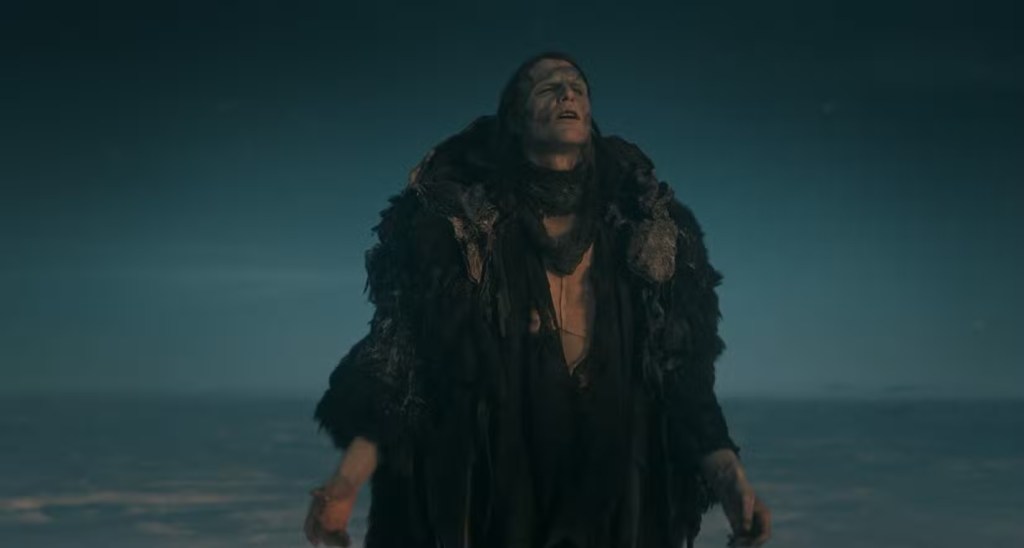
NOSFERATU – Introducing Count Orlock
Solicitor Thomas Hutter (Nicolas Hoult) travels to Transylvania to meet his firm’s rich new client Count Orlock (Bill Skarsgård) but from the moment he steps into his castle he realises something is amiss. Hutter sits at the dining table and eats as Orlock peruses his conveyancing documents, but the count stays in the shadows and seems to move unnaturally around the room. Soon his rumbling voice is close and his hands are on the back of Hutter’s chair and the lawyer realises with abject terror the dark entity he is dealing with.
SINNERS – Music Piercing the Veil
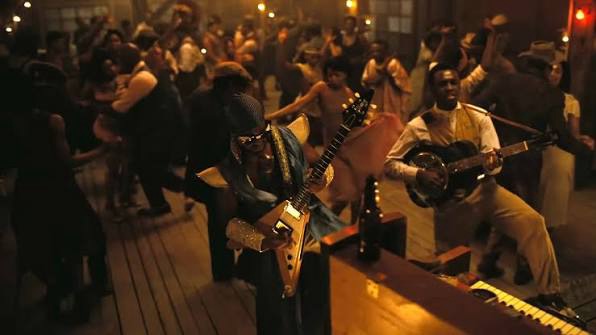
As prodigiously talented musician Sammie (Miles Caton) plucks his guitar and breaks into powerfully reverberating song, the dancing revellers at Smoke and Stack’s (Michael B. Jordan) juke joint get swept up in sonic ecstasy. Such is the musical euphoria that time and reality itself seems to splinter until Sammie is playing alongside a modern DJ, a glam rock guitarist, African tribal drummers and representatives from just about every moment of black art and expression in history, all captured in an impossible IMAX long take from cinematographer Autumn Durald Arkapaw.
SISU: ROAD TO REVENGE – Quiet Carriage
After surviving onslaught after onslaught from bloodthirsty Russians, Finnish killing machine Aatami (Jorma Tommila) navigates a military train to kill the commander at its head (Stephen Lang). When he comes across a carriage full of sleeping soldiers he tries to take the stealthy route, made more challenging by flailing arms and a bottle of vodka dropped and shattered on the floor in front of Aatami’s bare feet.
SORRY, BABY – Roadside Therapy
Young university professor Agnes (Ava Victor) has been through a lot, and at a time of massive change in their life, trauma from the past comes flooding back, resulting in a massive panic attack near a roadside diner. The at-first gruff owner Pete (John Carroll Lynch) in a moment of instinctual kindness manages to calm Agnes down, and they sit on the asphalt together to eat sandwiches and open up about their feelings and their contrasting life stories.
THE UGLY STEPSISTER – Tapeworm
After a whole film of being painfully broken down and remade in an image more acceptable to high society (thin and conventionally pretty) Elvira’s (Lea Myren) ravaged body finally gives in. Either her sister’s encouragement she expels the colossal tapeworm she earlier consumed as an egg, dragging it out of her own mouth metre by metre in one of the most mortifying, nauseating and unforgettable moments of body horror in film history.
28 YEARS LATER – Causeway Chase
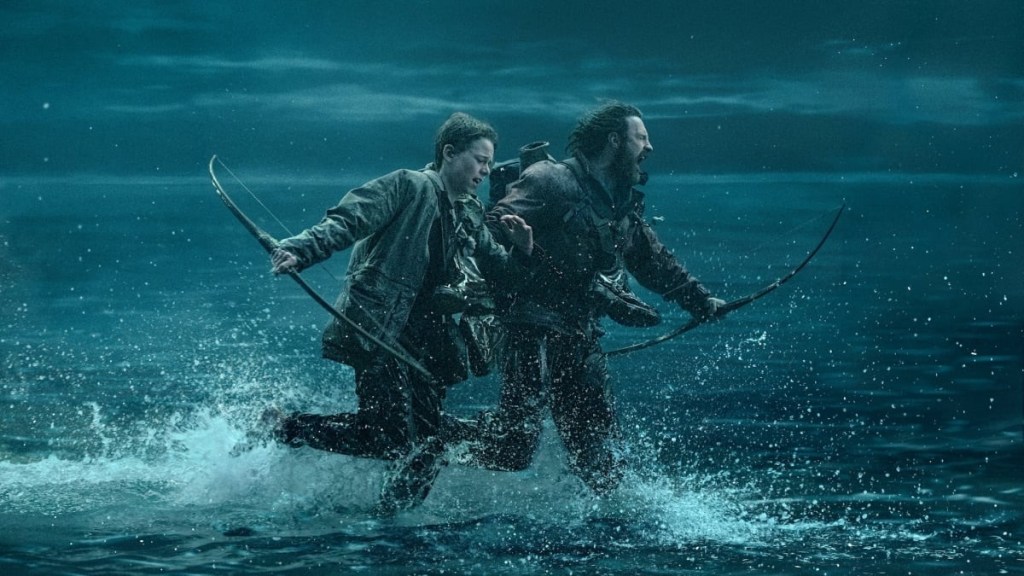
Dad Jamie (Aaron Taylor-Johnson) and son Spike (Alfie Williams) return from an excursion to the infected-swarming British mainland and are forced to flee back home over the half-submerged causeway to their island safe haven. Hot on their heels is a towering alpha infected which has already shrugged off their arrows, relentlessly closing in, and though the chase is happening in the dead of night, the horror is dazzlingly illuminated by aurora borealis overhead.
Alright, enough stalling, what 2025 films (UK release dates) really rocked my world and kept my faith in the art form alive?
Best Films of 2025:
20. 28 YEARS LATER Review in brief here.
19. I’M STILL HERE Review in brief here.
18. THE PHOENICIAN SCHEME Review in brief here.
17. THE LAST SHOWGIRL
16. THE SHROUDS Review in brief here.
15. THE LIFE OF CHUCK
14. THE UGLY STEPSISTER Review in brief here.
13. TRAIN DREAMS
12. BRING HER BACK Review in brief here.
11. ONE BATTLE AFTER ANOTHER Review in brief here.
10. SINNERS Full review here.
9. FRANKENSTEIN Full review here.
8. NOSFERATU Full review here.
7. GIRL WITH THE NEEDLE
6. FLOW
5. MARTY SUPREME
4. LAST SWIM
3. I SWEAR Review here.
2. THE BRUTALIST Review in brief here.
1. SORRY, BABY Review here.
Coming up in 2026, we have new Star Wars, DC and Marvel movies (and a lot is riding on the latter reigniting excitement in the MCU), plus DUNE PART III and hotly-anticipated work from the likes of Christopher Nolan, Steven Spielberg, Ridley Scott, Alejandro G. Iñárritu and Greta Gerwig.
To filmmakers and film lovers everywhere: keep making your art, keep watching, keep fighting. SSP


