The Best Film I’ve Seen This Year: The Way Way Back

THE WAY, WAY BACK

You don’t often see comedies like THE WAY WAY BACK today, and that makes me sad. I’m tired with overblown, excessive, abrasive humour on film.

The Way Way Back, co-written and directed by Jim Rash and Nat Faxon is pretty much the polar opposite of the type of studio comedy movie that makes big money, usually by relying on elaborate comic set pieces (THE HANGOVER, BRIDESMAIDS, TED etc.) – it’s an independent, small-scale, personal and achingly honest tale of growing up. Not just the journey from adolescence to adulthood, either – the grown-ups have a lot of maturing to do too!

We follow Duncan (Liam James) a 14-year-old introvert who’s dragged on holiday with his mother (Toni Collette), her new boyfriend Trent (Steve Carell) over the summer. Duncan just wants to be left to his own devices, but Trent insists on making him join in with the “family fun”, continually belittling and humiliating him in the process. While seeking solitude from his torment, Duncan meets a local slacker Owen (Sam Rockwell) who runs the local, slightly crappy water park, and strikes up a fast friendship with him. The rest of the film is a series of tonally contrasting sequences, with Duncan having a utterly miserable time with Trent and his grating middle-aged friends, or enjoying the liberation the water park offers him, body and soul.

The story is an old one – countless films following shy teens learning to come out of their shell already exist – but they’re rarely as earnest and true to life as this. Born out of a childhood experience of Jim Rash (co-writer/director with Nat Faxon) which is replicated in the movie; when Trent bullies Duncan into rating himself on a scale of 1-10 before crushing his confidence, The Way Way Back always feels real and completely relatable, especially if you’ve had similar experiences growing up. From the very first, hugely uncomfortable (though darkly funny) scene, we’re part of this world. We recognise the situations, and they’re poignant and amusing.

Comparisons have been made to other Independent North American bittersweet comedy dramas of the last decade – LITTLE MISS SUNSHINE, JUNO, NAPOLEON DYNAMITE, AWAY WE GO etc. There’s certainly an element or two of these films in The Way Way Back (notably sharing the cast of Little Miss Sunshine), and I’m sure Rash and Faxon were influenced by them. It’s also obvious that these are the same minds behind the Oscar-winning screenplay for THE DESCENDENTS – the Alexander Payne-directed George Clooney vehicle had moments of extreme darkness but also of incredible hilarity. For every examination of life and loss, you have Clooney flapping down the street in sandals or creepily (and not so subtly) spying on neighbours. The Way Way Back also reminded me of a recent British film – Richard Ayoade’s SUBMARINE, which again follows an awkward, dour teenager struggling to find his place in the world.

The Way Way Back does indeed feel like a tribute to the last decade of a certain kind of comedy film. It also feels like a tribute to another time (though the film’s time setting isn’t concrete), a time when growing up wasn’t better or worse, simpler or more complicated, just different. Nostalgia can be a powerful tool in the right hands, but The Way Way Back leaves its own mark with good performances (particularly from the likeable Rockwell, the talented young James and the filthily funny Janney) as well as naturalistic scripting, and a large helping of heart throughout. We’ve all had one of those summers, back when the seasons seemed to last forever. The film made an impression on me, and made me wonder why more people don’t make movies like this any more – perceptive, feel-good, human experiences. Why does comedy always have to be cruel, loud, shocking or excessive? Why can’t it be quitter, gentle and heartfelt?

The Way Way Back is my film of the year so far, for its unashamed old-fashioned-ness and the emotional connection it made with me, an eternally awkward soul, as much as its long list of filmmaking merits. SSP
Posted in Film, Film Feature, Film Review | Tagged , , , , , , , , , | Leave a comment

Review: Cargo (2009)

cargo2009bdrip720pxvida

This review was originally written for Subtitled Online August 2010.

Switzerland’s first attempt at sci-fi, and writer-directors Ivan Engler/Ralph Etter’s feature film debut, CARGO harks back to numerous icons of science fiction cinema – from THE THING to THE MATRIX, and, most prominently, Ridley Scott’s ALIEN. It belongs to that particular breed of dystopian science fiction where the world is ruined and the human race is living on borrowed time.

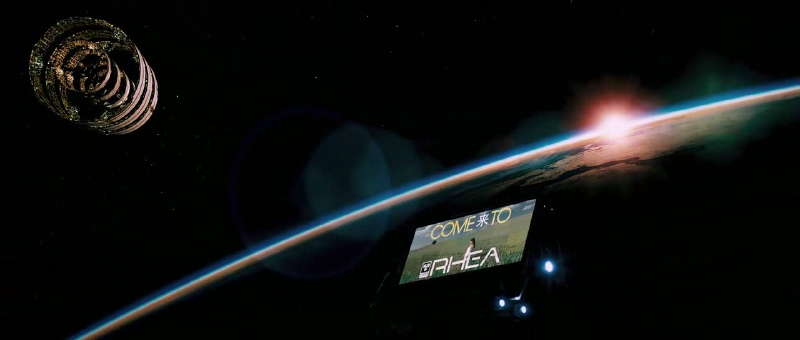
The film opens with Dr Laura Portmann (Anna Katharina Schwabroh) joining the crew of The Kassandra, a cargo transportation ship that is set to make a journey to the distant Station 42. Laura intends to make enough money to join her family on the planet Rhea – humanity’s last hope after Earth is left uninhabitable – by 2267. The people of Earth have been forced to flee their home planet and now live as refugees aboard cramped space stations rife with disease, famine and fear until they can be resettled more permanently.

After boarding the cargo vessel, Dr Portman is briefly introduced to the rest of the crew of sci-fi archetypes. There’s the old and grizzled Captain Lacroix (Pierre Semmler), the by-the-book second officer Lindbergh (Regula Grauwiller), a double-act of engineers Vespucci and Prokoff (Michel Finger and Claude-Oliver Rudolph), Yoshida the computer expert (Yangzom Brauen) and the mysterious Decker (Martin Rapold) – the security escort hired after a recent bout of terrorist attacks. All are put into cryo-sleep for the journey. Each crew member is awake for an eight month shift of the journey to maintain the vessel and cargo, and it is during Laura’s shift that strange things begin to happen. There are odd noises on the seemingly deserted ship, and something appears to be moving below in the cargo hold. She wakes the Captain and Decker and they investigate.

When Captain Lacroix mysteriously falls to his death while investigating the cargo hold, the rest of the crew are woken to decide on their next move. Suspicions arise about their cargo and their true mission. Both Decker and Lindbergh look like they are hiding something. What is the cargo they are transporting and why? And are the crew really alone on the Kassandra?

Cargo is visually impressive for a film considering its relatively meagre reported €4.2 million budget. The very first thing we see is a glittering space station hanging in low orbit of a colossal planet, then we then zoom right through a window in the side of the station. Here, we are taken inside, and we feel part of the cramped, squalid conditions of a space ghetto. The film is no less impressive when onboard the Kassandra, the corridors are all Ridley Scott-esque industrial piping shrouded in shadow, and the vast cargo hold looms ominously like a mechanical cathedral – you could scarcely get more creepily atmospheric locations.

Despite the visuals and the promising start to the story, Cargo has its problems. The most annoying thing about the film is how the writer-directors seem to have given into the pressure of audience expectations of a sci-fi film. It’s got the opportunity to be inventive, to stand out, but is actually not very different to a typical Hollywood film. The crew is made up of all the usual characters you find in every American sci-fi; we have the stiff and regimental officers, the smart-ass engineers and the computer expert of Asian ethnicity. Even the character of Laura is a little too close to Ripley of the Alien series (they both go on a similar character arc, starting fairly meek and quiet, before becoming independent heroines).

The first half of the film builds tension very effectively, and shocking revelations are promised from the start – we desperately want to find out what the crew are transporting and why, and what Decker’s secret agenda is. Unfortunately, when the truth is finally revealed, it’s a bit of an anticlimax, even if it does offer some nice emotional beats. We’ve seen it all before. The plot itself also meanders, and is more than a little incoherent in the final 20 minutes or so.

Cargo is a competent sci-fi, but it’s nothing special. The first half is effectively tense and engaging, but it loses its way towards the end. Visually stunning considering the budget, but unfortunately, it’s nowhere near original or creative enough to be considered a particularly revolutionary, or memorable sci-fi film. SSP

Posted in Film, Film Review, Subtitled Online | Tagged , , , , , , , , | Leave a comment

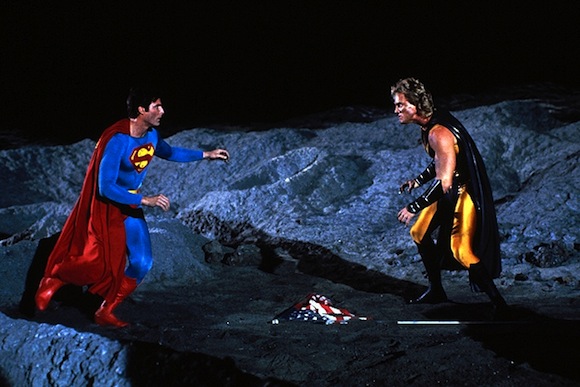
Film Confessional #2: Superman IV: The Quest for Peace

superman 4

I have a confession to make…I like SUPERMAN IV: THE QUEST FOR PEACE. It’s nowhere near on par with the first two Christopher Reeve movies, but it’s considerably better than SUPERMAN III, and is unfairly seen as the absolute dud of the series.

Sure, it looks cheap, and the script (co-written by Reeve) is flat and clumsily addresses big issues of the day, namely nuclear disarmament and morally bereft news conglomerates. But as a Superman film, it’s actually not bad – the characters act like they should, the main themes are still there, and it’s pretty entertaining throughout.

I also love the (admittedly ropey) but enjoyably over-the-top and incredibly creative fight between Supes and Nuclear Man (Mark Pillow) which has them scrap from Metropolis to the Moon.

It’s all absolutely ridiculous of course, but that’s what a Superman film should be! If any hero has the right to leave reality and common sense behind, to casually throw nuclear missiles into the Sun, plug active volcanos and rebuild the Great Wall of China with his eyes surely it’s the Man of Steel?

I’m not saying it’s an intelligent film, not even a little bit. It tries to tackle the biggest world issues of the late 80s and comes across as over-simplistic and heavy-handed. Almost everything defies basic logic, but if you’re prepared to shut down your brain for a bit you can get a lot of enjoyment out of it. What I am saying is that it’s a very fun, very dumb superhero film.

I understand why people have their issues with it. The budget was slashed drastically, so nothing looks convincing and lots of the effects shots are recycled multiple times throughout the film. Christopher Reeve, as talented a performer as he is, did not prove himself as a particularly competent screenwriter, and the whole thing is about as subtle as Nuclear Man’s glittery outfit. But at least it’s not the tonally jarring, vapid, lazy vehicle for Richard Pryor to be unfunny that Superman III was.

I enjoy Superman IV: The Quest for Peace as what it is – a bit of mindless fun. It’s not well executed technically, or well acted, or well scripted, but it keeps you watching, smiling (often bemusedly) and shows the potential for how far you can push a film about a man who can do pretty much anything.

It’s also an undemanding 90 mins, and Superman actually makes an effort to save people, which is more than can be said for this year’s MAN OF STEEL. Yeah, that’s the stinger I’ll leave on – below its wobbly exterior, Superman IV is a better Superman film than Man of Steel. SSP

Posted in Film, Film Feature | Tagged , , , , , , | 1 Comment

Anti-Pixar Animation

The-Illusionist3

This article was originally written for Subtitled Online September 2012.

There are some great alternatives to both the style and content of the products of dominant American animation powerhouse studios like Disney and Pixar, DreamWorks Animation and Blue Sky Studios. Animation as a medium is far more than something to distract the children while the adults watch something else. There’s much food for thought to be found, even for the most cynical film-goer, in animated features from around the world. Fascinating, enjoyable and beautiful animation is out there, you just have to look for it. So stop watching FINDING NEMO, SHREK and ICE AGE, and give one or two of these highly recommended world cinema animated features a go…

SPIRITED AWAY (Japan, 2001)

Hayao Miyazaki’s most famous and most loved creation is a thing of pure beauty, sweetness and magic. We follow Chihiro (Rumi Hiiragi) who finds her way into a fantastical realm with a bathhouse for mystical creatures at its centre. She endeavours to escape and free her parents from a spell cast by a witch which has transformed them into pigs, and through her numerous trials she emotionally comes of age and proves herself to be a real hero.

Studio Ghibli films are always rewarding, but somehow SPIRITED AWAY strikes an even more perfect balance than usual with pretty visuals, layered themes and a hugely likeable lead character, remarkably surpassing most of the studio’s pwn impressive back catalogue.

Miyazaki is a huge fan of Western literature, so I don’t think Spirited Away’s similarities to Lewis Carol’s ALICE IN WONDERLAND is an accident. Perhaps you could watch this instead of Disney’s 1951 animated Alice adaptation.

PERSEPOLIS (France/USA, 2007)

PERSEPOLIS is funny, daring and satirical. A distinctive and striking comic strip visual style and perceptive political and social humour makes the film a real joy to behold. Based on the autobiographical graphic novel by Marjane Satrapi (who co-directed this film adaptation) we follow the life of “Marji” (Chiara Mastroianni), from her childhood with a backdrop of political unrest in 1970s Tehran, through her rebellious student life in Europe, to her return Tehran in adulthood. It’s about identity, about nationhood and about religion, and discusses these subjects with much insight and biting satire.

There’s not really an American animated feature that’s particularly comparable to Persepolis, but you might want to watch it instead of RATATOUILLE, which beat it to winning Best Animated Film at the Oscars.  Thank goodness for the Cannes Film Festival, which awarded Persepolis the Jury Prize.

MARY AND MAX (Australia, 2009)

Quirky, intelligent and hilarious, MARY AND MAX really puts Australian animation on the map. It’s an incredibly tender tale of a pen-relationship between Mary Dinkle (Toni Collette/Bethany Whitmore), a lonely Australian girl and Max Horovitz (Philip Seymour Hoffman), an obese middle-aged American with learning difficulties. There’s laughter aplenty, particularly for the film’s more surreal visual gags, but the plot also goes to some really dark places.

Barry Humphries narrates the film like a modern fairytale, and although much of the story seems remarkable, it is purportedly based on true events.

Presented in the seemingly unsophisticated (although, in reality, complex and time-consuming) Claymation, it’s simply charming in its visual style, and a refreshing change to the spotless, clean computer generated animation of Pixar and DreamWorks.

There isn’t a lot of Claymation in American cinema, with the UK’s Aardman Animation dominating the medium, but maybe you should give Mary And Max a go instead of re-watching one of Tim Burton or Henry Selick’s stop-motion features, like THE NIGHTMARE BEFORE CHRISTMAS or CORPSE BRIDE.

PAPRIKA (Japan, 2006)

Satoshi Kon’s animation provides a stark contrast to Studio Ghibli, and his ideas were always far ahead of their time. His final film before his sad passing has a complex and layered narrative involving scientists researching the power of dreams. Sound familiar? It has a lot in common with Christopher Nolan’s dream-based blockbuster INCEPTION which arrived four years later (though Nolan had pitched his film years before). The story is dense and weaving, and the finale is wonderfully surreal and over-the-top.

Japanese anime has a notorious reputation for bewildering Western audiences, and PAPRIKA is convoluted even by these standards. You deserve an award if you can follow the plot in its entirety – Kon is clearly a fan of David Lynch’s scattergun approach to telling a story. But even if some of the plot turns confuse you, or if you’re simply dumbfounded by what you’re witnessing, you’ll still be mesmerised.

No animated film from Hollywood is really anything like Paprika, so just watch as an alternative (or a companion piece) to Inception, since Nolan’s thriller is so similar in terms of narrative and themes.

WALTZ WITH BASHIR (Israel, 2008)

WALTZ WITH BASHIR isn’t the easiest film to sit through, and provides some of the most horrifying depictions of human conflict in film history. A deeply personal animated documentary made by Israeli director Ari Folman, it recounts his own memories and those of fellow ex-soldiers who served in the First Lebanon War.

The film features straight interviews with former servicemen, and realistic human animation, but this is combined with surreal, nightmarish imagery to represent the horror of warfare. It’s incredibly downbeat and serious, but is honest and intelligent in its discussion of an incredibly controversial conflict. You’ll feel like you’ve been into battle yourself after seeing the film, and the experience will stay with you long after the credits roll.

American animation has never been this dark, intense or intelligent, so Waltz With Bashir is not really an alternative to any other existing animated feature. Just make sure you see it.

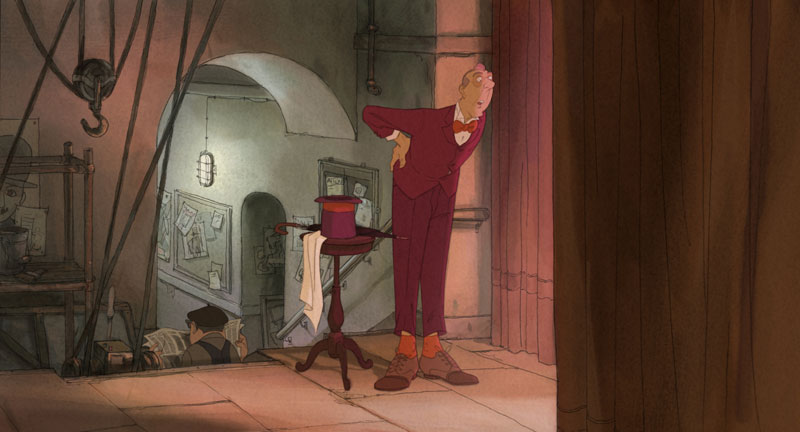
THE ILLUSIONIST (France/UK, 2010)

THE ILLUSIONIST is one of the most beautiful examples of animation in world cinema. Not just visually, but in its narrative simplicity and in its raw emotional power. Based on an unused Jacques Tati script, we follow a struggling stage magician physically modelled on Tati himself (Jean-Claude Donda), and his relationship with a poor Scottish girl (Eilidh Rankin) as the pair try to find a secure and happy future in 1950s Edinburgh.

Dialogue in the film is minimal, so it is left to the excellent quality of the exaggerated human animation to get across what the characters are thinking and feeling. The script has been seen as a letter of love and apology from Tati to his estranged daughter, and master director of animation Sylvain Chomet retains this subtext.

Perhaps The Illusionist is a good alternative to WALL-E, another film with mostly-silent lead characters and a soft heart – though the film about the cute little junk collecting robot is great, The Illusionist is better.


Hopefully this list has inspired you to give animated world cinema a go, to watch films that aren’t made by the powerhouses of American animation, and to be more adventurous in your viewing choices. Even if you’re already in love with animation from all around the world, perhaps you will discover something new and expand your horizons. SSP

Posted in Film, Film Feature, Subtitled Online | Tagged , , , , , , , , , | 4 Comments

Ultron Legal

It was announced earlier that James Spader will play killer robot antagonist Ultron in Joss Whedon’s THE AVENGERS: AGE OF ULTRON.

This is a great choice. Spader is a fine actor well-versed in playing hyper-intelligent characters, and is no stranger to playing amoral, often downright unlikeable anti-heroes and antagonists (which will come in handy if Whedon decides to cast Ultron as something other than an outright villain). And of course he’s got that wonderful gravelly voice which will sound brilliant coming out of a towering cybernetic body (likely motion-captured by Spader). He might even be able to bring a bit of humour to the role; just because he’s a metallic world-conquering behemoth doesn’t mean he can’t quip with the best of ’em. I’d happily pay just to see Spader’s Alan Shore from Boston Legal verbally sparring with Robert Downey Jr.’s Tony Stark.

Age of Ultron is rapidly becoming one of my most anticipated films of 2015. Joss Whedon exceeded expectations with the Avengers’ debut, and I see no reason why he won’t deliver a second time round. The plot sounds exciting, with increased emotional stakes and less silly aliens, and the already solid cast from the first film is being bolstered by some big, talented names. In addition to Spader, Aaron Taylor-Johnson is playing super-speedy Quicksilver and Elizabeth Olsen is strongly rumoured to be playing his hex-flinging twin sibling Scarlett Witch. May 2015 can’t come quickly enough. SSP

Posted in Film, Film Comment | Tagged , , , , | Leave a comment

Review: Howl’s Moving Castle (2004)

Howls-moving-castle-mainThis review was originally  written for Subtitled Online (now sadly closed) July 2010. It was my first full film review to be published online.

Environmentalism, war and peace, pride and corruption, coming of age and redemption – it can only be a fairytale from acclaimed Japanese animation director Hayao Miyazaki and his animation studio powerhouse Studio Ghibli.

Sophie Hatter (Chieko Baisho) leads an unremarkable and tedious life – a hatter by trade (as well as by name), she spends day after day making piles of fashionable headwear to keep her late father’s business going.

One day, she is rescued from the advances of two soldiers by the mysterious wizard Howl (Takuya Kimura), and is unwittingly caught up in the handsome young wizard’s affairs, as they both escape the minions of the sinister Witch of the Waste (Akihiro Miwa), who is determined to gain Howl’s power for her own.

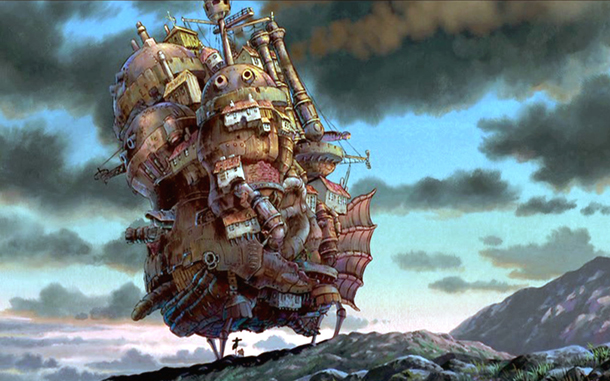
The Witch pays Sophie a visit at her shop and puts a curse on her – Sophie ages drastically in moments and is unable to tell anyone what has been done to her. So, scared and confused, she flees her home town and ventures forth into the wilderness, finding her way into Howl’s castle – in reality a bizarre walking pile of assorted architecture, landscape features and junk made sentient by a fire demon named Calcifer (Tatsuya Gashûin).

Sophie employs herself as housekeeper, and proceeds to tidy the castle, which has been left in a sorry state by Howl, his young assistant Markl (Ryûnosuke Kamiki) and Calcifer. Howl himself returns home but regularly disappears again without explanation, leaving Sophie and Markl to their own devices. Howl is, in fact, observing a horrifying war that has suddenly broken out, and though he wields incredible magic power, is reluctant to join without something concrete to fight for. The fire demon Calcifer has his own plans, too, as he offers to help Sophie escape her curse if she, in turn, will find a way to free him from Howl’s service…

The great thing about HOWL’S MOVING CASTLE is that we are given the opportunity to appreciate the beauty of every single frame of animation. Because of the relatively slow pace of the film, we can really take in the quality of the imagery – we are given time to simply look when too often in modern cinema are we thrown in at the deep end, rushed, and left disorientated. The animation moves from stunningly rendered dreamy landscapes to the strikingly weird and captivating movements of the castle itself, and the nightmarishly apocalyptic battlefield panoramas.

Sophie is an extremely likeable heroine. You really empathise with her magical entrapment, and Chieko Baisho’s ability to portray the character in both her young and old forms is a true testament to her skill as a voice actress. Over time she overcomes her demons and finds newfound confidence in herself – she matures internally as well as externally, and in essence, her curse sets her free.

Howl is far less engaging (at least, at first) – he appears arrogant, selfish and cowardly, and even his boyish charm can’t endear him to you. However, once his back-story is fleshed out, you can’t help but feel pity for him, as he’s just a lost soul. The villains, quite typically for a Miyazaki film, aren’t really very evil, rather they have lost their way and are in need of redemption. The real battle, for all the characters, is within themselves.

Miyazaki’s regular collaborator, Joe Hisaishi scores the film, and the soundtrack is simple yet effective. It is quite staggering how Hisaishi can bring a tear to your eye with a couple of well placed notes. The score sounds a lot like a lullaby, and whilst it may have the power to send young children to sleep, it stirs entirely other emotions in adults – it causes you to reminisce, to remember happier times when the world was so much simpler.

About three quarters of Howl’s Moving Castle is quite simply flawless. The last half hour or so, however, disappoints slightly – losing some of the overall magic. The story, while never completely watertight, is entertaining for most of the film, but drifts into nonsensical in the last act, and the final revelations about Howl’s past are a little underwhelming. The film as a whole feels slightly too long.

True, certain aspects of the plot are also never explained, as we are seemingly meant to take it on face value that Howl transforms into a bird-creature every now and then, but if you embrace the madness, Howl’s Moving Castle is a captivating, unusual and truly special viewing experience. SSP

Posted in Film, Film Review, Subtitled Online | Tagged , , , , , , , | 1 Comment

10 Films That Made My Childhood

brachio

I was introduced to the world of film at an early age. Something was always on a screen at home in my early years. I was born in 1990, and was first taken to the cinema before I was three years old. My poor parents had to sit down and watch the same few films (on VHS – ahh the 90s) or on TV with me time and time again. But they also made me aware of some cinematic delights that have stayed with me into adulthood.

What follows is a list that looks back on the films that played a key part in my formative years, why they were (and still are) so important to me, and how they changed the way I see movies and the wider world even today.

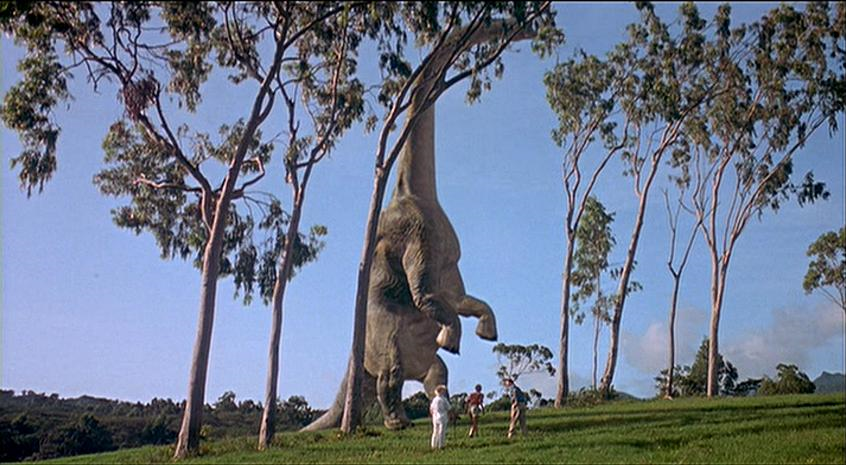
JURASSIC PARK (1993)

Like a lot of little boys I loved dinosaurs! I could pronounce much longer and more complicated words than I should by all rights have been able to while so young simply by identifying the prehistoric blighters. Spielberg’s dino-park-gone-wrong masterpiece still fills me with awe and wonder, and will always hold a very special place in my heart as the first film I was taken to see on the big screen. JURASSIC PARK is still in my Top 10.

THE LAND BEFORE TIME (1988)

Dinosaurs again, what can I say? This was the film I tended to make babysitters watch with me.

MARY POPPINS (1964)

Not the coolest film on the list, but Disney’s Julie Andrews musical was always on when I was growing up. My strongest memories attached to MARY POPPINS are not of the film itself (as much as I enjoy it), but of my Mum singing the songs to send me to sleep at night. Oh, and I began chalk drawing on the pavement outside too, all because of Dick Van Dyke.

STAR WARS/THE EMPIRE STRIKES BACK/RETURN OF THE JEDI (1977/1980/1983)

I first saw Star Wars when the Special Edition was released in cinemas in 1997. From there, I caught up on Empire and Jedi through the magic of the local library’s VHS rental service. I was hooked on George Lucas’ galaxy far, far away from the off, was bought loads of the Hasbro toys, and would take part in new adventures of the imagination (with a home-made lightsaber!). THE EMPIRE STRIKES BACK is still in my Top 10.

DUMBO (1941)

Pretty much any Disney animated film could have been on the list (I watched them non-stop), but DUMBO was one of the first I saw, and probably the one I watched the most in my early years. I loved the story, and the characters, and was blissfully unaware of the racist overtones!

THE LION KING (1994)

I saw this in the cinema too, and loved the music and animation. My favourite character was, and remains Jeremy Irons’ flamboyant, Machiavellian Scar, and I still know all the words to “Be Prepared”.

THE NIGHTMARE BEFORE CHRISTMAS (1993)

I probably should have found this stop motion favourite of Goths more disturbing as a child (maybe I’m just weird). I did find some elements scary, but I’d watch it again and again for Mr Selick’s animation, Mr Elfman’s songs and Mr Burton’s unique visual style. It remains one of my favourite Christmas movies.

HOME ALONE/HOME ALONE 2: LOST IN NEW YORK (1990/1992)

Thanks, I think, to my Dad, I love slapstick. You don’t get much better slapstick for children than the first two Home Alone films (no, the straight-to-video ones with another kid don’t count). They still makes me squeal with laughter to this day, and the burglars Harry and Marv (Joe Pesci and Daniel Stern) are still one of my favourite film double-acts. And despite what some might think, I maintain that HOME ALONE 2 is nearly as good as the first one.

OLIVER! (1968)

OLIVER! is still one of my favourite musicals (with parents like mine, you pretty much have to have favourite musicals). I love the songs, the look and the scale of the thing, and Ron Moody’s Fagin is a force of nature. Mum even tied together a string of handkerchiefs for me so I could recreate the pickpocketing scene!  I’ll still watch it whenever it’s on TV in the afternoon.

THE PAGEMASTER (1994)

It probably says something that this one film on the list (along with THE LAND BEFORE TIME) that I haven’t revisited in adulthood. I’m probably remembering it somewhat rosily, but I found it a magical little film as a child – weird and creepy with impressive animation.

So there you have it – my childhood film experience was composed of dinosaurs, Disney, Star Wars, slapstick and sing-alongs! I was, admittedly, a strange child, but the first part of my life was a joy thanks to the magic of cinema. My thanks go out to my tolerant parents for watching animation, effects extravaganzas and people falling over on a loop. What movies made your childhood? SSP

Posted in Film, Film Feature | Tagged , , , , , , , , , , , | Leave a comment

Film Confessional #1: Daredevil

daredevil-kingpin-fightThe following confession was prompted in part by the news that Ben Affleck has been cast as Batman, and everyone seems (quite unfairly) to be using his previous portrayal of a superhero as a reason why it’s the worst decision in history.

I have a confession to make…I like DAREDEVIL. I don’t love it, but I like Ben Affleck’s first foray into the superhero movie genre.

I fully accept that Daredevil has problems, big problems. The script could be more polished. Ben Affleck and Jennifer Garner could be better. Daredevil’s suit could look a little less gimpy. Let’s not even start on Colin Farrell. But, for some reason, I always seem to enjoy myself whenever I revisit it.

What’s the appeal for me? The action is decent – not stellar by any means – but decent. There’s a far few good gags, and a bit of pathos in the flashback sequences for balance. Affleck and Garner have chemistry (even if both are getting by on charisma rather than good performances) and Michael Clarke Duncan makes an imposing and entertaining Kingpin (and anyone who still insists Kingpin shouldn’t be black needs to get over themselves) and Joe Pantoliano is funny, and excellent as always as an investigative journalist. Matt Murdoch/Daredevil is also an engaging, layered and unusual protagonist, and it’s always refreshing to see a lesser-known comic book hero making it to the big screen.

I know, I know – Colin Farrell’s campy projectile flinging villain Bullseye is awful, but at the same time I’m never bored when he’s on screen.

There’s a lot of people who blame writer-director Mark Steven Johnson for mishandling the material, but I think he does a respectable job. Apart from a few jokes that fall flat (mostly involving Bullseye’s depravity) and a few scenes that could be cut or shortened, the screenplay is serviceable, and MSJ is mostly creative in visualising Daredevil’s world. The director’s cut is well worth a watch particularly for a removed murder-mystery subplot that emphasises Matt Murdoch’s abilities as a detective and tireless crusader for justice. You also get more of Jon Favreau’s bumbling Foggy Nelson which is no bad thing.

I’ll always be fond of a few key scenes in the film. I love the fun, tongue-in-cheek Murdoch/Elektra fight in the playground. I like the emotional punch of the flashback involving Murdoch’s boxer dad who pays the ultimate price for shady dealings. I think the beautifully atmospheric final confrontation between Daredevil and Kingpin in the gangster’s sprinkler-showered office makes for an impressive, dramatic (but not overblown) finale.

As much as I enjoy watching Daredevil, I can acknowledge its flaws in performance, pacing and tone. These nagging issues could easily have been ironed out if it prompted a sequel (I’d have loved to have seen a full courtroom drama with superheroics to break it up), but that was not to be. It’s probably for the best in hindsight, as Affleck may not have made the interesting career choices he has in recent years had he become part of a franchise. Also, it’s probably for the best he left his co-star and director to make their own bad career choices with ELEKTRA and GHOST RIDER respectively.

If you’re in the mood, give Daredevil another go. Regarding Mark Steven Johnson’s take on the source material it’s just serious enough, but knows when to lighten up. As a superhero film it’s a perfectly serviceable, if sometimes unremarkable example focussing on a complex character who really should have had more screen outings by now. And yes, I was devastated when Joe Carnahan’s gritty reboot was shelved.

Keep an eye out for future film confessionals – what other widely hated films do I have a fondness of? SSP

Posted in Film, Film Feature | Tagged , , , , , , | 1 Comment

Bat-Bets Are Now Closed!

The wait is over – it was announced today that Ben Affleck will play Batman in Zack Snyder’s BATMAN VS. SUPERMAN (or whatever it ends up being called), and I couldn’t be happier.

The reaction to the news was mixed to say the least. On Twitter especially, some fans seem livid (#BetterBatmanThanBenAffleck is currently trending), but I don’t see what all the fuss is about. Affleck has made some turkeys in his time, but what A-lister hasn’t? A lot of people are providing DAREDEVIL as their evidence that he should not front (or joint-front) another comic book film, but that was ten years ago, and the film wasn’t that bad was it? It wasn’t even the worst superhero film Mark Steven Johnson has done; it looked like a masterpiece next to GHOST RIDER.

One of the reasons I’m so happy about the decision is that Affleck has been on the top of his game for years now. He’s older, wiser, and has directed three critically-acclaimed feature films – GONE BABY GONE, THE TOWN and ARGO – in addition to playing a key role in the latter two. He’s also demonstrated his acting range throughout his career in fascinating films such as Gus Van Sant’s GOOD WILL HUNTING, HOLLYWOODLAND (where he played TV’s Superman George Reeves), Kevin Macdonald’s STATE OF PLAY and most recently Terrance Malick’s TO THE WONDER. The man has talent, both in front and behind the camera, and the choice should be applauded.

Also, Affleck should be able to embody the duality between the Bruce Wayne and Batman identities; he’s played extremes of darkness and lightness, and everything in-between. It’ll also be interesting to see what direction they take the Superman/Batman relationship. Clearly they’ll have their differences, but what will be the cause? Plot aside, will age and experience come into it? I quite like the idea of Henry Cavill’s youthful and relatively inexperienced Supes at loggerheads with an older, veteran Bats played by Affleck, and the actor’s real-life professional careers at present pretty much reflect this dynamic (though I’m sure they’ll get along fine off-camera).

I’m excited now, and fully anticipate that Ben Affleck will make a great Caped Crusader. He fully deserves some financial (as well as critical) success again, and he might just bring the spark that MAN OF STEEL lacked with him.

Plot details are still shrouded in mystery, but it’s widely assumed Lex Luthor will be playing a part in the super-duo’s conflict and inevitable team-up. So, the next big question is who should play Lex? SSP

Posted in Film, Film Comment | Tagged , , , , , , , | Leave a comment

The Son Becomes the Father…

smartlois

SUPERMAN II: THE RICHARD DONNER CUT is far more than a slightly different edit of a superhero film sequel. It’s an almost entirely new version of the story that changes fundamental plot points for the benefit of the narrative as a whole. I use the word “new” entirely wrongly – Donner’s version of SUPERMAN II came first, but didn’t see the light of day until 2006 following a hard-thought and passionate internet campaign. The Superman sequel the world is familiar with is Richard Lester’s – he was brought on-board to tweak, reshoot and eventually gut the sacked Donner’s work after prolonged clashes with producers.

The Donner Cut came to be through the efforts of editor Michael Thau and his dedicated team, who trawled through (literally) tons of celluloid to match and identify the footage shot by Donner, restore it, and re-edit much of the existing Superman II. Donner himself was on hand to offer advice, as was the original Superman creative consultant Tom Mankiewicz, to keep the look of the film consistent.

So, how many changes are made in this cut of Superman II, and is it a better film for these revisions? In short, lots, and yes it is a far superior version. What follows is a comparative analysis of the Donner vs. the Lester cuts of Superman II. Needless to say, in-depth spoilers follow.

Rather than Richard Lester’s clumsy, dated and laughably silly Eiffel Tower opening set piece, we are given a direct link between the end of the first Superman and the events of the sequel – it is Superman’s foiling of Lex Luthor’s plot to destroy California by guiding the missile harmlessly into space that frees the Kryptonian criminals Zod, Ursa and Non from their Phantom Zone prison. It is Superman’s seemingly heroic action that brings further destruction down upon the Earth. While the same is still true in Lester’s cut of Superman II (the hero throws the bomb of a French terrorist cell into space to save Paris) Donner’s opening to the film is far more organic and more thematically impactful. It allows you to view the two films as two parts of the same epic story, a story of a living God selflessly protecting humankind but inadvertently causing further harm with some of his actions. Lester’s opening just comes across as forced – a ham-fisted attempt to link the two films.

Another key part of Donner’s vision that is thankfully restored is the characterisation of Lois Lane. There’s no avoiding it the fact that Lois, in Lester’s cut of Superman II is a little bit dim. She doesn’t even begin to suspect Clark’s true identity until their trip to Niagara Falls, where he pretty much outs himself by being uncharacteristically (and unintentionally) clumsy. In Donner’s Cut, Lois is shrewd and calculating and smart – as a journalist should be! She begins to put the puzzle together from the start, forcing Clark to react by jumping though a window in the Daily Planet (an idea reprised in Lester’s version at Niagara Falls). Like in Lester’s version, Clark manages to avoid revealing himself, but Lois still suspects, resulting in one of the all-time great Superman film scenes. Sadly, the scene only survives in the form of an early screen test, but its impact remains – Lois is so sure of Clarks secret identity that she threatens him with a gun, before firing. Of course, Superman is impervious to most weaponry, so has to reveal himself when he is unharmed. After morally lecturing Lois about the consequences of her actions had she been wrong, Lois reveals that the gun was loaded with blanks – she tricked Superman into giving up his secret. This is a compelling and clever piece of characterisation, and Clark tripping just isn’t.

The third major change made to Donner’s film admittedly was not Lester’s fault. After the release, and astounding financial success, of Superman, Marlon Brando sued Warner Bros for planning to use scenes he shot as Jor-El for Superman in the sequel (they were shot simultaneously). He won a share of the film’s profits despite the fact that these scenes were re-shot by Lester featuring Susannah York as Kal’s mother, Lara. I’m conflicted on this change, mainly because I quite like York’s performance, and you don’t often see Lara come into play as a character (Superman’s story tends just to cover the Judeo-Christian patriarchal father-son relationship). Since the legal issues had been resolved by 2006 with the release of SUPERMAN RETURNS, the Donner Cut is finally allowed to use the Brando footage in its intended capacity. You ultimately get more of Brando being Brando, but it does allow for a couple of noticeable plot holes to be (more-or-less) filled. 1. We get to see how Kal-El gets his powers restored, through a crystal that appears to act as a conductor for Jor-El’s remaining power to pass into Kal’s body. 2. The Kryptonian prophecy “The son becomes the father and the father becomes the son”, which is left hanging in the Lester Superman II, is fulfilled, quite literally as Jor’s essence merges with Kal’s, and the Holy Trinity analogies are emphasised in an affecting fashion.

Finally we come to perhaps the most major change of all – the ending. Instead of Lester’s magic super-kiss which wipes Lois’ memory and effectively restores the film series’ status quo (apart from all the chaos caused by Zod and co.), Donner allows Superman to share an emotional farewell with his love, then reprises the ending of the first film – Superman flies at super-speed round the world and undoes all the death and destruction he accidentally caused. The world may not have changed, but he has drastically, and has grown as a character. It might not be the most creative ending in the world, but in makes sense in the Superman universe, and avoids that rather uncomfortable, slightly rohypnol-y ending of the Lester film.

Superman II: The Richard Donner cut was a massive creative undertaking only made possible by time, hard work and passion of both fans and professionals. It very nearly makes amends for one of the great injustices in film history, and comes as close as possible to letting us see Richard Donner’s original vision for the conclusion of his Superman story. Richard Lester’s Superman II was an incredibly entertaining, though fractured film, with incredible performances from Reeve and Stamp, which is incredible considering how late the new director joined the project. Richard Donner’s Superman II on the other hand, is an epic and intelligent superhero film masterpiece. SSP

Posted in Film, Film Feature, Film Review | Tagged , , , , , , , , , , | 1 Comment