Review: The Hobbit: An Unexpected Journey Extended Edition (2013)

THE HOBBIT: AN UNEXPECTED JOURNEY

Who didn’t see this coming? This month Peter Jackson released a special extended cut of THE HOBBIT: AN UNEXPECTED JOURNEY just in time to promote the second chapter, THE DESOLATION OF SMAUG, which is set to be released in cinemas in just under a month.

Jackson is a canny marketer, and a lover of showing the audience everything filmed at some point, even if it was initially left on the cutting room floor. Cynics might declare Jackson greedy for sticking to this release strategy (used in all three LORD OF THE RINGS films and KING KONG) and there may be a bit of a profit-driven incentive, but when you see what these new scenes can add to the film overall, in addition to the hours of detailed special features, you can’t begrudge Jackson much.

The first part of The Hobbit (if you somehow don’t know the story) sees the comfort-loving Bilbo Baggins (Martin Freeman) recruited by the wandering wizard Gandalf (Ian McKellen) to join a party of displaced Dwarves seeking to reclaim their treasure and their homeland. Their quest features encounters with trolls, stone giants, goblins and vengeful orcs, and builds on Tolkien’s well-trod themes of greed, loss and bravery. Not bad for an adaptation of a throwaway children’s book.

That’s one thing we have to remember, that J.R.R. Tolkien saw The Hobbit as something to keep youngsters amused, and it was only later he narratively tied it to the epic and layered Lord of the Rings Trilogy. The Hobbit is appropriately completely different in tone. There’s more humour, lightness and singing, and that goes double for the Extended Edition. Sadly, many of the more comical scenes, the ones that don’t move the plot along but still add something to our perception of the characters. Restored, they do add something (not a lot, but something), and it’s pleasing to have all the musical interludes and dwarf skinny-dipping back in the film.

In both cuts of the film, Martin Freeman steals the show. No-one else could fit so effortlessly into the furry feet of Bilbo Baggins. He’s always had great comic timing, but he also brings real warmth and some entertaining early-onset curmudgeoniness to his portrayal of Mr Baggins. Ian McKellen is again reliable as Gandalf, Sylvester McCoy has a lot of fun as the weird and wonderful Radagast and Ken Stott’s Balin and James Nesbitt’s Bofur stand out among the company of dwarves (the rest of them are still a bit of a blur at the moment). Andy Serkis makes a welcome return with his (presumably) final performance as Gollum, and the tricksy little blighter has never looked or sounded better than he does here, in the perfect adaptation of “Riddles in the Dark”.

A lot of criticism has been levelled at Jackson expanding a relatively short book into three films, but as Gandalf says, “all good stories deserve embellishment”. Maybe Jackson has embellished too much, as there are entire sequences that feel either unnecessarily drawn-out, or unnecessary full-stop. To an extent I understand the purpose of the Dwarf-focussed prologue – it’s there to set up plot points and character motivations that will doubtless pay off later, and it seems to intentionally echo the first scenes of THE FELLOWSHIP OF THE RING, but why did it have to be so long? Thorin’s drive, and the threat of Smaug could have been established in a couple of brief flashbacks, and then the main story could have been underway a little quicker. I don’t see any need for Azog (Manu Bennett) a big, CGI-assisted orc and nemesis to Thorin – no-one needs a reason to hate orcs, to have one commit a personal grievance to you, they’re the embodiment of evil! His addition is just an excuse for the addition of a couple of unmemorable action sequences with way too much heroic slow-motion.

Of course, you buy Peter Jackson’s special editions for the special features, and you’ll be pleased to hear there’s a truckload. Hour after hour of in-depth documentaries cover everything from casting to costume and makeup design to Christopher Lee’s long anecdotes the crew were too polite to ignore. This is what makes the purchase worth while, and incredible value for money, rather than the extra 15 minutes or so of new footage.

Ultimately, the extended cut of The Hobbit part 1 doesn’t improve a lot on the theatrical cut. It has the same strengths (humour, warmth and riddles) but suffers from the same drawbacks (pacing, repetition, excessive action). The new scenes are nice, but not essential viewing (unlike some of the key scenes exorcised from LOTR). Do buy it for the dragon’s hoard of extras though, you won’t be disappointed…or be likely to see daylight for a while. SSP

 

Posted in Film, Film Review | Tagged , , , , , , , , , , , , | 3 Comments

Review: Doctor Who: The Day of the Doctor (2013)

Doctor Who – 50th Anniversary Special - The Day of the Doctor

THE DAY OF THE DOCTOR is everything a 50th anniversary celebration of DOCTOR WHO disserves to be. It not only works as a glowing and affectionate tribute to half a century of an icon of science-fiction, but it’s also a cracking episode in its own right, with an intelligent and mature script, and the scale and budget that the regular show so often lacks to make it worthwhile seeing it on the biggest screen possible.

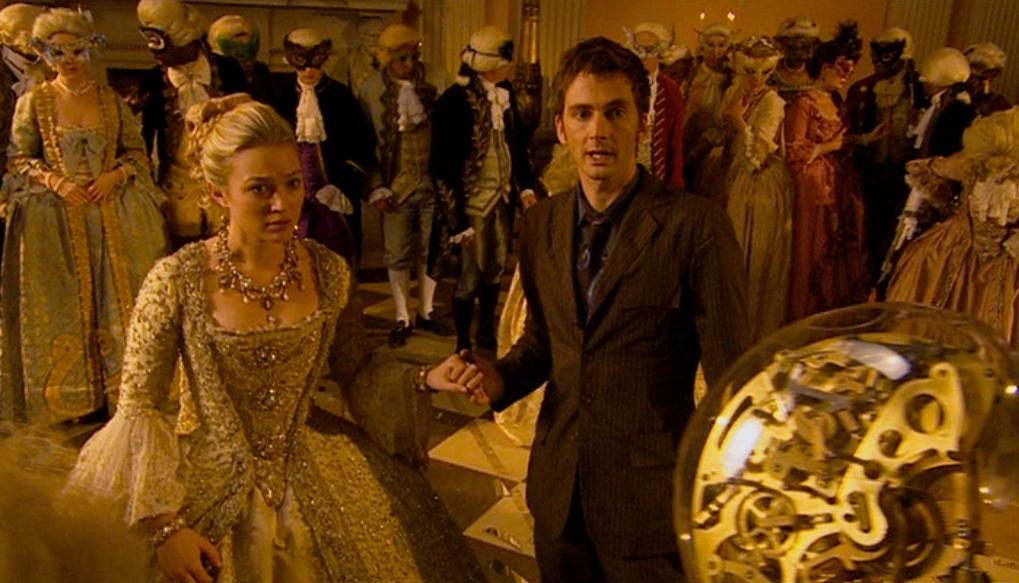
As set up in the mini episode THE NIGHT OF THE DOCTOR (which finally gave Paul McGann the send-off he deserved), at death’s door the Eighth Doctor was allowed to choose the form of his next regeneration to help him fight in the Time War. The form he chose was a warrior, a War Doctor (John Hurt) who is seeking to end the war once and for all, even if it involves the genocide of the two species in conflict, the Time Lords and the Daleks. Meanwhile, the Eleventh Doctor (Matt Smith) and Clara (Jenna Coleman) receive a suspicious call from old allies UNIT, and in the Sixteenth Century, the Tenth Doctor (David Tennant) is having a fling with Queen Elizabeth I (Joanna Page) and on the hunt for shape-shifting Zygons. These three seemingly disparate plot strands converge into an epic wider story that pretty much changes Doctor Who lore forever.

One of the things I liked most about the special, in fact the main thing that gave it so much charm, was that it didn’t take itself too seriously. Yes, there’s half a century of sci-fi mythology to draw on and pay tribute to, but Mofatt and the cast don’t shy away from poking gentle fun at some of the series’ well-known concepts and character traits. The best scenes by quite a way involve the three iterations of The Doctor as played by Smith, Tennant and Hurt squabbling and making fun of each other. Who else could play a grizzled, conflicted and exhausted iteration of The Doctor better than Hurt? He makes a brilliant contrast to the frivolous and energetic Smith and Tennant, and brings real acting heft to the episode.

The episode (or TV movie, however you view it) also appears to be pretty aware of how Doctor Who is regarded by fans and non-fans alike. Several references are made by Hurt’s Doctor to the childish personalities of Smith’s and Tennant’s, to their unwillingness to act like “grown-ups” and I’ve always seen that as one of the main appeals of the show to Whovians. Ideally, you’ll start watching it as a child, and if it makes enough of an impression on you then it’ll be with you for the rest of your life. For many, the show always remains a reliably fun piece of escapism to return to when real life is getting you down.

But grown-up is just what The Day of the Doctor is. You don’t tend to see much nuance in Doctor Who scripts, and though the underlying themes are often grand, they’re rarely this complex. It’s all wonderfully reflected in the emotional state of the three Doctors. Hurt’s character is at the precipice of a complete moral downfall. A good man is on the verge of going bad, even if his despicable decision is made for the right reasons, for the greater good. He’s seen horrors, but none on the scale of what he is contemplating doing himself. Tennant’s Doctor has already made that choice, and is still crippled by guilt. Smith’s Doctor has had to live with his decision for centuries, and has buried his regrets so far within himself that they could have happened to someone else entirely (and in The Doctor’s case, you could say that they did). Beneath the shinier-than-usual special effects and multi-Doctor banter, Steven Moffat has produced an intelligent exploration of morality and mortality, and an episode that progresses the main story nicely, with numerous interesting implications for the future.

Being a anniversary episode, it is of course expected to pay homage to what has come before. Every Doctor gets to take a short bow in a spectacular finale, and you can look forward to one very special cameo before the credits roll. As well as tying up loose plot threads both from the classic and revived series, there’s also a good number of in-jokes for fans to spot.

All in all, The Day of the Doctor is a rousing success. If not for THE EMPTY CHILD, it would be the best thing Steven Moffat has ever written. The timey-wimey stuff is tightly plotted and mostly makes sense (not always the series’ strongpoint), the character motivations are focussed, and the script is satisfyingly meaty. I really can’t think of a better way to cap off fifty years of a British cultural institution.

It’ll be sad to see Matt Smith go at Christmas (not quite as sad as I was about Tennant’s departure, but still). It’s not like it’ll be the last we’ll see of the Eleventh Doctor. Doctor Who has a long history of reunions, so I’m sure Smith will slip on the bow tie again sooner rather than later. Apart from that, bring on Peter Capaldi! SSP

Posted in Film, Film Review, Television | Tagged , , , , , , , , , , | 1 Comment

Time of the Timelord

Madame_doctor4

I know this is a film blog, but I couldn’t resist marking this occasion. Today’s the day (as if you’d managed to miss it), the 50th anniversary of the debut of DOCTOR WHO.

I haven’t always been a diehard fan of the show as many of the people watching THE DAY OF THE DOCTOR tonight will be. This isn’t because I’ve been converted to the show over time, but because I did most of my growing up in the “wilderness years” that the show was off air after following cancellation in 1989. Since the show’s comeback in 2005, I’ve been captivated, and in the lead-up to the big day I’ve been familiarising myself with as much of the show’s original run as possible. Today, I consider myself a true Whovian.

I’m not going to write a lot to mark the occasion, but I’d like to share the stories I love, the stories I hate, and which Doctor was best.

Great Stories:

THE ROBOTS OF DEATH (1977)

It’s Tom Baker being Tom Bakery within a pretty intricately plotted whodunit featuring very cool robots. What’s not to like? The designs are impressive and hold up incredibly well considering how much time has passed, and the script is one of the best the show has seen.

HUMAN NATURE/THE FAMILY OF BLOOD (2007)

An extremely radical story idea – what if The Doctor has amnesia, becomes human, and was powerless to stop an invasion? It’s a very clever story full of subtleties (which drip-feed into the impressive series finale THE SOUND OF DRUMS/LAST OF THE TIME LORDS), and demonstrates what The Doctor is capable of in a state of blinding rage when he finally gets his memory back and takes his revenge on the sinister “Family”.

THE DOCTOR’S WIFE (2011)

I’m amazed it took the show so long to explicitly explore The Doctor’s relationship with his beloved TARDIS. When she is given physical form, it turns out that the love is mutual, and an extremely unconventional and moving love story was born in the staggeringly talented mind of Neil Gaiman, and brought to life by tender performances from Matt Smith’s Eleventh Doctor and Suranne Jones’ Idris/TARDIS.

THE EMPTY CHILD/THE DOCTOR DANCES (2005)

The highlight of the Doctor Who revival, and still the scariest story Steven Moffat has done (I don’t care what people say, this is 10x more chilling than BLINK). Christopher Eccleston and Billie Piper are on fine form, as is John Barrowman as the now iconic bisexual con-man Captain Jack Harkness. This Blitz-set horror story is tense, dark and creepy, but has lighter moments and ends on a pleasingly optimistic note.

THE GIRL IN THE FIREPLACE (2006)

My favourite of all Doctor Who stories is an unassuming one-off period piece written by Moffat where The Doctor (Tennant) meets Madame de Pompadour (Sophia Myles) and outsmarts clockwork robots with a hidden agenda. The story is creative, the performances flawless, and the ending is soul-crushing. I really struggle to hold back the tears whenever I rewatch it. It proves the emotional potential of a series about time travel, and explores all of its heartbreaking implications.

Terrible Stories:

THE VAMPIRES OF VENICE (2010)

Matt Smith’s first series as The Doctor is pretty consistent in quality, but this story falls a bit flat. It’s just a really lazy “let’s drop a monster into a recognisable historical setting” story, and doesn’t offer much to recommend at all.

THE EDGE OF DESTRUCTION (1963)

This two-part William Hartnell story was just filler after the Dalek debut, and the episodes consequently look cheap and are really dull. It all takes place in the TARDIS with the cast acting a bit weird, and it looks like it’s going somewhere interesting until…it doesn’t.

THE NEXT DOCTOR (2008)

Russell T Davies is a great writer/producer, but he always seemed to struggle with Christmas Specials, and they all tended to be somehow overblown and underwhelming at the same time. This story had a potentially interesting concept: a ordinary man in Victorian England (David Morrissey) thinks he’s The Doctor and fights the Cybermen, but the potential is wasted (as is Morrissey) and the script isn’t up to much.

VOYAGE OF THE DAMNED (2007)

Another really bad Davies-era Christmas Special is set on Space Titanic and guest-stars Kylie Minogue. It makes zero sense, the baddies (robot angels who throw their halos as weapons) are rubbish, and Kylie makes absolutely no impression – she’s not bad, just bland.

DALEKS IN MANHATTAN/EVOLUTION OF THE DALEKS (2007)

This story gives me chills, and for all the wrong reasons. It’s a real contender for being the worst Doctor Who story since its revival, and is certainly the one that makes me spit the most venom. I’m not a fan of many Dalek stories, but this is a shonky effort even by the standard of the over-used fascist dustbins. It’s full of sloppy writing, awful acting and pig creatures (a strange Davies obsession). I really wish this one could be conveniently lost by the BBC like so many earlier stories.

Best Doctor:

PATRICK TROUGHTON (1966-1969)

Patrick Troughton’s Second Doctor is a wonderful creation. A hodge-podge of contradictions and complexities. He played the fool and the coward, but had a shrewd intelligence and unshakable bravery about him. He was always the smartest person in the room, but didn’t like to boast about it like many of his subsequent incarnations. Many have tried to copy him, but none have bettered him.

My Doctor:

DAVID TENNANT (2005-2010)

Every Whovian has unshakable loyalty and attachment to one Doctor, the Doctor who was around in your formative years. As I’ve said, I was born in the 1990s so didn’t have a Doctor as such, but there was one for me in my early teens when the show returned. Christopher Eccleston’s Ninth was great, but not around for anywhere near long enough. David Tennant, on the other hand, as the Tenth Doctor, made just the right impression on me. He was excitable and energetic, endlessly optimistic and forgiving until you crossed him, then you’d feel his wrath.

Over half a century, Doctor Who has evolved from an affectionately remembered British cultural artefact to a worldwide sci-fi phenomenon. It’s been a great 50 years, and long may The Doctor’s journeys through time and space continue.

Now, if you’ll excuse me, I have a very important date to keep with Messrs Smith, Tennant and Hurt. SSP

Posted in Television | Tagged , , , , , , , , , , , , , , , , , , , , , , , , , , , , , , , , , , | 1 Comment

Review: Hansel & Gretel: Witch Hunters (2013)

Hansel-and-Gretel-Witch-Hunters-DI

HANSEL & GRETEL: WITCH HUNTERS is a hoot. It begins like a much swearier and more violent Hammer horror film, and becomes an excessive tribute to EVIL DEAD-era Sam Raimi by the end. As a bonus the whole cast look like they’re having the time of their lives.

We all know the story – a brother and sister lost in the woods come across a house made out of sweets, inside they find a witch who they manage to trick and kill, narrowly escaping with their lives. Their tale picks up years later by which time they’ve become celebrity witch hunters for hire (played by Jeremy Renner and Gemma Arterton) and face their greatest challenge yet in a witch (Famke Janssen) who seeks to overcome her kinds’ inherent weaknesses and fight back.

The special effects, creature designs and action sequences are hugely imaginative, and elevate the trashy premise far above what it could be. We saw hints of this in the Norwegian director Tommy Wirkola’s previous splattery thrill-ride DEAD SNOW – he’s a great visualist, and has a depraved sense of humour. It’s not too much of a spoiler to say that the final act involves Hansel and Gretel fighting a coven of witches with a variety of deformities and degrees of monstrous behaviour, a scene which allows Wirkola and his design team to really let rip with their creativity and unleash some creepily inventive looks for each of their witches.

It’s not particularly smart, in fact it’s pretty dumb, but that’s fine every now and then. You get precisely what you’d expect from a modern reimagining of a classic story – anachronisms, contemporary dialogue and attitudes and story embellishments aplenty, but Hansel & Gretel at least seems pretty self-aware of itself. It doesn’t shy away from the nastiness of the Grimm fairy tale, and even manages to throw in some mild commentary on celebrity culture (at least I think that was the intention). You don’t generally watch films like this for great screenwriting, and Tommy Wirkola in truth is much more talented behind the camera than behind a keyboard, but he has a wicked sense of humour, and raises a few laughs from often brutal slapstick beats and foul-mouthed retorts.

It’s Gemma Arterton who seems most at home in this territory, and her version of Gretal, far from a damsel in distress or playing second fiddle to her male sibling, is tough and brash, and entertainingly fond of solving arguments with a head-butt, and swearing like a sailor. Though it doesn’t really matter in the grand scheme of things, as the cast is international and dialects eclectic, but I’m not sure why the British Arterton chose to put on an American accent. Perhaps it was to better match her with her on-screen brother Jeremy Renner. Speaking of Renner, he refreshingly plays the more damaged of the siblings, stricken with diabetes and trust issues after his childhood experience with the witch, it’s mostly left to Gretal to be the strong one, the constant in Hansel’s life.

The supporting cast do what is asked of them and little more. Famke Janssen is a fittingly pantomimey villain (apparently with paying off her mortgage in mind), Peter Stormare slots effortlessly into his role as a slimy sheriff and Pihla Viitala thankfully is given a bit more to her character than simply being the love interest for Hansel.

Unfortunately, the story doesn’t deliver on an emotional level. You might think a work of “trash” cinema can’t make an impact beyond being a guilty pleasure, but that’s not true. A prime example is HOBO WITH A SHOTGUN. Yes, it was about a homeless man on a vendetta with a firearm, but it packed a real human, soulful punch. Hansel & Gretal had the prime opportunity to capitalise on similar material, but it misses the mark in that regard. Whenever it looks like it’s going to offer more than depraved thrills and gore, it seems to lose interest.

As entertainment, Hansel & Gretel: Witch Hunters delivers. It also offers inventive creature designs, a pair of memorable protagonists, gruesome deaths and exciting action. As the first part of a fun but shallow franchise, it’s a solid foundation. Maybe the next one might delve a bit more into what makes the siblings tick? Or maybe we’ll just get more blood, guts and cursing (magic and sweary). Either way, I’m in. SSP


Posted in Film, Film Review | Tagged , , , , , , , , , , | 1 Comment

Review: World War Z (2013)

world-war-z-stills-1

I’ll just state from the start that I haven’t read Max Brooks’ novel, but from what I’ve heard this film adaptation bears little relation, so what does it matter? WORLD WAR Z is a painful viewing experience. Even by the standards of films with troubled production histories it feels rushed, badly put together and ill thought-through. It doesn’t work as a disaster movie, a thriller or (most disastrously) as a zombie movie.

The plot (surprise surprise) involves a worldwide zombie apocalypse and a former United Nations operative Gerry Lane (Brad Pitt) on a quest for a cure. He dumps his burdensome family on an aircraft carrier for safety and then jets off around the world with some jarheads to save humanity.

Every single character is woefully underdeveloped, in fact blink and you’ll miss the contribution of any character who isn’t played by Brad Pitt. You can count the number of lines Gerry’s wife Karin (Mireille Enos) gets on one hand after the opening sequence. A female Israeli soldier (Daniella Kertesz) gets to tag along with Gerry towards the end, by which point Peter Capaldi has turned up as well, but neither make any kind of impact. Even Pitt, who was having a pretty good run over the last couple of years is coasting by on still looking pretty good for a man in his late 40s, and Gerry as a character is just a bland archetype.

The screenplay thinks it’s quite clever in its spouting of cod-humanist philosophy, but is actually really dumb, and occasionally pretty insulting. This is never more noticeable than in the main action centrepiece of the film, which involves seemingly endless waves of the undead throwing themselves at a colossal defensive wall surrounding Jerusalem. The script (patched together by Matthew Michael Carnahan and Drew Goddard among others) lazily and staggeringly insensitively puts the extent of Israel’s preparation for an apocalypse down to “Jews survived the holocaust and countless other atrocities, we’re going to dig in and survive zombies too”.

The special effects look far too cheap for a major blockbuster, and some of the visuals just don’t work – I understand you want your zombie hordes to look like they’re swarming, but speeding their movement up to the extent that the film looks like it’s on fast-forward just looks awful. Fast zombies have worked, they’ve been scary – just look at 28 DAYS LATER or the DAWN OF THE DEAD remake – but when they’re this quick they look cartoony, bordering on comical, and not the least bit frightening.

The editing is clumsy throughout, both in terms of sewing together the laughably butchered plot and within the action scenes themselves, which Marc Forster, as competent a director as he is, has never been able to handle (the best action scene he’s ever directed involved kites). The only memorable, or even remotely tense scene takes place on board a cramped aeroplane with passengers panicking and trampling over each other to escape their neighbours who are “on the turn”. At least Forster can handle one scary scene, albeit one based around a situation that’s inherently scary rather than any remarkable artistic feat on his part.

Opportunities are also missed whenever the plot looks like it’s going somewhere interesting. Towards the end of the film, Pitt’s character reaches what seems like humanity’s last hope for a cure to the zombie epidemic, a World Health Organisation facility in Wales, and he has to make a difficult and selfless choice to reach his objective. The decision he makes has massive and weighty implications, and could have made the finale truly memorable, but no, all the complexities and possibilities are glossed over and the film becomes dull again. The third act of the film was drastically re-written last minute to make it a bit more hopeful, but what’s the rest of the film’s excuse? No scene seems to be connected to any other! You have a good ten or fifteen minutes establishing the Lane family dynamic, then it’s all dumped and the wayside as Gerry jets off on his one-man crusade, and you’re just expected to accept every plot curve-ball that comes our way.

At least Marco Beltrami’s soundtrack is decent, and deserves to be attached to a much better film, though it can sound a bit like he’s trying to imitate both John Williams and Hanz Zimmer at the same time.

World War Z is what happens when you let an A-lister loose with too much money. Something’s gotta give, and without a sure enough artist at the helm, your project will crash and burn. You’ll be left picking up the pieces, and no matter how much you try to smooth over the gaps, flaws will still show through. High concept filmmaking should never be this disheartening, and with a budget reportedly just shy of $200 million it should at least offer you a feast for the eyes. But as it is, Pitt, Forster, the writers and the money men just look like they weren’t trying. Go watch a smaller scale zombie movie, one that doesn’t think having a budget excuses a “that’ll do” attitude. You’ll get much more out of it. SSP

Posted in Film, Film Review | Tagged , , , , , , , , , , , , , , , , | 2 Comments

Jakarta Calling…

Today saw the debut of the teaser trailer for THE RAID 2: BERANDAL. If you never saw Gareth Evans’ first slice of martial arty Indonesian awesomeness, then why the hell not? It was stunning.

The trailer doesn’t reveal much, it’s only the first teaser after all, but it looks like Evans’ creativity and boldness in style of editing and cinematography is alive and well, and we get the briefest of looks at the beautifully presented acts of ultraviolence to come.

Plot-wise, we know next to nothing. The closing minutes of THE RAID heavily implied a greater threat to super-cop Rama (Iko Uwais) and his redeemed ex-criminal brother Andi (Donny Alamsyah) was on the horizon following their joint effort to topple a drug lord and the corrupt law enforcers on his payroll. Are we seeing glimpses of this sequel’s antagonists, the ones who were pulling strings behind the scenes in the first film? Will Andi really be able to escape his dark past and save his soul? Why is Rama in prison, and more importantly, how many peoples’ bones will he break to get out?

The Raid 2: Berandal is currently in post production, and the trailer assures us it will be out sometime in 2014. In the meantime, why not watch the first Raid again, or Evans and Uwais’ first collaboration, MERANTAU? I promise, they’ll blow your mind.

Posted in Film, Film Comment | Tagged , , , , , , , , , | 1 Comment

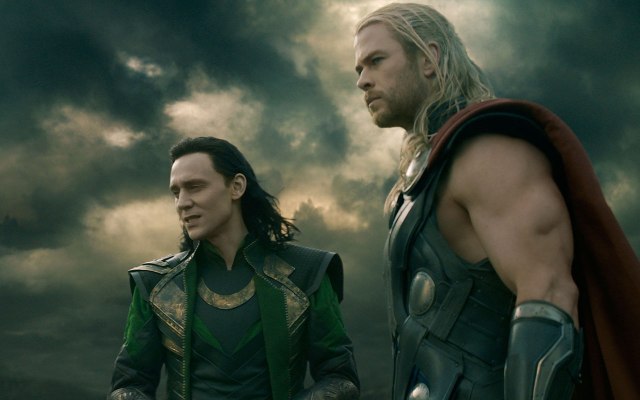
Review: Thor: The Dark World (2013)

Thor-The-Dark-World

Blondes don’t have any more fun: Marvel/Disney

As well as all involved have tried to hide it, THOR: THE DARK WORLD feels more than a little fractured. It looks fantastic, and the key players bring their A-game, but the plot veers and lurches alarmingly.

Following the events of THE AVENGERS, Thor (Chris Hemsworth) has returned to Asgard bringing his scheming brother Loki (Tom Hiddleston) in chains. The Nine Realms are in a state of turmoil, and Thor is faced with the dual challenge of the beckoning throne of Asgard and maintaining peace as various alien skirmishes and attempted invasions take place across worlds. Meanwhile, on Earth, Jane Foster (Natalie Portman) is missing her Godly boyfriend, and is researching strange astrophysical anomalies that might herald his return, as well as a new threat to the universe. That threat comes in the form of Malekith (Christopher Eccleston), the leader of the thought-to-be-extinct Dark Elves who is searching for a magic super weapon, and has a serious grudge to settle.

The first thing that strikes you about the sequel to THOR is a newfound sense of scale. The first film kept business in Asgard to a minimum, but this time round we see much of Thor’s homeland, in addition to spells on a few rival alien worlds. There are battles aplenty between squads of aliens in shiny, hugely impractical armour, stabbing and shooting energy blasts at each other, and you begin to get a sense that the Marvel cinematic universe is far larger and more varied than you’d ever expect.

The next thing you’ll notice is one of the first film’s greatest strengths, the human element, is still present and correct. The best scenes still take place on Earth between Thor, Jane and the scene-stealing Darcy (Kat Dennings) – they’re funny, sweet and engaging. I still love Thor and Jane’s relationship, it’s still endearing and it certainly develops over the course of this film. You also have the added bonus of an increasingly batty Erik Selvig (Stellan Skarsgard), who hasn’t quite been the same since Loki used his head as a taxi, and now has a tendency to remove his clothes at every opportunity. Speaking of the God of Mischief, Mr Hiddleston is still the best thing about the Thor universe, and is deservedly given all the best lines. There’s also a fantastically creative final set piece, which involves the destruction of a good portion of London and wacky bending of the very laws of physics.

Anthony Hopkins once again does a very good impression of Anthony Hopkins, and as always has the very best voice for a big chunk of expository narration. Eccleston, unfortunately doesn’t bring much to the table apart from memorising the Dark Elf language, and actually becomes a pretty forgettable villain overall. Perhaps there was more to his character before the re-edit, but he just comes across as evil for the sake of being evil.

What sadly hasn’t changed from the first film is that Asgard still doesn’t look quite…right. I appreciate that the filmmakers are trying to craft a distinctive and unique sci-fi/fantasy world, but it still only looks intermittently convincing. The imitation Shakespeare dialogue of the Asgardians can also grate after a while, and the script as a whole (great gags aside) could have probably done with a little polish. It’s here perhaps that we miss the hand of a confident, artistically distinctive director like Kenneth Branagh the most – Game of Thrones’ Alan Taylor is competent, but his personality and vision rarely shines through, except for the interior Asgard scenes which all look like something straight out of Westeros. The film relies a little too much, and too readily (like The Avengers and the first Thor film) on a magic MacGuffin, which (of course) spells doom for most of the universe.

Talyor could also perhaps do with giving keeping a closer eye on his editor – the script re-writes haven’t exactly managed to blend into the background, and you can sense that some scenes were hurriedly exorcised to make room for more Loki, and the slightly clumsy cuts in the action sequences can make it confusing to keep track of what is going on. Perhaps they’ve made the best film they could in the circumstances, what with a last-minute change of director and some production troubles, but cracks do end up showing in the final product.

Thor: The Dark World is a decent sci-fi fantasy romp. It will keep you pretty entertained throughout, and is bigger and at least as funny as its predecessor. What it lacks is narrative coherency, streamlined characterisation and a clear aim. Unlike IRON MAN 3, which capped off its own story nicely as well as acting as a worthy sequel to The Avengers, Thor 2 seems a little trapped between the pressures of the superhero ensemble and its own continuity. I’d advise you don’t scrutinise the convoluted mythology too much, and if you just go with it, then you’ll have a lot of fun. SSP

Posted in Film, Film Review | Tagged , , , , , , , , , , , , , , , , , | 6 Comments

Fifteen Shades of Black: Part 2

trainspotting

This article was originally published on Subtitled Online May 2013

It’s time for the second part of my countdown of my absolute favourite black comedies from Britain and Ireland (Here’s part 1). You’ll definitely laugh at them, but you might  sometimes feel bad about it.

TRAINSPOTTING (UK, 1996)

Danny Boyle followed SHALLOW GRAVE with another cheery feature about heroin addiction in Scotland. It’s considered by many (and rightly so) to be his strongest film, with trippy visuals, an adrenaline-pounding dance soundtrack, and memorable turns from Ewan McGregor and Robert Carlyle as the main protagonist and antagonist respectively. The film deals with a dark and serious subject maturely, but also has a fair few laughs at the characters’ expense to balance out the gloom.

Darkest Comedy Moment: Renton’s hilariously sickening, increasingly surreal, suppository-related emergency trip to “the worst toilet in Scotland.” The bathroom he selects in desperation can almost be smelt through the screen, and McGregor’s reaction to having his face obscenely close to the nostril-offending porcelain as he tries to retrieve his precious suppositories is priceless.

WITHNAIL & I (UK, 1987)

WITHNAIL & I is the tale of two poor students (Richard E Grant and Paul McGann) who escape their dreary life in London and take a miserable trip to a rainy Lake District. They bump into Withnail’s pervy thespian uncle Monty (the late great Richard Griffiths), and learn a bit about life, and its many drawbacks, along the way.

The film’s script, by the director Bruce Robinson, is deservedly seen as a highlight of ‘80s British cinema, and is full of odd, but insightful philosophical observations, and lots of creative swearing.

Darkest Comedy Moment: There’s a scene where Withnail, who, when at his lowest, downs lighter fuel whilst covered in goose fat to get drunk and keep warm at the same time. There’s also a dark debate about how best to dispatch a still-clucking chicken when the pair reach their less-than-ideal holiday destination, tired and hungry.

THE LAVENDER HILL MOB (UK, 1951)

One of the more light-hearted films on this list, but still with its fare share of black comic moments, THE LAVENDER HILL MOB is one of the most celebrated Ealing comedy films, winning an Academy Award for screenwriting. Ealing films often explored the darker aspects of human nature; in this case, the sin under scrutiny is greed.

We follow a bank clerk (a restrained Alec Guinness) in charge of gold bullion transfer, who teams up with a craftsman of metal souvenirs (Stanley Holloway) in order to smuggle and sell stolen gold in France. Their plan goes wrong to say the least, and the pair’s actions become increasingly dangerous and erratic as they try to correct their mistakes and evade capture.

Darkest Comedy Moment:  There’s a particularly creepy scene where Holland and Pendlebury essentially stalk a schoolgirl, who has mistakenly purchased a miniature Eiffel Tower made of their stolen gold. They fully intend to rob the defenceless child but are foiled when she goes into a police exhibition and their task becomes considerably more challenging. The sight of two bumbling well-dressed men struggling to outsmart a child is a sinister, yet amusing one.

WILD BILL (UK, 2011)

Dexter Fletcher’s directorial debut sees a wrong-doer (the criminally overlooked Charlie Creed-Miles) leave prison and attempt to go straight. This is no mean task when Bill discovers he has two sons to look after following their mother running out on them and the social services looming, in addition to the presence of his shady former associates who try and lure him back to a life of crime. Being a dad is the last thing Bill wants, and while he’s blackmailed to stay at first by his eldest, Dean (Will Poulter), he gradually makes a real connection with his sons.

Darkest Comedy Moment: Faced with being a responsible dad for the first time in his life, Bill has the unenviable task of making his residence liveable, and suitable (from the social services’ point of view) for raising children. One of the fouler tasks he is faced with is cleaning a toilet which appears to have never been mentioned in the same sentence as bleach, never mind come in contract with it.

IN BRUGES (UK, 2008)

Two Irish hitmen wait for new orders in the picturesque Belgian city of Bruges after their previous job went awry. Ken (Brendan Gleeson) loves the quiet, and the culture, but it puts Ray (Colin Farrell) on edge.

The film won a Golden Globe for Farrell and a BAFTA for the bitterly funny, uniquely Irish script, and effectively kick-started writer-director Martin McDonagh’s Hollywood career, as seen in 2012’s big-name ensemble Seven Psychopaths.

Darkest Comedy Moment: Ken’s rather rapid descent from a tourist attraction at the film’s climax is unexpected, splattery and strangely amusing.

HAPPY-GO-LUCKY (UK, 2008)

Mike Leigh’s HAPPY-GO-LUCKY features the sunniest personality on this list in Sally Hawkins’ Poppy, a primary school teacher who always, somewhat naively, looks on the bright side of life, often to the annoyance of those around her. Will Poppy ever grow up and begin to take life seriously?

Darkest Comedy Moment: The film keeps coming back to Poppy’s driving lessons under the dour instructor Scott (Eddie Marsan). Each lesson Poppy exasperates Scott either by taking shortcuts, making mistakes, or simply by being her cheery self. Finally, Scott snaps, launching into a psychotic tirade in the car. Not so much a comic moment, but a sudden, shocking change in tone in an otherwise pretty cheery film.

A FISH CALLED WANDA (UK, 1988)

John Cleese’s only real post-Python success is a wittily-scripted British comedy caper, with a standout and deranged performance from Kevin Kline.

We follow a criminal gang (Kline, Jamie Lee Curtis and Michael Palin) and a put-upon lawyer (John Cleese) fighting a battle of wits (or lack of) over a haul of jewels stolen in a heist. It’s all a pretty silly affair, but is punctuated by a few moments of darkness.

Darkest Comedy Moment: Kline’s Otto torturing Michael Palin’s stammering Ken by eating his beloved pet tropical fish Wanda straight from the tank in front of his eyes. Ken’s repeated failed attempts to assassinate an old lady who witnessed the robbery, only to accidentally kill one of her yappy little dogs every time, is comedy gold.

IF… (UK, 1968)

IF… is about rebellion in a stuffy, oppressive English boarding school.

Malcolm McDowell, in his debut big-screen role, plays Mick, one of a gang of three unruly sixth formers who tire with their tradition-bound surroundings and particularly of the physical and mental abuse by the senior house whips. Their protest begins with disruption, then progresses to open rebellion, until, finally, in the film’s shocking finale, they take position on the roof of the school and mercilessly gun down their oppressors.

Lindsay Anderson’s film was understandably controversial on its release, capitalising on the anti-establishment movements of the late-60s, and it still packs a punch today.

Darkest Comedy Moment: It’s all pretty bleak and disturbing, but there are some witty and amusing exchanges between the three seniors. At one point, to alleviate boredom, they discuss how they would like to die, and upon Mick’s suggestion that he’d like a nail driven through his neck slowly, his friends burst into laughter at the fact that he bothered to specify the speed of the nail.

So that’s it! My list could have featured any number of alternatives (the work of Ealing Studios could comprise an entirely separate list on their own) but these are some of my favourites, any of which I would wholeheartedly recommend. SSP

Posted in Film, Film Feature | Tagged , , , , , , , , , , , , , , , , , , , , , , , , , , , , , , , , , , , , , | 1 Comment

Review: Four Lions (2010)

four-lions-2009-12_601x256_t614

FOUR LIONS is one of, if not the most daring comedy films of the past decade. It’s the feature directorial debut of Chris Morris, and he has transferred his passion for satirising controversial subject matter on the TV incredibly successfully onto the big screen.

The film follows a cell of jihadists based in Sheffield who are in the midst of planning a suicide bombing. If they were a united group, or if they possessed any modicum of intelligence or basic common sense between them, they might present a real threat, and the film would be a very different creature. Luckily for the sake of comic material, they’re all complete morons, and their clumsy plotting and childish squabbles take up most of the film’s run time. I won’t say exactly where or how their plans go awry, only that they go wrong in a spectacular and hilarious fashion.

The writing is sharp, side-splittingly funny and hard-hitting, as is to be expected from such talented British writers as Morris, with Jesse Armstrong and Sam Bain, the former of which wrote for THE THICK OF IT and IN THE LOOP, and both of whom still write for PEEP SHOW.

The central cast playing a group of inept would-be terrorists are all great – Riz Ahmed’s Omar, and especially his brotherly relationship with his best friend Waj (Kayvan Novak) is the dramatic anchor for the story, and the rest of the group is composed of brilliant comic creations. We have an innocent man-child in Waj, the manipulative, arrogant white Muslim Barry (Nigel Lindsay), the moronic suicide-bombing-crow advocating Faisal (Adeel Akhtar) and the bad music-loving Hassan (Arsher Ali). There are also some nice little cameos for British TV favourites Craig Parkinson, Alex MacQueen, Julia Davis, Kevin Eldon, Darren Boyd and Benedict Cumberbatch, and it’s amusing now to see them before their careers had really made an impact (particularly Mr Cumberbatch).

Four Lions works both as a witty satire and as an extremely black comedy. It forces us to question our views of the world, and proves there is a funny side to almost every situation, even something as seemingly bleak as home-grown religious extremism and the threat of a terrorist attack in a community with a prominent religious minority presence.

It is, unfortunately, the kind of film that is at its most affecting and enjoyable on the first watch, as on repeated viewings some of the jokes lose their impact, and the message the film aims to promote (if there is one beyond exposing the idiocy of religious extremism) feels ever more muddled and indistinct as you give it real thought. It’ll also, of course, be a divisive film – some will never find comedy potential in this subject matter, no matter how it’s presented.

Perhaps one weakness of the film is that though Riz Ahmed gives a great performance as Omar, the closest thing the film has to a protagonist, as a character he always remains an enigma. We never understand why he has chosen the path that he has, and consequently the scenes where he is interacting with his loving wife and particularly his young son, who clearly idolises his father, feel a little sinister and without clear purpose. Perhaps Morris and co. never wanted to provide an explanation for Omar’s actions to highlight the senselessness of terrorism, but by making Omar so alienated from humanity, his potential as a compelling lead character is limited. At least the rest of the group can blame a severe lack of intelligence for their actions, but Omar is shown to be considerably more level-headed and calculated in the decisions he makes, and being able to see his point of view might have proved equally insightful and terrifying for the viewer.

Even with these minor issues, Four Lions is an original, razor-sharp and exceedingly brave film that tackles the war on terror with the most powerful weapon of mass destruction of all: laughter.  I eagerly look forward to seeing what else Chris Morris has stored away in that twisted little comedy brain of his. SSP

Posted in Film, Film Review | Tagged , , , , , , , , , , , | Leave a comment

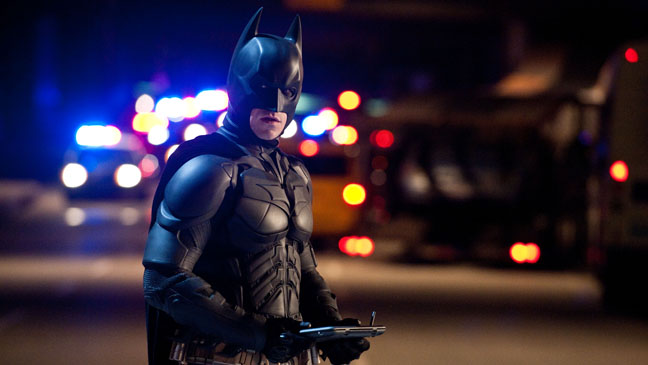
Review: The Dark Knight Rises (2012)

Dark Knight Rises

The filmmaking powerhouse that is Christopher Nolan delivered a fairly satisfying final chapter of his Dark Knight trilogy, even if it’s much easier to pick holes in than his previous two outings with the Caped Crusader.

The plot of THE DARK KNIGHT RISES might be a slow-burner, but the stockpiled tension accumulated over the course of the film explodes in an epic finale. Set eight years after the events of THE DARK KNIGHT, we find Bruce Wayne (Christian Bale) has retired from crime-fighting and become a recluse, giving into his ailing body and the belief that Gotham City no longer needs Batman. This all changes when he encounters a far from ordinary cat burglar Selina Kyle (Anne Hathaway) and Bane (Tom Hardy), the masked leader of a mercenary army bent on revolution.

With the addition of this final instalment, Nolan’s Batman series gratifyingly feels like a complete story that brings you full circle rather than a succession of tacked-on sequels. This was achieved thanks to an extraordinary joint writing effort by the Nolan brothers and David S. Goyer, who have put great effort into keeping their series tonally and thematically consistent. I loved the clear plot references to BATMAN BEGINS in particular (the police vs. Bats chase, the flashbacks, the involvement of the League of Shadows). This is one of the most enjoyable of the Caped Crusader’s screen outings, being pretty dark, provocative and relevant to an era of economic uncertainty (in an incredibly blatant way) but also never forgets to be fun, with a fair few lighter moments to break the monotony. Rises is a genuine, uplifting superhero film like Begins was, unlike The Dark Knight, which was more of a high-concept crime thriller that happened to involve people in silly costumes.

Is Tom Hardy’s Bane a more memorable villain than Heath Ledger’s Joker? Not by any stretch of the imagination, but he’s an entertaining, distinctive antagonist with a wonderfully odd voice and some of the best eye-acting ever committed to the screen. Bane’s introduction scene is arguably on par with the Joker’s from the previous film, though – both are creative, thrilling heist scenes that are served beautifully by Nolan’s love of IMAX. I’m not overly fond of the first Batman vs. Bane fight, though – it’s a bit lumbering and uninteresting, and I’m sure more effort and creativity could have been put into the choreography.

The old faithfuls of the franchise – Michael Caine, Gary Oldman and Morgan Freeman are good as ever, though with reduced screen time, and Christian Bale impresses as an older, creakier Batman. Series newcomer Anne Hathaway is mesmerising playing the manipulative and morally ambiguous Selina Kyle AKA Catwoman (though never actually named as such), who proves herself to be at least as formidable as her pointy-eared associate. Joseph Gordon-Levitt manages to hold his own in a cast of big-hitters as an honest cop served well by his instincts, though all his good work is nearly undone by a clumsy and unnecessary moment at the film’s conclusion (not Levitt’s fault, the writers’). The weak link of the cast sadly is the usually excellent Marion Cotillard, who veers from being wooden to hamming it up royally at an alarming frequency.

The main crime The Dark Knight Rises commits is attempting to tackle too much. The plotting is a lot looser this time round, conveniently glossing over such narrative inconveniences as the passage of time and geography, and there are frequent references to things that supposedly happened between the last film and this one, often resulting in an information overload. The amount of new incidental characters that are introduced, and the frequency at which they are dispatched again can be alarming, and it doesn’t exactly help a viewer in grasping the story. A lot of narrative fat could have been cut at the beginning of the film, and a tweak in plotting in the first act would have certainly helped with the flow of the story, and perhaps heightened the dramatic impact of the “rising” of the title. Also, if you’re paying attention, the plot twists don’t come as much of a surprise at all.

The Dark Knight Rises is still a hugely entertaining and handsome-looking film, and the mostly practically achieved action has never looked better, but if the story had been stripped back a little, and had been more focussed, then perhaps a more consistently enjoyable final product might have emerged. Whatever DC/Warner Bros do with Batman next, it’ll be nigh-on impossible to top Nolan’s trilogy, and tragically, since they’re starting from scratch, we’ll probably never see Hathaway’s wonderful take on Catwoman again. SSP


Posted in Film, Film Review | Tagged , , , , , , , , , | 3 Comments