Review: The Double (2013)

The-Double-Still

Surely it goes without saying by now that Richard Ayoade is one talented gent. I loved his feature directing debut SUBMARINE, and THE DOUBLE takes everything that worked in that film and amps it up, refines it, and takes it to a much weirder and far more twisted place. I can’t pretend I understood everything that happens (or doesn’t) especially towards the end of the film, but I don’t really think Ayoade intended it all, or perhaps much of it at all, to be easily pinned down, so that’s probably the point.

In a nondescript time and place, Simon (Jesse Eisenberg), an unremarkable office drone, is used to being unappreciated or flat-out ignored by his colleagues and most painfully, Hannah (Mia Wasikowska), the woman he secretly harbors feelings for. His life is monotonous, but he just accepts it as the way the world is, the way anyone like him would be treated, until his doppelganger James (also Eisenberg) arrives on the scene and quickly becomes the most popular guy in the office. Hannah falls for James and he is proclaimed the company’s brightest hope for the future by the boss, Mr Papadopoulos (Wallace Shawn), despite being exactly the same person as Simon, only with charisma. As James worms his way ever further into Simon’s life, events take a far more sinister turn…

Some films are so visually beautiful I get chills. In fact, I’d go as far as saying that The Double is by far the best-looking film of 2013, and no, I haven’t forgotten about GRAVITY. Every shot is painstakingly constructed and unavoidably eye-catching. The whole film has this sickly yellow-green filter over it and impenetrable, almost German Expressionist shadows, all of which reflect the story’s main themes of alienation and paranoia brilliantly. Then the camera ethereally floats along long corridors like it’s tentatively navigating some vivid nightmare, and the film itself certainly becomes that as Simon’s real-or-not torment escalates.

Jesse Eisenberg gives a career-best performance twice. The subtle differences he brings to the characters of Simon and James, the way they act, talk, move, hold themselves has clearly been given much thought. Also, to provoke such a different reaction from the viewer to two characters with the same face is a remarkable achievement. We always feel sorry for Simon, we want him to be loved and find just a little happiness, even if he is a bit pathetic and stalker-y, and we quickly grow to detest James for being a despicable human being, despite his bottomless pit of charm. Mia Wasikowska makes her mark too with an affectingly fragile turn. She is far from just a token love interest, and she hints at her underlying personality and mental health issues without ever boiling Hannah’s characterisation down to a simple diagnosis. Ever since she paid her Hollywood dues with Tim Burton’s staggeringly miscalculated ALICE IN WONDERLAND, Wasikowska has been allowed to prove herself to be an extremely versatile young performer with the wide range of brave roles she has taken on.

The film isn’t set in a particular time or place, and most of the traditional building blocks of storytelling are deliberately unclear (for instance, it’s used as a gag that we don’t ever find out what Simon’s company actually does). Whatever his job entails, his office environment is part BRAZIL, part THE IT CROWD (certainly a unique combination). Ayoade stole the show in pretty much every scene in The IT Crowd playing super-nerd Moss, but the parallels between his film and Graham Linehan’s TV show, whether intentional or not, are hugely noticeable, from the amusing exaggeration of incomprehensible and pointless office life to satirical company training/marketing ads even to a sudden hilarious cameo by Chris Morris. It’s also nice that Ayoade managed to find a part for pretty much all of the key cast of Submarine, from interesting supporting roles for Yasmin Paige and Noah Taylor as the boss’s deviant daughter and a moody colleague, to amusing cameos from Craig Roberts and Paddy Considine as a baby-faced cop and a campy TV sci-fi character, respectively.

Some filmmakers put their personalities straight up on screen, and Richard Ayoade doesn’t seem the least bit embarrassed to bare his soul to the world, eccentricities and all, through his work. Like Submarine, it’s a filmmaking style that speaks to the alienated, to those who see the world in a different way, and in turn are seen as different by the world. The Double has a lot going for it, from great performances to thematic richness and multiple ways to read the increasingly deranged plot and even horror elements that hark back to Germanic folklore, but the very best thing it does is to evoke a feeling of intense uneasiness leading into an exploration of outright madness. Submarine went from pleasant Welsh whimsy to bittersweet life affirmation, but The Double just goes from dark to darker. It’s funny in an underplayed kind of way, but by God it’s black stuff. SSP

Posted in Film, Film Review | Tagged , , , , , , , , , , , , , , , , , , , , | Leave a comment

Top 10 Killer Henchmen (RIP Richard Kiel)

Jaws

It really has been a tough year to be a film lover. The latest big screen icon to shuffle off his mortal coil is Richard Kiel, who died on Wednesday in hospital aged 74. A man with undeniable presence, Kiel made the most of the incredible stature he was born with, and his acting career was long and fruitful. He will of course be best remembered as one of the most iconic adversaries of Roger Moore’s James Bond, the metallic grinning behemoth Jaws, and to celebrate his most famous role, I thought I’d count down my Top 10 Killer Henchmen on film. I wonder who could be at number 1…

3509570-21

10. The Twins (Adrian & Neil Rayment) – THE MATRIX RELOADED (2003)

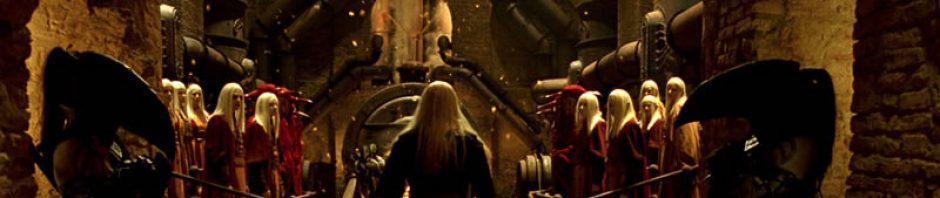
Not a whole lot in THE MATRIX RELOADED worked, but the Wachowskis did bring us a pair of pretty fun henchmen. Decked dreads to toes in white, unbelievably fast and with the terrifying ability to phase into wraith form, they are a royal pain in the asses of Morpheus (Lawrence Fishburne) and Trinity (Carrie-Anne Moss) as they try to get valuable ally The Keymaker (Randall Duk Kim) to safety along a packed freeway…

sin-city-marv-kevin1

9. Kevin (Elijah Wood) – SIN CITY (2005)

What kind of opponent would be worthy of fighting the hulking Marv (Mickey Rourke)? Frodo, that’s who! Elijah Wood has now played his fair share of psychos since he left Middle Earth, but Kevin was his first and arguably his best. Deceptively nonthreatening with his slight physique and casual clothes, this killer is completely silent, with cat-like agility and has a shudder-inducing taste in midnight snacks.

rob-roy-1995-10-g

8. Cunningham (Tim Roth) – ROB ROY (1995)

I’ve always preferred ROB ROY to BRAVEHEART, and the villains are a huge part of that. John Hurt is the big bad, but Tim Roth takes the uber-bastard henchman role as Cunningham, a foul fop light on his feet and quick with a blade. The way he flounces around in his floppy shirts, tights and powdered wig, you’d be forgiven for underestimating him. Then, he kicks Liam Neeson’s ass in fine fashion!

Savin_heat

7. Savin (James Badge Dale) – IRON MAN 3 (2013)

I loved pretty much everything about Shane Black’s IRON MAN 3, but the chief henchman Savin, a strutting, mischievous heat projecting terminator, was one of my favourite elements. James Badge Dale just looks like he’s having so much fun and gives him such charisma as he morphs seamlessly from cocky hired intimidator having a pissing contest with Jon Favreau’s Happy Hogan to superpowered Presidential assassin/decoy.

oddjob

6. Oddjob (Harold Sakata) – GOLDFINGER (1964)

He’s a  smiley Japanese man in an Edwardian suit who carries his master Goldfinger’s (Gert Fröbe) golf clubs and kills opponents with a razor-sharp bowler hat. He’s fun, he’s larger-than life, he’s ridiculous, what more could you want from a killer henchman?

x-neto

5. Mystique (Rebecca Romijn) – X-MEN (2000)/X-MEN 2 (2003)/X-MEN: THE LAST STAND (2006)

It’s easy to forget that before Jennifer Lawrence inherited the role for the prequels and turned Raven Darkholme into a misunderstood anti-hero, blue shapeshifter Mystique (Rebecca Romijn) was a cold-hearted killer bitch. She was great as Magneto’s (Ian McKellen) spy/seductress/muscle, and Romijn gave her great physicality and deadly intensity. She stole the show in X-MEN and X2, and then Brett Ratner got hold of her and found her surplus to requirements. Moron.

hellboy_kroenen

4. Kroenen (Ladislav Beran) – HELLBOY (2004)

Nazis have been the go-to no explanation required bad guys at the movies for a long time, and the genius that is Guillermo del Toro gave us the best we’ve seen in ages. Kroenen is a silent, mutilated zombie with a penchant for fancy blades and fancier designer gas masks. He’s nigh-on unstoppable, lethal and an undeniably cool-looking dude.

Kill_Bill_008

3. Gogo (Chiaki Kuriyama) – KILL BILL: VOL. 1 (2003)

Nobody is better at elevating low art to high art than Quentin Tarantino. In KILL BILL, The Bride (Uma Thurman) easily cuts her way through an army of disposable manpower in Kato masks,  but before she can claim revenge against O-Ren Ishii (Lucy Liu) she must also face some walking fetish fuel carrying a meteor hammer. As the film’s narration quite clearly establishes, Gogo (Chiaki Kuriyama) may look innocent but she is also quite mad and very good at what she does, as the brutal duel that follows proves.

The-Raid-2-Berandal-Hammer-Girl-Julie-Estelle-and-Baseball-Bat-Man-Very-Tri-Yulisman

2. Hammer Girl/Baseball Bat Man (Julie Estelle/Very Tri Yulisman) – THE RAID 2 (2014)

Gareth Evans produced two of the best deranged supporting villains outside of a Bond film, and certainly the most memorable of the past decade. A brother and sister team who love each other very much, and love being paid to put their unique weapons of choice to good use even more, Hammer Girl (Julie Estelle) and Baseball Bat Man (Very Tri Yulisman) provide the ultraviolent action highlights to the excellent THE RAID 2.

M12

1. Jaws (Richard Kiel) – THE SPY WHO LOVED ME (1977)/MOONRAKER (1979)

Who else? Jaws is a masterful supporting character performance from Richard Kiel. He could easily have been just another blunt instrument, but Kiel brings out something much more than his innate imposing physique. He becomes a character who is relentless, determined and increasingly frustrated at his inability to squash a much smaller posh man. He’s one of the best things about one of the best of all Bond films, THE SPY WHO LOVED ME, but even in the laughable MOONRAKER, Kiel gives Jaws added depth. You don’t tend to care about many henchmen on film, but you can’t say that about Jaws – he’s a strangely loveable killing machine. SSP

Posted in Film, Film Comment, Film Feature | Tagged , , , , , , , , , , , , , , , , , , , , , , , , , , , , , , , , , , , , , , , , , , , , , , , , | Leave a comment

A Few Thoughts More: The Amazing Spider-Man 2

Andrew Garfield

I hated THE AMAZING SPIDER-MAN 2 when I saw it earlier this year. I wasn’t planning on watching it again, but sometimes a movie you detest just turns up in your house and you’re strangely compelled to put them on. I’m also a bit of a sucker at giving superhero movies especially a second chance. I mean, I’ve already given GHOST RIDER and FANTASTIC 4: RISE OF THE SILVER SURFER another shot this year, so will I never learn? ASM2 still terrible, but I’ve had a second go at processing the extent to which it doesn’t work, and come up with a few more ideas. By the way, a few spoilers ahead.

One of the driving forces behind this iteration of Peter Parker (Andrew Garfield), especially since the events of the last film, is his moral turmoil at maintaining a relationship with Gwen Stacy (Emma Stone). Peter breaks up with Gwen again here, then a few months later she suggests they stay just as friends to make things less complicated, to which Peter heartily agrees. The trouble with this is that he’s still going to be putting Gwen in danger. It doesn’t matter whether their relationship is romantic or not, he’s still Spider-Man and she’s still at risk as long as colourful bad guys are coming after him. I know she’s not a passive damsel in distress and can handle herself, but at the same time, she’s not superhumanly strong, agile and durable. Yet Marc Webb and his writers try (and fail) at fooling us into thinking everything will be OK as long as Peter and Gwen aren’t snogging.

When will Hollywood learn once and for all that you show, and don’t tell. Film is a visual medium – guys in suits spying on Harry Osborn (Dane DeHaan) from a van and explaining to the audience how it will be good business sense for Oscorp to kick out the guy with his name on the stationery isn’t interesting!

Speaking of Harry, shouldn’t there have been at least one throwaway line in the last film that mentioned his childhood friendship with Peter? Something like: “I sure miss Harry…”. There also seems to have been next to no thought put into the Green Goblin’s genesis this time round. In Sam Raimi’s SPIDER-MAN, it was clear – Norman Osborn (Willem Dafoe) tested an experimental military-grade drug on himself and it drove him mad in addition to making him super-strong. Here, Harry apparently needs the same super-spider venom that transformed Peter into Spider-Man to cure his terminal hereditary disease despite seeing the plans on his company’s database for a suit of power armour that grants accelerated healing to its wearer. He only dons the armour once the venom starts wreaking havoc on his nervous system – why didn’t he just climb in the armour and not bother with pumping this unpredictable substance into his body?

Andrew Garfield might be a good actor, but aside from THE SOCIAL NETWORK, I’m seeing very little evidence to prove it. He looks like someone confident pretending to be the opposite, and just tries too hard to play the gawky teen, full of unconvincing physical tics and quirks, plus his Spidey-zingers which he just about got away with last time are starting to feel stale. He does have one really good scene with Aunt May (thank God for Sally Field) but it doesn’t quite justify the amount of time we have to spend with him.

I’ve already talked about how the makers of ASM2 should have been sued by Warner Bros for plagiarising WATCHMEN, but they even rip off Raimi’s SPIDER-MAN 2 in that they have exactly the same scene to prompt Spidey’s return to duty – Aunt May is throwing out Uncle Ben’s stuff and wonders where on Earth New York’s favourite superhero has gone when the city needs him the most.

I’ll admit, Gwen Stacy’s death scene works. It’s quietly beautiful and pretty poignant, but it’s ruined in the film’s concluding scenes. Peter mopes around the graveyard for a while as the seasons flash past (how many times have we seen that?) then when he re-dons the red and blue for the finale, he’s exactly the same person. He still struts around and still cracks wise, and doesn’t seem to have learned anything.

At least someone at Sony came to their senses and cut a scene they filmed where Richard Parker (Campbell Scott) returned from beyond the grave. At least they didn’t ruin the only scene in the film that really worked. Peter’s dad has to die and it only remains affecting for the audience and important to the character’s development and driving motivation if he stays that way. SSP

Posted in Film, Film Review | Tagged , , , , , , , , , , , , , , , , , , | 1 Comment

Review: The Brothers Bloom (2008)

Brothers Bloom

This year, Rian Johnson was announced as the director of STAR WARS EPISODE VIII, which is a truly enticing prospect. He’s a writer-director I’ve only come into contact with over the past couple of years, first through the sharp time travel thriller LOOPER, then I saw his masterful highschool noir, BRICK. His second feature film THE BROTHERS BLOOM is just as unique, twisted and entertaining, if not quite as consistent, as Johnson’s two other work, and though it’s essentially a farcical con-man movie, it’s not really about what happens in the story, but the act of storytelling itself.

The film follows a lifelong partnership between siblings Stephen (Mark Ruffalo) and his younger brother Bloom (Adrien Brody) who have been executing ambitious cons for profit since they were children. Stephen’s meticulous planning and Bloom’s ability to lie and create characters have served the duo well in their decades-long crime spree, but when Bloom falls for their latest mark, Penelope (Rachel Weisz), an eccentric heiress, what is supposed to be their final con proves to be far from simple.

The film’s setting is timeless, the mix of fashions, technology and language appearing to be belong to all an no particular period. This lends a certain level of fantasy to everything Stephen tells us, so we never really know what, if anything, we see actually happened. Stephen keeps insisting throughout that everything that occurs, whether good or bad, is all part of his plan (and at several points he produces his plan on paper to prove as such), but as Bloom and Penelope go ever more off-script, we are asked to wonder just how much has been planned, and how far ahead Stephen is really looking. Wisely, Johnson doesn’t ever provide us with a definitive answer, so we can read Stephen and his level of scheming to whatever extent we like. Is just lucky, or is he a bona fide genius?

Brody and Ruffalo convince as siblings whose relationship may go through frequent rough patches (usually when Bloom is duped into doing something particularly immoral by Stephen, and is haunted by his conscience), but their brotherly bond remains unbreakable – you don’t have to like your family, they say, but you have to love them. Brody makes Bloom appealingly earnest and morally conflicted, and Ruffalo brings a shed-load of charm to Stephen, and really sells it that he is always plotting, always at least two steps ahead. Bloom seems to be “done” with the life of crime every other scene, but Stephen always manages to tempt him back, usually with the help of his formidable, almost supernaturally resourceful silent bodyguard/fixer Bang Bang (Rinko Kikuchi). While Brody and Ruffalo both turn in fine performances, the film belongs to the ladies, with the mesmirising Kikuchi communicating a staggering amount with a slight change in expression or physical tic (their plan going a little wrong does at one point force her, hilariously, to say something), and Weisz, who creates a captivatingly daffy manic depressive “hobby collector” in Penelope.

I wasn’t so enraptured with Robbie Coltraine playing “The Curator” who may, or may not be Belgian (judging by his accent, probably not), nor by Maximilian Schell’s “Diamond Dog”, the Blooms’ former boss who looks and sounds like a villain from a pulp comic series you’ve never heard of. Both of these characters come from the portion of the film that doesn’t really work, when Johnson tries to bring in a credible threat to proceedings, elements of a serious crime film, we just can’t take it seriously because everything else we see is so throwaway and weird.

It’s kind of the point of the film that you can barely keep up with what is going on – we see events through Bloom’s eyes, and generally remain bewildered by Stephen’s “bigger picture”. That might be seen as a weakness by some, viewers who like their stories to be clearly defined and unambiguous, but I like how open and nebulous Johnson has left the plot and the way it is communicated (or not) to us. As I said, it’s not a story as much as a demonstration of storytelling and the embellishments that can be applied to narration, so it almost doesn’t matter that it’s a little incoherent.

A few of the jokes don’t quite land, and even in a film where big story event signposts are few and far between, some scenes feel unnecessary and don’t really go anywhere. A drastic final act change in tone seems particularly out of place, taking the film into a different genre entirely, but Johnson and his cast thankfully get things back on track again for an affecting final few minutes.

I can’t claim that everyone will like The Brothers Bloom, in fact, if you’re against an open style of storytelling that offers very few answers at the end, you’ll probably outright hate it. But not me, I’m might not be quite as captivated with Johnson’s second feature as his first, third, or his BREAKING BAD episodes, but I’m certainly glad I’ve seen it, a unique and odd experience that has allowed me to think a different way about telling (or not telling) a tale on film, and about the power the narrator wields. SSP

Posted in Film, Film Review | Tagged , , , , , , , , , , , , , , | 1 Comment

Series Retrospective: Marvel Cinematic Universe

ironman2013033

Ten films, six years, and two distinct phases later and Marvel are sitting pretty as kings of the proverbial movie castle. Try and cast yourself back to before Tony Stark strapped on his first scrappy suit of armour to escape from terrorists. It’s not easy to remember the film landscape before Marvel started overseeing the production of their own movies from start to finish.

In terms of Superhero blockbusters, the situation didn’t look all that promising in 2008. X-MEN and SPIDER-MAN, the twin architects of modern comic book franchises had petered out and died after lacklustre third instalments. We were still two months away from finding out that Christopher Nolan hadn’t just gotten lucky with BATMAN BEGINS, and over a year away from seeing the long-delayed film adaptation of WATCHMEN.

Then along came Kevin Feige, a man with the ambition to change in-house blockbuster filmmaking forever, who decided to try and launch one of the most profitable and well-received franchises in history with a director of kids’ movies and a burnt-out character actor.

What follows is a breakdown of Marvel’s first decalogy, what worked and what didn’t, and how I rank them from worst to best. Some spoilers follow, but surely you can’t have avoided seeing at least some of these superhero extravaganzas?

10. THE INCREDIBLE HULK (2008)

None of the performances in THE INCREDIBLE HULK are bad, just a little underwhelming. Norton, Tyler, Hurt, Roth are all fine, but none of them give anything more than they have to. The movie presses the reset button on Bruce Banner’s story but recaps his origins in the opening titles (I’m not complaining about this) and unfolds as a chase movie with horror elements. On a technical level, it’s fine, but key character beats and relationships feel rushed (especially compared to Ang Lee’s melodramatic take on the story) and the finale is just a big, ugly, boring punch-up in the dark.

9. IRON MAN 2 (2010)

Perhaps it was inevitable that the quality tailed off somewhat in Marvel’s first sequel. Whereas Tony Stark’s debut was lean and focussed and fresh, IRON MAN 2 is mostly bloated, plodding and lacking in charm. Sam Rockwell is amusing as a wannabe Tony Stark, and Don Cheadle and Scarlett Johansson are solid additions to the Marvel canon, but Mickey Rourke makes little impression, and the exploration a conspiracy tied to Stark Sr. doesn’t really work. The action and visuals are decent, but the whole thing just feels like it’s biding time.

8. CAPTAIN AMERICA: THE FIRST AVENGER (2011)

CAPTAIN AMERICA is a decent movie, just not a particularly good superhero movie. It works really well as a sharp critique, even satire, of wartime jingoism and propaganda, but as a superhero story, it’s not very exciting, and I really don’t like the cartoonily evil Red Skull (Hugo Weaving) and his incredibly dull Nazi Hydra henchmen. Chris Evans is an appropriately earnest action lead, and is ably supported by Hayley Atwell and Tommy Lee Jones, but I was still left underwhelmed in the end.

7. THOR: THE DARK WORLD (2013)

The God of Thunder’s first appearance was where the Marvel Cinematic Universe got weird. In THE DARK WORLD, the weirdness is expanded ambitiously outwards and the wider Marvel Universe, if not exactly fleshed out (that happens later), is certainly teased. Like the first THOR, the film’s biggest strength is the very human comic streak, but GAME OF THRONES director Alan Taylor also adds scale and tangibility. More Loki never hurts either, but the film does feel over-edited to accommodate him, and like Red Skull, Malekith (Christopher Eccleston) is another villain who’s too thinly sketched and black-and-white. My full review of Thor 2 can be found here.

6. CAPTAIN AMERICA: THE WINTER SOLDIER (2014)

I wasn’t as sold on THE WINTER SOLDIER as everyone else. It’s certainly a step up from Cap’s previous outing, Evans, Johansson and Anthony Mackie bring their A-game, and the action is superb (as good, and even occasionally better than THE AVENGERS), but the big picture just didn’t hold for me. I admire Marvel for keeping the many secrets under wraps, and it’s certainly ambitious, but the revelation of a decade-spanning Nazi Hydra conspiracy that leads to the third act action I found quite laughable, and a little tired and derivative to boot. My full review of Cap 2 can be found here.

5. IRON MAN (2008)

What a kickoff. It’s now impossible to imagine anyone else as the genius billionaire playboy philanthropist, and Robert Downey Jr. could arguably hold up the entire film on charisma alone. Not that he has to – Jon Favreau sets just the right tone, a balance between grittiness and lightheartedness, a tone that is carried on by the vast majority of Marvel’s films – it takes itself seriously, but not too seriously. IRON MAN has among the best cinematic tellings of a superhero origin story, and just the right split of action/character stuff. Downey was born to play Tony Stark, and Jeff Bridges is always fun even if his character is a little one-dimensional.

4. GUARDIANS OF THE GALAXY (2014)

Probably not quite as anarchic as you might expect a major blockbuster from James “SUPER” Gunn to be, but GUARDIANS OF THE GALAXY still had an air of mischief about it, and could be considered the first outright comedy Marvel has produced. Marvel have pulled the “They’re dead…ah! Fooled you!” trick a few too many times now, but this oddball team were a joy to be around, and made you truly thankful they all made it through. with the addition of a pleasing, if familiar STAR WARS-y plot structure, vibrant makeup and effects, and the promise of much more to come, this was something pretty special. My full review of Guardians can be found here.

3. THOR (2011)

Only a director like Kenneth Branagh could make this work. It’s half-HAMLET, half-FLASH GORDON, and all entertaining, even if some of the SFX are a little off. It’s thematically grand, theatrically performed, and gets the split right between galaxy-spanning pathos and Earth-bound sitcom humour. The film gave us Marvel’s most beautiful score from Patrick Doyle, the series’ best love-to-hate character in Loki (Tom Hiddleston), a scene stealing comic supporting character in Darcy (Kat Dennings), and refreshingly, a male object of lust in Thor (Chris Hemsworth) for Jane Foster (Natalie Portman) to turn into a giggling schoolgirl over.

2. THE AVENGERS (2012)

This shouldn’t have worked. There were too many plates spinning, too much depended on it. Then Joss Whedon proceeded to demonstrate just why he’s one of the most talented men working in the film and television industry. The spectacle on offer is still the level to beat by all competing blockbusters since, but Whedon also brought wit aplenty, aesthetic confidence and a soul to proceedings. Great performances across the board don’t hurt either – Downey, Evans, Hemsworth and Hiddleston make the most of their ensemble screentime, but it’s Mark Ruffalo and Scarlett Johansson who steal the show playing vulnerable characters trying their utmost to hide their true selves.

1. IRON MAN 3 (2013)

I understand why people have issues with this one, but I adore it. It’s an unavoidably weird mix of the usual Marvel fireworks, middle finger genre iconoclasm and 1970s James Bond rompiness. Shane Black (and co-writer Drew Pearce) were the perfect men to prove that Marvel still has some tricks up their sleeves, and they make the conclusion to Tony Stark’s character journey funny, satirical and satisfying. Downey is electric once again, Guy Pearce gradually peels back layers of his devious slip-on shoes wearer to become MCU’s most interesting villain after Loki, and Ben Kingsley now has a triumvirate of very different tour-de-force performances – Gandhi, Don Logan and Trevor Slattery. What a dinner party they’d make. My full take on Iron Man 3 can be found here. SSP

Posted in Film, Film Feature | Tagged , , , , , , , , , , , , , , , , , , , , , , , , , , , , , , , , , , , , , , , , , , , , , , , , , , , , , , , , , , , , | Leave a comment

Review: Doctor Who: Deep Breath (2014)

Peter-Capaldi-in-DEEP-BREATH

On Christmas Day 2013, Matt Smith regenerated into a very different actor. Arguably no more drastic a change personality-wise than it was from Christopher Eccleston to David Tennant two regenerations ago, but certainly a world apart from youngish David Tennant to the even younger Matt Smith. I doubt anyone really doubted Peter Capaldi’s acting abilities when he took on the role of the Twelfth Doctor, but there were questions about what his advanced (at least, compared to Smith and Tennant) age and perceived spikiness (thanks, mostly, to a certain Mr Tucker) would mean for DOCTOR WHO’S future. With the opening episode of Season 8 of the revived series, many of these questions have been answered, and though plot-wise it was a relatively stripped back affair, showrunner Steven Moffat being showrunner Steven Moffat couldn’t resist starting to lay his trail of narrative breadcrumbs for this season’s story arc.

It’s Victorian London, and a newly-regenerated, unstable and confused Doctor (Peter Capaldi) has a mystery to solve. There’s a dinosaur in the Thames, people are spontaneously combusting, and there’s a restaurant that’s not a restaurant to investigate. Far from in his best state of mind, the Doctor reunites with Madame Vastra, Jenny and Strax (Neve McIntosh, Catrin Stewart and Dan Starkey), who, in addition to their love of sleuthing the supernatural, may have a thing or two to teach Clara (Jenna Coleman) about the man she knows better than anyone, but no longer recognises…

Capaldi was spellbinding from the off, taking forceful ownership of the character and the show as a schizophrenic Doctor staggering out of a crashed TARDIS, then as his mind more-or-less-settled, he became something equally compelling, sympathetic, scary and funny. The Twelfth Doctor been described in the press coverage leading up to broadcast as not caring much for humanity anymore. Not much evidence of that so far, though he does seem particularly indignant (much like Tennant’s Tenth) at cruelty towards non-humans. There’s some nice humour from Capaldi too, from the frequent references to his accent crossing the boarder (and everyone else’s accents therefore having “a defect”), and some light self-deprication about his angry eyebrows and his new appearance not exactly being box fresh, including the wonderful question he poses himself after looking in a mirror: “who frowned me this face?”. He also has a great, if fleeting moment of subtle performance, when the Doctor shows the episode’s antagonist his reflection to make a point, and in the process catches a glimpse of his own new face and seems to be holding back a shudder.

Capaldi appears to (whether consciously or not) be referencing previous incarnations of the Doctor – a bit of Tennant here, a bit of Eccleston and Baker (both) there – but he also manages to bring across aspects to the character that have never really been touched upon before. Usually, when the Doctor regenerates, his companions are confused at first, but quickly come to accept his new appearance. In Deep Breath, Clara takes the full episode to get used to the new Doctor, and even then she isn’t too sure. Her whole world has been transformed in a split second, her dashing young friend is gone forever. It’s not like Billie Piper’s Rose whose relationship with the Doctor remained more-or-less the same as he hopped back a few years and grew some hair gel. Coleman has a tough job bringing this across but seems to relish the challenge, and Clara doesn’t behave in the most admirable or understanding way, much to Madame Vastra’s chagrin. Capaldi meanwhile makes us realise something new about the Doctor – when he changes, he’s just as scared and confused as his friends are, and he needs their support to get through it. At the finale, the emotional crescendo of the episode peaks as the Doctor heartbreakingly wills Clara to see that he is still the same person. It’s a pretty clever episode about concepts of identity, with plenty of food for thought about a very human trait – being shallow.

It was also a really funny episode, among Moffat’s best, and not overly smug as his humour can tend to be. The return of the Paternoster Gang always helps, and spending more time with Vastra, Jenny and Strax always makes episodes fly by. Strax still gets most of the laughs as usual, and Vastra and Jenny remain an appealing couple. The group’s presence and the entertainment value they provide almost makes me wish for another Earth and time period-bound season like the we saw in the Pertwee era.

As for the new stylistic embellishments, Ben Wheatley, master of disturbing British independent cinema, brings sweeping, trippy flourishes to his cinematography, and a macabre and unhinged  tone to the first of two episodes he’s been invited to direct. Obviously, he can’t really bring much of his love of depravity into play when the whole family is watching, but there is a scene with the Doctor crawling around on the floor like a feral dog in an unlit bedroom, and the episode’s plot, which references one of Moffat’s earlier stories, covers just the kind of creepy material Wheatley’s films do.

We get a new title sequence and re-orchestrated theme tune that might hint at the direction the Twelfth’s tenure is heading. The titles now feature moody clockwork animation and a more industrial sounding dun-dur-dun that could perhaps suggest we’re going to be having a Gothic time of it for the next couple of months. I’m not at all against this, it’s an aesthetic and tone I like, and one that lends itself particularly well to television (I got a particular kick out of PENNY DREADFUL, after all). One can only hope that with this new era of Who, Steven Moffat starts to rein in the drawn-out, convoluted, and ultimately disappointing mysteries that span a season or more. We can but hope. SSP

Posted in Film, Film Review, Television | Tagged , , , , , , , , , , , , , , , , , | 2 Comments

“I believe we need heroes, I believe we need certain people who we can measure our own shortcomings by.” (RIP Richard Attenborough)

It’s been a tough month for my childhood. Two weeks ago we lost Robin Williams, and now we must also bid a fond farewell to Lord Richard Attenborough, actor-director extraordinaire, RADA and BAFTA head, and tireless and passionate supporter of charity.

Attenborough was a key part of my childhood because of one role, that of misguided dreamer John Hammond, the mastermind behind JURASSIC PARK. It was my favourite film when I was growing up, and it still holds a very special place in my heart today. Attenborough brought warmth and a childlike energy at odds with his advanced years, as well as perhaps hinting at a darker nature below the surface, a seemingly harmless, but in the end quite destructive ambition. He really did make John Hammond one of the cuddliest mad scientists in movie history. Yes his Scottish accent was inconsistent at best, but even that added to his charm. As I think I’ve mentioned before on this blog, I even like Hammond’s flea circus monologue.

Though a successful actor in his youth in films such as BRIGHTON ROCK and THE GREAT ESCAPE, Attenborough was arguably better regarded for his work behind the camera directing thoughtful real-life tales and biopics. Ensemble war film A BRIDGE TOO FAR demonstrated his ambition, and has become a staple of Sunday afternoon telly in the UK, and GANDHI of course won Attenborough a well-deserved Best Director Oscar. He also directed SHADOWLANDS, which is one of my all-time favourite drama films. His chronicle of C.S. Lewis’ (Anthony Hopkins) relationship with Joy Gresham (Debra Winger) tragically cut short by her battle against cancer tugs on the heartstrings without ever becoming sappy, and Attenborough’s assured direction marries a sharp, humanist screenplay by William Nicholson with two faultless lead performances from Hopkins and Winger.

Richard Attenborough was an icon of the British film industry, and the likes of him, so talented in front and behind the camera, such a gifted actor and actor’s director, in addition to all of his philanthropic sidelines, will likely not be seen again for a long time. It’s deeply upsetting that he will now have to be known as the “late great Dickie Attenborough”, but it’s undeniable that he lived a full and fulfilling life. SSP


Posted in Film, Film Comment | Tagged , , , , , , , , , , , , | Leave a comment

Film Confessional #6: Robin Williams (Morbid Curiosity or Genuine Heartache?)

91MTunoIa5L._SL1500_

This is a little different to the usual semi-regular feature I host here on SSP Thinks Film. Usually, I confess to a love or affection, or leap to the defense of a film almost universally derided by critics or audiences. This time, I’m commenting on something I, and I’m sure many others have done. I have a confession to make, when Robin Williams died, I almost instantly ordered all his movies that I didn’t already own. This week, I’ve ordered JUMANJI, GOOD MORNING, VIETNAM (both of which I’ve seen many times), and ONE HOUR PHOTO (which I’ve never seen).

Is this a natural reaction for audiences to have, or is it a little bit sick? You sometimes suspect that professional film critics “jump on the mourning bandwagon” so to speak, when a big star dies and they almost seem desperate to claw together a piece featuring a few films that they apparently always loved.  I might be wrong, but I suspected this was the case with the sudden and shocking passing of Tony Scott a couple of years back. Scott’s films were always adored by audiences, but almost never critically loved, especially compared to his brother Ridley’s. He was always the dumb action Scott brother, rather than the thoughtful visualist Scott brother. And yet, critics piled in to praise him on his sudden death and I don’t think for a moment it was all genuine. All of a sudden, where were an awful lot of fans of TOP GUN around. Can you blame them? Death is news, after all, and retrospectives give critics something a bit different to talk about.

The same goes for anywhere that sells DVDs on mass. It was quite frankly sickening how quickly displays including copies everything from CAPOTE to THE BOAT THAT ROCKED found prominence in stores when Philip Seymour Hoffman suddenly passed away earlier this year. Even after the DVD isles returned to normal, pretty much every review of Hoffman’s posthumously released films still have an uncomfortable tone to them, like the critic is promoting some kind of macabre sideshow. Shops even tried flogging THE IRON LADY when the real Margaret Thatcher died last year. As the old saying goes, sex sells. So does death, it seems.

Is this a natural human reaction to the loss of a performer you admire? When we know there aren’t going to be any more Robin Williams movies (at least none where we’re uncomfortably reminded of his absence) is it understandable that a lot of us want to gorge on his performances? If it’s wrong for shops to make money out of a sudden death (I’ve even seen the undeniably tasteless 2 for 1 deal on these occasions), is it any better that we, the viewer, the fan, the bereaved, to take advantage of these deals? Yes, I was very fond of Robin Williams, but no, I would not have bought three of his films this week had he not died. I’m not sure I can justify that, or claim that I handle the loss of a person, a very famous person admittedly, but still a person, any more sensitively than profiteering retailers. What I can promise though, is that those DVDs will be loved, and the legend that is Robin Williams will be remembered with equal parts affection, sadness and a slight morbid twinge. SSP

Posted in Film, Film Feature | Tagged , , , , , , , , , , , | 1 Comment

Review: The Monuments Men (2014)

George Clooney;Matt Damon;John Goodman;Bob Balaban

THE MONUMENTS MEN is an all-star ensemble period comedy-drama directed by George Clooney. It should be great, but doesn’t quite get there despite the good intentions behind it and the abundance of talent involved.

The year is 1943, and Hitler’s forces are being driven back in Europe by the combined efforts of the Allies. Seizing on this opportunity, Frank Stokes (George Clooney) is given the go-ahead by President Roosevelt to form a team of art experts to go to Europe with the US army and rescue significant pieces in Nazi hands, thereby preserving Western culture for future generations. Stokes recruits to his “Monuments Men” old friends James Granger (Matt Damon), Richard Campbell (Bill Murray) and Donald Jeffries (Hugh Bonneville) as well as Walter Garfield (John Goodman), Preston Savitz (Bob Balaban) and Jean-Claude Clermont (Jean Dujardin) – between them they possess an impressive range of knowledge of painting, sculpture and architecture, and are all determined to liberate a particular masterpiece from the Reich. Meanwhile, in Paris, curator Claire Simone (Cate Blanchett) watches helplessly as her city is gutted of its culture by the Nazis.

None of the central cast seem to really be playing characters, but rather caricatures of themselves based on a well-known trait of their public persona or the archetypes they usually play. George Clooney is the leader, Matt Damon the well-meaning nice guy, Bill Murray the sarcastic one, John Goodman the jolly loud one etc. Hugh Bonneville and Jean Dujardin don’t even get character traits, but nationalities (not American) which of course makes them vulnerable in a way foreigners only ever are in Hollywood movies. Thank the Lord for Bob Balaban, the only real character with more than one dimension – snarky, bitter, resentful, possibly slightly psychotic, and hugely entertaining. Cate Blanchett is good as well – stoic, driven and dignified, but it’s a role she could do in her sleep. I think I’ll just refer to the cast by their names rather than their “characters” for my ease of mind from here on.

The film’s title appears onscreen in conjunction with Murray (looking at Damon and Clooney, but staring straight into camera from the viewer’s perspective) giving a salute with a completely straight face and an inspirational tune playing in the background. I think this was supposed to be taken seriously, but sadly it can’t not be funny. Because of his deadpan comic style, Murray trying to act serious is often funnier than Murray acting in an obviously comedic fashion. Damon’s character is introduced lying on his back in order to paint a mural on the ceiling. Just in case this gag is too subtle, Clooney helpfully quips “There’s a Michelangelo joke to be made”.

They found actors who look an awful lot like Goering (Udo Kroschwald), Truman (Christian Rodska), even, briefly, Hitler (James Payton), but seemingly couldn’t be bothered to find a convincing Roosevelt, as the actor playing him (Michael Dalton) is only shown from behind, with cigarette holder in hand (in case we’re in any doubt about who he’s meant to be, Clooney helpfully addresses him as Mr. President). It’s a small thing, but seems a bit of a waste considering the effort the casting team have made finding doppelgangers for the other historical figures.

There’s a smattering of decent jokes to enjoy – Bonneville smoking like a chimney during his medical examination, and his doctor doing the same; Damon butchering the French language; Murray and Balaban’s hate-hate relationship. There’s also a few well-judged emotional beats you can’t help but be affected by – a key character’s dignified death doing his duty; the imprisonment of a frightening number of teenage members of the Nazi-sympathising Milice by the Allies; a warehouse full of mountain-upon-mountain of Jewish possessions; an unexpected Christmas message from home. Of course, Clooney gives the film’s central inspiration speech about culture, history, the human spirit (all the good stuff) as his team listen intently while gathered round a campfire, and a mournful, simple piano theme plays over the top. You fully expect this scene, you get it, it works.

There’s a scene with an American officer being (justifiably) angry at being asked by Clooney to put further lives at risk by making a last-minute change to his battle strategy just to protect some artwork, but it’s almost like we’re being asked to feel bad for the Monuments Men hitting this setback, that they’ll have to face their mission alone, rather than considering the wider implications – that there were actually people in WWII who considered art worth dying for. An almost identical scene comes later when Bonneville asks the same thing of his British superior.

The film has lengthy scenes involving German, French, and Russian speakers speaking, appropriately, German, French, and Russian. It still annoyingly occasionally lapses into that old Hollywood shortcut of characters speaking English with silly accents. This is especially odd when so much effort to use the appropriate language is on display elsewhere, even to the extent that someone has translated Damon’s French dialogue intentionally badly for comic effect.

It’s dumfounding that this is the first time the story of these remarkable men has been told onscreen, as it’s a tale worthy of telling. It’s odd, though, that George Clooney still chose to change the names of the characters involved, since the main aim of the film seems to be to make the world recognise their extraordinary achievements. In their adaptation of Robert M. Edsel’s book about the Monuments, Fine Arts, and Archives Programme, Clooney and co-writer Grant Heslov have retained the key events in broad strokes, but decided to re-name the real George Stout to Frank Stokes (as played by Clooney) and even more strangely, changed just the surnames of Damon and Goodman’s characters. Surely the filmmakers would like us to know the real names of the individuals the film is built around?

With the best will in the world, the most positive thing I can say about the film as a whole is that it’s a undemanding and pleasant. It looks at an obscure aspect of a major historical event through a rose-tinted lens, and really it’s a product of a past era of filmmaking along with films like THE GREAT ESCAPE that’s somehow been released in 2014. It’s not quite funny enough to be an outright comedy, and it’s certainly not thoughtful enough to be anything else. It’s a little narratively messy to begin with, but finds its feet and focus towards the end, and will make a pleasing enough watch in the near future when it’s rerun endlessly on weekend afternoon television. SSP

Posted in Film, Film Review | Tagged , , , , , , , , , , , , , , , , , , , , | Leave a comment

Review: I, Frankenstein (2014)

frankenstein_a

Firstly, my thoughts on the UNDERWORLD series – the first one wasn’t very good, and has only become hokier with age, the sequel and prequel were slightly better, but only slightly. I’ve yet to have the “pleasure” of the second sequel. I, FRANKENSTEIN comes from the writer of Underworld, Kevin Grevioux and is directed by Stuart Beatie, who had a hand in writing PIRATES OF THE CARIBBEAN and GI JOE. It’s not the most promising filmmaking pedigree.

In a grim, generic European city probably some time in the not-too-distant future, the ancient war between good and evil rages on. The forces of darkness, with ranks filled by demonic hellspawn, want to overrun the world and enslave or kill all of humanity (the usual drill), while the forces of light, composed of the angelic Gargoyle Order want to retain balance and protect humankind by “descending” demons with blessed weapons. In the late 18th Century, Dr Frankenstein (Aden Young) discovers the secret to bestowing new life upon the dead, and the result of his experiments, an inexplicably good-looking monster (Aaron Eckhart) is rejected by his creator, whereupon he takes brutal revenge for Frankenstein’s cruelty. After Frankenstein’s death, the monster is attacked by demons, then rescued by gargoyles, given the biblical name of Adam by the Gargoyle Queen (Miranda Otto), and is asked to join them in their war. As the centuries pass and Adam endeavors to remain neutral, the demon leader Prince Naberius (Bill Nighy) finally plays his hand for world domination.

The film opens with a subdued choir singing over an aurora in the heavens, then transitions into a stylish enough (and fairly faithful) re-telling of the second half of Mary Shelley’s iconic and influential FRANKENSTEIN, with a gravelly Aaron Eckhart providing foreboding narration. After about three minutes, a gang of demons show up and Frankenstein’s Monster lays into them all Underworld-style. We then get maybe one more passing reference to Shelley, but apart from that it’s all Grevioux. You have to admit that he’s certainly committed to his particular style. Committed and limited.

What is the most tired, over-used story archetype in action-horror cinema? Why, a literal battle between heaven and hell, of course. I, Frankenstein centres on an eternal battle between demons and angels (here presented as gargoyles) and features Frankenstein’s creation used as a blunt object by the forces of light, and appropriately enough, using two batons to dispatch his foes. Movies like this really make you appreciate how nuanced unavoidably flawed examples of the same genre, like Timur Bekmambetov’s NIGHT WATCH were (and Night Watch wasn’t exactly subtle).

What is probably the key plot point in the film clearly can’t have been thought through. The Gargoyle Order lock Frankenstein’s book of notes – proof that “God is not the sole creator of man” – away in a vault early on to stop them falling into Prince Naberius’ hands. If this book is so dangerous, why not just burn it? After all, as Jai Courtney’s gargoyle general Gideon quite rightly points out, “it is but a book”. Sure enough, the notes fall into the wrong hands later on, and the gargoyles just come across as arrogant morons.

The finale is ripped straight out of VAN HELSING (an undead army awaiting an arbitrary surge of energy to give them unholy life), but with the addition of an “evil plan progress bar”, in story terms the bastard son of the “countdown to doom”, while we keep flitting back to the final brawl between Adam and Naberius.

The demons come in two flavours – ugly, and character actor. The gargoyles are sometimes stoney, winged creatures and sometimes catwalk models. Eckhart’s brief but shameless shirtless scene goes some way to redressing the skewed balance of sexualisation in popular culture, but is otherwise pointless. Like all post-Universal Frankenstein films, they have to get “it’s alive!” in there somewhere, and the film makers unwisely attempt to explain how the Creature was made with some science mumbo-jumbo, missing the whole point of Shelley’s character and story.

Miranda Otto, playing the gargoyle queen Leonore, deserves some sort of medal for delivering lengthy chunks of stunningly stupid plot exposition with a straight face. We’re also asked to care when the queen is in jeopardy despite the fact she only has about three scenes and displays no discernible character or fathomable motivation while she’s on screen. This isn’t Otto’s fault, she’s under-served by Grevioux’s writing and Stuart Beattie’s direction. Eckhart, Courtney and Yvonne Strahovski’s performances are non-existent, but at least Nigh livens up his scenes with a tried-and-tested mix of still creepiness and scenery-chewing overdrive. Bruce Spence is in it too (very briefly) which is always nice.

The film uses numerous Dutch angles for no discernible reason, seemingly just to add some style to Stuart Beattie’s otherwise style-less film. The action is Underworld-meets-BLADE with almost all energy and rhythm drained, and over-compensatory CG pyrotechnics. It’s polished but completely unremarkable stuff, apart from one admittedly cool moment where Adam flying-punches a gargoyle in the face. Polished but unremarkable could also apply to the VFX – the gargoyles look decent, but the rendering of these flying, fighting humanoid monsters doesn’t seem much more advanced than how Dracula’s brides looked in Van Helsing a decade ago.

The script is bad even by Grevioux’s usual standards. Gloriously idiotic dialogue includes “the Gargoyle Order must survive…[pause for effect] and mankind with it”, and even the lines that don’t make you wince as a reflex are delivered laboriously enough by a completely uninterested cast to cause discomfort.

The demon makeup is admittedly well done (always nice to still see physical prosthetics) but it’s not as original or creative as examples in a Guillermo del Toro film, or even the monstrous sorceresses in HANSEL & GRETEL: WITCH HUNTERS. The film’s set design is impressively detailed and well-lit, though again it’s too derivative of Underworld and others in the genre.

Would the film be better if it took itself less seriously? If it was funnier, grimier, trashier? Perhaps – that’s what saved Hansel & Gretel, after all. I, Frankenstein is an ugly, will-sapping slog containing very little to recommend other than Nighy miraculously proving that he can be watchable in absolutely everything. I hope this isn’t the beginning and end to Aaron Eckhart’s leading man roles, because he’s a good actor in most things, and has the charisma to carry a big movie, just not this one. SSP

Posted in Film, Film Review | Tagged , , , , , , , , , , , , , , , , , , , , , , , , | 1 Comment