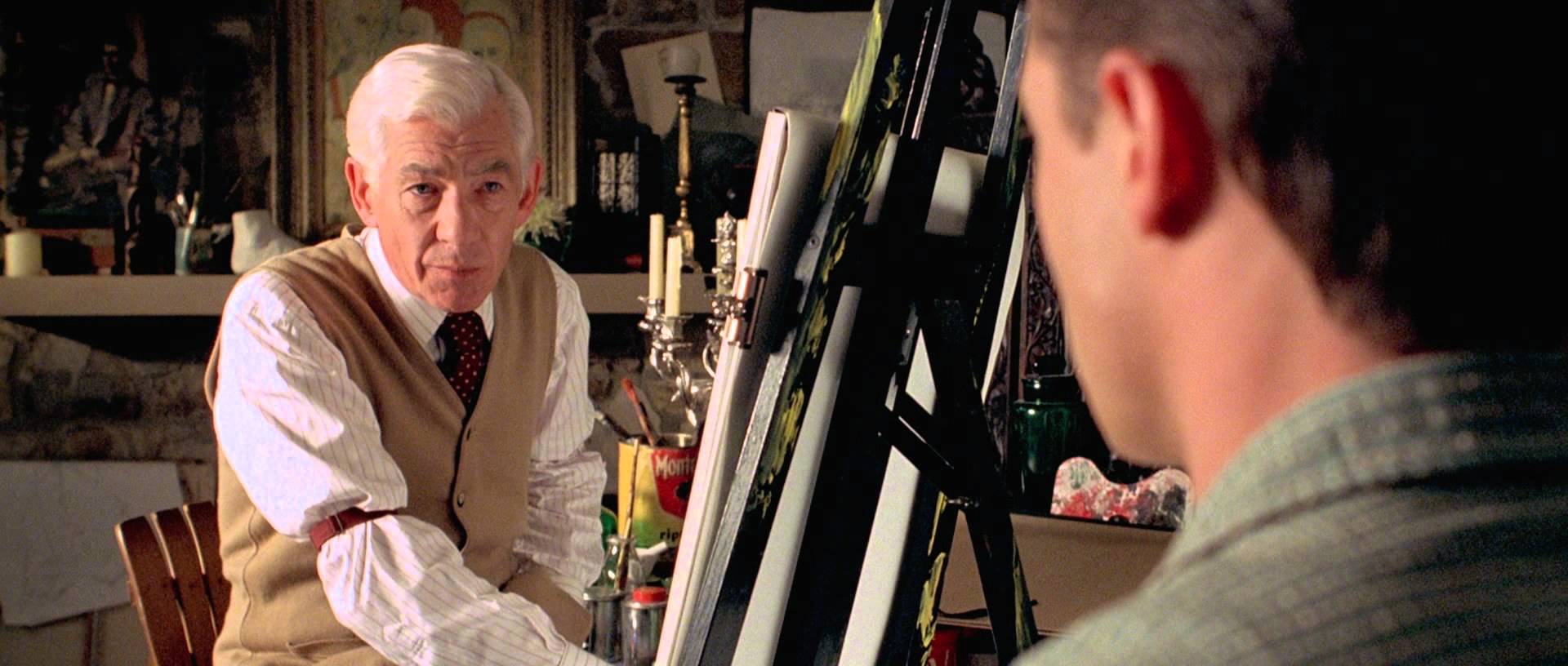
Review: The Monuments Men (2014)

George Clooney;Matt Damon;John Goodman;Bob Balaban

THE MONUMENTS MEN is an all-star ensemble period comedy-drama directed by George Clooney. It should be great, but doesn’t quite get there despite the good intentions behind it and the abundance of talent involved.

The year is 1943, and Hitler’s forces are being driven back in Europe by the combined efforts of the Allies. Seizing on this opportunity, Frank Stokes (George Clooney) is given the go-ahead by President Roosevelt to form a team of art experts to go to Europe with the US army and rescue significant pieces in Nazi hands, thereby preserving Western culture for future generations. Stokes recruits to his “Monuments Men” old friends James Granger (Matt Damon), Richard Campbell (Bill Murray) and Donald Jeffries (Hugh Bonneville) as well as Walter Garfield (John Goodman), Preston Savitz (Bob Balaban) and Jean-Claude Clermont (Jean Dujardin) – between them they possess an impressive range of knowledge of painting, sculpture and architecture, and are all determined to liberate a particular masterpiece from the Reich. Meanwhile, in Paris, curator Claire Simone (Cate Blanchett) watches helplessly as her city is gutted of its culture by the Nazis.

None of the central cast seem to really be playing characters, but rather caricatures of themselves based on a well-known trait of their public persona or the archetypes they usually play. George Clooney is the leader, Matt Damon the well-meaning nice guy, Bill Murray the sarcastic one, John Goodman the jolly loud one etc. Hugh Bonneville and Jean Dujardin don’t even get character traits, but nationalities (not American) which of course makes them vulnerable in a way foreigners only ever are in Hollywood movies. Thank the Lord for Bob Balaban, the only real character with more than one dimension – snarky, bitter, resentful, possibly slightly psychotic, and hugely entertaining. Cate Blanchett is good as well – stoic, driven and dignified, but it’s a role she could do in her sleep. I think I’ll just refer to the cast by their names rather than their “characters” for my ease of mind from here on.

The film’s title appears onscreen in conjunction with Murray (looking at Damon and Clooney, but staring straight into camera from the viewer’s perspective) giving a salute with a completely straight face and an inspirational tune playing in the background. I think this was supposed to be taken seriously, but sadly it can’t not be funny. Because of his deadpan comic style, Murray trying to act serious is often funnier than Murray acting in an obviously comedic fashion. Damon’s character is introduced lying on his back in order to paint a mural on the ceiling. Just in case this gag is too subtle, Clooney helpfully quips “There’s a Michelangelo joke to be made”.

They found actors who look an awful lot like Goering (Udo Kroschwald), Truman (Christian Rodska), even, briefly, Hitler (James Payton), but seemingly couldn’t be bothered to find a convincing Roosevelt, as the actor playing him (Michael Dalton) is only shown from behind, with cigarette holder in hand (in case we’re in any doubt about who he’s meant to be, Clooney helpfully addresses him as Mr. President). It’s a small thing, but seems a bit of a waste considering the effort the casting team have made finding doppelgangers for the other historical figures.

There’s a smattering of decent jokes to enjoy – Bonneville smoking like a chimney during his medical examination, and his doctor doing the same; Damon butchering the French language; Murray and Balaban’s hate-hate relationship. There’s also a few well-judged emotional beats you can’t help but be affected by – a key character’s dignified death doing his duty; the imprisonment of a frightening number of teenage members of the Nazi-sympathising Milice by the Allies; a warehouse full of mountain-upon-mountain of Jewish possessions; an unexpected Christmas message from home. Of course, Clooney gives the film’s central inspiration speech about culture, history, the human spirit (all the good stuff) as his team listen intently while gathered round a campfire, and a mournful, simple piano theme plays over the top. You fully expect this scene, you get it, it works.

There’s a scene with an American officer being (justifiably) angry at being asked by Clooney to put further lives at risk by making a last-minute change to his battle strategy just to protect some artwork, but it’s almost like we’re being asked to feel bad for the Monuments Men hitting this setback, that they’ll have to face their mission alone, rather than considering the wider implications – that there were actually people in WWII who considered art worth dying for. An almost identical scene comes later when Bonneville asks the same thing of his British superior.

The film has lengthy scenes involving German, French, and Russian speakers speaking, appropriately, German, French, and Russian. It still annoyingly occasionally lapses into that old Hollywood shortcut of characters speaking English with silly accents. This is especially odd when so much effort to use the appropriate language is on display elsewhere, even to the extent that someone has translated Damon’s French dialogue intentionally badly for comic effect.

It’s dumfounding that this is the first time the story of these remarkable men has been told onscreen, as it’s a tale worthy of telling. It’s odd, though, that George Clooney still chose to change the names of the characters involved, since the main aim of the film seems to be to make the world recognise their extraordinary achievements. In their adaptation of Robert M. Edsel’s book about the Monuments, Fine Arts, and Archives Programme, Clooney and co-writer Grant Heslov have retained the key events in broad strokes, but decided to re-name the real George Stout to Frank Stokes (as played by Clooney) and even more strangely, changed just the surnames of Damon and Goodman’s characters. Surely the filmmakers would like us to know the real names of the individuals the film is built around?

With the best will in the world, the most positive thing I can say about the film as a whole is that it’s a undemanding and pleasant. It looks at an obscure aspect of a major historical event through a rose-tinted lens, and really it’s a product of a past era of filmmaking along with films like THE GREAT ESCAPE that’s somehow been released in 2014. It’s not quite funny enough to be an outright comedy, and it’s certainly not thoughtful enough to be anything else. It’s a little narratively messy to begin with, but finds its feet and focus towards the end, and will make a pleasing enough watch in the near future when it’s rerun endlessly on weekend afternoon television. SSP

Posted in Film, Film Review | Tagged , , , , , , , , , , , , , , , , , , , , | Leave a comment

Review: I, Frankenstein (2014)

frankenstein_a

Firstly, my thoughts on the UNDERWORLD series – the first one wasn’t very good, and has only become hokier with age, the sequel and prequel were slightly better, but only slightly. I’ve yet to have the “pleasure” of the second sequel. I, FRANKENSTEIN comes from the writer of Underworld, Kevin Grevioux and is directed by Stuart Beatie, who had a hand in writing PIRATES OF THE CARIBBEAN and GI JOE. It’s not the most promising filmmaking pedigree.

In a grim, generic European city probably some time in the not-too-distant future, the ancient war between good and evil rages on. The forces of darkness, with ranks filled by demonic hellspawn, want to overrun the world and enslave or kill all of humanity (the usual drill), while the forces of light, composed of the angelic Gargoyle Order want to retain balance and protect humankind by “descending” demons with blessed weapons. In the late 18th Century, Dr Frankenstein (Aden Young) discovers the secret to bestowing new life upon the dead, and the result of his experiments, an inexplicably good-looking monster (Aaron Eckhart) is rejected by his creator, whereupon he takes brutal revenge for Frankenstein’s cruelty. After Frankenstein’s death, the monster is attacked by demons, then rescued by gargoyles, given the biblical name of Adam by the Gargoyle Queen (Miranda Otto), and is asked to join them in their war. As the centuries pass and Adam endeavors to remain neutral, the demon leader Prince Naberius (Bill Nighy) finally plays his hand for world domination.

The film opens with a subdued choir singing over an aurora in the heavens, then transitions into a stylish enough (and fairly faithful) re-telling of the second half of Mary Shelley’s iconic and influential FRANKENSTEIN, with a gravelly Aaron Eckhart providing foreboding narration. After about three minutes, a gang of demons show up and Frankenstein’s Monster lays into them all Underworld-style. We then get maybe one more passing reference to Shelley, but apart from that it’s all Grevioux. You have to admit that he’s certainly committed to his particular style. Committed and limited.

What is the most tired, over-used story archetype in action-horror cinema? Why, a literal battle between heaven and hell, of course. I, Frankenstein centres on an eternal battle between demons and angels (here presented as gargoyles) and features Frankenstein’s creation used as a blunt object by the forces of light, and appropriately enough, using two batons to dispatch his foes. Movies like this really make you appreciate how nuanced unavoidably flawed examples of the same genre, like Timur Bekmambetov’s NIGHT WATCH were (and Night Watch wasn’t exactly subtle).

What is probably the key plot point in the film clearly can’t have been thought through. The Gargoyle Order lock Frankenstein’s book of notes – proof that “God is not the sole creator of man” – away in a vault early on to stop them falling into Prince Naberius’ hands. If this book is so dangerous, why not just burn it? After all, as Jai Courtney’s gargoyle general Gideon quite rightly points out, “it is but a book”. Sure enough, the notes fall into the wrong hands later on, and the gargoyles just come across as arrogant morons.

The finale is ripped straight out of VAN HELSING (an undead army awaiting an arbitrary surge of energy to give them unholy life), but with the addition of an “evil plan progress bar”, in story terms the bastard son of the “countdown to doom”, while we keep flitting back to the final brawl between Adam and Naberius.

The demons come in two flavours – ugly, and character actor. The gargoyles are sometimes stoney, winged creatures and sometimes catwalk models. Eckhart’s brief but shameless shirtless scene goes some way to redressing the skewed balance of sexualisation in popular culture, but is otherwise pointless. Like all post-Universal Frankenstein films, they have to get “it’s alive!” in there somewhere, and the film makers unwisely attempt to explain how the Creature was made with some science mumbo-jumbo, missing the whole point of Shelley’s character and story.

Miranda Otto, playing the gargoyle queen Leonore, deserves some sort of medal for delivering lengthy chunks of stunningly stupid plot exposition with a straight face. We’re also asked to care when the queen is in jeopardy despite the fact she only has about three scenes and displays no discernible character or fathomable motivation while she’s on screen. This isn’t Otto’s fault, she’s under-served by Grevioux’s writing and Stuart Beattie’s direction. Eckhart, Courtney and Yvonne Strahovski’s performances are non-existent, but at least Nigh livens up his scenes with a tried-and-tested mix of still creepiness and scenery-chewing overdrive. Bruce Spence is in it too (very briefly) which is always nice.

The film uses numerous Dutch angles for no discernible reason, seemingly just to add some style to Stuart Beattie’s otherwise style-less film. The action is Underworld-meets-BLADE with almost all energy and rhythm drained, and over-compensatory CG pyrotechnics. It’s polished but completely unremarkable stuff, apart from one admittedly cool moment where Adam flying-punches a gargoyle in the face. Polished but unremarkable could also apply to the VFX – the gargoyles look decent, but the rendering of these flying, fighting humanoid monsters doesn’t seem much more advanced than how Dracula’s brides looked in Van Helsing a decade ago.

The script is bad even by Grevioux’s usual standards. Gloriously idiotic dialogue includes “the Gargoyle Order must survive…[pause for effect] and mankind with it”, and even the lines that don’t make you wince as a reflex are delivered laboriously enough by a completely uninterested cast to cause discomfort.

The demon makeup is admittedly well done (always nice to still see physical prosthetics) but it’s not as original or creative as examples in a Guillermo del Toro film, or even the monstrous sorceresses in HANSEL & GRETEL: WITCH HUNTERS. The film’s set design is impressively detailed and well-lit, though again it’s too derivative of Underworld and others in the genre.

Would the film be better if it took itself less seriously? If it was funnier, grimier, trashier? Perhaps – that’s what saved Hansel & Gretel, after all. I, Frankenstein is an ugly, will-sapping slog containing very little to recommend other than Nighy miraculously proving that he can be watchable in absolutely everything. I hope this isn’t the beginning and end to Aaron Eckhart’s leading man roles, because he’s a good actor in most things, and has the charisma to carry a big movie, just not this one. SSP

Posted in Film, Film Review | Tagged , , , , , , , , , , , , , , , , , , , , , , , , | 1 Comment

“You’ll have bad times, but it’ll always wake you up to the good stuff you weren’t paying attention to” (RIP Robin Williams)

As Jeff Bridges’ self-hating DJ Jack Lucas says of Robin Williams’ Parry in THE FISHER KING, “You’re a psychotic man…a very nice psychotic man”. With the most affection possible, that would accurately describe Robin Williams’ public persona – a mad genius who could veer between playing gentle souls, exhaustingly hilarious live-wires and sad, deeply troubled individuals role-to-role. His sudden and tragic passing leaves a void that cannot be filled, because it belonged so completely to him.

While some would have first come across Williams through his unique stand-up routines, I’m just the right age to first grow to love him through the numerous family films he starred in throughout the 1990s – HOOK, ALADDIN, MRS. DOUBTFIRE and my personal favourite, JUMANJI.

Later, of course, I saw some of his live comedy, watched amazed as fellow guests on chat shows tried in vain to compete with him for attention, and grew to appreciate his talent for pathos as well as laughter. War satire GOOD MORNING, VIETNAM provided an outlet for Williams’ boundless, mischievous and manic energy before he tried his hand at being taken seriously.

Williams’ dramatic roles (more often than not performed with an appearance-transforming beard) were astonishing – full of subtle nuances and deep melancholy, and often involving scene-stealing extended monologues delivered with heartbreaking conviction. Terry Gilliam’s The Fisher King and Gus Van Sant’s GOOD WILL HUNTING (for which Williams won an Oscar) might be the two serious performances I’ll best remember him for, but I know a lot of people have a great affection for DEAD POETS SOCIETY as well.

Such a prolific performer is bound to have a few duds on his record, and Williams is no exception. BICENTENNIAL MAN was well-meaning but overblown, and unwisely tried to cram in Williams in both serious and not so serious modes. FLUBBER, out of all his family-orientated films is the one I have zero memory of beyond not being particularly amused by it even at age seven, and ROBOTS was just a but of a non-entity.

Williams still has several projects in development which he has completed work on (most notably a third NIGHT AT THE MUSEUM) but we will now never see the recently announced MRS. DOUBTFIRE 2, though perhaps that is for the best. Robin Williams is irreplaceable, certainly, but he leaves behind a body of work varied and satisfying enough to captivate viewers of all ages for years to come. SSP

Posted in Film, Film Comment | Tagged , , , , , , , , , , , , , , , , , , , , , | Leave a comment

Review: Guardians of the Galaxy (2014)

XXX GUARDIANS-GALAXY-MOV-JY-0704.JPG A ENT

Walking the Walkman: Marvel/Disney

It’s good! Marvel’s biggest risk to date (and we really mean that this time) GUARDIANS OF THE GALAXY is not only a pleasantly shiny space adventure film with laughs, loveable anti-heroes  and fireworks aplenty, but it’s also the most outright fun I’ve had sat in front of a massive screen this year.

In 1988, following a family tragedy, young Peter Quill (Wyatt Oleff) was abducted from Earth and taken into the vastness of outer space. He grows up to be a daring thief grandly dubbing himself Star-Lord (Chris Pratt), and proceeds to attract the wrong sort of attention from some dangerous sorts when he steals a mysterious orb and his bitter mentor and former employer Yondu (Michael Rooker) puts out a bounty on his head. Every ne’er do well in the galaxy comes after Quill, including a pair of unlikely bounty hunters Rocket and Groot (Bradley Cooper and Vin Diesel respectively) and Gamora (Zoe Saldana), an assassin in thrall to the Kree despot Ronan (Lee Pace).  When Quill, Gamora, Rocket and Groot are incarcerated together, they agree to a reluctant truce, and together with the vengeance-driven Drax (Dave Bautista) they plan to bust out and sell the orb, or at the very least survive whatever Ronan is about to throw at them.

After the prologue establishing how Peter Quill left Earth and ended up planet-hopping for kicks, we get a real introduction to Star-Lord. He lands his hot rod spacecraft on a forbidding alien planet, enters an ancient temple like a spacefaring Indiana Jones and…grooves his way across the room to the 80s tunes blasting out of his Walkman as the opening credits flash by. This opening gambit pretty much sets the tone for the film – it’s going to be a blast! Writer-director James Gunn loves odd  combinations – the remarkable paired with the mundane, the old with the new, the brash with the subtle. The best evocation of Gunn’s  sensibilities comes just before the film’s spectacular final act – our heroes have geared up and are striding down a corridor in slow-motion towards their final stand – classic hero stuff – apart from Rocket adjusting his jumpsuit’s crotch and Quill yawning widely.

The Guardians all bring a lot to the table. Chris Pratt has real star quality (pun intended) and bestows Peter Quill with a boatload of effortless charm and an endearing vulnerability in his eyes. Zoe Saldana plays it pretty low-key as the spiky Gamora, but she soon thaws and the horrors of her in the past begin to show through. We all knew the towering Dave Bautista would have the physicality to play Drax, but it turns out he also has an innate ability to communicate a lot through layer-upon-layer of prosthetics. Drax also gets a good percentage of the laughs from Bautista’s perfectly deadpan performance, and the fact that his species think almost entirely literally (“I am not a princess!”). Bradley Cooper and Vin Diesel miraculously made me care deeply about a talking Raccoon and a walking tree. Rocket and Groot are both a marvelous marriage of performance and animation, and their double-act is among the most affecting things in the film. As a group, they’re a damaged, emotionally vulnerable bunch hiding behind a lot of attitude.

It’s a great feeling to be able to spend a couple of hours with a group of lively, fun, and ever so slightly depraved friends. It’s nice to look forward to the next time we’ll see these characters together rather than feeling the all-too-familiar fatigue of mega-franchises. It always helps when your core cast look like they had the time of their life making it, even when two of them are slathered in makeup, and another two are elaborate motion-captured SFX jobs.

Concerning the villains, Lee Pace’s Ronan is a more complex and better performed version of Christopher Eccleston’s Malekith from THOR: THE DARK WORLD – he doesn’t want to destroy planets just because, but as recompense for diplomatic injustices that weakened his homeworld’s position in the galaxy. Karen Gillan left Amy Pond behind in Cardiff, and proves to be a pretty darn terrifying as violet cyborg henchman Nebula. Michael Rooker is also fun as Yondu, the leader of a clan of colourfully foul and thuggish scavengers, and wields one of the coolest sci-fi weapons in recent memory – a floating, energy-tipped arrow he controls by whistling. John C. Reilly and Glen Close don’t have much to do as the leaders of the space constabulary Nova Corps besides valiantly keeping a straight face whilst saying silly names of people and planets, though Peter Serafinowicz manages to steal the couple of brief scenes he has, as a Nova officer with pure undiluted snark. Benicio del Toro, as the hoarder of shiny MacGuffins The Collector, proves to be as irrelevant to the plot as he is fabulously flamboyant.

I think I mentioned in a previous review that I love it when a film shows me something I’ve never seen before (tragically rare these days), and Guardians of the Galaxy has plenty on that score. A giant disembodied space head hosting a hive of scum and villainy, Groot providing a beautiful solution to his teammate’s lack of light, and Yondu not taking kindly to threats from a small army of soldiers all prove to be unforgettable spectacle.

Music is a big, and important, part of the film. Peter Quill’s only real connection to his past, his homeworld and his family is the Walkman and 70s/80s mixtape his mother gave him. Aside from adding colour to scenes and amusing tonal juxtapositions between image and sound, the music remains an important part of Star-Lord’s characterisation. He’s always on the search for a family to replace the one he lost on Earth, and he only has memories to keep him going until then. The music also allows for a terrific gag as the end credits roll.

Though the film is pretty DUNE-esque in aesthetic, the closest comparison I can make tonally speaking is THE FIFTH ELEMENT. Luc Besson’s film too had an epic scale, came in every colour of the rainbow, and gave equal weight to drama and comedy. There isn’t a sentient black hole to fight in this film, but there is a massive threat on the horizon for not only the Guardians, but their entire galaxy and beyond. Yes, the Mad Titan Thanos finally makes a proper appearance, if only for a single scene. After a pretty explicit callout to THE EMPIRE STRIKES BACK (there’s kneeling, there’s a big hologram of an ugly dude in a hood), Ronan makes contact with Mr. Purple Chin to re-negotiate their nefarious deal for galactic domination. Thanos, as I’m sure you’ve heard, is voiced by Josh Brolin, and I’m sure they’ve tweaked his design since he first turned to camera at the end of THE AVENGERS to look a bit more like him, too. Maybe we’ll get to see him doing something other than standing or sitting next time.

What few criticisms I have of Guardians of the Galaxy are pretty inconsequential or even petty. The only one even worth mentioning in passing is that a Marvel film once again looks like it’s going to do something really bold and emotionally shattering at its conclusion, but then it chickens out at the last minute. But even this, a sin the studio has committed in its last three films, doesn’t bother me when I’ve had such a fantastic time watching the rest of the movie. It really was a near-perfect combination of vivid visuals, raucous humour and a disarming helping of heart and soul. The summer popcorn season goes out on a high. SSP

Posted in Film, Film Review | Tagged , , , , , , , , , , , , , , , , , , , , , , , , , , , , , | 11 Comments

Review: Surrogates (2009)

surrogates23

SURROGATES suffers from the same problem that a lot of middling sci-fi films suffer from (besides being derivative), namely that it has a solid and interesting central premise which doesn’t hold up to much, if any, additional scrutiny. It’s a lot better, and smarter, than director Jonathan Mostow’s previous film TERMINATOR 3: RISE OF THE MACHINES (not hard, but still), but doesn’t quite go the extra mile.

In the near future, most of the world’s population now use surrogates – perfect robotic avatars mentally controlled from the safety of your home – to go out into the world, work, travel, and socialise. Most seem happy with this arrangement, but an anti-surrogate terrorist group headed by The Prophet (Ving Rhames) is gaining traction, and the sudden simultaneous murder of a surrogate and his user prompts FBI agents Greer (Bruce Willis) and Peters (Radha Mitchell) to begin an investigation that casts doubts on how comfortable the world has become with their new way of life.

First off, let’s look at why that solid central premise doesn’t really work. It’s established in the opening sequence that the vast majority of the world now uses surrogates to go about their daily lives, and that this was achievable because the manufacturers of these self-projection avatars made them affordable for all. This chunk of exposition is laid out for us from the start over the opening credits, but the explanation is hurried and never built upon throughout the film. For instance, I want to know what happened to the all of the world’s socio-economic problems to allow for such seemingly universal equality. What about poverty in Africa or South America? Which genius came up with a solution to not only feed the world, but bring them cheap surrogates? Like the thematically similar IN TIME, the premise just seems to be an excuse to have only young, sexy actors (plus Willis and Rhames). For once, I was crying out for a little more exposition.

The film has a pretty standard noir setup – a detective, a killer, and a conspiracy to unravel with added sci-fi gimmickry. It owes a great debt to much better sci-fi films like THE MATRIX, MINORITY REPORT and TOTAL RECALL without ever ripping them off outright.

There are some witty ideas, like seeing that even in the future, our shiny tech toys will still need hours plugged in to recharge, or that pushy tech salesmen will still try to offer us every frill and extra available (“the basic model is vision-only, if you want to feel something that’s extra”), or a surrogate salon that looks and sounds like a high-end custom car repair shop. We also come to understand that in this future you can appear exactly how you want in surrogate form, customising it to whatever extent you wish, much like an avatar for an RPG – do you want to be a younger, healthier version of your middle-aged white self, or do you want to be a towering black gentleman? One guy we see here has clearly made his choice.

We also witness a brief moment that hits pretty close to home – a military exercise undertaken by soldiers driving their surrogates across a battlefield from the safety of a bunker. This feels particularly relevant with all the recent debate about drone warfare, though, again, it hasn’t completely been thought through that the surrogates in this particular situation don’t really need to look like humans at all. Other attempts at any kind of satire in the film have already been said much more fluidly in Minority Report.

There are a couple of character moments that work well too, like when Greer’s wife Maggie (Rosamund Pike) expresses something only slightly short of abject horror when she sees Greer outside his surrogate and in the flesh for the first time in years, which acts as an effective metaphor for their ailing relationship in general – they never really see each other or interact because of their near-constant use of their surrogates. Willis also delivers a great reaction when he goes outside in the flesh for the first time in years, like he is being born again, disorientated and confused.

It’s amusing to see that the moment when characters wake from their latest trip out in surrogate form is used as a key dramatic moment for this story. What do they really look like? Why do they need a new physical shell? More often than not, the answer is laughably underwhelming – oh no, they’re bald/wrinkled/short-sighted! Perhaps only two characters we see in the film have a valid reason for retreating into surrogacy, and the rest are just shallow.

James Cromwell really is the go-to-guy for playing the “father” of something, whether it’s robotics (I, ROBOT), faster-than-light-travel (STAR TREK: FIRST CONTACT) or here where he’s the mastermind behind the technology that makes “surrogacy” possible. Of course, Cromwell is brilliant as always, and dominates the limited screentime he’s given.

On visual terms, Surrogates is sharp and sleek, and nicely filmed. It’s not really an action film, with only a couple of real set pieces, but what’s there is pretty well staged, though the film’s decent but not extravagant budget leaves a helicopter crash looking a little unfinished, and some CGI transitions stand out more than they should. The surrogates look as flawless as you’d expect, apart from Willis’ stand-in who looks unnervingly (and deliberately) doll-like. What the film screams out for in terms of action, is a sports match. We see a poster in the background of one shot advertising a game with a surrogate football player holding the dismembered head of his opponent at his side, and we don’t get to see it! It would have been great to see how surrogacy has changed sport, but maybe the budget didn’t allow for it.

Surrogates moves along at a brisk pace and has some half-decent sci-fi ideas, but the promising premise, if not entirely squandered, doesn’t deliver on its potential. It just about works as a hybrid noir film, though even here you’d want more thought to be put into the plot structure so that all the revelations don’t come in a messy jumble at the end. Diverting, then, but not one that will stick with you. SSP

Posted in Film, Film Review | Tagged , , , , , , , , , , , , , , , , , , | Leave a comment

Review: The Grand Budapest Hotel (2014)

item9.rendition.slideshowWideHorizontal.grand-budapest-hotel-set-10-vintage-photocrom

THE GRAND BUDAPEST HOTEL is Wes Anderson-y even by Wes Anderson’s standards. A vividly colourful cornucopia of eccentric characters on an elaborate farce barely contained within Mr Anderson’s utterly unique “Wesworld”, it’s certainly an experience to watch. It’s also probably my favourite film Anderson has done after his two masterpieces THE ROYAL TENENBAUMS and RUSHMORE, though it’s by no means perfect.

We first see the titular hotel long past its glory days, as a young writer (Jude Law) visits during the late 1960s. While staying at the near-deserted, fading establishment, he meets the owner, Zero Moustafa (F. Murray Abraham) who tells the remarkable story of the Grand Budapest, and how it came into his hands. It is the early 1930s, and young Zero (Tony Revolori) arrives for his first day as one of the hotel’s numerous reliable lobby boys. He is taken under the wing of exacting and impeccable concierge M. Gustave H. (Ralph Fiennes) who really is the best at what he does, from day-to-day management of the hotel, to marshaling an army of staff to give top-notch service, to providing sexual gratification for rich aristocrats in their twilight years. When one such elderly lady, Madame D. (Tilda Swinton) whom Gustave is particularly fond of, dies and leaves a valuable painting to her favourite concierge, her bickering extended family smells foul-play, and Gustave is framed for her murder and incarcerated. As Zero’s story unfolds, it only becomes stranger, and much more complicated.

It almost goes without saying that, like all of Anderson’s movies, The Grand Budapest Hotel is impeccably scripted, quietly amusing and beautiful to look at. Eye-popping colour and meticulously, almost obsessively centrally-framed shots demonstrate that Anderson is stubbornly sticking to his signature style, perhaps even hightening it over time, but the addition of a liberal dose of slapstick and exaggerated physical comedy here is a new one for him, unless you count it done in stop-motion in FANTASTIC MR. FOX.

It’s Ralph Fiennes’ show, and the veteran thespian demonstrates a mastery of comic timing, both verbal and physical, hitherto not even hinted at in his career (leaving aside IN BRUGES). Fiennes is ably supported by promising newcomer Tony Revolori, solid villain performances from Adrien Brody and Willem Dafoe (scenery-chewing and quietly terrifying respectively) and F. Murray Abraham as our world-weary narrator. Anderson has also of course brought together all his usual collaborators in addition to a few new arrivals to Wesworld for a series of entertaining brief turns and cameos.

Narrative style-wise, The Grand Budapest Hotel feels closest to Anderson’s unconventional family dramedy The Royal Tenenbaums. That film played like (and literally featured) turning pages of non-existent literary epic, and Budapest goes further in its narrative emphasis by not only dividing the story into distinct chapters, each with their own tone, colour palette, even genre and aspect ratio, but is also a story within a story within a story told by several narrators.

The film joins a long line of fellows (DUCK SOUP, Universal’s FRANKENSTEIN) set in a stylised never-Europe, and this makes it about this world but not of this world. Anderson makes much of the story’s setting in the early 1930s, and references real history and real horrors, but the locations are made up and it’s full of anachronisms. If it was more grounded in reality, the darkness that creeps into the final act might feel a bit much, but Anderson strikes about the right balance by keeping us one step removed in a near-fantasy.

The more surreal comic scenes feel like Monty Python sketches, an effect emphasised by Terry Gilliam-esque animation used in establishing shots and the tissue that connects sequences together. It is a jarring effect, but it’s jarring in a good way (if that makes sense).

Sadly, like most of Anderson’s movies (sorry, but it’s true), Grand Budapest does go off the rails a little towards the end. It happened with BOTTLE ROCKET, it happened with DARJEELING LIMITED, it certainly happened with MOONRISE KINGDOM and it happens again here. Anderson always starts with a great idea, but he doesn’t have restraint, and always wants to keep embellishing the idea long beyond what the story can comfortably accommodate. I like that he’s ambitious and committed, and I’d never ask him to tone it down, just cut the story a little shorter before it gets too…off. I’ll admit that I should have given in when Gustave and Zero end up (for some reason) in a monastery atop a snowy peak, seemingly just to have an excuse to ski off it in an odd animated race sequence.

If you love, or are at least intrigued by Wes Anderson’s unique filmmaking style, or even if you just want to see Fiennes flex his surprisingly taut comic muscles, The Grand Budapest Hotel has a lot to offer. If you find Anderson grating and pretentious, then his latest won’t change your mind, but even then it’s fun to play a game of Spot the Massive Actor in a Cameo Role. Will Wes Anderson ever tone it down? Probably not, but if his weird and wonderful mind keeps coming up with such skewed gems as this, then at least American filmmaking won’t be dull for a long time to come. SSP

Posted in Film, Film Review | Tagged , , , , , , , , , , , , , , , , , , , , , , , | Leave a comment

Review: Dawn of the Planet of the Apes (2014)

DAWN PLANET APES MOV

Dawn of the Planet of the Apes (2014): Chernin Entertainment/TSG Entertainment

From the visceral opening ape-hunting-deer action sequence, I was completely enthralled by DAWN OF THE PLANET OF THE APES. I enjoyed the previous instalment, Rupert Wyatt’s RISE OF THE PLANET OF THE APES, a solid little film, but Dawn makes it look astonishingly slight and visually dated in comparison (despite being only three years old).

Ten years after the search for a cure for Alzheimer’s Disease inadvertently made apes hyper-intelligent, causing a rebellion against their humanity and the spread of a virus known as “Simian Flu” over the world, humankind is struggling to survive in makeshift communities, while the apes are thriving in their woodland home outside San Francisco. When the humans discover a valuable hydro-electric dam in ape territory, a rag-tag group led by Malcolm (Jason Clarke) call a truce with ape leader Caesar (Andy Serkis) and begin to work together for the mutual benefit of both societies, but instigators on both sides have other ideas about species preservation…

Following the aforementioned hunt, we are treated to a series of extended and undeniably brave scenes set in ape society where we are given time to really get to know our furry distant genetic cousins. They comfort each other, they debate, they show gratitude, all in sign language and grunts. It’s like watching something from another time, not only culturally, but in terms of the building blocks of film itself. There’s something wonderfully old-fashioned, almost of the Silent era about it, and it’s so refreshing to see this kind of thing in a big summer movie.

I really like Matt Reeves as a director. He’s like a more talented and less showy model of his buddy and frequent collaborator JJ Abrams. They may have both started out editing Super 8 footage for Steven Spielberg, but they’ve each grown into someone quite different. In my opinion, Abrams is a marketer, whereas Reeves is a filmmaker who actually delivers on all that he promises.

Remember the ugly chump from the last film whose facial expressions all-but said “I’m going to be a villain in the sequel”? Well he is a villain in the sequel, but Koba (Toby Kebbell) isn’t a typical one-note bad guy. He has depth and an involving character arc, and his actions, no matter how brutal, make sense. He doesn’t go bad to drive the plot, but his moral decline is a product of the plot and it reaches a point where he sees no other way to protect his species from the humans he so resents for how barbarically they treated him in captivity. In the hands of the incredibly talented  young character actor Toby Kebbell (ROCKNROLLA), Koba rivals Caesar as the most compelling character in the film. Kebbell is chillingly passionate in a deeply uncomfortable, intense and affecting scene that is built around the repetition of two simple words: “human work”. If Caesar is the wisest of the apes (he even has a philosopher’s beard this time) then Koba is easily the most cunning. Just look at the ingeniously wicked way he gets around a tricky situation in the human weapons depot! His main action scene could remain the best of the year (it involves horses, machine guns, fire and a tank) and in places like this Reeves has been given space to prove himself a fluid, natural-born director of action.

The apes of course, are the result of a close and equal partnership between a crack team of animators and a talented troupe of hugely expressive actors, and the hard work all involved put in before, during, and after the shoot pays dividends when you see the final product. The whole cast that portray primates, but most notably Andy Serkis (finally given top-billing), Toby Kebbell and  Nick Thurston (playing Caesar’s nervy son) have the uncanny ability to communicate not just big, broad emotions, but the tiniest momentary flicker of an idea or feeling through their performance-captured avatars.

Tangibility marks the film out from most other summer blockbusters seen over the past few years. Half of the main cast are played by actors driving motion-captured animation, but this technology was brought out on location, the performances were captured live, raw, and for real. The film’s production designers have been hard at work on ambitious, solid sets that the actors can touch, interact with and react to, and this helps no end to ground the film in reality. The quality of execution on display here, both VFX-based and practical, is peerless.

Michael Giacchino’s score cannily references Jerry Goldsmith’s iconic theme music from the original 1968 film. It’s got all of Giacchino’s usual richness and dramatic heft, but for several key moments, when we need a little extra mounting dread, the instantly recognisable, eerie plinky-plonk tones of Goldsmith’s Apes music show though to make the hairs on the back of your neck stand on end.

Reeves, a massive Apes fan, has decided to lift all the better elements from the hit-and-miss final two films of the original series, and elevates slices of CONQUEST and BATTLE to great effect. Some of the final act feels like a species-inverted take on Conquest’s uprising and we get call-backs aplenty to Caesar’s speeches from the original films, and the film’s second half that follows the uneasy truce between humans and apes gradually breaking down and eventually escalating into all-out war is a better version of the story Battle took a whole film to tell.

It might not have as many big sci-fi ideas as some of the previous Apes films, but it takes one really good idea about human (and human-like-ape) nature and runs with it, namely, no matter who you are (ape or human), where and when you live (primitive forest society or dystopian barely-surviving city) there are good people, a few bad apples and the rest of us who lie somewhere in-between. The inevitable place this story will end up, as shown in the ’68 film is all the more tragic and poignant for the knowledge that neither the apes nor the humans overcame their less enviable traits, and eventually “finally really did it” and were all damned to hell.

For all the technical wizardry and deep performances, the film does still have the cookie-cutter action movie finale featuring the main hero and villain duking it out on a tall structure, and while you don’t begrudge Serkis and Kebbel dominating in terms of screentime because of how they both own every moment, you do wish that Judy Greer as Caesar’s mate Cornelia had been given more to do, and that the human characters could prompt as much of an emotional connection as the apes do from the audience. Gary Oldman as the de-facto leader of what remains of human society has a couple of moments, but the others among the non-hairy cast make little-to-no impression.

Aside from a slight slump into conventionality and the humans once again being duller and less memorable than the riveting scenes that focus on the apes, Matt Reeves has produced a meaty, satisfying and affecting sci-fi sequel that respects, and builds on, what has come before in the franchise, whilst also carrying the story, and the visuals forward leaps and bounds. The debate about the validity of motion-captured acting will likely continue for a few years yet, but this film, and the performances of Andy Serkis and Toby Kebbell is sure to bolster the pro side of the debate. SSP

Posted in Film, Film Review | Tagged , , , , , , , , , , , , , , , , , , , , , | 3 Comments

Review: Religulous (2008)

religuloustrailer

Just to start I’d like to say that yes, I am an atheist, and my views of RELIGULOUS, an admittedly fairly one-sided satirical documentary will reflect my religious outlook. It’s a divisive film, and there’s no reason why you’d get much out of it if faith is a particularly important part of your life.

Religulous follows comedian and TV personality Bill Maher and director Larry Charles (BORAT, BRÜNO) as they travel the world talking to people about their varying extent of religious faith, and try to understand how and why they believe what they believe through a series of frank interviews.

Bill Maher is an engaging and funny guide who isn’t the least bit afraid to ask the difficult questions. The most astounding thing about the interviews with believers, perhaps the main thing that makes the film worthwhile, is how quickly it is revealed that none of them really want to talk about their faith. Practically nobody wants to answer a question that even hints at an aspect of their religion being wrong, not even if a view might have (understandably and inevitably) become outdated because it comes from a book that is thousands of years old, and seemingly no-one even wants to acknowledge, or attempt to understand how others have their doubts. We need people like Maher and Larry Charles  to ask a question so often posed to organised religions and is never answered (perhaps because it can’t be) – why?

As a presenter, Maher has an interesting perspective. He’s not a lifelong atheist, in fact he grew up in a house of two faiths (Catholicism from his father, Judaism from his mother) and has only been overwhelmed by doubts in recent years. He’s a comedian, and of course comes up with some zingers to put down the people he’s talking to (if he can’t get it into the interview himself, then they flash up in subtitles) but he’s not out to cause offense, unless the person he’s interviewing really infuriates him. He seems genuinely interested, and wants to understand people with faith, and get a good debate going with a range of people. He’s not outright rude unless he has to be, for instance if an interviewee doesn’t allow him to present a counter-argument, and has clearly done his reading, particularly hilariously providing direct biblical quotes to back up his argument, and often to prove the ignorance of a particularly blustery believer.

The interviewees are to an extent cherry-picked, and perhaps those more open to reasonable discussion were excised for lack of entertainment value. For instance, in addition to creationists, a “cured” ex-gay and a rabbi that wants Israel wiped off the map, Maher interviews a man who is convinced (and has persuaded a terrifying amount of others) that he is the literal second coming of Christ. Maher is bemused, and almost seems sorry for the guy, who is otherwise charming. Deranged, but charming.

But you do get to know a few interesting cases, some fascinating oxymorons (a Vatican astronomer, gay Muslim activists) who help colour the debate. In terms of his technique for interviewing the radicals, Maher tends to let them talk, and dig themselves into a hole, allowing Larry Charles to drop in a choice piece of evidence in post-production that proves to what extent the interviewee has just outright lied to us the viewer.

Maher perhaps takes the debate cruelly far when he directly compares having a religion with a mental illness, and the expert he ropes in here looks particularly uncomfortable at this suggestion (though he does have a stab at theorising on those lines for the camera) and he shows a little ignorance himself at suggesting (perhaps a little tongue-in-cheek) to some young, gay Muslims that they don’t have many options when the Quran outlaws a particular type of intercourse.

The debate does change its tone, becoming much more cautious when the question of free speech and religion rears its head. Someone perhaps advised Maher and Charles to tread lightly when engaging Muslims in his debate, and the subject is arguably still too raw around the world to lay into followers of Islam to the same extent as he does Christians and the Jewish. An interesting point is still raised at this point that Muslims seem especially reluctant to be interviewed about their faith by “outsiders”, and that could be the subject for an entire film by itself, if anyone was brave enough to take it on.

There is, unavoidably, a central problem with Maher and Charles’ debate. Maher engages with believers in his own personal, atheist, secular, interrogative way, but faith is, by its very nature, unexplainable, and never can be. Science and religion parted ways forever following the Enlightenment, and it is useless, and without much purpose, to try and force them together again. Though Maher really earnestly wants to get an answer from his interviewees that will satisfy him, a devout believer will never be able to provide such an response to a non-believer.

When Maher finally brings the argument to a close, suggesting religious leaders with power over the hearts and minds of billions are dangerous, responsible for a lot of what is wrong with the world (cue a timely appearance by George W. Bush from the archives), the apocalyptic music that plays over the top of the sequence is wholly unnecessary. Not only is it not needed, the over-the-top nature of it (whether satirical or not) will only bolster the argument that this isn’t a valid, “real” documentary, which is a shame, because it certainly kicks off an interesting debate to be had.

I also don’t understand why Maher and Charles only interviewed followers of Christianity, Islam and Judaism either, and especially why they chose to talk to someone from a Dutch cannabis church before a Sikh or a Hindu. Bringing in someone from a monotheistic religion might have shone a new, fascinating light, or at the very least make Maher break down in tears of despair.

Religulous, if you’re of similar frame of mind to Bill Maher, is almost guaranteed to entertain you. The final verdict of Maher and director Larry Charles’ tongue-in-cheek thesis on religion isn’t particularly helpful, and is likely to antagonise far more than encourage a progressive discussion, but as a comedy, as a piece of entertainment, it delivers, and it does make you think. SSP


Posted in Film, Film Review | Tagged , , , , , , , , , | Leave a comment

Biopics: 3 of The Weirdest and Most Wonderful

gods and monsters

Biopics have understandably remained popular throughout cinema’s history. Take a famous figure who lead an interesting life, cast a (usually) big star to play them, and half the battle is already over for any half-decent filmmaker. There are a lot of good ones, a lot more mediocre ones, and a fair few not so good ones. A lot of critics and audiences, especially if they happen to be devotees of the person being depicted, tend to focus on inaccuracies or dramatic license being taken as negatives. Sometimes though, deviation from the truth, combined with an unconventional take on narrative and perspective can produce something really interesting, and perhaps more worthy of the biopic’s focus figure. Here are three notable, and favourite, examples.

GODS AND MONSTERS (1998)

James Whale, Universal Pictures stalwart and 1930s horror icon, was one of the most fascinating artists (on-set and off) to ever work in Hollywood. A gay, working-class English theatre director might not seem like the ideal fit to helm studio genre films, but he quickly became a reliable pair of hands to Universal, and the films he made were utterly essential to their survival.

The success of GODS AND MONSTERS comes down to three key strengths. 1. The faultless, human performances of Ian McKellen, Brendan Fraser and Lynn Redgrave. 2. The razor-sharp adapted screenplay that’s liberal with the truth but always comes back to the characters and what they’re going through in a given moment. 3. The equal parts affection for and criticism of Whale, his life, and his art.

It’s always McKellen’s film. The brilliant venom with which McKellen spits “the other FRANKENSTEIN films were directed by hacks”, and the heartbreaking intensity he puts into his monologue about a miserable working class childhood as the camera orbits him will stay with you, and is easily the best scene in the film. Fraser is good too, embodying a certain kind of 50s male, not overly judgmental until his status-quo is threatened, and sharing as Clayton does a troubled upbringing with Whale, and potentially hiding just as many secrets. Redgrave seems to relish playing Whale’s snarly German housekeeper Hanna like a parody of all the severe European hags to be found in Universal Horror, her prickliness hiding a deep affection for her employer.

As Whale reminisces and his mind fractures, we move from straight recreations of his career behind the camera to a trippy blend of his films and reality, to the extent that the melodramatic final shot of the film looks just like a scene from Whale’s own Frankenstein transplanted into 50s American suburbia.

MAN ON THE MOON (1999)

Milos Forman is the king of unconventional biopics of unconventional people. AMADEUS, THE PEOPLE VS. LARRY FLINT and MAN ON THE MOON all play with our perceptions of the facts, and this fast and loose film about Andy Kaufman, like Forman’s previous masterful Mozart film, does some really interesting things with film reality and by extension, comments on Kaufman’s unique view on the world.

We open with Jim Carrey as Kaufman, in character as his most famous persona, commenting on how biopics tend to be inaccurate, and recommending that you switch off the film there and then (as he awkwardly watches the credits scrolling past beside him). From the off, MAN ON THE MOON is subverting your expectations, and it never stops doing so in a storytelling sense. In being such a bizarre story, we as an audience are convinced much of it is untrue (though a lot of it, bafflingly did), and just like really happened, we expect a final reveal, Kaufman’s last great act, but it never comes. The joke was on us, that at long last, it wasn’t a joke.

Carrey is electric throughout, and brings across just how out of place Kaufman was in our world, how frustrating spending any amount of time with him must have been, and how unusual any film about him is bound to be. You couldn’t hope for a more ideal supporting character performance in a film than Paul Giamatti, the master of stealing a scene from a film’s star (though it’s a challenge with Carrey at his most intense).

THE LIFE AND DEATH OF PETER SELLERS (2004)

The first fifteen minutes of THE LIFE AND DEATH OF PETER SELLERS plays it pretty straight, but then the characters take over. All of a sudden, Peter Sellers’ father (Peter Vaughan) walks out of his living room after watching his son on TV, and as the light changes and he turns to camera he is now Geoffrey Rush playing Peter Sellers playing his father. He then proceeds to talk about Peter’s upbringing. A few scenes later, Sellers plays his own wife (Emily Watson) as he watches playback of a passionate argument they have just had, re-dubbing it how he wished it had gone, and later still Sellers becomes Stanley Kubrick (Stanley Tucci) dissecting his star. Finally, and most affectingly, he becomes his ailing mother (Miriam Margolyes). All the actors playing Sellers’ family and associates impress (particularly Margolyes), but not quite as much as Rush does when he plays Sellers playing them.

Rush also gets Sellers’ physicality spot-on, and doesn’t try to pretend that the subject was a nice person, in fact, he was a bit of a bastard. This is particularly emphasised by a scene where Sellers announces to his family that he is leaving them for Sophia Loren. His young daughter, clearly upset, asks “do you still love us?” Without missing a beat, Sellers replies “Of course I do, but not as much as I love Sophia Loren”.

Sellers is rarely shown to let his guard down, he’s always playing some kind of character and I think that’s how most people, in his private and public life, saw him, as a chameleon. The Sellers family life isn’t real either, not really, and neither are their home videos. It’s all an act, a performance, and when the cracks do show, it’s only to have him flying into a rage, as is the case when one outburst results in a pile of broken toys, a crying son and the sudden appearance of a “I’m sorry” pony.

 All three of these biopics wisely don’t choose to simply re-tread the subject’s life. Instead, through unusual stylistic, storytelling and performance choices, they embody the spirit of the unique artists being portrayed far more vividly than a conventional filmed biography ever could. SSP


Posted in Film, Film Feature | Tagged , , , , , , , , , , , , , , , , , , , , , , , , , , , | Leave a comment

SSP Thinks Film – A Year On…

I’ve been writing this blog for a year today. How time flies. I’m not sure whether I’m a better writer than I was in July 2013, but I think I’m a more economical one, and I’ve enjoyed the experience regardless.

I’d like to express my sincere gratitude to everyone who’s visited, everyone who’s given up their valuable time to read my views on the art and entertainment form closest to my heart, even if you thought I was talking a load of rubbish.

I hope to keep this going for as long, and as regular as I can, and I have a few ideas for some (hopefully) interesting features in the future. I do, however, also need to find a real job at some point!

Warm regards and high hopes for the rest of 2014 in film,

Sam

Posted in Film | 1 Comment