Review: Interstellar (2014)

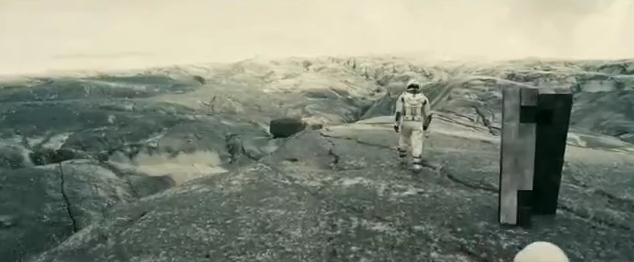
Interstellar-Walking-Monolith-Robot

Well, you can’t say Christopher Nolan lacked ambition with his latest endeavor, but I find myself wishing he’d attempted a little less so he could actually pull off a little more in practice. INTERSTELLAR will surely go down as Nolan’s first big misstep so far in an otherwise pretty spotless career.

In the not-too-distant future, our little Blue Planet is facing natural disaster on a global scale. Massive dust storms cause devastation across populated areas and a mysterious blight has killed off most of the crops we rely on, pressing the majority of the world’s population out of necessity into service as farmers to preserve what food remains. When strange goings-on bring him to stumble across the remains of the Earth’s space programme, Cooper (Matthew McConaughey), a former pilot and a widower, is forced to abandon his young family to undertake a mission through a wormhole in order to find the human race a new home.

One one hand, Interstellar wants to be a hard science sci-fi (Christopher and Jonathan Nolan clearly revel in showing off how much brainier they are than us mere mortals) but on the other hand it tries to sell (completely straight-faced) the tired and all-too-easy to mock hippie-dippy concept of “love conquers all”, even (snicker) time and space. INCEPTION in many ways shares similar themes, but Nolan there didn’t have to balance the gooey stuff with plausibility, because the core concept behind that film was inherently ridiculous. With Interstellar, he tries to have his cake and eat it by trying to balance an improbable see-saw with science on one end and poetry on the other. Consequently, both the heart and the brain of the piece take a real hit.

You can tell this was originally a Steven Spielberg project, and perhaps it would have been more successful if it remained that way, if you could see what he would he could do with the film’s core dysfunctional family dynamic, since that’s the kind of stuff he does better than just about anybody. If Spielberg directed, the emotions would have been more concentrated and focussed, and perhaps all the science stuff would have been less all-consuming and show-offy. The odd Spielberg-y element remains (intentionally or not) – the Cooper’s arrival at a secret facility before being blinded by spotlights and surrounded by suits couldn’t be more like E.T. if it tried. In comparison to other projects where a director has inherited duties from a fellow, it’s not quite the disaster that was A.I. (which Spielberg finished for Stanley Kubrick) but it’s certainly a lesser product because Stevie boy jumped ship.

Far too often when a character (usually David Gyasi’s Romilly) provides a big chunk of science-y exposition, shortly followed by Cooper or Brand (Anne Hathaway) pitching in with an emotion-y quantifier, I found myself asking, “Why should I care?”. Beyond their basic drives, and no matter how good a job the actors do (and they are good for the most part), you’re never allowed to get a handle on any of them, what really motivates them or what the hell their end-game is.

If the time distortion plot element that becomes steadily more prevalent as the film goes on weren’t confusing enough, the Nolans make things even more bewildering through the casting. The adult Murph (Jessica Chastain) in an admittedly poignant scene, finally sends her astronaut dad a video message after many years of hurtful silence. Murph claims to now be the same age as Cooper when he left Earth. Chastain is in her mid-30s, McConaughey is 45, and a weathered 45 at that. Let’s not even start on the octogenarian Michael Caine’s character still being around another 25 years into the story.

Nolan clearly adores certain classic examples of science-fiction filmmaking. Apart from the obvious, that he wants Interstellar to be this generation’s 2001 (it isn’t), he also seems to have been inspired by the original STAR WARS in how technology looks (bulky, functional) as well as George Lucas’ approach to planet design (as mocked by ROBOT CHICKEN, planets “defined by one topographical feature”). Nolan even uses a visual cue towards the end that recalls his own work pretty explicitly. But of all the sci-fi films to blatantly rip off, it does surprise me somewhat that Nolan chose EVENT HORIZON!

Speaking of obvious inspiration, Hans Zimmer may just have been listening to a lot of Philip Glass as he composed his Interstellar score. The former’s music is certainly evocative of the latter’s here, and as such has the power to be equally beautiful in its form and intrusive and distracting in its repetition.

All of this isn’t to say that the film is a lost cause.There are a few elements that I really liked. Being a Nolan film, it looks stunning in IMAX, whether you find yourself in a dusty cornfield or among the stars, and it sounds even better (Nolan being one of the few directors who seems to really care about the quality of a sound mix). I also liked how humanity’s technology appears to have remained at early 21st Century-level because of their changing priorities. You of course wouldn’t bother researching flying cars if you could barely farm enough food to survive the day.

It must be so hard for designers to come up with original ideas for movie robots, so I particularly appreciated the pair we’re presented with in Interstellar. TARS (Bill Irwin) and CASE (Josh Stewart) look like minimalist kitchen appliances and six-foot versions of the sleekest and cleverest desk toys the next. One of them also carries Anne Hathaway just like in THE FORBIDDEN PLANET’s poster, which pleased me a great deal (because I’m sad like that).

Interstellar is also easily Nolan’s funniest film so far, in that it actually has a sense of humour. The laughs mostly come from the robots who have customisable personality settings and a hilarious degree of self-awareness, and occasionally from a deadpan McConaughey at his quippy best, though this is at odds with how deadly seriously we’re expected to take everything else in the movie.

I’m not saying don’t see Interstellar, as it’s too worthy of discussion – for the badd points as much as the good – to be dismissed entirely. All I’m saying is don’t expect the highs that Christopher Nolan has delivered before. It’s not another Inception, MEMENTO, or THE DARK KNIGHT. It’s not even another THE PRESTIGE. SSP
 

Posted in Film, Film Review | Tagged , , , , , , , , , , , , , , , , , , , , , , , , , , , , , , | 1 Comment

Radio 1 Rescores Drive: Spoiling Through Experimentation

radio1drive

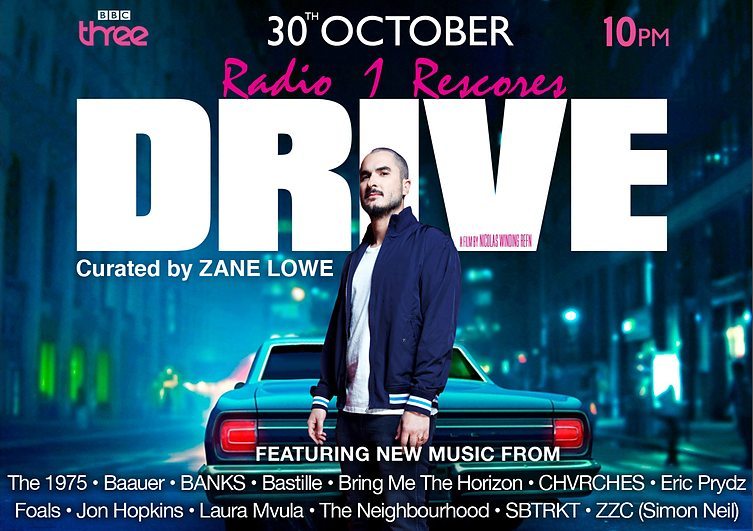
DRIVE is, at this moment in time, my favourite film of the last ten years. Nicolas Winding Refn’s neo-noir completely and utterly blew me away, and its superlative, moody electro soundtrack was a big part of why it worked so beautifully as a film, and why it had such a massive impact on me as a viewer. Last month, it was entirely rescored for its broadcast on British TV.

At a conceptual level, as a bold artistic statement, as an experiment, re-scoring an entire film is an interesting idea. Drive’s director Nicolas Winding Refn clearly thought so too, as he gave the project his full support. Radio 1 DJ Zane Lowe has chosen to curate a new score made up of specially recorded contributions from his friends and associates working in the music industry. That’s fine, but why’d her have to choose to use a film with a soundtrack so integral to, so inseparable from, the film’s characters, emotions and themes?

Before it was broadcast on the BBC on 30 October 2014, Zane Lowe did a little piece to camera to talk us through the concept:

“The idea was to take an incredible film with an incredible soundtrack, to give it to bunch of new artists who had been inspired by it, and to reinterpret it [in order to] to share exciting music through film”.

An admiral aim, then, and as such I tried my utmost to approach Lowe’s rescored Drive with an open mind.

Things don’t start well. The opening sequence sorely lacks something without Cliff Martinez’s music, which provided the nameless Driver’s (Ryan Gosling) first job with not only an in-built time-check with its rhythm, but also with a palpable, creeping dread. In place of Martinez, we have a synthy dance beat about as subtle as the Driver’s scorpion bomber jacket, and it does absolutely nothing for the scene.

Over Drive’s opening credits against Los Angeles distinctive nighttime skyline, in the original film we had “Nightcall”, a haunting and modulated track by Kavinsky & Lovefoxx which established the story’s black tone straight away. In the rescore, instead of Kavinsky, we have generic chart-hit wailing and a dance club beat. It should be noted at this point that I don’t know enough about current music to identify by ear most of the artists who provided tracks for this rescore. The Radio 1 website tells us Chvrches, Bastille, The 1975 and Eric Prydz among others contributed to the soundtrack, but I’ll be damned if I can tell which is which.

In Refn’s Drive, every song was carefully selected not only for their retro feel, but for their lyrics that told us something about the Driver. He doesn’t say much, so we’ve got to form our opinion of his character through his actions and the reactions of others towards him. “Nightcall” talks about his enigmatic nature and darker side that he’s tried to hide:

“There’s something inside you, It’s hard to explain”.

“Under Your Spell” by Desire is used for the scene where Irene’s (Carey Mulligan) ex-con husband Standard (Oscar Isaac) returns home, scuppering the Driver’s romantic intentions, and the song sums up falling quickly head-over-heals in love:

“I don’t eat, I don’t sleep, I do nothing, But I think of you”.

Most importantly of all, “A Real Hero” by College & Electric Youth is used twice in the film to describe the main theme of the whole story – Gosling’s character’s journey from an being just an occupation (the driver) to a fully-functioning person (the Driver):

“I grow to be, A real human being, And a real hero”.

None of Lowe’s new selection of songs tell us anything about the characters, and rarely do they do anything beyond provoke the most basic of emotional reactions to what is occurring on screen.

Arguably one of the key scenes in Drive, the only sequence with obviously diegetic music (Standard’s coming home party) here just has a vague beat playing in the background. Irene even ends up apologising for the noise of her jamboree, which makes sense in the original film where the pop music is pounding through the Driver’s walls, but here, bafflingly, the scene is mostly silent by the time Standard steps out of the party to take out the trash (no euphemism). What kind of hipster party is Standard hosting where his guests are listening to an avant-garde rhythm one moment and then absolute silence the next? This crucial dramatic moment within the story and its characters has here been drained of almost all emotion and realism, and ends up looking more like footage from the dailies than an element in a finished movie.

Later, we see that Lowe or one of his collaborators clearly thought one of the film’s big shocks and dramatic high points needed the accompaniment of the musical sledgehammer that is the choral backing track. Just. Don’t.

Zane Lowe has seemingly just tried to select tracks/artists that (at least tangentially) belong to a similar musical genre as those those used in Refn’s film. Anything that sounds even vaguely 80s is fair game, though perhaps this general grand sweeping approach shouldn’t have been used, because it’s far too easy to draw negative comparisons if it sounds like Martinez’s score, only not as good.

In the end, Refn’s films still exists to be enjoyed by all, and what is great about it still is just that, but in this version it exists in a lesser form without the music from Martinez and associates that helped the film a great deal to reach the heights it did.

The original music that the various artists involved contributed for this very special endeavor could all be considered good in their own way, and I could even imagine myself listening happily enough to some of it on the radio, but very little works notably with the film, no matter how closely they manage to ape Martinez’s selection. The only musical addition that seems to gel is Laura Mvula’s eerie contribution that marries particularly well with the infamous and gruesome elevator scene.

If you’re going to undertake such a bold artistic experiment and avoid negative comparisons then you simply have to execute it better than this. I gave Zane Lowe’s musically manipulated version of Drive a chance. I really wanted to like it, for it to make a statement about the importance of music in film. In a sense it does make a statement, but that statement is not to mess with a film’s soundtrack. The final product needed to be memorable, but sadly the only memories I’ll retain are those of frustration, frustration that I wasn’t watching Nicolas Winding Refn’s Drive with Cliff Martinez’s score. I know I shouldn’t take it personally, and I can’t claim any kind of entitlement or ownership of one of my favourite films, but I just can’t help but feel hurt at seeing something I love be spoilt. SSP

Posted in Film, Film Feature, Film Review, Music | Tagged , , , , , , , , , , , , , , , , , , , , , , , , | Leave a comment

Review: The Hobbit: The Desolation of Smaug Extended Edition (2014)

BxxTGOGCAAA09VB.png large

I’ve been a massive fan of Peter Jackson’s Extended Editions since that chunky, green FELLOWSHIP OF THE RING box set first appeared on my DVD shelf over a decade ago. It was followed by a chunky burgundy TWO TOWERS and a chunky blue RETURN OF THE KING over the next two years, and those tantilisingly extended film cuts, the meticulous, almost obsessive pile of behind-the-scenes documentaries and the warm, funny cast commentaries have been watched time and time again. The Extended Edition of THE HOBBIT: AN UNEXPECTED JOURNEY continued to prove Jackson as a film addict’s enabler, offering yet more making-of goodies and some nice additional scenes that went some way to lessening the weaknesses of his original cut. Now comes an extended DESOLATION OF SMAUG, and I must admit I’m a little disappointed.

For those just joining us, the second chapter of Bilbo’s (Martin Freeman) journey finds the previously timid and comfort-loving hobbit and his party of displaced dwarves continue on their quest to reclaim the kingdom of Erebor from the formidable dragon Smaug (Benedict Cumberbatch), and this time we get to come face-to-face with the fiery beast. In addition to their scaly nemesis, the diminutive company must also contend with horrifying giant spiders, relentless orcs in pursuit, devious wood elves and corrupt, sorry examples of humanity, all the while a great darkness from the past threatens to rise again.

I found that most of Jackson’s additions to The Desolation of Smaug, the embellishments to the story that already worked handsomely,  just amounted to unnecessary waffle that ruined the rhythm and pacing of dialogue scenes, as well as the svelte (for Jackson) plotting of the second Hobbit film’s story at large.

Is this a warning of the danger of releasing a director’s cut that exists for its own sake? Jackson clearly doesn’t like wasting footage, but if it doesn’t add to the story, or if it’s reached the stage where he seems to have shot entirely different versions of scenes just to release this version of the film later (or perhaps this is a result of the extensive reshoots) it seems like a pointless, egotistical endeavor.

This is the only one of Peter Jackson’s Middle-Earth films so far where I actually prefer the original theatrical cut. With all the Lord of the Rings films as well as the first Hobbit, I always found myself saying at least once, “Awww, why’d they cut that out?”. Fellowship had more hobbitty goodness, Two Towers had Theodred’s beautiful funeral and an affecting Boromir/Faramir flashback, Return of the King gave us Saruman’s demise. Even the first Hobbit brought us dwarves skinnny-dipping in an elf fountain. Here, I  more often than not found myself asking “Why was this ever a necessary moment to tell this story?”.

Nobody, and I mean nobody needs to see Stephen Fry’s Master of Laketown eating his way through a plate of ram and goat testicles, and especially not with the addition of an obvious, CARRY ON-esque lead-in to the gag. I’m of course not against lighter moments in the story, but surely you want something, if not more sophisticated, then at least funnier, than this?

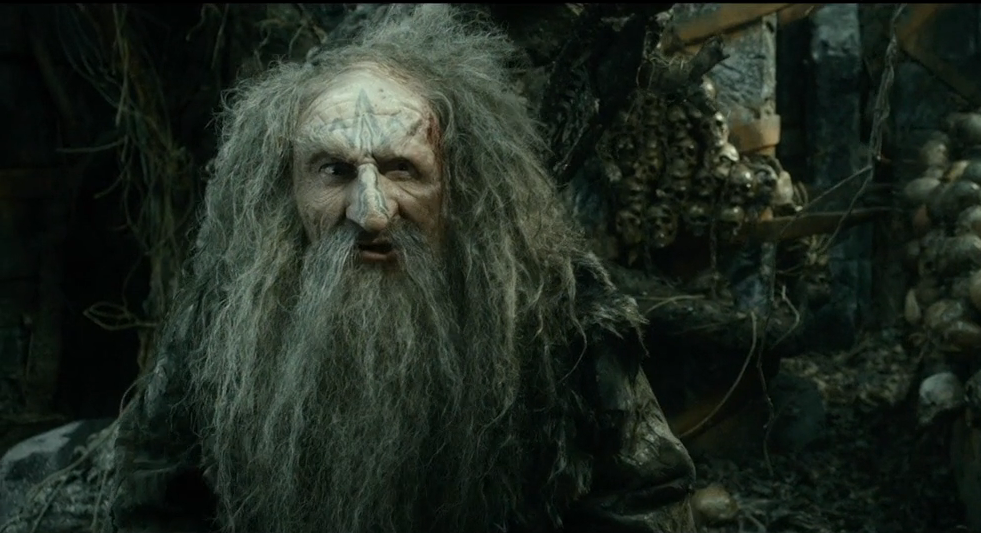
The embellishments we do get are mostly unmemorable and uninteresting – a few extra lines of dialogue here, a disappointing extended encounter with Beorn (Mikael Persbrandt) there. About the only new thing worth seeing is Thorin’s (Richard Armitage) long-lost father Thrain (Anthony Sher) who turns up in Dol Guldur all feral to briefly tangle with Gandalf (Ian McKellen) before regaining his senses and the deepest of regrets about how his disappearance may have affected his son, and indirectly sent him on a fool’s errand.  The Thrain scene is good, but it’s right at the end and over all too quickly.

Even if the film itself hasn’t improved with Peter Jackson going back and pumping it up, the special features do not disappoint. If you care to know such things, you can hear those in the know talk you through the minutia of writing, filming, production design and the cast and crew arsing about. I’m still only on the first disc, but my favourite behind-the-scenes morsels so far are watching poor fish-phobic Adam Brown (Ori) being entombed in a mountain of the (real) slippery buggers, and Lee Pace (Thranduil) struggling with his “elf dress”.

Maybe for the next (and presumably final) Extended Edition, you should have a long hard think, Mr Jackson – do you need to keep this in, or is it just filler? SSP

Posted in Film, Film Review | Tagged , , , , , , , , , , , , , , , , , , , , | 1 Comment

Halloween Special 2014: Assorted Flavours of Horror

ExorcistMerrinArrives

I wasn’t always all that into horror movies. I can’t say that I ever got a particular rush out of being scared when I was younger. I was a timid-ish child. But I’m a convert, and I now see the appeal of horror. I don’t tend to see scary movies on the big screen, but now catch a fair few at home, and I’ve grown to appreciate the plethora of scares on offer. Here’s a selection of what I watched during the lead-up to Halloween this year, some for the first time, some tried and tested favourites.

linda-blair-exorcist-530x2831-horror-trivia-secrets-of-the-exorcist

THE EXORCIST (1973)

I know, I really should have made the time to see William Friedkin’s classic possession chiller long before my 24th year. The exceptional level of craftsmanship in evidence here is staggering. This isn’t just frightening (often more for what you don’t see than what you actually do), but it’s also a perfectly paced slow-burner that brings with it a steadily rising sense of dread, rich textures and awards-worthy performances from Ellen Burstyn, Jason Miller, and especially Linda Blair. Even the archaic special effects manage to remain striking and sinister, and the imagery will cling to your mind for a very long time. The scariest film of all time? Not for me, but it’s certainly up there.

dog soldiers

DOG SOLDIERS (2002)

DOG SOLDIERS, as well as being the first real showcase for Neil Marshall’s talents as a twisty genre director, also works really well on its own terms. It has an appealing group of broad-stroke characters that you actually want to see make it through the carnage (well, you want Kevin McKidd and Sean Pertwee to survive, but can’t wait for Liam Cunningham to cop it), and appealingly tactile but slightly shonky (in a charming way) horror effects achieved with a combination of puppetry/animatronics and big rubber monster suits. It’s part siege movie, part slasher, part monster hunt, and it’s all a hell of a lot of fun. There’s a great gag during the end credits too.

murder-party-truth-or-dare

MURDER PARTY (2007)

The IMDb page for MURDER PARTY contains only one item of trivia: “Filmed in February 2006 with no money”. That certainly comes across, but it’s also witty and creative, developing from a horror-tinged NAPOLEON DYNAMITE to a full-on gore fest of a finale. Mild-mannered loner Christopher (Chris Sharp) comes across an invitation to a “Murder Party” for Halloween, and after making himself a knight costume out of cardboard and tape, finds his way to a backstreet warehouse, where he is imprisoned by some substance-added failed artists (dressed as a vampire, werewolf, undead cheerleader and Pris from BLADE RUNNER) who plan to record their collective masterpiece – the murder of Christopher as the ultimate artistic expression. Luckily for Christopher, his captors are inept, squabbling hacks, and his escape doesn’t seem all that impossible. It’s unexpected, satirical and makes the absolute most of its next-to-nothing budget.

The-Loved-Ones2

THE LOVED ONES (2009)

It’s THE TEXAS CHAINSAW MASSACRE meets MISERY, set the Australian outback and with a wicked and depraved sense of humour – what’s not to like? The way director Sean Byrne juggles and balances the disparate elements, and the distinctive way he has with constructing shots, marks him out as one to watch in the future. It’s also by-far the funniest of my Halloween selection, with laughs coming from the blackest-of-black gags and the increasing extremity of the nightmarish situation Brent (Xavier Samuel) finds himself in after he turns down Lola’s (Robin McLeavy) request to accompany her to the school dance. Lola, or “Princess” as she’s known for most of the movie, and her over-protective Daddy (John Brumpton) have one of the most disturbing implied relationships in film, both in and out of horror, and boy do they put Brent through a living hell, making his eventual retaliation all the more satisfying.

Happy Halloween! SSP

Posted in Film, Film Feature | Tagged , , , , , , , , , , , , , , , , , , , , , , , , , | Leave a comment

10 Years On: Saw (2004)

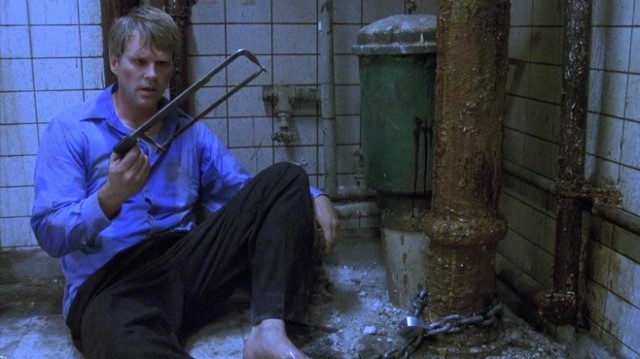
Saw-Cary-Elwes-640x359

Has it really been a decade since this surprise hit horror behemoth kicked off? It’s really quite remarkable that SAW was as successful and influential as it was considering it wasn’t originally even going to get a cinematic release.

It’s a simple idea – two guys (Carey Elwes and Leigh Whannell) awake in the worst bathroom since TRAINSPOTTING, chained to a pipe and with no memory about how they got there. When they eventually cease squabbling and doling out blame, they both try and work out why they are in their current predicament, and attempt various futile escapes, all the while a group of cops hunt a serial killer “who has never killed anyone”, and who in all likelihood is pulling everyone’s strings.

Much of the criticism levied at Saw seems to come from those who either haven’t seen it, and/or those who are just conflating what they’ve read about the wider film series and what it represents. For one thing, the first Saw isn’t actually that gratuitously gory. There are nasty ideas, sure, and the odd blood splatter, but we don’t actually see that much, and clever editing is employed pretty much throughout (admittedly often for reasons of budget rather than taste). The sequels became steadily more extreme and convoluted, and rarely, if ever, managed to equal what was achieved in this first chapter, and yes, they did become pure spectacle through the lens of so-called “torture porn”. You did at least get much more Tobin Bell, which was nice.

Really, the first Saw movie is tonally closer to a horror-tinged police procedural/murder-mystery than an outright scarefest (much like its clear influence and much more of a critical favourite, SEVEN) and in that regard it works solidly – the mystery, the intrigue, the layers being slowly but surely peeled back, as well as the steady build of tension are all very well executed, in addition to the plot being lean and (mostly) no-nonsense. It of course contains the series’ first, and arguably the best (perhaps with competition from SAW: THE FINAL CHAPTER) almighty plot twists, and as surprising as it was on the first watch, the clues are all there in plain sight, but the filmmakers expertly diverted our attention elsewhere.

The fears that Saw taps in to were perceptively cherry-picked by creators Leigh Whannell and James Wan to best affect an audience of 2004. The paranoia of constant surveillance and the danger of fanatical madmen and their disciples understandably struck a chord with a world still reeling from the nightmare that was 9/11. I seem to remember comparing Jigsaw to Dick Chaney in an essay on the horror genre and society at university, mostly because I couldn’t find an appropriate quote that compared him to Bin Laden (it could have gone either way).

Jigsaw, or rather John Kramer (Tobin Bell) is not only the plot anchor, and main driver for the story moving forward, but perhaps more than any other modern horror villain he’s also the emotional anchor. As insane as he is, you can almost understand what he’s getting at, why he wants to achieve what he wants to achieve. It all makes a certain kind of depraved sense. You can’t avoid the fact that Bell’s seductive, chocolatey voice helps sell any point he’s making, either.

It’s not a movie without faults, of course. I wouldn’t say anyone in the cast apart from Bell and maybe Shawnee Smith is at their best in acting terms (Danny Glover really is getting too old for this shit), and it was only in the sequels that we were really allowed to get under John Kramer’s skin. The onslaught of dramatic editing at certain moments in the film, though striking, could be considered over-doing it somewhat. I wouldn’t even call it particularly scary, since it’s pretty low-key and only directly involves a small number of characters, the pure carnage of the more explicit sequels could arguably linger on the mind more, though there are always those who would insist that less is more (which it often is).

I like Saw, I’m not ashamed to admit it. It’s as lethal, rusty and immoral as many of the antagonist’s traps, but it has a definite point to it unlike the increasingly tenuous and profiteering sequels. Ten years on, it leaves a pretty-much dead horror subgenre in its wake. I don’t know whether it kicked off the Torture Porn trend, but it certainly popularised it, and energised it for a good half-decade at the box office. The wider story of Saw had highs and lows. The key highs were here at the start of the Jigsaw saga, and at the very end, when the filmmakers decided to go for broke. If you’ve thus far avoided the Saw franchise, I’d highly recommend you see this initial entry, then maybe just see SAW III and SAW: THE FINAL CHAPTER. You won’t be missing all that much by skipping the rest. SSP

Posted in Film, Film Feature, Film Review | Tagged , , , , , , , , , , , , , , , , , | 1 Comment

Review: Fury (2014)

Fury-Movie

Fury (2014): Columbia Pictures/QED International/LStar Capital

I won’t lie and say I’m not tired by Hollywood’s obsession with being gritty. If it’s not a new serious take on a superhero or a or a downbeat sequel or remake, then it’s seemingly not worth investing in. You don’t get GUARDIANS OF THE GALAXY and THE LEGO MOVIE every year. But if there’s one genre that has every right to be gritty, it’s the war movie, and FURY even manages to have a few laughs in addition to slowly wearing down your soul, usually coming from the tasteless banter between this hugely unconventional testosterone-fuelled family who live in a tin can.

As WWII enters its final phase, Hitler and his forces are getting desperate. As the Allies push on through Germany, leaving rubble in their wake, tank warfare is becoming increasingly important to support exhausted ground troops and to maintain control of the few towns and cities left standing. The American tanks – one such example being Fury, commanded by Sergeant “Wardaddy” Collier (Brad Pitt) – are effectively relics next to their far deadlier German equivalents, and rely on the skill and resolve of their crews to win the day. Wardaddy and his crew – gunner/chaplain “Bible” (Shia LaBeouf), driver “Gordo” (Michael Peña), loader “Coon-Ass” (Jon Bernthal), and new recruit Norman Ellison (Logan Lerman) – are given the unenviable mission to block the advance of the German war machine, or die trying.

Fury’s tank battle scenes are impressively choreographed and edited (both visually and perhaps more importantly in sound terms) as well as being palm-sweatingly tense, and claustrophobic enough to bring on a panic attack. The brutality of the war violence isn’t held back on either, with bodies being literally obliterated left, right and centre. A portion of a human face, cleanly severed from its owner and left on a seat inside a tank is an image that you might struggle to shift. Fury could never be accused of glamorising warfare, and if you really think it does that, then you perhaps need to watch it again. These are dirtiest, nastiest men blowing each other to bits, and while they are all just doing a job that someone has to, they aren’t coy about showing how much they can enjoy it. Their glee at violence and tasteless wisecracks about the horrors they have been collectively responsible for should not be taken as “selling” what they do, rather these aspects of the characters are so over-the-top that they are mocking these kinds of attitudes in the armed forces, sending up these views by exaggeration, just as THE WOLF OF WALL STREET did with amoral money men.

You don’t often see these kinds of moral questions explored in war films, and especially not in this way. We’ve seen conflicted soldiers before, sure, but they usually know what they are doing is essentially wrong, even if they’re doing it for the right reasons, and are preparing for their soul’s eternal damnation as a result. The characters in Fury, on the other hand, probably know what they do, and how they do it, is wrong, but they don’t tend to worry about it, and even seem to relish it. Their attitude seems to be that the Nazis are so bad they need to be worse to effectively fight them, and they’ve been doing it so long they no longer see the rights and wrongs of a more civilised world.

The best scene in the film doesn’t even take place in the titular rustbucket. Wardaddy and Norman scout a nearby house when their convoy rolls into town, and discover two German women (Anamaria Marinca and Alicia von Rittberg) hiding there, and have to decide what to do with them. The sequence is a mini masterpiece in its own right, it tricks you into thinking it’s heading to a much darker place than it is, then it lulls you into a false sense of security as the tension drops momentarily, before heading back into darkness again as the rest of Fury’s crew crash the party. In some ways it’s a moment of relief from the relentless carnage, but in many ways it’s a far more frightening scene in what it says about how human behaviour degrades in wartime.

The performances are great for the most part. Logan Lerman keeps proving himself as a young talent to watch, giving Norman many different shades to his character and elevating him from the standard audience surrogate. Shia LaBeouf is arguably the best he’s ever been, conveying an almost painful intensity with very few words, and Pitt keeps the whole thing ticking over as Fury’s (mostly) unshakable commander, who is equal parts drill sergeant and Mother Hen. Wardaddy does tend to speak mostly in taglines, which can grate, but at least he doesn’t go off on long monologues about liberty and morality, as he well knows he’s not the right person to preach from that particular pulpit. Michael Peña is reliable as always, but out of all of Fury’s crew is perhaps given the least chance to make his mark, to define who his character is (appearing in a funny hat in one scene doesn’t really count as a character trait), and Jon Bernthal essentially reprises Shane from THE WALKING DEAD, but with less subtlety.

The finale does admittedly drag on a little, and seems to have been dragged in from a different film with somewhat less high aspirations just to give the Fury crew a worthy challenge. Said challenge comes from a detachment of the SS, the crème de la crème (or whatever the German equivalent is) of Hitler’s forces, who march fanatically chanting like Sauron’s orcs, so you know they’re super-duper bad (thanks for emphasising that, Mr Ayer!). In this final extended, hellish battle sequence shrouded in smoke and illuminated by bursts of flame, Ayer and his effects team decided to highlight the American and Nazi bullets in different colours – red for our heroes, green for their opponents. I can understand why this was done, so you know instantly who’s shooting which way at who through the gloom, but the end result with the contrasting bright colours looks a little too distractingly like a scene STAR WARS. You also can’t help but think in the film’s final moments that David Ayer lost his nerve to give a slightly more studio-friendly ending, which is odd considering how uncompromising the rest of the movie has ended up being.

Fury does advance the war movie through unflinching portrayal of brutality, both through levels of gore and violence, and through the characters’ rather extreme world views. You’re unlikely to find any of the crew of Fury particularly relatable, and certainly not likable, but that doesn’t mean this group, which David Ayer had acting as a team off-screen as well as off, isn’t compelling and disturbingly fascinating to spend time with. The film exposes a side to WWII warfare that is rarely focussed on, and it represents it on screen warts and all, but it still can’t shake free the somewhat outdated Hollywood tropes, plot structure and short-cuts to quick and easy characterisation. The cast certainly sell the kind of conditions the real tank teams would have worked in, and it is this sweaty, grimy discomfort and the deafening noise that will stay with you. SSP

Posted in Film, Film Review | Tagged , , , , , , , , , , , , , , , , , | 1 Comment

Review: Pompeii (2014)

pompeii

Well, that was disappointing. When it was announced an all-out modern blockbuster was being made based on the devastating eruption of Mount Vesuvius in 79 AD, I thought, what could go wrong? You’ve got inbuilt human pathos, the chance to re-tell an iconic moment of history, and no grander or terrifying spectacle than you could ask for. It turns out that pretty much everything can go wrong.

The film opens in 62 AD, and the brutal massacre of a tribe of Celts at the hands of an invading Roman force. The only survivor, a young boy (Dylan Schombing), is taken by slavers to be used in gladiatorial combat in Londinium. As he grows in body and skill, Milo (Kit Harington) is transported to the teeming Roman resort of Pompeii, where his fight to-the-death is to provide entertainment for the man who murdered his parents in front of his eyes, Senator Corvus (Kiefer Sutherland). As Milo continues to prove himself in the arena, he strikes up a romance with a young noblewoman, Cassia (Emily Browning), just as the mountain that casts a shadow over Pompeii begins to rumble.

POMPEII ends up being a very peculiar brand of bad movie. There have certainly been worse things committed to celluloid, several this year in fact, but many of those were terrible enough to be entertaining, or at least offensive enough in some way to be interesting. Pompeii is just dull and miscalculated to the extreme. The misjudgement of how to play the core premise, as most critics have described it, “TITANIC meets GLADIATOR”, is frankly baffling.

Let us assess the obvious ways the film falls short first. The script is terrible, the acting embarrassing, the characters unbearable and the story manages to outstay its welcome despite taking less than 2 hours to tell. It really shouldn’t be funny to witness a major supporting character suddenly falling into a fissure, but somehow here it is. The romance that should function as the film’s warm, magma-y heart is woefully underdeveloped and might even be less convincing than Anakin and Padme’s from the STAR WARS prequels.

Beyond the obvious, yes the special effects are good, but to misquote Proximo in Gladiator, “they’re not that good”, and boy, does director Paul W S Anderson and his SFX team want you to notice them. Here’s a fun drinking game: take a sip every time you see an elaborate, CGI-heavy establishing shot. Trust me, you’ll be absolutely destroyed, because Anderson, for some reason, feels obliged to use one whenever the scene changes.

The editing is really distracting too, with most cuts lacking rhythm at best, or logic at worst. The cuts jarringly draw attention to themselves, even where it isn’t a requirement to obscure a level of violence that would push the film out of the financially safe age certification. Dialogue scenes are edited like action scenes, and action scenes are edited like the person responsible was relaying instructions over the phone while riding a crowded bus.

I won’t say it’s irredeemable, though. Kit Harington clearly put the work in to get his body into convincing gladiator shape, and much like he does on GAME OF THRONES, he handles the fight sequences well. Kiefer Sutherland turns in one of those performances that’s so bad and inconsistent that it would fit quite comfortably into the “so bad it’s good” category, so there’s a certain pleasure in the amount of camp he provides. Jared Harris, who is otherwise a pointless addition to the cast along with on-screen wife Carrie-Anne Moss, has one of the funniest outbursts in recent memory with “Juno’s tit!”. We also get one genuinely good performance from Adewale Akinnuoye-Agbaje (last seen all spiky as Kurse in THOR: THE DARK WORLD) as Milo’s imposing fellow gladiator Atticus, and he even manages to occasionally bring another dimension to his performance when he’s not lumped with the chore of providing portentous exposition.The secondary baddie, Corvus’ towering Praetorian bodyguard Proculus (Sasha Roiz) is pretty entertaining too, especially when we see that he can somehow take a the same amount of punishment as a Terminator.

Paul W S Anderson should probably just stick to making RESIDENT EVIL movies. He has the remarkable knack of (usually) making that kind of nonsense work. With the somewhat odd exception of EVENT HORIZON, Anderson has demonstrated little to no versatility in the kinds of projects he is able to bring successfully to life. Perhaps in someone else’s hands, Pompeii might have been good, but as it is, it’s an underwhelming, miscalculated, unintentionally hilarious mess. SSP

Posted in Film, Film Review | Tagged , , , , , , , , , , , , , , , , , , , , , , | 1 Comment

Review: Tracks (2013)

Tracks: video still

TRACKS opens with a warning of cultural sensitivity for Aboriginal viewers that the film “may contain images and voices of deceased persons”. This statement sets the precedent for the whole story, that it’ll be dealing with real people and doing them justice from the off.

Robyn Davidson (Mia Wasikowska) lives her day-to-day simply as a means to achieve her dream: to trek across Australia with only her dog and a small team of camels essential for her survival for company. She works hard and often for free, trading her long days of toil for essential knowledge and the guarantee she will have everything she needs for her journey. Reluctantly, she accepts the sponsorship of a magazine and tolerates the occasional presence of a photographer (Adam Driver), but this is Robyn’s quest, and hers alone, and she will get through it the only way she knows how: the hard way.

Robyn Davidson is described through the course of the film by others as “an odd girl” and “the Camel Lady” and “at home nowhere” by herself. She’s a slippery one to pin down, almost impossible to psychoanalyse, but she’s a captivating presence nonetheless.

It’s so nice to hear Wasikowska use her own voice for once. She’s played plenty of Americans and Brits, but rarely gets to play someone with her natural dialect. I shudder at the thought of one of Hollywood’s darlings playing Robyn and putting on a bad Aussie accent (Julia Roberts was considered years ago) so I’m pleased we ended up with a native in the lead role, and she certainly seems to come of age with this particular turn. There’s some lovely subtleties to Wasikowska’s performance. You can plainly see the life leave Robyn’s eyes when she is forced to hang out with her friends one last time before she sets out on her mammoth trek, then witness the fire in her belly reignite as she begins her endurance test. As she is about to set off, her sister tells her “there’s no shame in turning back” and Wasikowska gives Robyn this wonderful facial expression, a weird, endearing and determined grimace that proclaims giving up just isn’t an option for her. Her whole life has been leading up to this moment, and she’ll see it through. She clearly wasn’t born to just sit still and make do.

From the off there’s a great contrast between Wasikowska and Driver’s characters – Robyn in serene and serious, confident and certain of what she wants and how she wants to achieve it, whereas Rick nervously cracks jokes, is awkward and out of place, and is always looking for answers, many of which Robyn is unwilling or unable to provide. She despairs at having a photographer accompany her (just look at the pure venom in her “smile” for the camera). But Rick is also a necessary evil, his magazine’s sponsorship is the reason she has the opportunity to fulfill her dream. Despite his support, you get the sense Robyn feels like Rick is stealing her journey of a lifetime, her one ultimate expression of individual spirituality, away from her. No wonder she tells him to f-off as he tries to take a picture of her in a sandstorm.

Rick’s voyeuristic drive, as a photographer, not only irritates Robyn, but puts her on the back foot as he feels compelled to take photos of Aboriginal “Secret Business”. She cannot cross sacred ground without the company of an “Old Fella”, which they are understandably reluctant to provide after her associate has acted so insensitively. But you get the impression that though this is a major inconvenience to her, Robyn is up for the challenge, and she almost seems put out when a very nice Old Fella agrees to escort her on the final leg of her journey. As friendly and fascinating as Mr Eddy (Roly Mintuma) is, it’s not truly her journey anymore when she has company.

The will-they-won’t they? question between Robyn and Rick does seem a little forced for the film (though admittedly I don’t know to what extent it happened in real life). You feel at first it might be at odds with everything we’ve learned about Robyn’s personality, at least until you realise it was just a one-night stand in the desert strictly on her terms (much to Rick’s disappointment). Though the film doesn’t quite lower itself to outright conventionality in the film romance department, we do get an unwise attempt at explaining the way Robyn is through the prism of symbolic childhood trauma that returns to her in dreams. It’s not badly done, it’s just been done so many times before.

The film contains one of my favourite lines of film dialogue of all time – when debating how to tell the decent, well-intentioned, but interfering Rick to take a hike, Robyn asks “How can you tell a nice person that you wish they’d crawl into a hole and die?”. It’s a really funny line, but it also serves to sum up Robyn’s attitude to most of the rest of the people on the planet, that she bears them no ill will, she even likes some of them, but she’d still just prefer they all left her to it.

The film is full of emotional highs and lows, joy and pathos. Perhaps the real dramatic potential of this amazing story is best reached in a scene where Robyn is mobbed by journalists in the wilderness and questions having ever started the journey, before finally admitting to Rick that she is “so alone”. The walls finally come crashing down, and she is laid bare for the first time, finally wondering whether she really can do what she’s never had any doubts she could do before.

Robyn’s journey seems possible through equal parts tenaciousness and luck. Her achievement was miraculous, a testament to her strength of body, mind, and soul, but we never really find out for certain why she decided to do what she did. Maybe she never knew. Maybe she simply doesn’t want to tell us. In the end, it doesn’t really matter. Aside from the odd stumble, Tracks is a finely-tuned feelgood adventure with a clever and mature performance from Waskikowska. It serves as an appropriate and fitting tribute to its illusive subject and also works as a spiritually satisfying experience as a whole. SSP


Posted in Film, Film Review | Tagged , , , , , , , , , | Leave a comment

Review: Middle-Earth: Shadow of Mordor (2014)

Shadow-of-Mordor-

A now for something a little different. I’m going to review a video game just as I would a film. I know, movies and games are very different forms of art and entertainment with different purposes and different requirements of their audiences, but considering the basis of this game is a long-running film franchise based on iconic fantasy literature, I think the cross-pollination of art and media justifies the comparison.

I wouldn’t say I’m a passionate gamer, and I tend to go through phases of playing them a lot, then very little from month-to-month. I’ve played pretty much all of the licensed LORD OF THE RINGS video games, though not many have been particularly good, but I’ve been looking forward to MIDDLE-EARTH: SHADOW OF MORDOR since it was announced, and I’m very pleased to report that it’s really good.

Shadow of Mordor follows Talion (Troy Baker), a Gondorian Ranger posted on the Black Gate, who is murdered along with his family by Sauron’s human disciples as they lay the foundations for their master’s return. Talion is saved from death/cursed to eternal suffering when he is possessed by an Elven wraith (Alistair Duncan) and they both set out on a quest for revenge against the evil residing in Mordor.

On the surface, it’s a very handsome and fluid open world action adventure sitting at that happy halfway point between ASSASSIN’S CREED and BATMAN: ARKHAM ASYLUM. Beyond the obvious influences of those games in terms of form and style, what makes Shadows of Mordor stand out is how it pushes the boundaries of interactive storytelling in a way we haven’t really seen before with the much-hyped “Nemesis System”, where every play-through can be a drastically different experience. It also satisfyingly builds on Peter Jackson’s interpretation of J.R.R. Tolkien’s epic fantasy universe, contributing to the richness of this world in the process, and managing to feel like a key piece of Middle-Earth lore (the heavy involvement of Weta Workshop helps immensely here).

A lot of people might sigh at the thought of a story set between two trilogies (STAR WARS has worn out its welcome to the extreme in that regard) but Shadow of Mordor  makes it work. Much like Jackson did with his extended adaptations of THE HOBBIT, the writers of this video game have made extensive use of Tolkien’s Appendices, extrapolating grand events from mere implications, embellishing the given material to great effect. The game explores the periphery of Middle-Earth lore, and brings to light a few key concepts that have (to the best of my knowledge) never really been explored before, by Tolkien or Jackson, but they marry really well in this world. For instance, we discover that the Gondorien Men were not all flawed but essentially good, on the contrary they actually had very few qualms about using slave labour after Sauron’s defeat to reconstruct their ruined world and prepare their defences for the next inevitable conflict.

The Two Istari (the ones who aren’t Gandalf, Saruman, or Radagast) are referred to quite craftily out of necessity. Like in the first Hobbit film, the writers are forced to navigate quite complex legal obligations – the two Blue Wizards are only named in material that Warner Bros doesn’t currently own the rights to, and without having Gandalf on hand to conveniently forget their names, we hear some soldiers hypothesising that they were put under a spell so they would forget the wandering wizards after meeting them so they could continue with their covert mission in the East.

Our two lead characters, another guilt-ridden, flawed  human reluctantly accepting his destiny, and a bitter Elf spirit with a shadowy past and a tie to all of the key events in The Hobbit and The Lord of the Rings, are a pretty compelling pair of protagonists, derivative as they are, and they way they are eventually able to reduce an orc to component parts is frighteningly cool.

The main antagonists are appropriately nasty, and the randomly-generated orc foes are a grotesque, love-to-hate bunch. We also get major appearances from Gollum (sadly Andy Serkis does not reprise, but Liam O’Brien does a decent impersonation) and Sauron (Steve Blum), and other Middle-Earth stalwarts have brief, but fun, cameos. The randomly-generated orc nemeses you encounter can provoke remarkably strong reactions in the player too, often being fun and frustrating to fight in equal measure, especially if they’ve managed to kill you multiple times and are getting smugger and smugger with each encounter, and really maddeningly push you to wiping their corrupted elf grins off their faces.

Sauron’s motives are presented as almost understandable here. Usually, he’s the ultimate unknowable evil, but the game’s writers present him as someone trying to rebuild a war-ravaged world. OK, rebuild it to his very specific tyrannical specifications, so in that sense he’s not that different to many 20th Century dictators, but at least there’s a logic to his actions rather than just evil for the sake of being evil. That criticism could be leveled towards Sauron’s henchmen, The Black Hand (Nolan North), The Tower (JB Blanc) and The Hammer (John DiMaggio), who serve as the game’s final bosses to fight, and while all three are interestingly designed and creepy, they are all pretty one-note characters.

Like Peter Jackson’s films, Shadow of Mordor isn’t above extracting a little bit of humour from Tolkien’s generally dead-serious lore. You get a fair few laughs from the orcs’ banter with one another, and other sniggers from dialogue unlocked with the game’s numerous collectibles, like a damning battle report that dubs The Battle of Five Armies  “The Battle to Unfairly Gang Up On the Orcs”.

The game’s plot is pretty involving, and motivates you press on through challenges and complete Talion’s story, though it does admittedly become less focussed in the final third or so, and the ending sadly feels a little underwhelming after such a long build-up. There’s ample opportunity to explore and uncover Middle-Earth’s secrets, and plenty of replay value, so you should be glued to this one for a while (at least until Jackson’s final Middle-Earth blockbuster is released in just over a month), dismembering and manipulating Sauron’s armies to your heart’s content. SSP

Posted in Film, Film Review, Video Games | Tagged , , , , , , , , , , , , , , , , , , , , , | 1 Comment

Review: Philomena (2013)

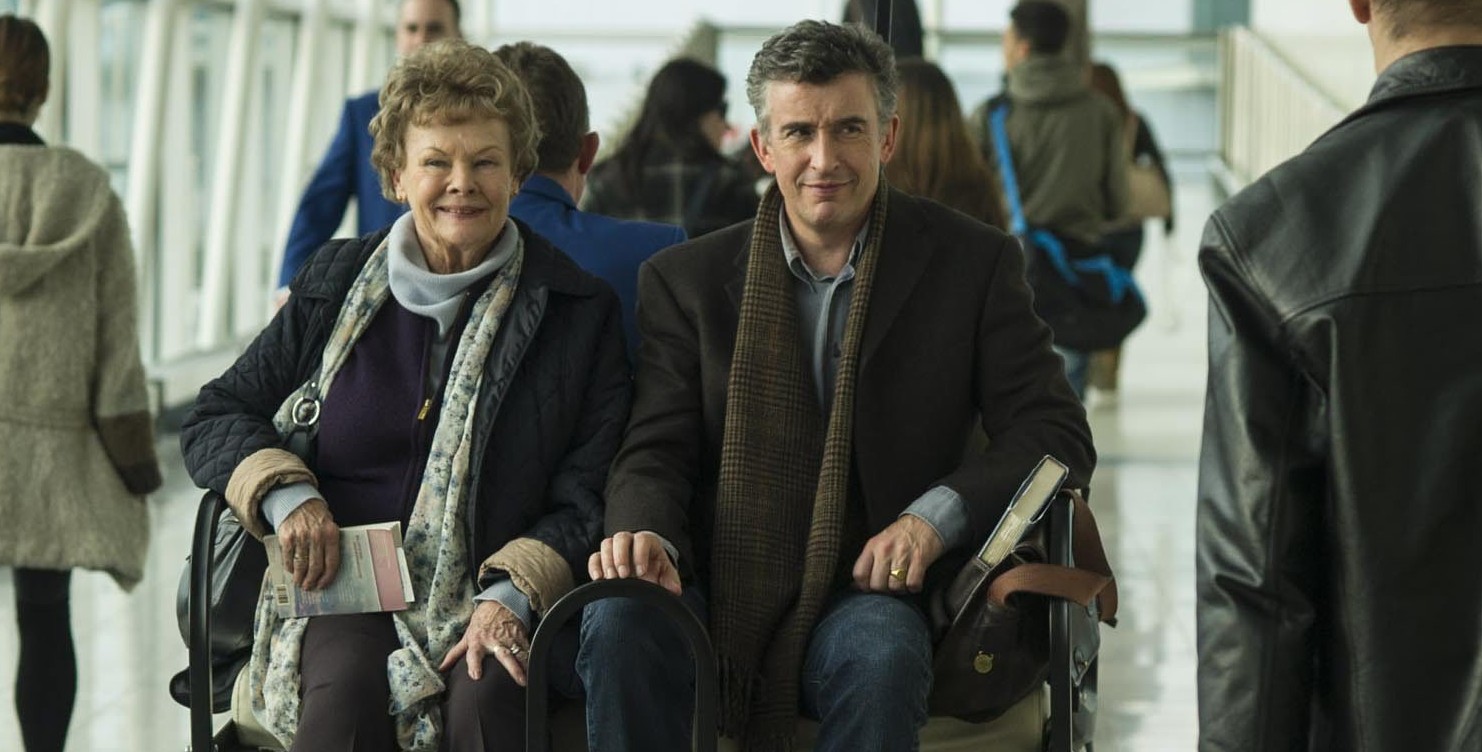
film-philomena-e1385664855549

Some stories don’t need much embellishment when adapting them for drama. Martin Sixsmith’s human interest article which forms the basis for PHILOMENA is one such story, remarkable and moving, and Steve Coogan who writes and stars does a fine job of bringing Philomena Lee’s tale to life.

In the early 2000s, Martin Sixsmith (Steve Coogan) was not a popular man. Estranged professionally and publicly by his controversial actions as a journalist and political advisor, he plans to give himself something to do, in addition to some comfort therapy by writing a long, boring book on Russian history. His plans change when he is persuaded to write an article on Philomena Lee (Judi Dench), who was sent to a convent as a young woman when she became pregnant, and had her baby son forcibly removed from her care. Fascinated by the emotional turmoil and moral implications of the story, Sixsmith accompanies Philomena back to her native Ireland and beyond in the hopes of tracking down and reuniting her with Anthony.

Judi Dench giving a great performance is nothing out of the ordinary, it’s what she does in everything after all (CHRONICLES OF RIDDICK? Never heard of it!). That’s not to take anything away from what she does in portraying Philomena, making her a shining light of strength, determination and unswerving goodness, who gets excited by hotels. But it is Steve Coogan’s transformation that is in many ways far more remarkable. There’s a recurring gag in the British mocumentary THE TRIP where Coogan (playing an exaggerated version of himself) complains to his travel companion Rob Brydon that he’ll never be taken seriously as an actor, and will be forever known as the guy who does Alan Partridge. This film could very well change all that. It turns out Coogan can do low-key, and do it incredibly well. There’s no physical, verbal or behavioural tics, nothing showy, he just acts and you forget it’s Steve Coogan on screen. He doesn’t make Sixsmith particularly empathetic, but perhaps embodies the most enviable and idealistic traits of a determined journalist – asking the difficult questions in the search for the (or a) truth.

Philomena is of course heartbreaking. You can’t watch these atrocities unfold and not be moved, not have your heart go out to the young mother (Sophie Kennedy Clark), what she goes through, and what she has to live with (and without) for decades, nor prevent yourself from being outraged at the collective actions of the Catholic Church. The film can be really funny too, the balance between light and shade pitched just right. I challenge you not to giggle at how adorably giddy Philomena gets when she sees the range of breakfast options available at her hotel, and can’t comprehend Martin’s insistence that he doesn’t tend to eat first thing in the morning.

It could (and I’m sure this version of Sixsmith, and maybe the real one too would have wanted it to) be a story about revenge. Philomena would be completely justified in being furious at what the Catholic Church did to her, her son, and their stopping them from meeting for over four decades. But Philomena was, and is, a good person, a great person, and that’s what the film is really about, being good. She forgives, but never forgets.

The film’s main antagonist, if there really is one (excluding the Church in general), is the decrepit Sister Hildegarde (Barbara Jefford). It would be very tempting to force some sort of moral resolution, a change of heart, an apology with this character, but bravely, the script doesn’t require Hildegarde to make any such progress. When she is finally asked the difficult question, “Why?”, so dedicated to her doctrine and way of life is she that decades later she still sees nothing wrong with what her and her Sisters did to Philomena and countless girls like her, and Philomena still forgives her for everything.

She embodies that very Christian of virtues, forgiveness, whereas Sixsmith, like many Atheists (though he’s really more of an agnostic), just wants answers, justifications, where there aren’t really any. If you don’t follow what it says in Scripture, then how can you possibly comprehend atrocities committed in the name of it? It is their clash of wills, in many ways, their differing perspectives in how to handle Philomena’s situation when the whole truth has finally come out, that is the high point of the film. It sums up why this story matters, why it had to be told. A short exchange of words between Philomena and Martin encapsulate the whole affair wonderfully:

“I don’t want to hate people. I don’t want to be like you. Look at you.”

“I’m angry”.

“Must be exhausting”.

Philomena does justice to an already remarkable true story, events and characters tweaked just enough, but still handled sensitively by Steve Coogan and Jeff Pope’s screenplay and Stephen Frears’ unobtrusive direction to produce the most emotionally satisfying film possible. Dench is great, Coogan is even better, and he seems to have a bright future as a serious writer-performer. I don’t agree for a moment the claim made by some that it’s an anti-Catholic film. It doesn’t hide the fact that the Catholic Church did some monstrous things, and it aims to raise awareness of them, but the main message is always the one that Philomena herself preaches: forgiveness. We should never forget, but we shouldn’t dwell too much on the past either, as it won’t help to make the pain go away when there is nothing to understand.  SSP

Posted in Film, Film Review | Tagged , , , , , , , , , , , , , , , | Leave a comment