All Hail Caesar and His Empire!

Something is changing at a grass-roots level, even if the Hollywood establishment don’t quite seem ready to accept it. On Sunday night at the 2015 Jameson Empire Awards, the film awards voted for entirely by the public, Andy Serkis was bestowed Best Actor for his masterful performance in DAWN OF THE PLANET OF THE APES.

So, it’s another award for a hard-working actor, so why is this such a big deal? Well, it’s the first real acknowledgement of the motion-captured performances fronted by Serkis, among others for the last fifteen years or so, as a credible mode of acting. Mo-cap is big business to today’s film industry, playing a major part in many of the biggest blockbusters on the planet, from LORD OF THE RINGS to AVATAR and the upcoming AVENGERS: AGE OF ULTRON and STAR WARS: EPISODE VII. It is only through this technological breakthrough, through this harmonious relationship between actors and animators, that it has been possible to bring some of the most memorable screen characters of the last decade to life.

It’s still a hot debate amongst industry professionals how best to categorise motion capture. Is it merely an extension of an actor’s performance, “digital makeup” (as Serkis would argue) or is it just as much down to the army of technicians as the person in the leotard in front of the camera? You clearly can’t dismiss the months of work SFX artists put in, but at the same time a performer like Andy Serkis’ personality and facial expressions always come through, whether he’s playing ape, corrupted hobbit or cartoon alcoholic seaman. It’s a massive grey area in short, and this is used as an excuse for why Serkis, who mostly does this kind of acting, has been completely ignored at awards ceremonies so far.

It’s entirely appropriate that it was the readers of Empire Magazine who have made this happen. The real movie audiences have told the industry what really made an impact on them, which cinematic experiences actually matter. Even if we’re a few years away from a motion-captured performance even being nominated for, let alone winning, an Oscar, this might be the first sign of momentum in that direction. It’s widely believed that it was the Academy’s much-derided snubbing of THE DARK KNIGHT (for being, technically, a superhero film) that lead to the increased number of Best Picture nominees, so maybe Hollywood’s grand jury might take note again of what is happening in their industry. We should at least see a new category for this type of performance if those who get to decide this sort of thing still don’t see it as real acting (needless to say a hugely backward view to have).

You might argue this isn’t a major landmark. It was just the Empire Awards after all, broadcast not on TV but via YouTube and the Empire’s own blog. Empire magazine is just the biggest film-focussed publication in the UK, with a massive fan-base worldwide both within the industry and out. Audiences have spoken as one. Great waves start out as ripples after all, and the film industry has likely taken note of the current direction of the tide. SSP

Posted in Film, Film Comment | Tagged , , , , , , , , , , , , , , , , | Leave a comment

Film Confessional #7: Field of Dreams

field-of-dreams

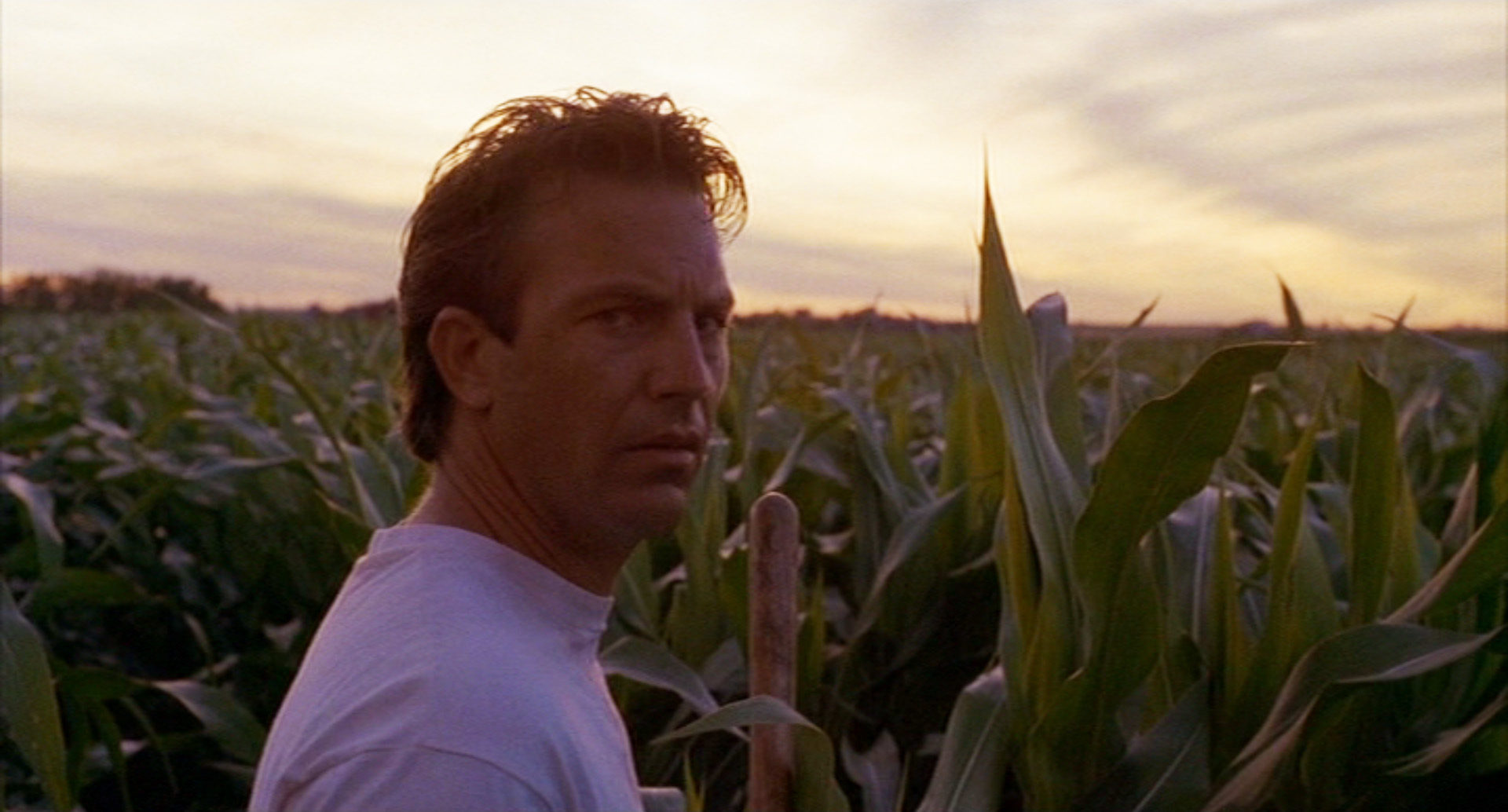
It’s been a while since I’ve done one of these, but I have a confession to make…last night I watched FIELD OF DREAMS, and I don’t see what all the fuss is about. It’s one of those movies that a staggering amount of people seem to have a deep-rooted affection for, that they will proudly shout from the rooftops that they love, that’s it’s apparently OK for guys to cry at. But now I’ve finally seen it, I can safely say it had absolutely zero affect on me.

Maybe it’s because I’m not American, in fact I’m British. I’ve never watched a game of baseball in my life, it’s not a game that is part of my culture, and I’m pretty apathetic to sport in general. I didn’t object particularly to the highly romantic view of American society and culture on show, nor to the emotionally blackmailing drive behind many of the plot contrivances (though both of these elements could be annoying at times). What I objected to most was how dull the thing was. The performances were mostly boring and unmemorable, and though Amy Madigan is entertaining, and Ray Liotta and Burt Lancaster bring pathos to their roles, that’s not enough to save the film as a whole. The pacing of the plot requires a lot of trust on the part of the viewer, with revelations not so much drip-fed as all dumped on us at once in the last fifteen minutes. The film also looks very conventional, always competently framed and put together by director Phil Alden Robinson, and the Iowa scenery admittedly looks pretty, but it never makes you go “wow” and very few individual shots are memorable.

I know the film is essentially a fantasy, but I couldn’t suspend by disbelief and get behind the idea that Costner’s Ray Kinsella gives up his family farm to build a field for long-dead ball players, and everyone’s OK with that. His wife falters at first, but comes around conveniently quickly. Can we not be honest and just say what a selfish jerk he’s being? The only character who acknowledges this is Timothy Busfield’s Mark, Ray’s brother-in-law, and we’re meant to see him as an antagonist for quite rightly warning that Ray is putting his family in very real danger because of an apparent delusion. But I know I’m trying to apply cold logic to unbridled fantasy here.

I’m not completely heartless – the final scene, the entire reason for seeing the film, is lovely. It almost makes sitting through the previous 100-or-so minutes worthwhile, and it certainly elevates what has come before. Again, though, for me, it’s not enough.

As I’ve previously stated on the blog, I like some weird films. I sometimes disagree with critics, and other times I disagree with other audience members. Sometimes you just love something and can’t quite explain why, and if Field of Dreams just has a direct line to your heart, then good for you. But I didn’t shed a tear once my first time watching it, in fact I rarely felt anything beyond boredom. It just wasn’t for me. SSP
Posted in Film, Film Feature | Tagged , , , , , , , , , | Leave a comment

Review: The Babadook (2014)

jennifer-kent-babadook-2014-05-06-004

It’s true what you’ve heard, THE BABADOOK is very good. But is it really all that scary? I’m not so sure.

Set in suburban Australia, The Babadook follows working mother Amelia (Essie Davis) who is left caring for her child on her own after her husband dies in a car crash whilst driving her to hospital. Her son Samuel (Noah Wiseman) is a troubled and imaginative boy whose behaviour makes it difficult for the pair of them to fit in with “normal” society, and Amelia becomes steadily worn down in both body and spirit. Then, when a sinister pop-up story book appears in their house, something comes with it…

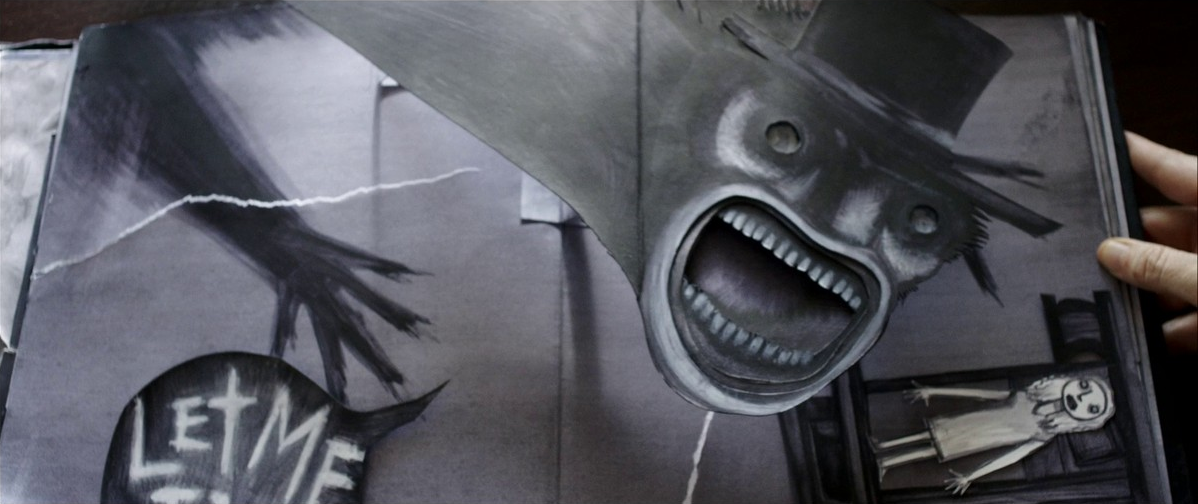
Bizarrely, Mister Babadook is the least frightening thing in the film. Yes, he has a striking design, and he’s done a great service by never being revealed in his entirety, but he’s more an excuse to evoke a consistently sinister mood and to make creepy noises from impenetrable shadows than he is a monster who will invade your dreams. The most frightening he ever is is on the pages of his book, complete with nightmare-inducing rhyming verse (and if the book itself is ever released for purchase, I imagine it’ll be a very popular item of geek merch). Far scarier is what Babadook represents: the failure of parenthood; the inability to control your child’s behaviour or protect them from harm. These themes fill you with dread, and this is the atmosphere conveyed throughout. But after all that, after the reviews, after William Friedkin, director of THE EXORCIST called it one of the scariest films he’d ever watched, I was expecting something more horrifying and more lasting.

It’s a film built around two hypnotic performances from Essie Davis and the young Noah Wiseman. If you didn’t care about, if you weren’t compelled by, this core relationship between Amelia and Samuel, then the film would have imploded. The decision to keep the pair disconnected behind the scenes appears to have contributed greatly to the palpable tension and discomfort in their relationship evident on camera. Davis makes you experience her character’s utter exhaustion and paranoia as a single working mother with issues of her own and a challenging child in her care, and she takes her to some incredibly dark places later in the film. Said challenging child, in the hands of Wiseman is a force of nature, and as an actor he’s a real find for the future.

Daniel Henshall is also in it, and I found it incredibly difficult to believe he was playing a decent human being here following his chilling turn in the psychologically scarring SNOWTOWN. Hayley McElhinney also leaves her mark as Claire, Amelia’s sister and Samuel’s aunt, giving as she does one of the most painful and cruel excuses for not spending more time with her family I think I’ve ever heard.

First-time feature director Jennifer Kent makes the most of her modest budget through original and economical set and creature designs all veiled in German Expressionist shadows. Low-key creativity can’t hide everything, however, and occasionally frayed edges in the visuals show through, and the sound mixing could probably have done with another pass in post-production for clarity.

Minor gripes aside there really isn’t all that much to complain about. For me, The Babadook tripped up as a horror film for not being all that scary for me, but that doesn’t mean you will have the same experience, and it might just hit the right buttons to chill you to your core. It works well as a traumatic family psych-drama, and what anyone can appreciate is the shear talent on show, both from debut or breakthrough turns from actors, and from the artists working behind the scenes who have been quietly grafting away for years. Now they’ve proven themselves by contributing to this striking project any or all of their careers could prove to be very interesting indeed. SSP

Posted in Film, Film Review | Tagged , , , , , , , , , , , , , , | 3 Comments

Review: We Are the Best! (2013)

we are the best

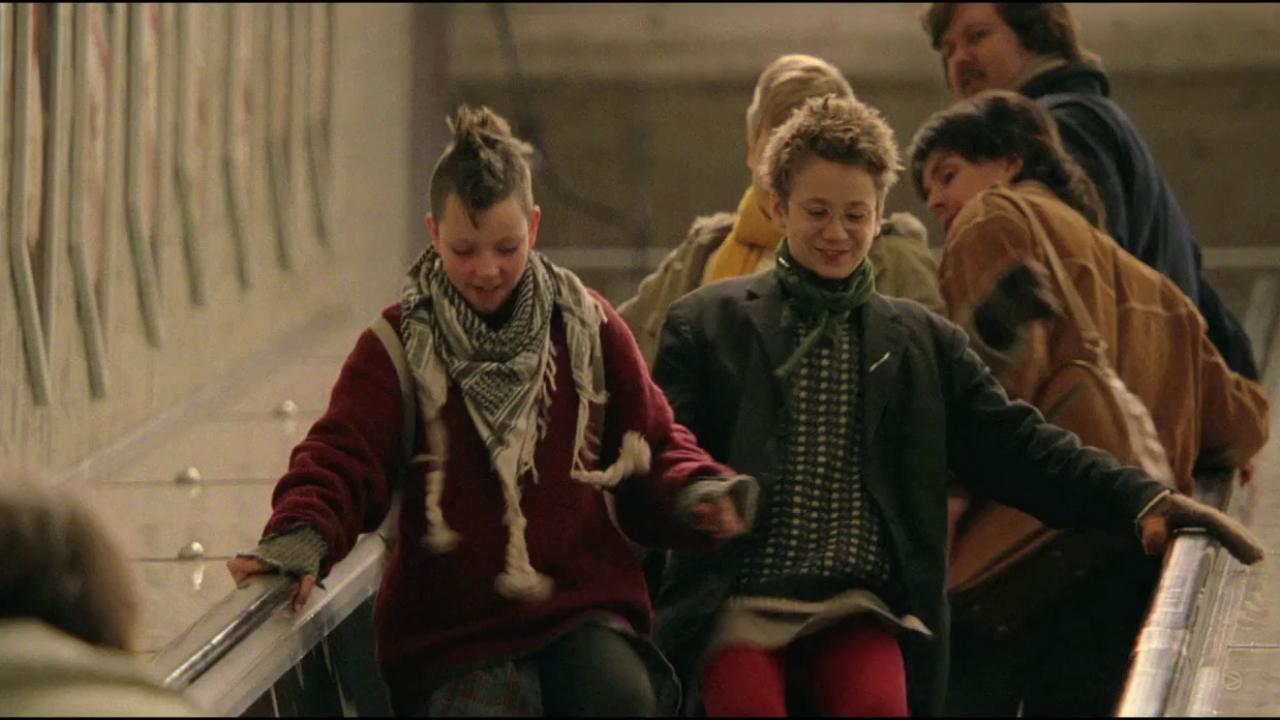
WE ARE THE BEST! should really be compulsory viewing for pre-teen girls worried about their self-image or “fitting in”. It probably won’t be encouraged by many parents though, considering our three thirteen-year old protagonists get called, and call others the C-word. But despite the pre-teens’ sailor’s vocabulary and their rebellious antics (they gatecrash and get drunk at a party, trash a canteen and hang out in abandoned buildings and on rooftops) I think all the groovier parents out there should still let their kids watch the film. The morals tirelessly promoted throughout – friendship, fortitude, determination and just being yourself – are all values that would benefit any child’s worldview and enjoyment of life.

It’s suburban Sweden in the 1980s, and best friends Bobo (Mira Barkhammar) and Klara (Mira Grosin) love punk. They love the music, the image and what it stands for, and when an opportunity presents itself to not only to have fun forming a band, but to stick a middle finger up to the man, they just can’t resist. The only problem is that Bobo and Klara can’t play music, and need help from religious good girl Hedvig (Liv LeMoyne) if anyone is going to take them even a little bit seriously.

The central friendship of Bobo, Klara, and later Hedvig is captivating, and the young actors’ effortlessly natural performances (frequently resulting in them visibly cracking each other up, scripted or not) brings the story to vividly true life. I think the shy and troubled Bobo may be one of my favourite film characters in recent years. Her home life is miserable, with her single mother frequently at work or seeing her latest man, and even when hanging out with her BFF Klara, it’s never her show, she’s never the centre of attention. The girls decide to form a band as much to cause disruption at their youth club as to create music. They write a protest song about how much they hate PE, and Bobo moans “why do I have to play the drums?” while Klara gets the much cooler bass guitar. Eventually they recruit quiet and Christian Hedvig to inject a little much-needed talent, maturity and motherly affection into their ensemble, but even at this stage they seem to be in a band as an excuse to hang out more than any genuine musical aspirations.

You don’t need a lot of help to make snowy Sweden look pretty, but We Are the Best! is a very good looking film regardless, with careful framing and pleasing attention to detail without ever being showy or overshadowing the actors’ performances. Lukas Moodysson, as well as having an awesome name, proves to be a confident actor’s director with a real style and rhythm to his work.

It’s a great film about a very specific age group, girls who are beyond children but still not quite teenagers. They contemplate which of the cute boys from a teen punk band they’d like to be an item with in a giggly girly fashion, but when a jealous argument erupts later in the film between Bobo and Klara, their commitment to their crushes doesn’t last all that long, and they decide pretty quickly their friendship isn’t worth losing over a stupid boy neither are that bothered about hanging on to.

Much like the girls’ attitude to punk and life in general, Moodysson’s film exhibits a pleasingly unfussed attitude towards what the world thinks of it. It can be as deep or as simple as you like. Is it a commentary on loyalty, growing up and art as a way to smash the system, or is it just a pleasant little tale of three friends goofing around? Personally I think it’s a little of both, but others might commit to one side or the other. Either way, there’s a lot enjoy.

If this unassuming treasure of a film passed you by on its release, then it’s time to rectify that. We Are the Best! really is the best, a fantastically feelgood films about growing up at your own pace and having fun every step of the way. An absolute pleasure. SSP

Posted in Film, Film Review | Tagged , , , , , , , , , | 3 Comments

“Stories of Imagination Tend to Upset Those Without One” (RIP Sir Terry Pratchett)

AT LAST, SIR TERRY, WE MUST WALK TOGETHER.

Terry took Death’s arm and followed him through the doors and on to the black desert under the endless night.

The End.

The above was posted last Thursday on Terry Pratchett’s Twitter account. Sir Terry had finally been taken by the Alzheimer’s disease he had so tirelessly campaigned to raise awareness of in his last years despite his steady decline. His final interaction in life imagined to be with the most iconic character of his Discworld Series, an anthropomorphic personification of Death, was a fitting and touching sendoff.

I don’t usually write about popular figures not directly involved in the film industry, but I had to make an exception for Pratchett as he was without doubt my favourite author of all time. Few, if any people in this world have gifted me with as much joy with their work. The long-running Discworld series has been an important part of over half my life, and has fed my imagination, my love of reading, of the fantasy genre, and of satire. The Discworld novels might not be epic, “high” fantasty like THE LORD OF THE RINGS or GAME OF THRONES complete with imposing family trees and dense appendices, but they’re a very perceptive, affectionate and playful deconstruction of such works and their ilk. Anyone who dismisses the fantasy genre as irrelevant, for kids who never grew up, has clearly never read one of Pratchett’s novels. His books might be set in Ankh-Morpork or elsewhere on the Disc (which sits on the back of four elephants which in turn stand on the shell of a giant turtle), but they are always about the here and now, whether discussing new technologies, society and culture or life itself in Pratchett’s wry and witty manner.

Pratchett was always a talented writer, but what I loved about him was that he wasn’t afraid to change his style, even completely re-write some of his characters as his body of work grew. He certainly became a better writer as his career progressed, and never did he retread old ground. You can jump into Discworld at any point as the stories tend to be pretty self-contained, but there’s in-jokes and character development aplenty if you want to work your way through the complete narrative arcs of groups of characters like the Witches, or the City Watch, or Death & Family.

Pratchett’s work has yet to make it to the big screen, but given his prolific production of novels (even in his later years) and the variety of genres he’s dipped into, I don’t really understand the reason for this. We’ve had three OK TV adaptations (the best of which was probably GOING POSTAL) and while they all looked good enough, I’m not convinced that Pratchett’s humour translated all that well into live-action, and nothing more notable has been produced since. Terry Gilliam and Sam Raimi have expressed interest in directing projects based on Pratchett’s books, but they never seemed to gain much traction, which is probably for the best because their distinctive styles might have eclipsed Pratchett’s own. You’d have thought at least Disney or DreamWorks would see the potential in the Tiffany Aching/Nac Mac Feegle stories as a series of family animated movies in the vein of HOW TO TRAIN YOUR DRAGON?

If a filmed Discworld ever emerged, I have my dream casting in mind for my favourite characters (Mark Rylance for Vimes, Eileen Atkins for Granny Weatherwax, Maisie Williams for Tiffany Aching and David Tennant for Rincewind, if you’re asking) but perhaps my ideal Discworld should remain in my mind and on Pratchett’s page to enjoy forever. SSP

Posted in Film, Film Comment, Literature | Tagged , , , , , , , , , , , , , , , , , , | Leave a comment

Running (and Dancing) with Scissors

fc-scissorhands-ashley-shaw-dominic-north-snow-kiss_620

The following contains spoilers for the film and stage versions of EDWARD SCISSORHANDS.

A couple of Saturdays ago I indulged in a night of culture when I finally got to see Matthew Bourne’s impeccable dance adaptation of Edward Scissorhands. I found it a completely magical experience, and though it made some notable changes to Tim Burton/Caroline Thompson’s original story from 1990, I understand why these changes were necessary for a successful transition to the stage. The stage is, after all, a very revealing space, a space which requires bigger emotional expression and creative conveyance of your story’s themes.

The film and stage versions may be different, but both are great interpretations of this particular modern fairy tale of an unnatural outsider’s struggle to fit in. Bourne and original screenplay writer Thompson tweak Edward’s origins for the dance – here he’s a real boy killed in a tragic accident and later revived with his unusual appendages, whereas he’s closer to a cookie than a corpse in Burton’s film. For the dance, Bourne makes the PINOCCHIO “real boy” references even more blatant, overshadowing the FRANKENSTEIN “it’s alive!” take of Burton’s film and arguably this does make Edward more relatable and human, even though he’s also implied to be somewhat supernatural here as well.

Unlike in the film, Edward is not a product of an unfortunate but unavoidable incident (the Inventor, played by Vincent Price in his final screen appearance dies of old age before completing him) but of a gang of rowdy teens terrorising his creator and driving him to an early grave. Here, Edward is a product of societal flaws, the pure malice of kids with nothing better to do, rather than tragic circumstance, and this could conceivably give him motivation for revenge. Bourne and Thompson smartly instead make Jim kill himself accidentally rather than making Edward responsible, which he is in the Burton film for flat-out murdering him (defending Kim, but still…).

Not everything has been altered in Edwards transition to stage, and it’s still recognisably the same story being told. The characters’ relationships and themes of the story remain pretty much identical, and only difference in Edward’s portrayal is a little less naivety, more confidence and arguably more character development in the stage version (good as Johnny Depp was in the film).

Both dance and film appear to be set in a very 80s take on the 50s (influenced primarily by Tim Burton’s upbringing) and while you could poke holes in some of the iconography not fitting in its allotted decade, both takes on Edward Scissorhands get American Suburbian satire just right. There’s a lot of fun to be had in the dance with the OTT choreography of the nuclear families beginning their days, Edward’s awkward tip-toe shuffle in contrast to everyone else’s big movements. It’s a shallow, cruel pastel world Edward is dropped into, and the craftsmen working on stage and screen help engage you in his journey from freakish outsider to curiosity and back again through clever, graphically distinctive designs and effective use of available space.

Which version of Edward Scissorhands do I prefer? That’s a difficult one to answer, given that film and dance for the stage are completely different mediums with different requirements. The performances are understandably bigger on stage to covey the range of emotions needed, the key beats choreographed to within an inch of their lives to make up for the lack of dialogue. Both Bourne and Burton treat Thompson’s story well, and even without Burton’s direct input on Bourne’s stage adaptation, it had his blessing and still feels like a slightly different take on the same story by borrowing much of Danny Elfman’s score (with tonally fitting expansion from Terry Davies) and Burton’s aesthetic. Really, which version will connect the strongest with you will be entirely down to what you want from your art and entertainment and how you choose to experience it. Me? I’ll have a little bit of both please. SSP

Posted in Dance, Film, Film Feature | Tagged , , , , , , , , , , , , , | Leave a comment

Review: Chappie (2015)

chappie

In a world where we already have ROBOCOP, then why do we need actually need a CHAPPIE? Not only was the morality of robotic law enforcement already explored in fine fashion in Paul Verhoeven’s classic (and somewhat undermined in the remake), but it didn’t leave much more to discuss if the concept was re-visited further down the line. Neill Blomkamp is good director with a clear vision, but his latest doesn’t even outsmart the overblown ELYSIUM, and shouldn’t be mentioned in the same breath as the near-perfect DISTRICT 9.

Not far into the future, Johannesburg is patrolled by armed artificially intelligent police robots in an attempt to cut the crime rate in one of the most dangerous cities in the world. When one of the robots is damaged beyond repair, his creator Deon Wilson (Dev Patel) gives him an experimental chip that allows him to learn, and “Chappie” (Sharlto Copley) is born. Together with a gang of crooks with plans of their own for Chappie, Deon attempts to teach his creation to be human, while a jealous and violent rival ( Hugh Jackman) hunts them down.

Something seems to have happened in the edit of this film. Blomkamp isn’t an incoherent filmmaker by habit, so surely he must have noticed the vast bounds in logic he asks his audience to make? You can suspend your disbelief for a time, but with so little explanation it feels like we’re being left adrift by Blomkamp and co-writer Terri Tatchell’s plotting. As it is, there’s no setup, and a major plot point in the third act just arrives and we’re supposed to accept it.

I also have to report the presence of one of my pet peeves: unnecessary subtitling. This again is probably a last-minute addition after a test screening as I seriously doubt Blomkamp wanted to patronise the accents of his home nation. Unnecessary subtitling is annoying enough, but inconsistent unnecessary subtitling is even worse – some characters are captioned, others (with equivalently strong accents) are not. This just ends up being distracting.

Being a Sony picture, need I mention the obscene levels of self-advertising? I know all studios do it, but Sony seem particularly egregious proponents of late. Did I really just witness our robo-protagonist using PS4s to save the day? Cape Town Rap duo Die Antwoort also got a really good deal, not only starring in the film but providing music for it whenever Hans Zimmer needed a rest.

Chappie himself is admittedly a very well-realised character in both his visual execution and in the complex behaviour and dog/toddler mannerisms given to him by the flawless-as-usual Sharlto Copley’s performance capture. The scenes of him learning how the world works are excellent, but his action scenes, while competently constructed, aren’t as exciting or original as they should be (the finale is literally Chappie fighting an ED-209 rip-off).

As for the rest of the cast, Die Antwoord (Yolandi Visser and Ninja) are both really good as small-time gangsters who have very different views on how best to treat Chappie and Dev Patel does the inventor with a heart of gold bit well. While it’s nice to see Hugh Jackman not doing Wolverine for a change, he’s a bit of a nothing villain, and the scariest aspect of his character are his mullet and his preference for really short shorts. Anyone expecting a significant Sigourney Weaver role will leave disappointed – she’s in about three scenes as the CEO of a weapons manufacturer, and none of them are particularly significant to the film as a whole.

Blomkamp clearly still has something to say in his ongoing dissertation on South African injustice, and having such a prominent voice from outside Hollywood working within it and offering a different perspective on the world is as it should be. He does need to careful to hold on to what makes him distinctive, as he’s just starting to show hints of industry homogenisation creeping into his work. With a tighter script and a few more original ideas, Chappie might have been something special. As it is, it’s good-looking and well performed, but mostly forgettable. Still, Blomkamp’s ALIEN movie sounds all kinds of fun! SSP

Posted in Film, Film Review | Tagged , , , , , , , , , , , , , , , , | 2 Comments

Review: Mr. Turner (2014)

mr-turner-timothy-spall-2

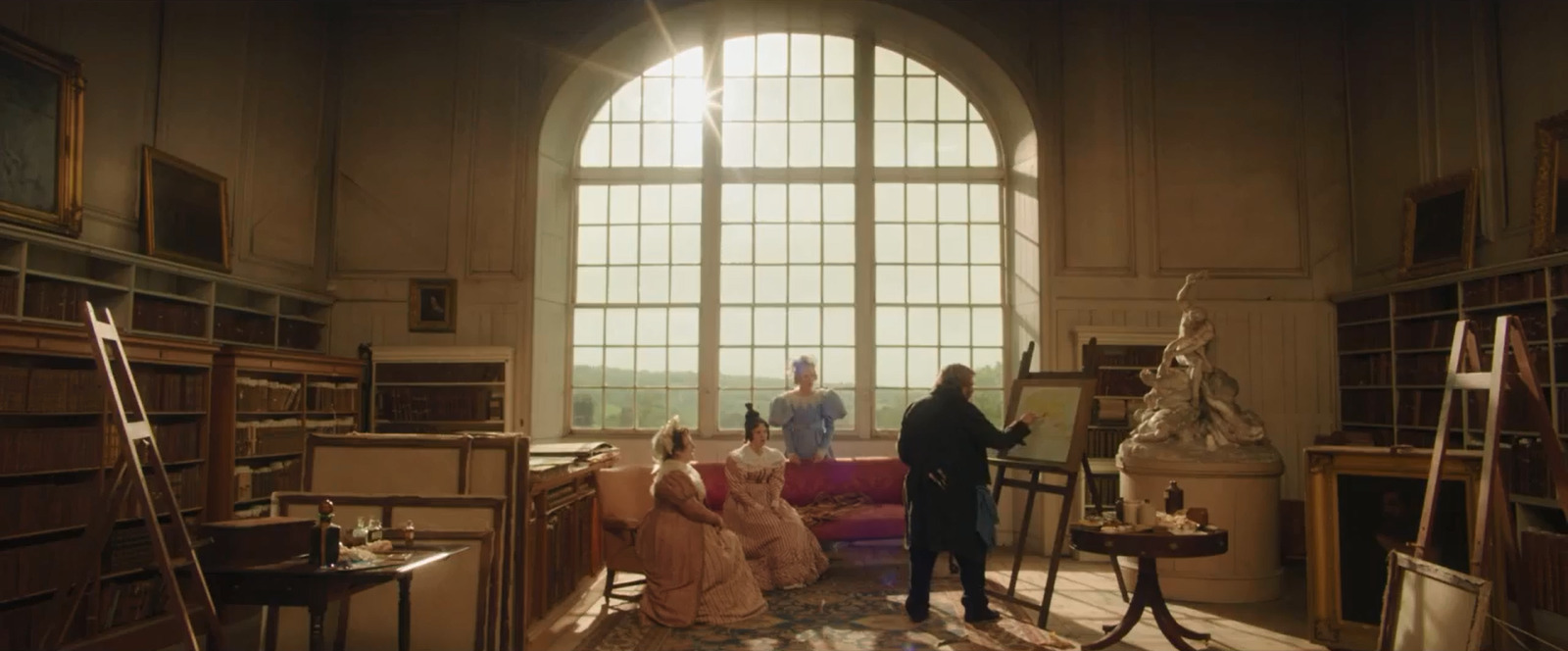
Not for a single moment was I in any doubt that I was in another time, observing these real people going about their real lives. That’s Mike Leigh’s greatest strength as a filmmaker, the convincing portrayal of the world we know, warts and all. It’s one thing to recreate a version of the lives we live every day, it’s a whole other level of achievement to make the viewer believe they are actually witnessing a moment from 150 years ago. MR. TURNER exhibits a very particular kind of truth despite the story being mostly made up.

JMW Turner (Timothy Spall) was the greatest painter of his age. Appreciated during his life by high society, but never quite part of it, he travels far and wide for inspiration and pushes those closest to him ever further away as he is consumed by his art. Following a bereavement that rocks him to the core, Turner’s artistic style becomes more experimental, and his public image becomes one of a man losing his grip on reality. With the world changing rapidly around him, the only one to stay loyally by his side is a lonely widow he finds a connection with (Marion Bailey).

Spall’s performance as Turner is certainly not a handsome one. He makes the eponymous artist a gouty bag of guttural noises with next-to-no human feeling at all beyond passion for his art and a deep affection for his father William (Paul Jesson). It may not be pleasant to witness his deplorable treatment of everyone he meets, from exploiting his besotted housekeeper (Dorothy Atkinson) for occasional sexual release, to guffawing at the idea of a happy meeting with his illegitimate daughters and their mother (Ruth Sheen), to throwing his weight around at the Royal Academy and dismissing any promising artist who might compete for his limelight. It’s unpleasant, but it’s mesmerising stuff. I’ve never been of the opinion that characters have to be likeable, or even empathetic; characters just have to be interesting, and Leigh and Spall have crafted someone detestable, grotesque, yet compelling, and surrounded him with a formidable ensemble.

Fittingly, for a film about such a great visualist, Mr. Turner looks utterly divine. Every shot is striking and painterly, from the carefully arranged interiors to the staggeringly vivid tableaus we see as Turner strolls purposefully towards his next inspiration. A prominent match cut between canvas and rock face is particularly lovely. Turner’s last words were supposed to be “the sun is God”, and this theme is used to great affect by Leigh and his regular cinematographer Dick Pope in bathing drawing rooms, hillsides, coastlines and our questionable protagonist in glorious, revealing light.

The film explores a number of sociocultural concepts distinct to its period setting. For one, the idea that you could be a celebrity, one of the most famous men in the county, and yet could live anonymously because unless they moved in the right circles (and few did) people would have no idea what you looked like. The deep shame attached to illegitimacy is shown to still dominate in the 19th Century, with Turner resenting any visit by his flesh-and-blood, and denying their existence in public. One of Turner’s only redeeming qualities is shown to be fighting the tide of class-dominated society at large. He might move in intellectual circles, attend lavish events and rub shoulders with lords and ladies, but he is still a working-class kid at heart, elevated to a respectable status by talent alone. This surfaces in a scene at John Ruskin’s (Joshua McGuire) house, where Turner loses patience with the critic’s obnoxious intellectual ramblings and brings the conversation crashing back to grass roots topics with a question of pie preference.

Turner is rightly acknowledged to be far ahead of his time. While his contemporaries might have assumed he was losing his gift and/or his sight, he was arguably laying the foundations for the imminent arrival of the Impressionists and even the Surrealists a century later. Leigh manages to get his own views on art in there too; his disdain for art as a business is shown with an elderly Turner refusing to sell his body of work for a generous sum; the tragedy of the loss of true craftsmanship caused by new technologies is demonstrated by Turner’s uneasiness around one of the first cameras (he scoffs”long may it continue” to fail to produce anything in colour). These strong opinions are particularly prominent in the film’s final act, where Leigh is taking stock on Turner the man, and the life he lead.

Mr. Turner is a masterful and absorbing biopic, a challenging character piece that is both funny and tragic, and a sharp critique of the narrow-mindedness and fickle nature of the art world. Leigh brings little moments in 19th Century English high society to life, and Spall and the supporting players inject humanity and flaws into real lives, lives that are far away in time, but brought closer, made more real, by their unrivaled skill in their craft. It didn’t get much awards recognition outside Cannes, not even from BAFTA (for shame) but perhaps that’s appropriate for Leigh’s status as a dogged independent, the forever outsider. SSP

Posted in Film, Film Review | Tagged , , , , , , , , , , , , , , , | 2 Comments

Review: The Guest (2014)

107930_original

Adam Wingard is a filmmaker to watch. He clearly adores lowbrow genre flicks, and his career aim seems to be to be to produce some very polished examples of his own. His films are recognisable, but always with a little deconstruction and self-awareness to make them feel fresh. Like he did with slick home-invasion horror YOUR NEXT, he’s equally elevated and aped the horror-thriller with THE GUEST.

When David (Dan Stevens) appears on the Peterson family doorstep and claims to be the squadmate of their recently killed in action son, they are compelled to invite him into their home to hear affectionate stories of their son’s bravery and to embrace this seemingly nice young man as one of the family. But it becomes increasingly clear that something is amiss, and as David worms his way further into their lives, it becomes clear he has no intention of leaving.

The first half of The Guest is a tense, nuanced, slow-burner of a character piece. We’re given time to get to know the members of the Peterson family and their woes, we are equally compelled and creeped out by David and the way he affects the family unit. The second half is an all-out unashamedly trashy horror-tinged actioner. These disparate tones shouldn’t work together, and one should derail the other, but somehow Wingard makes this combination of extremes not only work, but excel. He’s a good all-rounder filmmaker really, in addition to executing a remarkable tonal balancing act, he has a distinctive, confident aesthetic style and the ability to encourage the best possible performances from his actors. He also really loves blood and carnage, but always stops short of becoming unpleasant.

You’ve never seen Dan Stevens like this before. He oozes charm and visibly simmers with menace all at once, making for a chill-inducing horror antagonist (particularly when Stevens switches on his uncanny valley smile). It’s not just Stevens’ show though, and the supporting players all bring something a little extra to their performances. Sheila Kelley excels as Laura, a mother ruined by grief, Leland Orser bring a very human bitterness to Spencer the father, and Maika Monroe and Brendan Meyer give star-making turns as Anna and Luke the increasingly suspicious Peterson children. It’s fascinating to see the different tactics David uses to deceive each of them based on their personality types – he charms Laura, drinks with Spencer, flirts with Anna and protects Liam.

Everyone has been talking about the lean, mean, barroom brawl sequence where David demonstrates just how lethal he can be using furniture and hot sauce, and the editing and choreography here is indeed excellent, but the scene that sticks with me the most comes later and is much lower key. It takes place on a school corridor with the camera tight on David’s face. David has just saved Luke from being expelled from school by manipulating his Principal, and in gratitude Luke reveals he knows a little too much about what David is up to, but pledges to keep his secret. Here, Stevens goes through seemingly every human emotion possible in one unbroken 20-second shot. It’s a wonderfully versatile performance in microcosm.

The biggest action scene in the film is arguably its weakest element. Not only have we seen heavily armed black ops types trying and failing to hit their target through the walls of a brittle building countless times before, but here Wingard unfortunately can’t hide his film’s modest budget. It’s not badly done, it just doesn’t look or sound as sturdy as it should. The finale in contrast revels in being a little cheap-looking, intentionally appearing like the sickly neon-lit final showdown in a teen slasher.

Watching The Guest provides an equal rush of adrenaline and endorphins. It’s a thrill from beginning to end and it’s just so much honest-to-goodness fun throughout. One moment you’ll be almost in pain from the tension, the next you have the wonderful release of  a gentle (or not so gentle) gag, then you’re back on the edge of your seat again within moments. It’s all very carefully calculated by Wingard and regular writer Simon Barrett, but it’s executed in a manner that almost looks casual. The Guest is an effective and high quality thriller with an antagonist all the scarier because he’s not supernatural, he’s just a guy in your house you can’t get to leave. SSP

Posted in Film, Film Review | Tagged , , , , , , , , , , , , | 3 Comments

Review: Big Hero 6 (2014)

Baymax

The latest from Disney is a colourful and undemanding superhero romp. Much like the film’s main draw Baymax, BIG HERO 6 is bouncy, endearing and funny, but perhaps doesn’t offer much extra once its fairly limited aims have been satisfied.

Hiro (Ryan Potter) is a bona fide robotics genius who has world-changing ideas but lacks the motivation to apply them, until his brother Tadashi (Daniel Henney) convinces him to enroll at the same prestigious university in order to develop his already considerable talents. Following an apparent tragic accident, Hiro is left alone and aimless once more, until the simultaneous discovery of Baymax (Scott Adsit), one of his brother’s inventions, and the arrival of a masked supervillain inspires him to form a team composed of his brother’s tech-savvy friends to protect their city of San Fransokyo.

Baymax is an instantly iconic creation. This big loveable Flump steals every scene, will undoubtedly inspire a mountain of licensed merchandise and memes, and is more interesting than pretty much every character who is given more dialogue. He’s beautifully animated with an original design and cute physical quirks (apparently inspired in part by baby penguins) and thanks to 30 ROCK’s Scott Adsit, he is given the most warm and appealing not-quite-human voice since I, ROBOT’s Sonny. They even manage to get an IRON GIANT-esque wobbly-lip moment in there towards the end.

Ultimately it’s a pretty standard superhero origin story crossed with every kids anime series from the late 90s/early 2000s (plus a random FRANKENSTEIN reference that doesn’t really make sense with this story). Elements of a really good film are there; it looks good, it demonstrates immense imagination and the heart and humour are more-or-less in the right places. What’s a little off is the split between action and quieter character moments (it’s weighted heavily in favour of the former) and the pacing of the thing, with some elements seeming  rushed (perhaps to limit the film to a family-friendly 100 minutes) while others drag, and the film just seems to abruptly end.

The over-abundance of action wouldn’t be a bad thing if it was memorable, but the set pieces here are sadly very conventional with some interesting animated effects thrown in, and you never feel the heroes are in jeopardy. The only moment of tension which comes from a tweak of Asimov’s ideas is over all too quickly, and the characters, Hiro in particular, move on all too quickly. You might be tempted to say that since it’s a children’s film (debatable), why bother making it emotionally or intellectually complex? Then you remember what Pixar and more recently DreamWorks have produced over the last decade and that particular argument falls flat.

There’s a generous number of decent jokes, most of which come from Baymax’s well-meaning nature and non-lethal physique (“I fail to see how [latest weapons/armour upgrade] makes me a better care provider”). The gag that made me laugh the most of all was Wasabi (Damon Wayans Jr.) making a bit of a mess of cutting his way through a door with his arm-mounted energy blade, something which anyone who’s ever tried to saw through something without the know-how will relate to.

The central mystery, that of the identity of the masked villain, is entry-level stuff – there are only three real suspects and one of them is discredited pretty quickly. Kids might still be surprised if they haven’t seen much like this before, but most adults will be looking for another dimension. Still, viewers of all ages can become invested in the tale of a lonely boy-genius and his squidgy robot pal.

I won’t say don’t see Big Hero 6, because there’s a lot to like about it. What I will say is my expectations of Disney are a little higher at this stage, particularly after their reinvention in recent years, and I’m not sure if I’ll remember any part of the film that didn’t involve Baymax six months from now. As I write this, I now hear it’s an Oscar winner. This confuses me. It’s not really Oscar quality, but the Academy were clearly too confused by braver animated efforts last year (HOW TO TRAIN YOUR DRAGON 2, THE BOXTROLLS), so perhaps they just gave it to Disney out of habit. SSP

Posted in Film, Film Review | Tagged , , , , , , , , , , , , , , , , , , , | 4 Comments