https://secondcutpod.substack.com/p/captain-america-brave-new-world-review SSP
Captain America: Brave New World (Review) 2025
Posted in Film, Film Review, Second Cut
Tagged Anthony Mackie, Captain America: Brave New World, Harrison Ford, Julius Onah, Marvel, MCU, Superhero Movie
Leave a comment
Review in Brief: Conclave (2024)
A load of old men locked in a room together to decide which one of them will get to be the boss, it’s the stuff thrillers are made of right? Based on the Robert Harris bestseller, the sudden death of the Pope triggers a Papal election, with every eligible cardinal sequestered from the outside world for a series of votes. Tasked with overseeing the conclave, Cardinal Lawrence (an awards-worthy Ralph Fiennes) attempts to remain impartial and not be drawn into faction politics while dark secrets in the front runners’ pasts begin to surface. This is impeccably constructed, pristinely performed old-fashioned filmmaking that proves effective thrillers can be talky and self-contained as long as the characters and their clashes of personality are interesting. CONCLAVE is a film made in its small moments, in director Edward Berger’s control over every facet, drip-feeding you information until the final shocking twist. This is subtle, but still a good deal more exciting than the majority of mainstream fare. SSP
Posted in Film, Film Review, Review in Brief
Tagged Conclave, Edward Berger, Ralph Fiennes, Robert Harris, Thriller
Leave a comment
Review in Brief: Wolf Man (2025)
While not as effective as his modern take on THE INVISIBLE MAN, Leigh Whannell’s WOLF MAN still works as a no-nonsense representation of a painful and tragic transformation. In a slightly laboured setup, Christopher Abbott’s Blake must return to his childhood home in the Oregon countryside with his wife and daughter (Julia Garner and Matilda Firth) to clear out his missing-presumed-dead father’s belongings, but is soon infected by a werewolf and faced with a horrifying transformation. The film’s main new gimmick is its “wolf vision”, where perspective shifts to the creature’s POV, with darkness illuminated and its prey’s dialogue muffled, their eyes now with retro-reflective highlights to show just how far removed from humanity he has become. There are some meaty themes here but they’re not really pushed far enough and the solid performances and great prosthetics work can’t make up for a relative lack of genuine scares. SSP
Posted in Film, Film Review, Review in Brief
Tagged Christopher Abbott, Horror, Julia Garner, Leigh Whannell, Matilda Firth, Wolf Man
Leave a comment
Review in Brief: Rebel Ridge (2024)
It’s depressingly rare today to come upon a suspense film that genuinely keeps you guessing the direction it is heading in. Jeremy Saulnier’s REBEL RIDGE, a politically pointed, punchy modern Western certainly does that. Terry (Aaron Pierre) rides into a small town to pay his cousin’s bail and falls afoul of a corrupt and institutionally racist police department under Chief Burnne (Don Johnson). Terry must work with public defender Summer (AnnaSophia Robb) and an anonymous police mole and utilise the skills from his past in his fight for justice. All of Saulner’s films are visceral, uncomfortable watches but the sense of righteous anger directed at the systemic racism still permeating US society and the balance between heightened tension and grounded emotionality makes this one of his most satisfying works to date. It probably runs a little long and does slightly strain credulity in the final act, but it’s one hell of an effective thriller overall. SSP
Posted in Film, Film Review, Review in Brief
Tagged Aaron Pierre, AnnaSophia Robb, Don Johnson, Jeremy Saulnier, Rebel Ridge, Thriller
Leave a comment
Looking Back and Looking Forward: 2024

The year in which Hollywood tried its darnedest to recover from a year of disruption and underperformance, and the resulting 12 months ended up being a mixed success.
Some studios like Disney saw some of their biggest box office hits in years with the likes of INSIDE OUT 2 and DEADPOOL & WOLVERINE while noted auteurs, notably Francis Ford Coppola and George Miller struggled to make their mark either creatively, financially or both. At least the indie sector, animation and films around the world kept pushing the art form forward in a turbulent time where it has never been more necessary.
As per usual, before my full top 20 films of 2024 (UK release dates), here’s the individual scenes that have stayed with me.
Best Scenes of 2024:
DUNE: PART 2 – Feyd in the Arena

Baron Harkonnen (Stellen Skarsgård) presents his nephew and heir to his subjects on Feyd’s coming-of-age, the deadly and psychotic young royal (Austin Butler) stepping into an arena to prove his physical prowess against (mostly) drugged prisoners as his fight is bathed in the cold light of Gedi Prime’s black sun. A sequence made in its boldness and in Greig Fraser’s ingenious infrared cinematography, Feyd makes one hell of a first impression.
POOR THINGS – Bella Acts Up
Still at an awkward phase of her development and seen as hugely embarrassing in public by the man who is more than happy to take advantage of her lack of inhibitions in private, reanimated cadaver Bella (Emma Stone) upends Duncan’s (Mark Ruffalo) fancy dinner engagement at a lavish hotel before dancing with wild abandon. Jerskin Fendrix, the film’s composer cameos as part of the band and also soundtracks Bella’s dance floor liberation, her jerky movements more than matching the discordant notation.
ALL OF US STRANGERS – One Last Family Meal
After regularly visiting his long departed parents (Claire Foy and Jamie Bell) in their home, Adam (Andrew Scott) realises it is time to let go of his past and his regrets and decides to say his goodbyes at a location close to all of their hearts – a slightly depressing American-style diner in a British shopping centre. You’d have to have a heart of stone to not be moved by this lowkey, impeccably acted farewell representing Adam finally coming to terms with his regrets and his grief.
DEADPOOL & WOLVERINE – Mini Van Fight
The Merc with the Mouth (Ryan Reynolds) and Wolvie (Hugh Jackman) haven’t had the most harmonious introduction, with the former essentially kidnapping the latter to save his universe, and after some uncomfortable truths are swearily unleashed, both stabby, regenerating antiheroes lay into each other in the confines of a family SUV soundtracked by a malfunctioning radio. It’s by some distance the film’s least spectacular action sequence but by imposing limitations of space on the scene it becomes its most memorable too.
FURIOSA: A MAD MAX SAGA – The Stowaway

The only sequence that even comes close to rivalling the spectacle of FURY ROAD sees the young Furiosa disguised as a mechanic and clinging to the underside of the brand-new, shiny and chrome war rig on its maiden voyage, inevitably coming up against some marauding raiders and fiery chaos ensuing. Miller specialises in escalation, tactility and momentum and this chase provides all of this in spades as well as serving as a searing character introduction for the now-adult title character (Anya Taylor-Joy).
HIS THREE DAUGHTERS – Perfect Goodbye
After a whole film’s worth of upsetting family squabbles as three sisters (Carrie Coon, Natasha Lyonne, Elizabeth Olsen) watch over their dad in his final weeks dying of cancer, a moment of welcome tranquility comes at the story’s close. As his daughters carefully manoeuvre him from his sickbed to his favourite chair, Vincent (Jay O Sanders) appears to recklessly tear out his IV and heart monitor, only for it to be revealed he has stepped out of his now unresponsive body to tell his children how proud he is of all of them.
THE SUBSTANCE – New Years Show
After breaking the unbreakable rule of using The Substance – not to double-dose – the younger ideal version of Elisabeth Sparkle Demi Moore), Sue (Margaret Qualley) horribly mutates into a third form, Monstro Elisasue. Not wanting to bow out of hosting the upcoming star-making New Year show on TV, the shambling horror squeezes into her dress, puts on her makeup and earrings and staples a promo image of her formally glamorous self to her face and heads down to the TV station for one of the most extreme, claret-soaked and hilarious film finales of all.
EVIL DOES NOT EXIST – Town Hall Meeting
When an unthinking corporation swoop in and expect a small rural community to cooperate with their proposal for the building of a power generator, their token offering of a public consultation quickly gets out of hand. Quickly their slick representatives crumple in the face of calm, firm and well-informed questions from the locals who just want to be left to their peaceful way of life.
REBEL RIDGE – P.A.C.E
There are plenty of great turning points in movies, moments where you feel a seismic shift in tone. After being pushed around, discriminated against and threatened by corrupt and prejudiced authorities, Terry Aaron Pierre) turns the tables on them as he has a heated conversation with the police chief (Don Johnson) outside his station. Terry gradually reveals he has a dark past and is a force to be reckoned with, just as the chief’s colleagues battle iffy WiFi to look to his service record and everyone realises simultaneously what a mistake it was to mess with him.
ANORA – Ani Goes Beast Mode

Inept thugs sent to break up an unapproved marriage between Russian playboy Ivan and stripper Ani (Mikey Madison) fatally underestimate how formidable she can be. Before long she is holding her own against two much larger men and causing them lasting damage as they fall over fancy furniture and attempt to restrain and gag her, her sailor’s mouth and flailing limbs making them think twice about every attempt they make to contain but not hurt her.
Best Films of 2024:
Honourable mention: ISRAELISM
20. MONSTER Full review here.
19. REBEL RIDGE Review in brief here.
18. THE SUBSTANCE Review in brief here.
17. INSIDE OUT 2 Review in brief here.
16. HIS THREE DAUGHTERS
15. THE REMARKABLE LIFE OF IBELIN Full review here.
14. CONCLAVE
13. ANORA Review in brief here.
12. MY OLD ASS
11. SING SING
10. HUNDREDS OF BEAVERS Full Top 10 write up here.
9. THE WILD ROBOT
8. SOMETIMES I THINK ABOUT DYING
7. KNEECAP
6. THE ZONE OF INTEREST
5. PERFECT DAYS
4. ALL OF US STRANGERS
3. ROBOT DREAMS
2. THE TEACHERS’ LOUNGE
1. POOR THINGS Full review here.
Coming up in a jam-packed 2025 we have the return of DC superheroes with James Gunn’s SUPERMAN and hopefully the return to form of the MCU with CAPTAIN AMERICA: BRAVE NEW WORLD, THUNDERBOLTS* and THE FANTASTIC FOUR. Tom Cruise reportedly bids farewell to Ethan Hunt in undoubtedly spectacular fashion in the eighth MISSION: IMPOSSIBLE and we can look forward to new films from Bong Joon-Ho, Ryan Coogler and others. That’s not even getting started on all the other IP including AVATAR, WICKED and the live-action takes on LILO AND STITCH and HOW TO TRAIN YOUR DRAGON. Here’s to a year of cinema that will help us cope with uncertain times. SSP
Posted in Film, Film Feature
Tagged All of Us Strangers, Anora, Conclave, Deadpool & Wolverine, Dune: Part Two, Evil Does Not Exist, Furiosa: A Mad Max Saga, His Three Daughters, Hundreds of Beavers, Inside Out 2, Israelism, Kneecap, Monster, My Old Ass, Perfect Days, Poor Things, Rebel Ridge, Robot Dreams, Sing Sing, Sometimes I Think About Dying, The Remarkable Life of Ibelin, The Substance, The Teachers’ Lounge, The Wild Robot, The Zone of Interest
Leave a comment
Review: Nosferatu (2024)
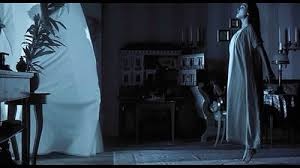
It’s been a long time coming, Robert Eggers’ NOSFERATU. A dream project for the singular director of THE WITCH and THE LIGHTHOUSE since high school, this version of FW Murnau’s unauthorised adaptation of DRACULA brings with it shocking imagery, an oppressive atmosphere and some fascinating embellishments to Bram Stoker’s original text.
Years after a teenage Ellen (Lily-Rose Depp) communed with the vampire Count Orlok (Bill Skarsgård) over the astral plane, her husband Thomas Hutter (Nicholas Hoult) is tasked with traveling to a distant land to complete a property sale with the very same dark entity. After he discovers the Count’s true nature and is left psychologically broken and near-drained of his life force, Hutter races home to stop Orlok from claiming Ellen, while a group of intellectuals led by Professor von Franz (Willem Dafoe) attempt to fight back against the death and pestilence brought forth by the nosferatu.
Every subsequent adaptation of Nosferatu adds some new ingredient to the pot, from Murnau’s vampire getting killed by sunlight to Werner Herzog’s residing in a dream castle to Eggers’ psychic communion/possession angle. Is the prominence of cats and rats in the Eggers version a knowing reference to Herzog? Does the latest director manage to avoid the trap of reproducing the iconic imagery of the original wholesale? Are all these alternative takes on Dracula in conversation with each other? It’s definitely food for thought.
From the off, Eggers emphasises the psychic connection between Ellen and Orlok, the idea that years ago she ventured into the world between dreams and waking to find a meaningful connection, to cure her loneliness and emancipate herself from an unfulfilling home life and in doing so willingly let this monstrous entity in and kick-started all of these horrific events, is a powerful one.
Skarsgård’s Orlok is a genuinely terrifying presence, the slow reveal of what he actually is, the way the camera is used to keep him just out of frame and to embellish his unnatural movement around Hutter’s chair in their first meeting before fully depicting him as a shambling corpse dressed in regal furs held together by sheer dark will. The decision to have him messily feed from his victims’ chests like a suckling parasite rather than daintily drinking from their necks also helps make him feel far more bestial. Lily-Rose Depp more than matches him as a soulful, pained but willful Ellen and fearlessly throws herself into the visceral physicality of the role, her being supernaturally manipulated callously dismissed by most of the men around her as garden variety hysteria. Nicolas Hoult and Willem Dafoe, both veterans of previous Dracula or Nosferatu adaptations (RENFIELD and SHADOW OF THE VAMPIRE respectively) feel like they appropriately reside in the Victorian era with all its hangups and repressions, as does Eggers good luck charm Ralph Ineson as the steadfast Dr Seward and Simon McBurney’s feral vampire thrall Knock. Aaron Taylor-Johnson and Emma Corrin feel a little more out of place but they are lumbered with playing the least interesting characters.
This film may be in colour, but the way it is lit, seemingly by ethereal moonlight for every nighttime scene, means it has more than a hint of expressionist black and white filmmaking aesthetics about Jarin Blaschke’s cinematography. Of particular note are the scenes in Ellen’s bedroom, sinister shadows thrown as the white drapes billow inwards to seemingly reach for the room’s occupants, and an early scene where Hutter pauses at a crossroads on route to Orlok’s castle, standing in a beam of moonlight with snowfall illuminated around him, the dense trees making it seem like he is trapped in an impossible void.
Eggers has always been a striking visualist but this film is perhaps his finest work to date in demonstrating his skill at evoking romantic artworks (the final shot of the film, equally grisly and beautiful in particular stays with you) while simultaneously marrying tactile, authentic production design and crowd pleasing genre trappings. How many other filmmakers would bother to put so much time and energy into answering the question “if a Transylvanian noble really could live for centuries, how would they dress, talk and style what remains of their hair?”.
Nosferatu 2024 may be the latest telling of a very familiar story but it’s been given a new, hypnotic life after death by a filmmaker finally getting to tick a passion project off his bucket list. Finding new shades in the Dracula story even after all these years is no mean feat, but keeping the setting the same while updating and deepening the themes and recruiting a fearless ensemble and ridiculously talented artists and technicians has helped make this one of the most memorable and handsomely appointed horror films in recent memory. SSP
Review in Brief: Anora (2024)
Sean Baker, champion if those whose professions have made them persona non grata in American society has made his most crowd-pleasing film to date, winning him the Palme d’Or at Cannes for his troubles. Stripper Ani (Mikey Madison) falls for Ivan (Mark Eydelshteyn) the spoiled son of a Russian oligarch who spirits her away for a Vegas wedding and a life of excess. But Ivan’s powerful family won’t take this perceived insult lying down and send some heavies to force the young lovers apart. Everyone knows by now that Madison is a force of nature in this, but Baker’s good luck charm Karren Karagulian and especially Yura Borisov leave their mark too as, respectively, Toros, the increasingly exasperated lead thug and Igor, the softie of the gang. This is hilarious, hard-hitting and dynamically captured largely on the streets in Baker’s signature semi-documentary style, all shot through with tension, heightened emotions and unexpected slapstick comedy. SSP
Posted in Film, Film Review, Review in Brief
Tagged Anora, Black Comedy, Drama, Karren Karagulian, Mark Eydelshteyn, Mikey Madison, Romance, Sean Baker, Yura Borisov
1 Comment
Review in Brief: Inside Out 2 (2024)
The first INSIDE OUT, out of all of Pixar’s output, is probably the film that connects with adults far more than children. It was profound, clever and moving and seemed almost impossible to meaningfully follow up. INSIDE OUT 2, while not quite topping the TOY STORY sequels, is definitely the studio’s most fulfilling and connective follow-up in a long time. Riley (Kensington Tallman) is well and truly a teenager and changes in her life combined with raging hormones bring new emotions to clash with Joy (Amy Pohler) and the gang, particularly the volatile Anxiety (Maya Hawke). What’s most refreshing about this franchise is how it steadfastly refuses to talk down to younger audience members who might be going through exactly the same things as Riley. The visualisation of abstract concepts is still ingenious, the warm humour and big heart still endearing and the plot derives just the right level of jeopardy to connect meaningfully with the characters without provoking an anxiety attack of your own. SSP
Posted in Film, Film Review, Review in Brief
Tagged Amy Pohler, Animation, Family Film, Inside Out, Inside Out 2, Kelsey Mann, Kensington Tallman, Maya Hawke, Pixar
1 Comment

 SSP Thinks Film
Amazon to Take Full Creative Control of the James Bond Franchise
https://secondcutpod.substack.com/p/amazon-to-take-full-creative-control SSP