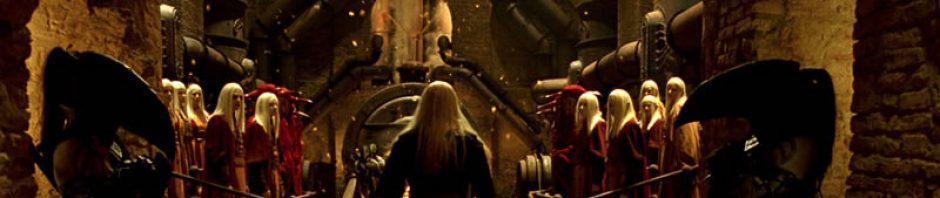
It’s been a long time coming, Robert Eggers’ NOSFERATU. A dream project for the singular director of THE WITCH and THE LIGHTHOUSE since high school, this version of FW Murnau’s unauthorised adaptation of DRACULA brings with it shocking imagery, an oppressive atmosphere and some fascinating embellishments to Bram Stoker’s original text.
Years after a teenage Ellen (Lily-Rose Depp) communed with the vampire Count Orlok (Bill Skarsgård) over the astral plane, her husband Thomas Hutter (Nicholas Hoult) is tasked with traveling to a distant land to complete a property sale with the very same dark entity. After he discovers the Count’s true nature and is left psychologically broken and near-drained of his life force, Hutter races home to stop Orlok from claiming Ellen, while a group of intellectuals led by Professor von Franz (Willem Dafoe) attempt to fight back against the death and pestilence brought forth by the nosferatu.
Every subsequent adaptation of Nosferatu adds some new ingredient to the pot, from Murnau’s vampire getting killed by sunlight to Werner Herzog’s residing in a dream castle to Eggers’ psychic communion/possession angle. Is the prominence of cats and rats in the Eggers version a knowing reference to Herzog? Does the latest director manage to avoid the trap of reproducing the iconic imagery of the original wholesale? Are all these alternative takes on Dracula in conversation with each other? It’s definitely food for thought.
From the off, Eggers emphasises the psychic connection between Ellen and Orlok, the idea that years ago she ventured into the world between dreams and waking to find a meaningful connection, to cure her loneliness and emancipate herself from an unfulfilling home life and in doing so willingly let this monstrous entity in and kick-started all of these horrific events, is a powerful one.
Skarsgård’s Orlok is a genuinely terrifying presence, the slow reveal of what he actually is, the way the camera is used to keep him just out of frame and to embellish his unnatural movement around Hutter’s chair in their first meeting before fully depicting him as a shambling corpse dressed in regal furs held together by sheer dark will. The decision to have him messily feed from his victims’ chests like a suckling parasite rather than daintily drinking from their necks also helps make him feel far more bestial. Lily-Rose Depp more than matches him as a soulful, pained but willful Ellen and fearlessly throws herself into the visceral physicality of the role, her being supernaturally manipulated callously dismissed by most of the men around her as garden variety hysteria. Nicolas Hoult and Willem Dafoe, both veterans of previous Dracula or Nosferatu adaptations (RENFIELD and SHADOW OF THE VAMPIRE respectively) feel like they appropriately reside in the Victorian era with all its hangups and repressions, as does Eggers good luck charm Ralph Ineson as the steadfast Dr Seward and Simon McBurney’s feral vampire thrall Knock. Aaron Taylor-Johnson and Emma Corrin feel a little more out of place but they are lumbered with playing the least interesting characters.
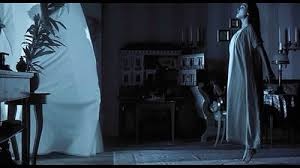
This film may be in colour, but the way it is lit, seemingly by ethereal moonlight for every nighttime scene, means it has more than a hint of expressionist black and white filmmaking aesthetics about Jarin Blaschke’s cinematography. Of particular note are the scenes in Ellen’s bedroom, sinister shadows thrown as the white drapes billow inwards to seemingly reach for the room’s occupants, and an early scene where Hutter pauses at a crossroads on route to Orlok’s castle, standing in a beam of moonlight with snowfall illuminated around him, the dense trees making it seem like he is trapped in an impossible void.
Eggers has always been a striking visualist but this film is perhaps his finest work to date in demonstrating his skill at evoking romantic artworks (the final shot of the film, equally grisly and beautiful in particular stays with you) while simultaneously marrying tactile, authentic production design and crowd pleasing genre trappings. How many other filmmakers would bother to put so much time and energy into answering the question “if a Transylvanian noble really could live for centuries, how would they dress, talk and style what remains of their hair?”.
Nosferatu 2024 may be the latest telling of a very familiar story but it’s been given a new, hypnotic life after death by a filmmaker finally getting to tick a passion project off his bucket list. Finding new shades in the Dracula story even after all these years is no mean feat, but keeping the setting the same while updating and deepening the themes and recruiting a fearless ensemble and ridiculously talented artists and technicians has helped make this one of the most memorable and handsomely appointed horror films in recent memory. SSP


 SSP Thinks Film
Pingback: Looking Back and Looking Forward: 2025 | SSP Thinks Film